
Introduction
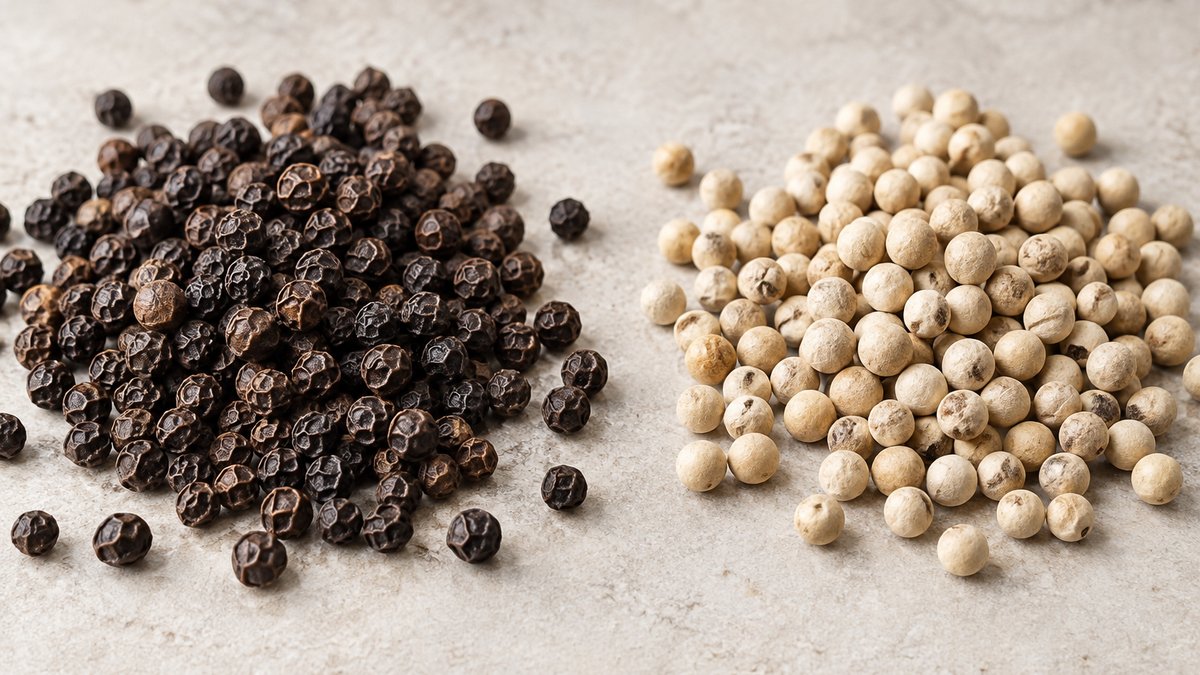
Black pepper and white pepper come from the same species, Piper nigrum L., but processing gives them different appearances and sensory profiles. Under Codex Standard CXS 326-2017, black pepper is made from dried berries with the pericarp intact; white pepper is made from dried berries after the pericarp has been removed.
For importers and exporters, the distinction affects product identity, the intended use and the details that belong in a purchase specification. The names alone do not state whether pepper is whole, cracked or ground, or establish its grade, origin, harvest, cleanliness or compliance with the destination market’s rules.
1. Black Pepper vs White Pepper: The Main Difference
Black pepper retains the berry’s outer pericarp after drying, while white pepper is dried after that layer has been removed. Both are berries of Piper nigrum L.; the processing difference changes the pepper’s color and sensory character.
Codex Alimentarius describes black pepper’s flavor as pungent, with a penetrating odour and hot, biting taste. Its standard describes white pepper as slightly sharp and very aromatic. Those are characteristic descriptions, not guarantees that every lot will taste the same. Cultivar, growing conditions, post-harvest handling, processing and storage can affect the product buyers receive.
The terms identify the pepper type, not its complete commercial specification. Codex recognizes whole, cracked or crushed, and ground styles for black, white and green pepper. A quotation for “white pepper,” for example, still leaves the buyer to establish whether the requirement is whole or ground and to agree on the applicable quality criteria.
In the United States, an FDA Compliance Policy Guide gives traditional identity descriptions: black pepper as dried, immature Piper nigrum berries, and white pepper as dried, mature berries from which the outer covering has been removed. For international contract specifications, Codex CXS 326-2017 defines the products by the condition of the pericarp. Buyers should state the standard and jurisdiction they are using instead of assuming every authority or contract uses identical wording.
The choice often starts with the finished food. White pepper can suit products where dark particles would be undesirable; black pepper leaves visible dark flecks. That is a formulation and appearance consideration, not a universal rule about which pepper is better or more pungent. Sensory acceptance should be assessed against the buyer’s intended recipe and agreed sample.
Buying consideration: When requesting offers, name the product type and style separately: black or white pepper, then whole, cracked or ground. Add the agreed grade or standard, origin, packing and any required test limits so suppliers are quoting the same product.
2. Black Pepper and White Pepper Compared
The table summarizes the distinctions that can be established from the product name and Codex’s standard. Buyers need a separate specification for attributes the name does not determine.

The pericarp is the outer layer of the pepper berry. Its presence or removal is the defining distinction in Codex’s product definitions. A buyer who needs white pepper should check that the offered product matches that identity, rather than relying on color alone. Color can help inspect a lot, but it cannot establish all quality or safety attributes.
The sensory descriptions are useful for setting expectations, but they do not replace an agreed method of evaluation. If aroma, flavor or color is commercially important, the contract can state the agreed sample procedure and acceptance criteria. The parties should also agree how a dispute will be assessed, including the sampling method and any laboratory method relevant to the parameter.
Codex CXS 326-2017 includes physical and chemical criteria, with requirements that differ by product and style. For example, its chemical-characteristics tables set separate maximum moisture levels for ground black pepper and ground white pepper. Those figures apply to the standard’s specified products and should not be treated as universal limits for every market or contract. The buyer should confirm the correct product scope and applicable regulation before placing them in a specification.
Pepper names also do not guarantee a specific intensity, aroma profile or performance in a recipe. A supplier’s origin or product description may provide useful context, but buyers should confirm the stated details and evaluate a representative sample when the formulation depends on them.
Buying consideration: For a like-for-like quotation, define the pepper type, style, grade or referenced standard, and measurable acceptance limits. Keep those requirements consistent across suppliers; otherwise differences in the quoted price may reflect different products rather than different offers.
3. A Sourcing Scenario: Pepper for a Light-Colored Sauce
Imagine a food manufacturer sourcing pepper for a pale cream sauce. The product team wants pepper aroma and pungency while limiting visible dark particles in the finished sauce. White pepper may fit that appearance requirement because its color differs from black pepper, but a buyer should confirm the result in the actual formulation.
The procurement request should specify white pepper and the required style. Whole pepper may be suitable if the factory grinds it in-house; ground pepper may fit a production line that uses a ready-to-dose ingredient. Those options are not interchangeable in handling, particle size or production workflow. The buyer should state the required grind or particle-size range where applicable and agree on the method used to assess it.
A supplier’s offer should identify the product as white pepper and state whether it is whole, cracked or ground. The buyer can then compare the quoted product with the requested specification, including any required standard, grade, moisture limit, packaging and documentation. If the product is ground, the buyer should specify any relevant particle-size requirement and test method instead of assuming a common grind.
Before approving a supplier or a shipment, the buyer can test a representative sample in the sauce at the intended dosage. The evaluation should check appearance, aroma and flavor in the finished product. A sensory result from a different recipe or dosage may not predict the manufacturer’s outcome. If both parties rely on a reference sample, they should record its identity and agree how it will be stored and used for comparison.
A different buyer may need visible pepper flecks in a marinade or seasoning blend. Black pepper may fit that appearance requirement, with whole, cracked or ground style chosen to match the product and process. The same procurement discipline applies: set the product identity first, then the style and measurable quality requirements.
These are illustrative formulation scenarios, not a universal preference for one pepper type in a food category. Recipes, processing conditions and customer expectations vary. A sample trial can check whether the pepper meets the intended appearance and sensory result before the buyer settles the commercial specification.
Illustrative inquiry format:
Product: White pepper, ground
Standard or grade: State the agreed standard and grade
Particle size: State the required range and test method, if applicable
Quantity and packing: State the required quantity and pack format
Quality requirements: State applicable moisture and other agreed limits
Delivery terms: State the requested Incoterm, named place and shipment timing
This is an illustrative inquiry format, not a universal specification. Buyers should set requirements for their product, market and production process.
4. When Should Buyers Choose Black Pepper or White Pepper?
Choose between black and white pepper by matching the pepper’s appearance and sensory profile to the finished product, then confirm the required processing style and specification. The product name alone cannot determine whether a lot will meet a particular recipe or market requirement.
4.1 Black pepper for a darker appearance or visible flecks
Black pepper is a candidate when the recipe calls for the characteristic dark appearance of pepper or when visible flecks form part of the product’s presentation. Buyers can select whole, cracked or ground pepper according to how the ingredient will be processed and used. If fleck size matters, specify a measurable particle range and how it will be checked.
Codex describes black pepper as having a penetrating odour and hot, biting pungent taste. A buyer who needs a particular flavor balance should assess a sample in the intended product. The description gives a recognized product characteristic; it does not promise a fixed sensory result for every origin or lot.
4.2 White pepper when dark particles are undesirable
White pepper is a candidate when a manufacturer wants pepper’s characteristic aroma and taste without the dark flecks associated with black pepper. The product may be supplied whole, cracked or ground, so the buyer should select the style that suits the factory’s equipment and recipe.
Codex describes white pepper as slightly sharp and very aromatic. That profile should be checked against the buyer’s target product through a representative sample. A pale appearance by itself does not establish grade, flavor strength, food safety or compliance with a destination’s requirements.
4.3 Specify the attributes that affect the purchase
For either pepper type, the contract or inquiry should state the product name and style, the agreed grade or standard, the origin if required, and the relevant quality criteria. It should also identify the packing format, quantity, delivery point, shipment schedule and commercial terms. Importers should confirm which food-safety, contaminant, pesticide-residue and labeling rules apply in their destination market and to the product’s processing form.
When comparing offers, check that each supplier is quoting the same pepper type and style, with matching grade, limits, packaging and delivery basis. FOB, for example, means Free On Board under the relevant Incoterms® rules; the parties should name the port and edition in the contract. A comparison between whole black pepper and ground white pepper would not isolate supplier pricing because the products differ in type and processing.
Buying consideration: Choose the pepper that fits the end product, then make the specification testable. A buyer can compare suppliers more fairly when every offer addresses the same product identity, style, quality limits and delivery basis.
5. Related Resources for Black Pepper Buyers and Sellers
Codex Alimentarius Standard CXS 326-2017 is a reference for black, white and green peppers intended for direct consumption, use as a food-processing ingredient or repackaging. It defines product identity and includes quality, contaminant, hygiene, labeling and sampling provisions. Its scope excludes these peppers when intended for industrial processing, so users should check whether the standard applies to their product and transaction.
The FDA Compliance Policy Guide provides U.S. identity descriptions for black and white pepper. It is a U.S. agency reference, not a substitute for checking the current legal requirements that apply to a shipment or for confirming the contract’s chosen standard. Importers should check current destination-country rules for their product and intended use.
Freshdi’s black pepper buying-request and supplier categories are related sourcing resources for businesses comparing stated requirements and product listings. Review each listing’s details and verify specifications and commercial terms before proceeding.
Businesses preparing a black pepper inquiry can review relevant buying requests and supplier listings on Freshdi.
View Latest Herbs, Spices & Seasonings Buying Requests →View Potential Herbs, Spices & Seasonings Suppliers →

References
1. Codex Alimentarius Commission – Standard for Black, White and Green Peppers (CXS 326-2017), 2017.
2. U.S. Food and Drug Administration – CPG Sec. 525.750 Spices - Definitions, 1978.
3. Access Agriculture – Organic Cultivation of Pepper, Special section: Product Specifications and Quality Standards, 2022.
Disclaimer: This article is compiled from platform data, public sources and information provided by third parties, for general informational purposes only. We do not guarantee its accuracy or completeness. It is not legal, customs, tax or compliance advice. Regulations, tariffs and requirements differ by country and change frequently, so please consult a qualified professional (such as a customs broker, freight forwarder or lawyer) and confirm product specifications with the supplier before acting.