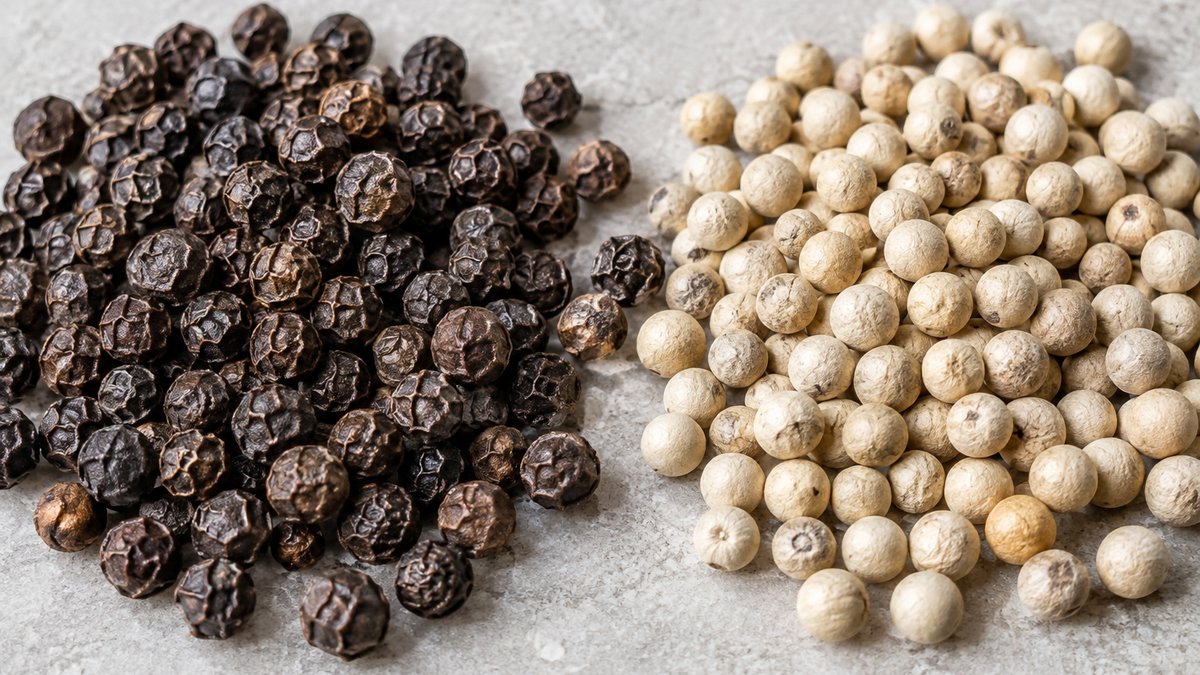

1. Black pepper and white pepper differ mainly in the outer layer
Black pepper and white pepper come from the same species, Piper nigrum L. The main product difference is the berry's pericarp, its outer layer: Codex defines black pepper as dried berries with the pericarp intact and white pepper as dried berries with the pericarp removed.
That processing difference changes the peppercorn's appearance and its sensory profile. Codex describes black pepper as brownish to dark brown or blackish, with a penetrating aroma and hot, biting pungency. It describes white pepper as grey to pale ivory, with an aroma and flavor characteristic of white pepper that is slightly sharp and very aromatic. These are standard descriptions, not guarantees that every lot will taste or smell identical.
The distinction is useful when a buyer needs to control visible color or match a product's expected aroma. It does not, by itself, establish grade, cleanliness, moisture, particle size, microbial status, origin or price. Buyers should assess those attributes separately against the destination market's rules and the contract specification.
White pepper processing can involve operations such as soaking, washing and decorticating, alongside drying and grading. Codex lists these among the treatments used to obtain pepper products; it does not say that every producer uses one identical processing route. Exporters should state the product form and processing details their buyer needs, rather than relying on color alone to describe the lot.
2. How do black pepper and white pepper compare?
For trade purposes, compare the two forms by processing, sensory description and the specification the buyer will receive. Codex Standard CXS 326-2017 covers black and white pepper offered whole, cracked or crushed, and ground. It also sets out quality factors for the products; buyers should check the standard's scope and confirm any applicable national requirements.

Codex gives different sensory descriptions for the two products, but neither color nor name provides a full quality assessment. A 2024 laboratory study detected piperine in both black and white pepper samples and found differences in their volatile profiles. Those findings describe the samples tested; they do not establish a universal pungency ranking for all origins, grades or lots.
The standards also distinguish product identity from product quality. Codex provides physical and chemical quality factors and grade classes for pepper. A buyer should name the standard or contract limits that apply, state whether the product is whole or ground, and agree how the shipment will be sampled and assessed.
For a ground product, ask suppliers to identify whether the offer is ground black pepper or ground white pepper and to state the requested particle size and packaging. For whole pepper, specify berry appearance and the agreed quality parameters. The words “black pepper” or “white pepper” alone do not settle these commercial details.
3. A sourcing scenario: matching pepper to a light-colored sauce
A food manufacturer developing a pale cream sauce may want pepper seasoning without visible dark flecks. White pepper is a practical candidate because its lighter color is less conspicuous in the finished product. The manufacturer still needs to test the seasoning in its own recipe: the required flavor intensity, aroma and particle size depend on the formula and production process.
If the same manufacturer is formulating a dark marinade, the visible contrast from black pepper may be acceptable or desired. That choice should follow a product trial, not a blanket assumption that one pepper form is stronger or better. A comparative study found distinct volatile profiles in the black and white samples it tested, while Codex describes characteristic sensory properties for each.
Illustrative inquiry format:
Product: White pepper, ground
Use: Seasoning for a pale sauce
Specification: State required grade, particle size, quality limits and applicable food-safety requirements
Commercial details: State quantity, packaging, destination, delivery term and requested shipment period
Assessment: Request product documentation and agree on sampling or testing criteria
This is an illustrative inquiry format, not a universal specification. Buyers should set requirements for their product and destination market.
The inquiry makes the intended use explicit, while leaving room for the manufacturer to define measurable acceptance criteria. Before confirming an order, the buyer and supplier should agree on the product form, grade, test methods where applicable, packing, shipment conditions and the documents required for the destination.
Looking to Source Black Pepper?
Connect with verified suppliers, discover matching products, and explore sourcing opportunities from global markets.
4. When should buyers choose black pepper or white pepper?
Choose between black and white pepper by checking the finished product's color and the sensory profile required by its recipe. White pepper suits trials where a lighter-colored seasoning is preferred; black pepper suits products where its darker appearance and Codex-described aroma and pungency fit the application.
For processors, the choice may affect more than appearance. The manufacturer should assess the pepper in the actual recipe, at the intended addition rate and processing conditions. A bench sample can reveal whether the aroma, pungency and particle size work in the finished food. The result should then inform the purchase specification.
For importers comparing supplier quotations, first align the product form and quality basis. A quotation for whole black pepper is not directly comparable with one for ground white pepper. Even when both offers name the same form, compare the agreed grade, moisture and other quality limits, packaging, quantity, delivery term and included documentation.
Codex CXS 326-2017 is an international reference for black, white and green pepper intended for direct consumption, food processing or repackaging. It excludes pepper intended for industrial processing. Buyers should check whether that scope fits their product and verify the importing country's current requirements before contracting. Freshdi's black pepper buying requests and black pepper supplier listings can help buyers and exporters review relevant sourcing opportunities.

References
1. Codex Alimentarius Commission – Standard for Black, White and Green Peppers (CXS 326-2017), 2017.
2. Molecules – Assessment of metabolome diversity in black and white pepper in response to autoclaving using MS- and NMR-based metabolomics and in relation to its remote and direct antimicrobial effects against food-borne pathogens, 2024.
Disclaimer: This article is compiled from platform data, public sources and information provided by third parties, for general informational purposes only. We do not guarantee its accuracy or completeness. Please conduct your own due diligence before making business decisions.