
1. Frozen durian and fresh durian differ in form, handling and use
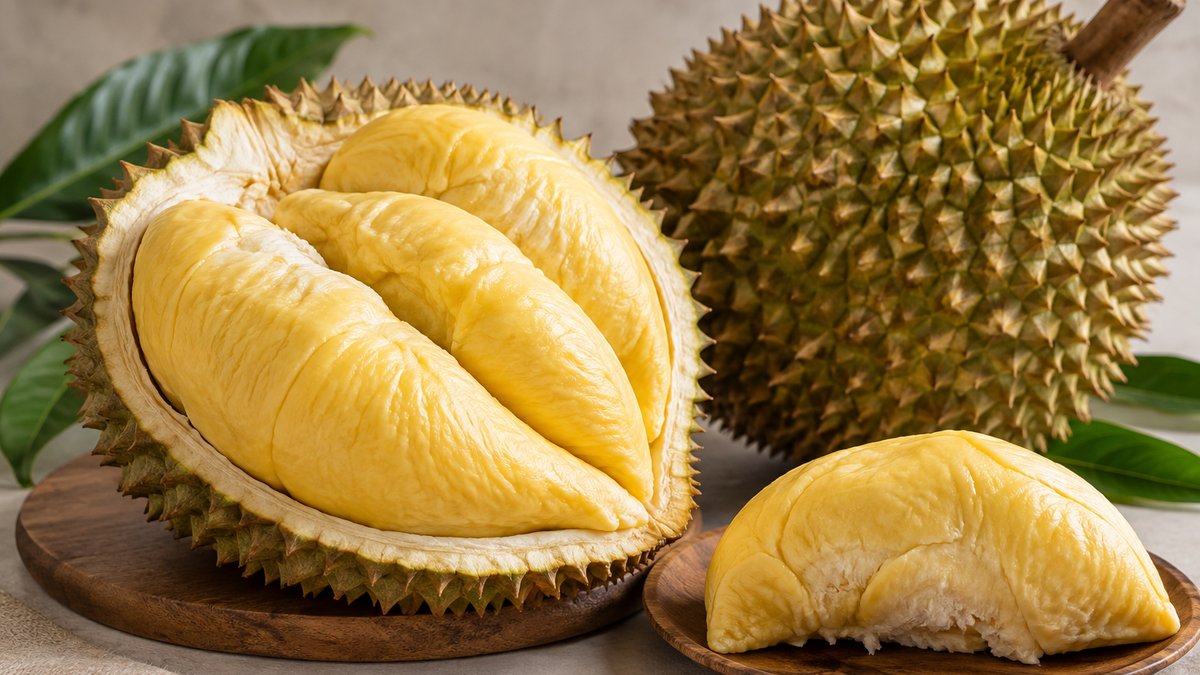
Frozen durian is ripe fruit preserved by freezing and sold as whole fruit, pulp or puree, depending on the product and market. Fresh durian is sold unfrozen, either whole or as extracted flesh, so its handling and sale depend on the fruit remaining in suitable condition through distribution.
The choice affects what a buyer can inspect, how the product travels, how long it can be held, and how much preparation is needed before use. It does not, by itself, determine the cultivar, maturity, quality, flavor, seed content or grade. Buyers need those details in the product specification.
Frozen products can suit buyers who need a form that can be stored and transported under a frozen cold chain. Fresh whole fruit can suit businesses selling intact fruit or serving customers who want to open and assess it themselves. Fresh extracted flesh and frozen pulp are separate product forms, even though both are ready to use without the shell.
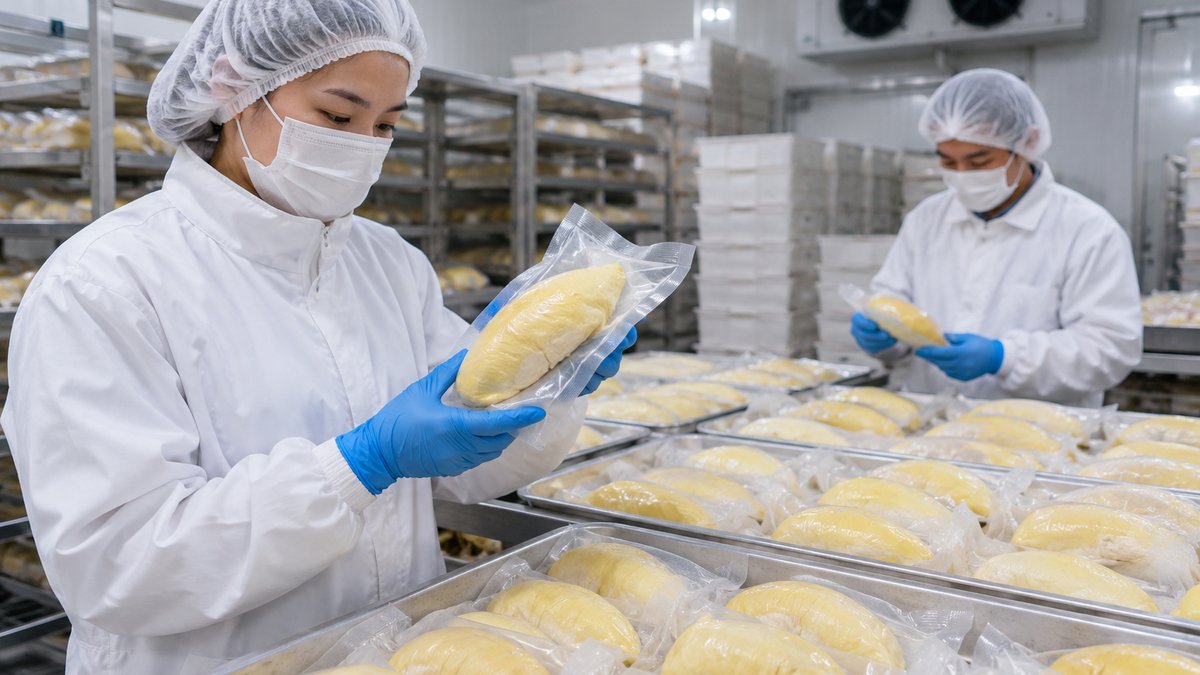
The term “frozen durian” covers more than one presentation. A 2024 protocol between Viet Nam’s Ministry of Agriculture and Rural Development and China’s General Administration of Customs defines frozen durian for that export lane as whole fruit with husk, pulp without husk, or puree without husk. It specifies freezing at -35°C or below for at least one hour until the core reaches -18°C or below, followed by storage and transport at a core temperature of -18°C or below. These are requirements in the Viet Nam-to-China protocol, not a universal rule for every origin and destination.
Freshness also needs a precise definition in the request. A buyer may mean a whole fruit, an opened fruit, or fresh extracted flesh. Each has different inspection, packaging and distribution needs. Write the requested form explicitly, then state the variety, maturity or ripeness criteria, and intended application.
2. How frozen durian compares with fresh durian
The main commercial differences are preservation method, product form, cold-chain needs and the condition the buyer can assess on arrival. The table compares common sourcing considerations; individual specifications and import rules vary by product and destination.
The difference in frozen storage can affect sensory and compositional quality over time. An October 2026 open-access study examined Musang King durian frozen at -110°C and then stored at -20°C for up to 12 months. The researchers reported changes in acidity, reducing sugars and aroma-related compounds over the storage period. Those findings apply to the study’s durian and freezing conditions; they do not establish the same changes or shelf life for every commercial frozen product.
Freezing also does not replace food-safety controls. For Viet Nam-to-China frozen durian, the 2024 protocol requires approved orchards and registered processing establishments, hygienic packaging and official inspection and quarantine requirements. Buyers shipping to another destination should check that destination’s rules and any applicable bilateral protocol.
3. How a frozen durian purchase changes the supply decision
Consider a dessert manufacturer planning a durian filling for production across several months. The buyer could compare fresh extracted flesh with frozen pulp, but the choice depends on the factory’s recipe, storage capacity, production schedule and import rules. Frozen pulp may fit the plan if its variety, seed status, maturity and thawed texture meet the recipe, and the business can keep it frozen throughout transport and storage.
Fresh whole durian presents a different purchasing task. The buyer must plan for arrival condition, ripeness assessment, opening labor, flesh yield and the time needed to process or sell the fruit. The visible fruit allows inspection of the husk and, after opening, the flesh. For a frozen whole fruit, the buyer should confirm how and when it can be thawed for inspection, and whether the sale specification concerns the whole fruit or the usable flesh.
Illustrative sourcing scenario:
Buyer: A dessert manufacturer scheduling durian filling production over an extended period
Option A: Fresh whole fruit, with a plan for ripeness checks, opening and prompt processing
Option B: Frozen pulp, with confirmed variety, seed status, storage temperature, shelf life and thawed-use requirements
Decision: Choose the form that fits the production schedule, product specification, available cold storage and destination rules
This scenario illustrates factors to compare. It is not a universal recommendation or a product quotation.
For either option, compare equivalent product specifications. A price per kilogram for whole fruit includes husk and seed weight, while a price per kilogram for pulp refers to a different usable form. Compare the buyer’s expected usable yield, processing labor, packaging and delivery conditions before judging the total cost. Do not treat the two price bases as like-for-like.
The purchase contract should identify how the product will be assessed. For frozen durian, agree on sampling, frozen condition at delivery, packaging integrity, lot identification and the procedure for evaluating the product after thawing. For fresh fruit, specify acceptable maturity and condition, the inspection method, and how the parties will handle damaged or unsuitable fruit. Inspection terms should be written into the commercial agreement rather than left to assumptions.
Looking to Source Frozen Durian?
Connect with verified suppliers, discover matching products, and explore sourcing opportunities from global markets.
4. When should buyers choose frozen or fresh durian?
Choose frozen durian when the product form, frozen storage and thawed performance fit the buyer’s operation. Choose fresh durian when the buyer needs fruit sold or processed in its fresh state and can manage the handling time and condition checks. Neither choice is automatically superior; the intended use and supply chain determine the fit.
Frozen pulp or puree can be practical for manufacturers and foodservice buyers that need a ready-to-process ingredient. Before ordering, request the exact form and composition: whole pulp or puree, seed-in or seedless, variety, ripeness at processing, and any permitted additives. If the pulp is intended for a recipe, test a representative lot after thawing. The frozen state may preserve the product for storage, while thawing can change texture and aroma compared with fresh flesh.
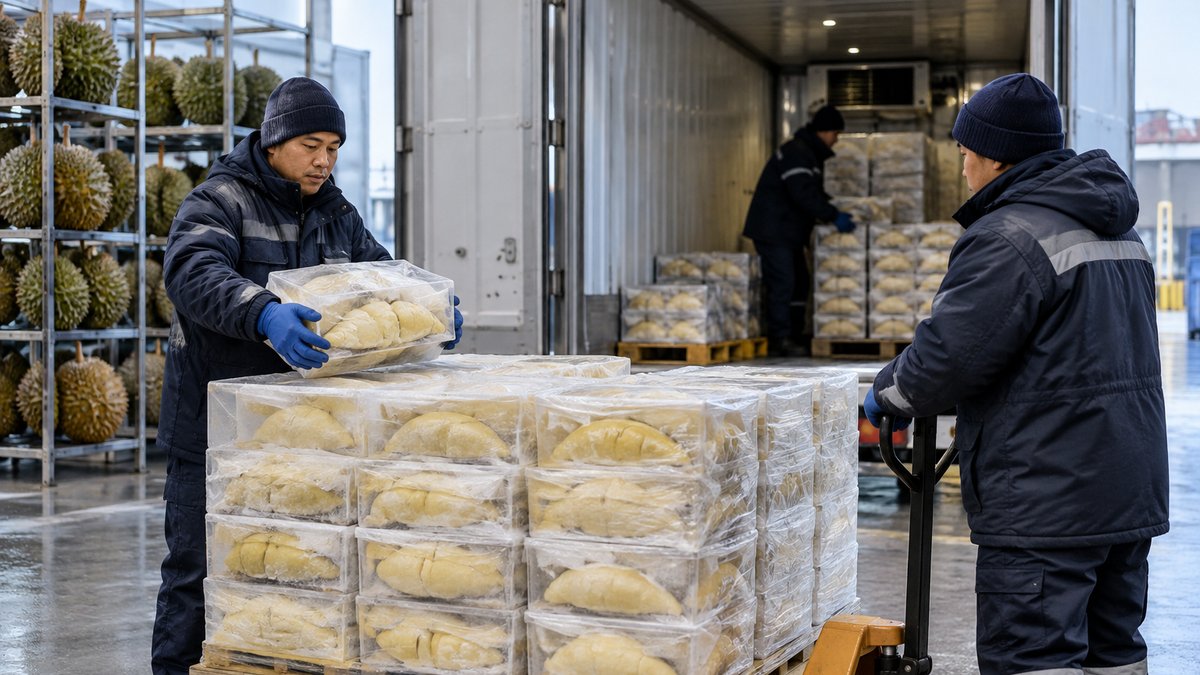
Frozen whole fruit may suit a retailer or distributor that wants a whole-fruit presentation while moving product through a frozen chain. It requires packaging that protects the fruit and a defined thawing and inspection procedure. Ask whether the supplier’s stated shelf life applies to unopened packs under specified storage conditions, and confirm the temperature monitoring and handling records available for the shipment.
Fresh whole fruit may suit specialty retailers, local distributors or foodservice operations that sell or prepare whole durian. A Singapore Food Agency consumer guidance page advises checking that a whole durian shell is not cracked or open and notes that a newly harvested durian may have a greener or lighter stem, while a darker stem can result from enzymatic browning. These are inspection cues, not a complete grading system or a substitute for the buyer’s agreed quality specification.
Fresh extracted flesh can reduce shelling work at the destination, but extraction adds handling and packaging steps before delivery. Specify the time and temperature controls required for the particular shipment and destination. Singapore’s Food Agency advises refrigerating leftover durian for consumption within two to four days or freezing it for longer storage, using airtight containers. That is consumer guidance for leftovers in Singapore, not a commercial shelf-life claim for an export consignment.
Import classification is another decision point. Singapore’s Food Agency classifies fresh durians under fresh fruits and vegetables, while fruit that has undergone processing such as cutting, peeling or freezing is classified as processed food for its import requirements. Other jurisdictions may classify products differently, so verify the applicable category for the exact product form before agreeing shipment documents.
Before requesting offers, prepare a specification that lets suppliers quote the same item. State the product form, variety, seed status, required maturity or ripeness, packaging, net weight basis, storage temperature, shelf-life basis, quantity, destination and delivery term. Add market-specific certificates or other import documents only after confirming which rules apply. For frozen shipments, include the required temperature range and how the cold chain will be documented. For fresh shipments, state the inspection criteria and the expected condition at delivery.
Buying consideration: Ask suppliers to identify the form and variety on the quotation, give storage and shelf-life conditions, and explain how the shipment will be inspected at arrival. Compare the product on the same usable-weight basis and confirm the destination’s import requirements before placing an order.
5. Resources for checking product and import requirements
Product descriptions such as “frozen durian” can refer to whole fruit, pulp or puree. Ask the supplier for a specification sheet that identifies the form, variety, seed status, packaging, storage temperature and shelf life. Confirm whether the shelf-life period is supported for the stated pack and storage conditions.
Import requirements are destination-specific. The Viet Nam-China protocol is one example of a bilateral rule for frozen durian; it includes product definitions, freezing and temperature conditions, establishment registration and phytosanitary steps. Singapore separately distinguishes fresh fruit from frozen or otherwise processed fruit in its import classification. Neither source establishes requirements for every trade lane, so check the current rules with the relevant authority for the destination and origin.
For sourcing, Freshdi has Frozen Durian buying requests and Frozen Durian supplier listings. Review the stated product form and commercial requirements, then verify the supplier’s specifications, documents and shipment conditions for your market.
The sources below cover the stated research and regulatory examples. The 2026 study concerns Musang King durian under its tested freezing and storage conditions; the bilateral protocol applies to frozen durian exported from Viet Nam to China.
References
1. Ministry of Agriculture and Rural Development of Viet Nam and General Administration of Customs of the People's Republic of China – Protocol on Inspection, Quarantine and Sanitary Requirements for Frozen Durian Exported from Viet Nam to China, 2024.
2. Singapore Food Agency – Safety of Durians, n.d..
3. Singapore Food Agency – Import Requirements for Food & Food Products, 2026.
4. Sospeter, Ding and Fang, Journal of Agriculture and Food Research – Integrated metabolomic and chemometric profiling reveals quality-related chemical changes in Musang King durian during long-term frozen storage, October 2026.
5. Japan International Cooperation Agency – Technical Guideline for Packaging Development and Post-Harvest Process of Fresh and Semi-processed Agricultural Products, Part 2: Fruits and Vegetables, 2018.
Disclaimer: This article is compiled from platform data, public sources and information provided by third parties, for general informational purposes only. We do not guarantee its accuracy or completeness. Please conduct your own due diligence before making business decisions.