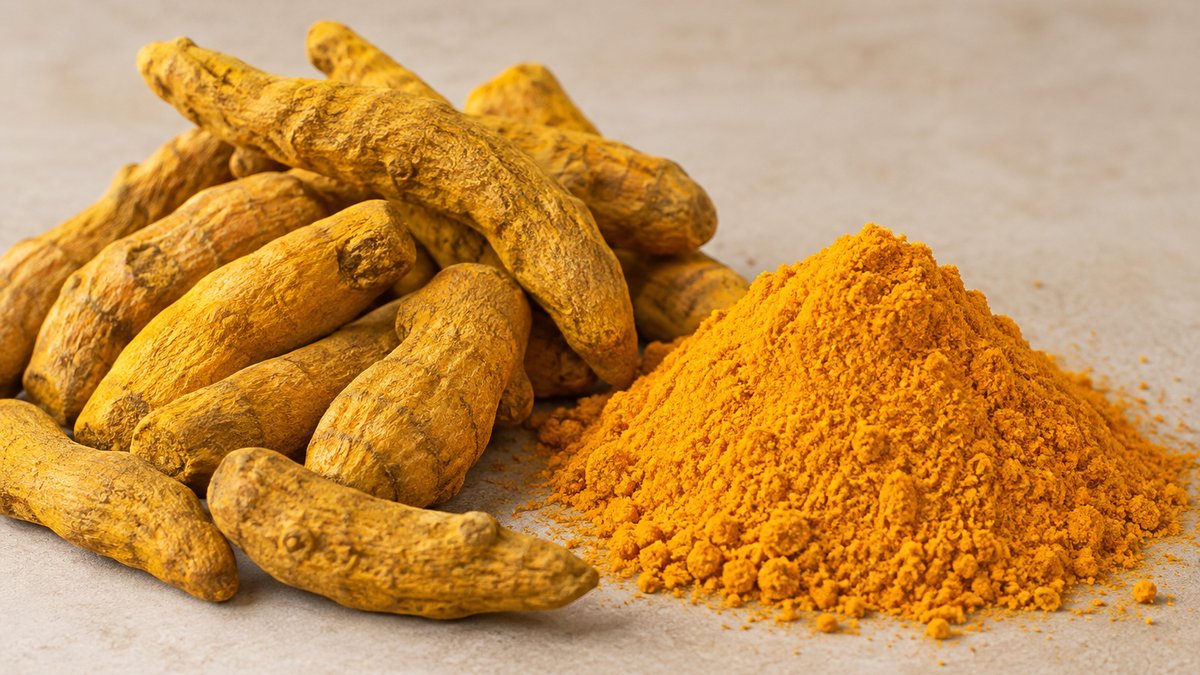

1. Dried turmeric fingers keep the rhizome whole; powder is ground turmeric
Dried turmeric fingers are whole, dried rhizomes of Curcuma longa L. Turmeric powder is the ground form of dried turmeric. Codex Alimentarius recognizes whole or finger, pieces, and powdered or ground styles as distinct forms of dried or dehydrated turmeric.
The difference is the physical form and the processing stage. Fingers retain the recognizable rhizome shape, so a buyer can inspect its external appearance before grinding or further processing. Powder is already milled, so it can go directly into a blend, food process or repacking operation that accepts ground spice.
Neither form alone tells a buyer the turmeric’s origin, cultivar, harvest year, curcuminoid level beyond a tested result, particle size or suitability for a particular factory. Codex allows trade name, variety or cultivar to appear on a label; it also provides for country of origin to be declared. Buyers should request the information relevant to their specification rather than treating the word “finger” or “powder” as a complete grade.
The terms also describe a product style, not an assurance of quality. Codex CXS 359-2024 sets quality and composition requirements for dried turmeric offered for direct consumption, food processing or repackaging, and excludes product for industrial processing. Importing-country laws and buyer requirements may add obligations, so confirm which rules apply to the shipment and intended use.
2. Finger and powder turmeric differ in inspection, moisture limits and handling
A buyer choosing between the two forms should compare the intended use, the applicable quality checks and the receiving operation. Codex CXS 359-2024 sets separate maximum moisture limits for whole turmeric and powdered or ground turmeric; its physical-characteristics table also treats the styles differently.
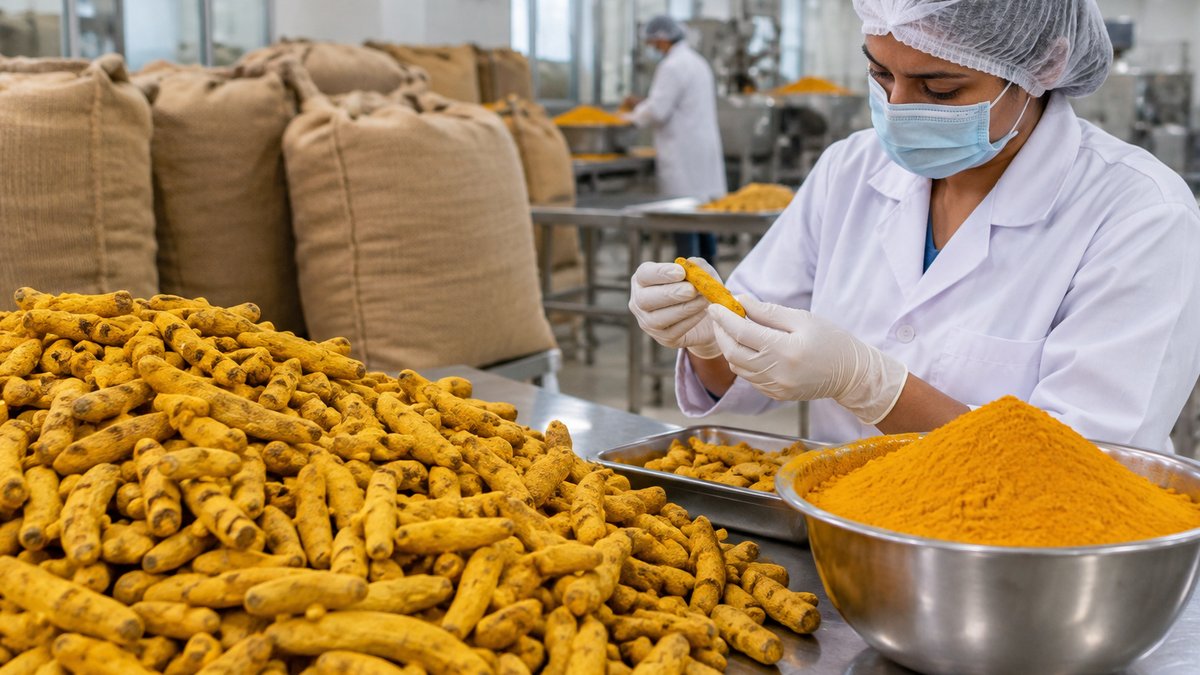
The Codex figures are style-specific limits, not a complete purchasing specification or a guarantee that a lot meets a destination market’s law. For example, the 12% moisture maximum applies to whole turmeric in the standard, while the powdered or ground style has a 10% maximum. Both styles have a 2% minimum curcuminoids content on a dry basis. Compare laboratory results with the relevant limit and confirm the analytical method, sampling approach and test basis in the contract.
Whole fingers allow a visual review of individual rhizomes, including signs of shrivelling, internal damage that becomes visible when cut, or damage from processing. Visual review cannot establish moisture or curcuminoid content, and a sample cannot represent a shipment unless the sampling method is agreed. Ask for representative lot samples and laboratory documentation when the buyer’s acceptance depends on measured properties.
Powder has no intact rhizome surface for piece-by-piece inspection. The Codex physical-characteristics table lists several whole-product checks as not applicable to the powdered style. In that table, “not applicable” means the form has not been evaluated for that provision; it does not mean the value is zero or that a powder lot has passed a broader cleanliness or safety assessment. Buyers should specify the tests and evidence they require.
Particle size matters for powder because it affects how a buyer handles and incorporates the spice. State the required mesh or micron range and whether the specification sets a tolerance. Do not assume that “fine powder” means the same size to every supplier. For fingers, state whether whole rhizomes are required, whether size limits apply, and whether cut ends, polishing or a particular presentation are acceptable.
Processing practices vary. A Government of India food-processing technical manual describes cleaning and sorting dried rhizomes, optional slicing, drying and polishing; its powder process includes grinding and sieving. Treat process details as supplier-specific rather than universal. Ask the supplier to state how the offered lot was prepared, and agree on the attributes that matter to the buyer’s own equipment and product.
3. A bulk buyer should choose the form that fits the next processing step
Consider a food manufacturer comparing dried fingers with powder for a production line that makes a turmeric-containing seasoning blend. If the plant has a controlled grinder and needs to manage particle size at its own facility, fingers may fit the process. If the plant’s receiving and blending line is designed for ground ingredients, powder may avoid an extra grinding step.
The choice changes where processing takes place. With fingers, the buyer’s operation may need suitable grinding equipment, dust controls, cleaning procedures and capacity for the incoming form. With powder, milling has already occurred, so the buyer should focus on the supplier’s particle-size specification, handling and packaging, and whether the product remains free-flowing and suitable for the buyer’s process.
Illustrative inquiry format:
Product: Dried turmeric fingers, Curcuma longa
Form: Whole rhizomes; state whether polishing and cut ends are accepted
Quality basis: Codex CXS 359-2024, plus buyer’s destination-market requirements
Tests: Moisture, total ash, acid-insoluble ash and curcuminoids, with methods and basis stated
Lot evidence: Representative sample, test report, lot identification and harvest or packing details if available
Commercial details: Quantity, packaging, destination, delivery term and requested shipment schedule
This is an illustrative inquiry format, not a universal specification. Buyers should set limits and documentation requirements for their product, market and process.
A powder inquiry should replace the finger-form description with the required ground style and particle-size range. It should also state any requirements for flow, packaging, colour, flavour or incorporation into the buyer’s process. If the buyer needs a specific curcuminoid level above the Codex minimum, state the target and the test basis rather than relying on a general description such as “high colour.”
For either form, define acceptance before requesting quotations. Specify the product identity, style, required test results, lot documentation, packaging, quantity and delivery conditions. If the seller’s specification uses a different test method or basis, ask for clarification before comparing offers. A price comparison is useful only when the offers refer to comparable product forms and agreed specifications.
Looking to Source Dried Turmeric?
Connect with verified suppliers, discover matching products, and explore sourcing opportunities from global markets.
4. Choose fingers when your process needs whole rhizomes; choose powder when it needs ground spice
Choose dried fingers when the buyer needs the whole-rhizome style for its own inspection, processing or grinding operation. Choose powder when the receiving operation needs a ground ingredient and the buyer can verify particle size and other required characteristics. The choice depends on the buyer’s equipment, quality controls and product specification.
- Choose fingers if your process includes grinding or if you need to receive and inspect the whole style. State acceptable rhizome size, presentation and defects, and agree on sampling and laboratory tests.
- Choose powder if your process requires a ground ingredient ready for blending or further food processing. Set particle-size limits and request test results and product documentation for the lot.
- Compare offers only after confirming the form, test basis, packaging, quantity and delivery conditions. A tonne of fingers and a tonne of powder are not automatically equivalent inputs for a production line.
- Check food-safety and import requirements for the destination and product use. Codex provides an international standard; it does not replace a destination country’s applicable regulations or the buyer’s contract requirements.
The Codex standard gives a useful starting point for contract specifications, including separate moisture maxima and a shared minimum curcuminoids level for whole and powdered turmeric. It also directs users to relevant Codex methods of analysis and sampling for checking compliance. Buyers should put the selected limits, test method, sampling procedure and acceptance criteria into the purchase specification.
Customs classification is a separate question from product selection. In the World Customs Organization’s 2022 Harmonized System, turmeric is classified under subheading 0910.30; unlike the listed ginger subheadings, the international HS listing does not split turmeric into crushed or ground and neither crushed nor ground at that level. National tariff schedules can add detail, so confirm the importing country’s current classification and tariff treatment with the relevant customs authority or broker.
A buyer can request both forms when the factory is assessing alternatives, but the inquiry should keep the specifications separate. State whether the supplier may quote fingers, powder or both, then ask for the corresponding style, tests and packaging for each. This makes it easier to assess the cost of the raw material together with any processing the buyer would otherwise perform.
5. Use Codex and customs references, then review current turmeric listings
For the product definition and quality limits, consult Codex Alimentarius CXS 359-2024, the Standard for Dried or Dehydrated Roots, Rhizomes and Bulbs: Turmeric. It identifies whole or finger, pieces and powdered or ground styles and sets style-specific chemical and physical characteristics. Check the standard’s scope before applying it to a product intended for industrial processing.
For international tariff nomenclature, consult the World Customs Organization’s Harmonized System. The 2022 listing places turmeric under 0910.30. The importing country’s national tariff schedule is the relevant next check for more detailed national codes, duties or import measures.
On Freshdi, buyers can review Dried Turmeric buying requests and Dried Turmeric supplier listings as starting points for comparing stated product forms and sourcing requirements. Confirm specifications, documentation and commercial terms for each potential transaction.
References
1. Codex Alimentarius Commission – Standard for Dried or Dehydrated Roots, Rhizomes and Bulbs: Turmeric, CXS 359-2024, 2024.
2. World Customs Organization – Harmonized System Nomenclature 2022, Chapter 9, 2022.
3. Government of India – Food Processing Technical Manual, 2020.
Disclaimer: This article is compiled from platform data, public sources and information provided by third parties, for general informational purposes only. We do not guarantee its accuracy or completeness. Please conduct your own due diligence before making business decisions.