
1. White Sugar and Brown Sugar Differ Mainly in Color, Moisture and Specification
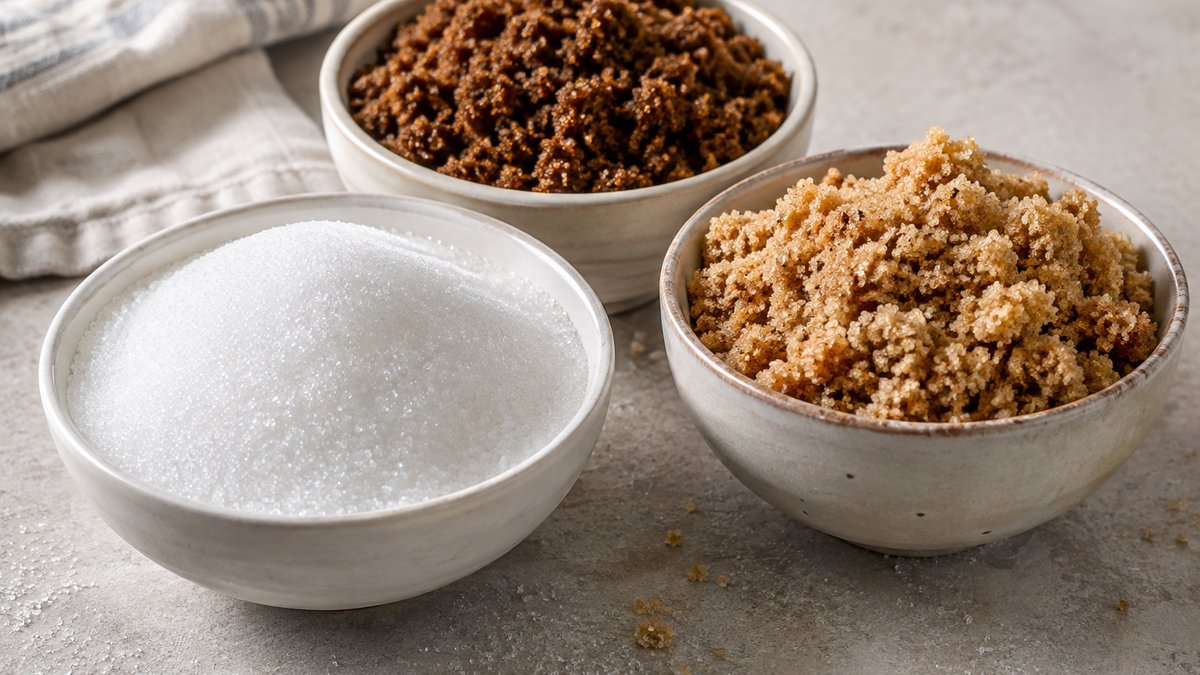
White sugar is purified, crystallized sucrose with a neutral color and flavor profile. Brown sugar is a broad trade and consumer term for brown-colored sugars whose composition and production method can vary. Some brown sugars retain molasses from processing; others are made by adding molasses to refined sugar. For a buyer, the practical differences are color, molasses character, moisture, handling and performance in the intended product.
Codex Alimentarius defines white sugar as purified and crystallized sucrose with a polarization of at least 99.7 °Z. Its standard separately defines soft brown sugar as fine-grain, moist sugar ranging from light to dark brown, with at least 88% sucrose plus invert sugar by mass. These are specific Codex product descriptions, not a universal definition covering every product sold as brown sugar. National standards and commercial specifications can differ.
The names alone do not establish crystal size, moisture limit, color value, origin, processing method, packaging or intended use. Buyers and exporters should agree on those details in the product specification and contract rather than relying on “white” or “brown” as a complete description.
The term white sugar also covers commercial products that can differ in physical properties. Fine crystals and larger crystals behave differently in dissolving, conveying and blending. A buyer should therefore request the particle-size range needed for the process rather than assuming that every shipment sold as granulated white sugar has the same crystal profile.
Likewise, a darker shade of brown does not by itself establish a particular molasses content, manufacturing route or taste intensity. Suppliers may use different product names for brown sugars, and the names can depend on local usage. A specification that identifies the product category and measurable properties gives both parties a clearer basis for confirming that the supplied lot matches the buyer’s intended use.
2. White Sugar vs Brown Sugar: A Specification Comparison
The principal distinction is that white sugar is defined as purified and crystallized sucrose, while brown sugar may retain or receive molasses and can have higher moisture. That difference affects appearance, flavor and storage behavior. Exact product limits still depend on the relevant standard and the parties’ agreed specification.

Codex gives a minimum polarization of 99.7 °Z for the white sugar category and a minimum sucrose plus invert sugar content of 88% by mass for soft brown sugar. These measures describe different standard categories; do not treat them as a complete like-for-like quality ranking or as the only figures needed in a purchase specification. The applicable standard and buyer’s test methods should be identified in the contract.
Brown sugar does not always come from the same manufacturing route. Codex describes raw cane sugar as partially purified sucrose crystallized from partially purified cane juice, with crystals covered by a film of cane molasses. That description is distinct from its soft brown sugar category. In Canada, the compositional standard describes brown, yellow or golden sugar as food obtained from syrups originating in the sugar refining process and sets limits for moisture and other properties. These examples show why a buyer should identify the exact product and destination-country standard.
Moisture changes storage and handling requirements. Utah State University Extension notes that brown sugars contain natural moisture and are less suitable for long-term storage than granulated white sugar. Buyers handling bulk product should confirm packaging, storage conditions and the supplier’s moisture specification, especially when the sugar will be stored before processing.
A purchase specification should distinguish between a product’s identifying name and its acceptance criteria. The name tells the supplier what broad category the buyer wants; measurable limits explain what the buyer will accept. For example, a buyer can state the required moisture limit, color range, crystal size and method for measuring each property. If the destination standard sets a requirement, identify that standard and make clear whether it applies to the product at shipment, at arrival or at another agreed inspection point.
The certificate of analysis should use the same product description and test methods as the contract. If the buyer and supplier use different methods or units, the reported figures may not be directly comparable. Agreeing on sampling, testing and how out-of-specification lots will be handled can reduce disputes, particularly when the product is intended for a recipe with narrow color or texture requirements.
3. A Bakery Ingredient Purchase Shows Why the Product Name Is Not Enough
Consider a food manufacturer sourcing sugar for two product lines: a white cake mix that needs a pale appearance and a cookie formula designed for a brown color and molasses note. White sugar may fit the first line, while a specified brown sugar may fit the second. This is an illustrative purchasing situation, not a universal recipe rule; the manufacturer’s formulation and production trials determine the final choice.
Illustrative inquiry format:
Product: Brown sugar for a cookie formulation
Product definition: State the applicable product category or agreed manufacturing description
Color and flavor: Specify the target color and molasses profile
Physical properties: State crystal size, moisture limit and any required flow characteristics
Quantity and packing: Provide order quantity, unit, package format and pallet requirements
Destination and delivery: Name the destination market, delivery point and requested trade term
Quality evidence: Identify the agreed certificate of analysis and test methods
This is an illustrative inquiry format, not a universal specification. Set limits against the product, process and destination requirements.
If the buyer requests only “brown sugar,” suppliers may quote products with different color, moisture, crystal size or molasses characteristics. The buyer may then receive offers that share a name but are not directly comparable. An agreed specification lets both sides assess whether the product fits the formula and helps the buyer compare quotations on the same basis.
The buyer should also confirm whether the product needs to remain free-flowing in storage or dissolve quickly in a process. Brown sugar’s moisture and texture can affect how it is conveyed, measured and blended. Those are operational checks for the buyer’s own process, not properties that should be assumed from the name.
For the white cake mix, the manufacturer may specify a white sugar category, the crystal size accepted by its equipment and the limits used to assess color and moisture. For the cookie line, the buyer can specify the exact brown sugar type and the color and moisture characteristics needed for repeatable batches. Separate specifications keep a general ingredient name from standing in for a production requirement.
The purchasing team can then ask each supplier for a sample and a certificate of analysis against the agreed limits. The team should check that the documents describe the same product and compare samples using its own process where needed. A sample that looks suitable in a bowl does not establish how it will flow through a production line or perform in a finished recipe.
Looking to Source White Sugar?
Connect with verified suppliers, discover matching products, and explore sourcing opportunities from global markets.
4. Choose the Sugar That Matches the Product and Process
Choose white sugar when the product specification calls for purified, crystallized sucrose with a white appearance and the buyer’s process depends on a neutral color or flavor. Choose brown sugar when the formula requires a brown color, a molasses character or a particular moist texture. A formulation, pilot batch or production trial is the sound basis for checking the fit.
4.1 Choose white sugar when color consistency and a neutral profile matter
White sugar is a practical choice for products where visible brown color or a molasses note is unwanted. Buyers may also prefer it where a dry, free-flowing ingredient supports the plant’s dosing and blending equipment. Those are application considerations, not guarantees: crystal size, moisture, storage and process conditions still affect performance.
A buyer comparing white sugar offers should first match the product category and purity measure, then confirm crystal size and color requirements. For industrial use, the contract should state the relevant test methods and the acceptable tolerances. If the sugar is for a destination market with a compositional standard, check the rule for that jurisdiction and product category.
4.2 Choose brown sugar when color, flavor or texture is part of the specification
Brown sugar may suit a product that needs a brown appearance, a molasses character or the texture of a moist sugar. Before purchase, clarify what the supplier means by the product name. Ask whether the sugar is a defined soft brown sugar, raw cane sugar or another brown sugar category, and specify the agreed production description where it affects the finished product.
Color alone does not identify the sugar’s composition or process. If color and molasses character affect the buyer’s recipe, request agreed limits or a product sample for evaluation. Confirm moisture and packaging as well, because both affect storage and handling. Avoid substituting one brown sugar type for another without checking the ingredient’s effect in production.
4.3 Compare quotations against the same commercial and quality basis
A useful comparison starts with the same product definition, specification, order quantity, packaging, delivery point and trade term. Trade terms allocate particular costs and responsibilities, so two quotations with different delivery terms may not be directly comparable. Record the currency, unit of sale and validity period alongside the quality requirements.
The buyer should check whether quoted prices cover the same quality parameters and shipment configuration. A quotation for one crystal size, package format or delivery point cannot be compared directly with an offer for another without accounting for those differences. Confirm what the supplier’s quotation includes, which costs remain with the buyer and the point at which delivery responsibility changes under the selected trade term.
For repeat purchases, retain the accepted specification and link it to the product name used on the purchase order. If a supplier proposes a change in source, process or specification, review the change before shipment rather than assuming the replacement will perform the same way. This is especially relevant when the buyer’s process depends on a consistent color, moisture level or crystal size.
- Name the sugar category and the production description required.
- Set limits for polarization or the agreed sucrose measure, color and moisture where relevant.
- Specify crystal size, physical form and any requirement for free-flowing product.
- State the quantity, unit, packaging, pallet configuration and shipment requirements.
- Identify the destination country and check its applicable compositional and labeling rules.
- Agree on the certificate of analysis, sampling procedure, test methods and acceptance limits.
- Compare quotations using the same delivery point, trade term, currency and quantity basis.
Buying consideration: Before approving a supplier, check that the sample, specification and certificate of analysis describe the same product. If the sugar will be used in a production line, confirm the result in a process trial and include the accepted product parameters in the purchase contract.
5. Related Resources for White Sugar and Brown Sugar Buyers
For reference, Codex Alimentarius’ Standard for Sugars provides descriptions for white sugar, soft brown sugar and raw cane sugar. It is an international standard, while national rules may set separate definitions or requirements. The Canadian Food Compositional Standards provide one national example for brown, yellow or golden sugar. Both sources were checked on 14 November 2026; buyers should confirm the rules currently applicable to their destination and product.
When preparing a sourcing request, include the product category, intended application, quality limits, packaging, quantity and destination. Buyers can review white sugar buying requests on Freshdi and white sugar supplier listings on Freshdi as starting points for comparing stated requirements and product information.
References
1. Codex Alimentarius – Standard for Sugars (CXS 212-1999), Adopted 1999; amended 2001, 2019 and 2022.
2. Canadian Food Inspection Agency – Canadian Food Compositional Standards, section 15.1 Sweetening Agents, Current standard, accessed 14 November 2026.
3. Utah State University Extension – Storing Sugars, Accessed 14 November 2026.
Disclaimer: This article is compiled from platform data, public sources and information provided by third parties, for general informational purposes only. We do not guarantee its accuracy or completeness. Please conduct your own due diligence before making business decisions.