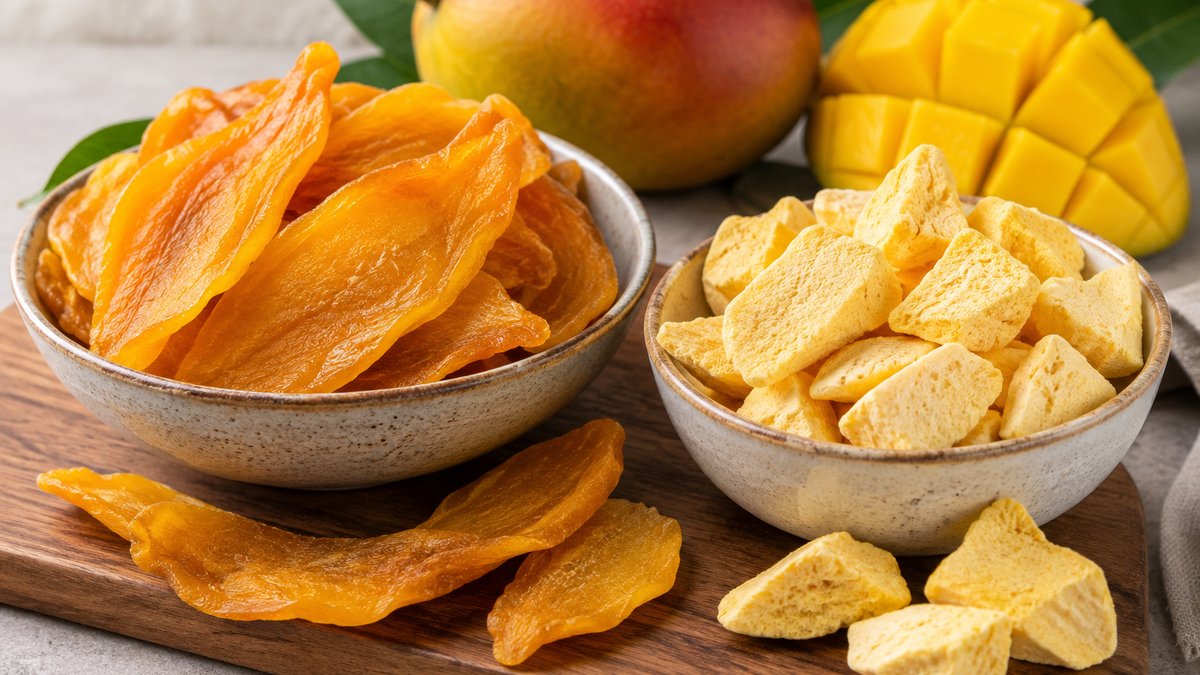

1. Summary of the Difference Between Dried Mango and Freeze-Dried Mango
Dried mango is mango with moisture removed by a drying method such as sun drying or heated-air dehydration. Freeze-dried mango is first frozen, then dried under reduced pressure so ice leaves the fruit as water vapor. The process changes the product's structure: conventional dried mango is generally pliable or chewy, while freeze-dried fruit is typically porous and crisp.
The names do not specify all the commercial details a buyer needs. Neither term alone states the mango variety, ripeness, slice dimensions, added sugar, moisture content, water activity, packaging, or permitted defects. Buyers should request these details and a product sample before approving a specification.
Codex Alimentarius Commission's General Standard for Dried Fruits, CXS 360-2020, describes dried fruit as fruit processed by sun drying or other recognized drying or dehydration methods. It allows for products with or without sweetening solution. The standard provides a general framework; buyers still need to check the applicable destination-country rules and the contract specification.
Freeze drying is one method of drying, so the labels are not opposites in the broadest sense. In trade, however, “dried mango” commonly refers to a chewy, conventionally dehydrated product, while “freeze-dried mango” identifies a distinct process and a light, crisp product form. The contract should state the process instead of relying on the general word “dried.”
2. Comparison of Dried Mango and Freeze-Dried Mango
The main difference is how moisture is removed. That process affects texture and handling, but a product name alone cannot establish its ingredients, food-safety status, shelf life, or quality.
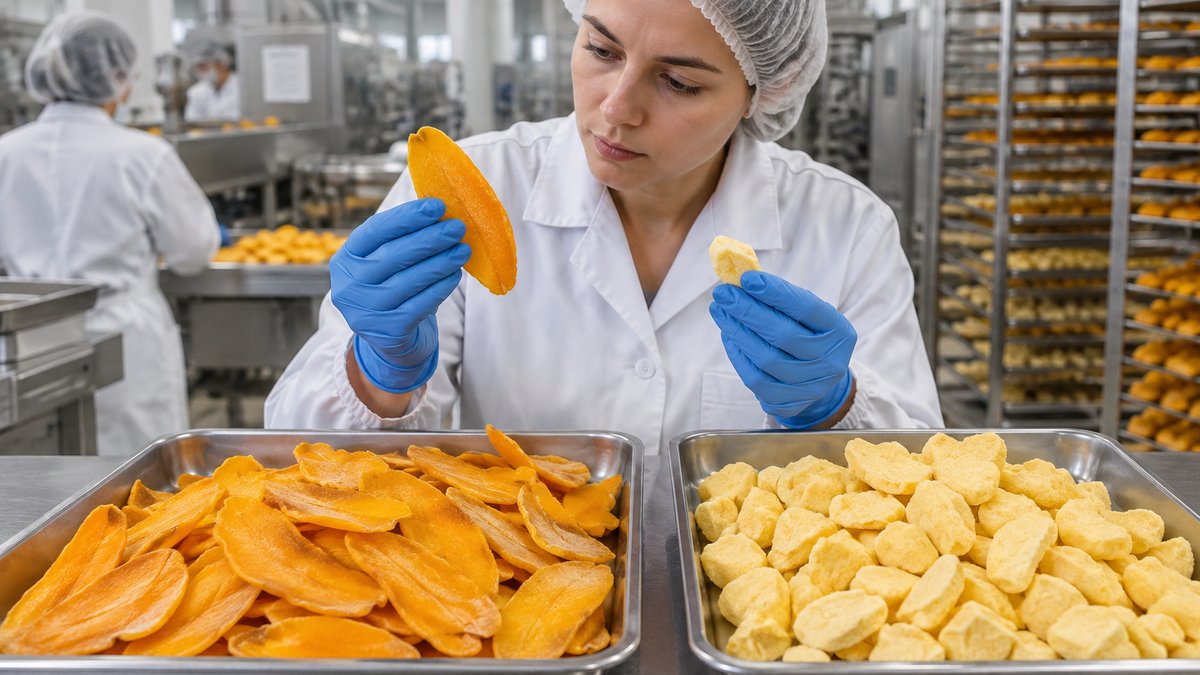
These texture descriptions are general product characteristics, not acceptance criteria. Mango variety, ripeness, pretreatment, slice thickness, drying conditions, and packaging all affect the delivered lot. A 2022 study of osmotic hot-air-dried mango reported a chewy and gummy texture for the tested product. That result describes its study conditions, not every hot-air-dried mango on the market.
Moisture content and water activity are related but different measurements. Moisture content measures the amount of water in the product; water activity indicates how available that water is. The FDA notes that water activity affects food stability and must be controlled through drying and maintained during storage. Buyers should agree on the relevant test method and limit with the supplier and check destination requirements rather than infer safety from a product's texture.
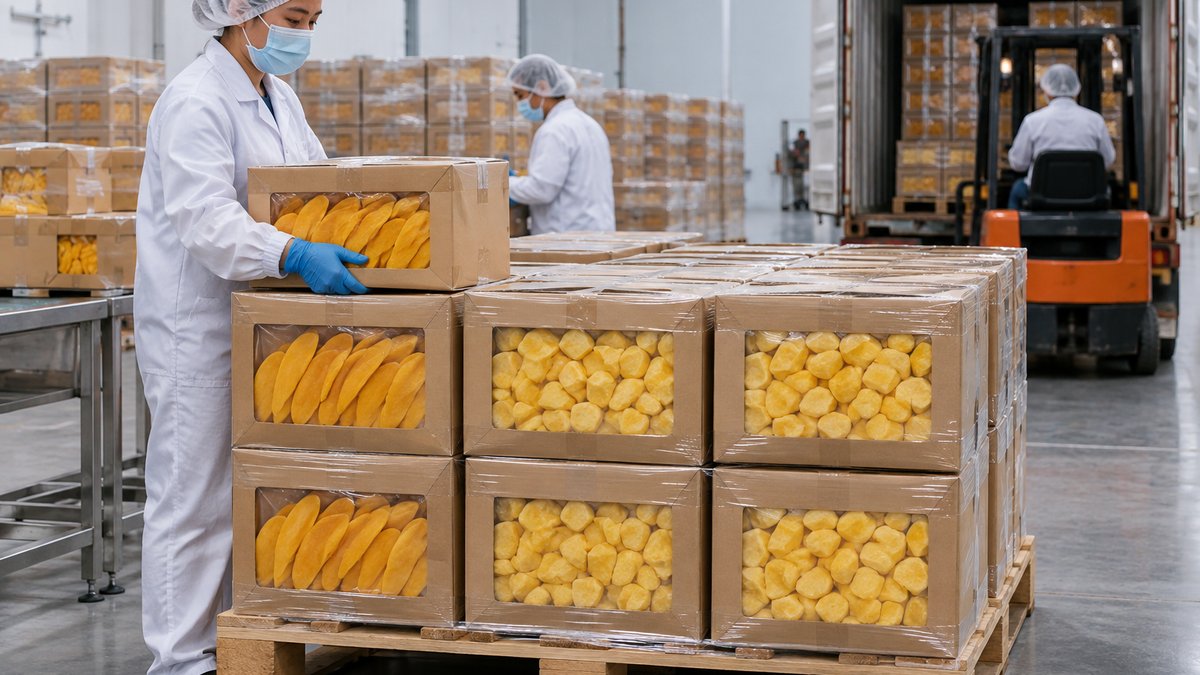
Packaging needs also follow the product's physical condition. Both forms need packaging that protects them from moisture and contamination. Freeze-dried pieces also need protection against crushing during packing and transport. Specify the inner pack, outer carton, sealing method, and any handling requirements, then confirm that the packaging suits the intended shipment and storage conditions.
Buying consideration: When comparing quotations, ask suppliers to state the drying process, ingredients, cut, moisture and water-activity limits, test method, packaging, and acceptable breakage or defect levels. Compare products only after those terms are clear.
3. Sourcing Scenario: Choosing a Mango Ingredient for Snack Production
A snack manufacturer choosing between the two products should start with the finished product, not the ingredient label. If the mango needs to remain soft and chewy in a pouch, conventional dried mango may suit the recipe. If the product needs crisp mango pieces, freeze-dried mango may be a better match, subject to a sample test.
For example, imagine a manufacturer testing mango pieces in a dry cereal mix. The buyer could request a sample of each form, then check taste, piece size, crispness after mixing, breakage during packing, and the texture after the product has been stored in its intended packaging. The buyer should test the finished mix because other ingredients and packaging can affect the result.
Illustrative inquiry format:
Product: Mango slices or pieces; state dried or freeze-dried
Ingredients: State whether added sugar or other ingredients are acceptable
Cut: Specify slice or piece dimensions and size tolerance
Quality limits: Request agreed moisture and water-activity limits, test methods, and defect tolerances
Packaging: State inner pack, carton size, and moisture and transit protection needs
Commercial details: State order quantity, destination, delivery term, and requested delivery period
This is an illustrative inquiry format, not a universal product specification. Set limits to fit the recipe, destination rules, and buyer's own quality program.
The sample evaluation should include a written acceptance standard. Record the required texture, flavor, color range, piece dimensions, and any limits for broken pieces or clumping. For freeze-dried mango, include a packing and handling check to see whether pieces arrive intact. For chewy dried mango, check whether slices stick together or vary enough in moisture to affect portioning.
A supplier quotation should identify the product being priced. If the quote says only “dried mango,” ask whether the product is hot-air dried, sun dried, freeze dried, or made by another process. Confirm the stated ingredients and whether the quotation covers the same specification, packaging, quantity, and delivery term as competing offers.
Looking to Source Dried Mango?
Connect with verified suppliers, discover matching products, and explore sourcing opportunities from global markets.
4. When to Choose Dried Mango or Freeze-Dried Mango
Choose conventional dried mango when the application calls for a chewy fruit piece and the product meets the required ingredient, texture, and quality limits. Choose freeze-dried mango when the application calls for a crisp, porous piece and the buyer can protect it from moisture and physical damage.
4.1 Choose conventional dried mango when
- The recipe or consumer product needs a pliable or chewy mango texture.
- The buyer needs slices, strips, or pieces for snack packs, bakery products, or other uses that suit the texture.
- The supplier can state the drying method, ingredients, and agreed moisture and water-activity limits.
- A sample performs well in the intended recipe and remains acceptable in the planned pack.
4.2 Choose freeze-dried mango when
- The application needs crisp mango pieces or a light, porous texture.
- The buyer can specify piece dimensions and set a practical tolerance for breakage.
- The finished product and packaging can protect the mango from moisture during packing, storage, and transport.
- Sample testing confirms the texture and flavor work in the intended product.
The process choice does not remove the need for food-safety checks. Dried fruit can have different moisture levels while looking similar, and water activity needs suitable control. Ask the supplier for product-specific test results, lot identification, ingredient declarations, and the documents required for the destination market. Requirements vary by jurisdiction and product formulation.
Codex CXS 360-2020 also distinguishes untreated dried fruits from treated or preserved dried fruits. Buyers should therefore verify whether the mango is unsweetened, sweetened, treated with preservatives, or processed with other permitted ingredients. The general product name does not answer those questions.
Buying consideration: Before confirming a purchase, align the product process, ingredient declaration, laboratory limits, packaging, sample approval, and destination-market documentation in the purchase specification. Use the same agreed terms when comparing supplier offers.
5. Related Resources for Dried Mango Buyers
For a general international reference, consult the Codex Alimentarius Commission's General Standard for Dried Fruits, CXS 360-2020. It addresses the scope and description of dried fruit, product styles, ingredients, and quality factors. Codex is an international reference; buyers should check whether and how the importing jurisdiction applies its provisions.
The United States Food and Drug Administration's guidance on water activity explains why a dried product's moisture level and water activity both matter for stability. For mango-specific drying context, a 2022 research study examined osmotic and hot-air drying and the quality attributes of the resulting mango. Its findings apply to the tested process and samples, not to every commercial product.
Buyers comparing sourcing options can review dried mango buying requests on Freshdi and use the product terms above to clarify the required form and specification.
References
1. Codex Alimentarius Commission – General Standard for Dried Fruits, CXS 360-2020, 2020.
2. U.S. Food and Drug Administration – Water Activity (aw) in Foods, 1984.
3. Foods – Osmotic Dehydration, Drying Kinetics, and Quality Attributes of Osmotic Hot-Air-Dried Mango as Affected by Initial Frozen Storage, 2022.
Disclaimer: This article is compiled from platform data, public sources and information provided by third parties, for general informational purposes only. We do not guarantee its accuracy or completeness. Please conduct your own due diligence before making business decisions.