
1. Natural and Alkalized Cocoa Powder Differ by Alkali Treatment
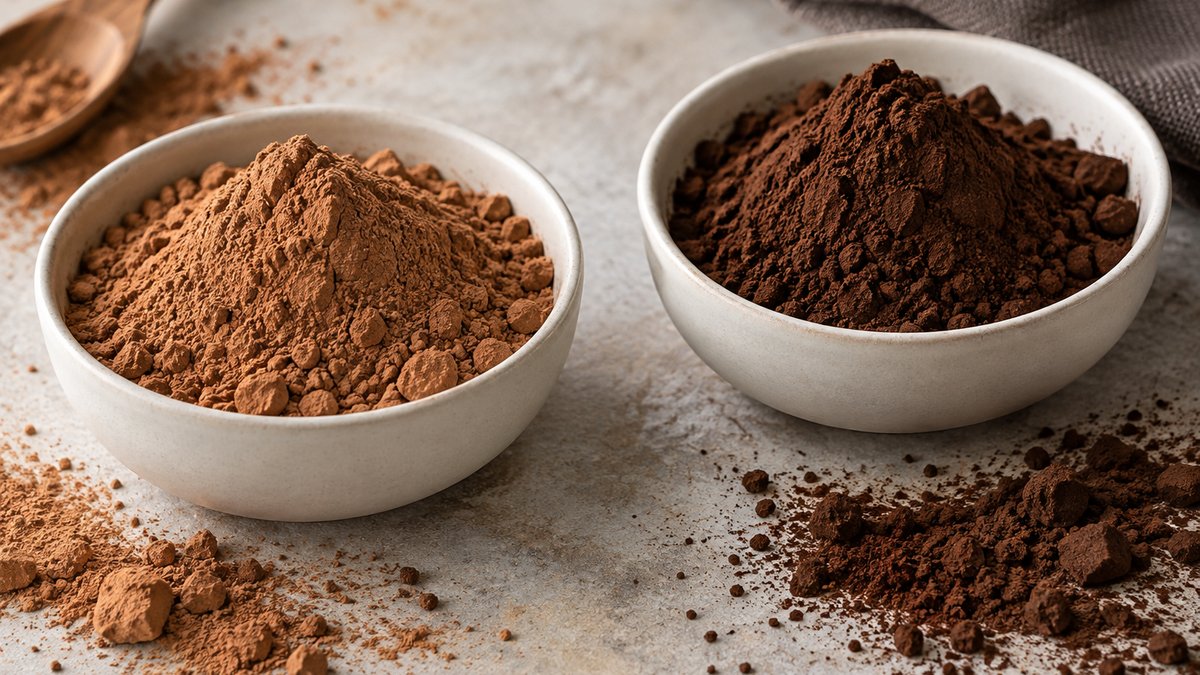
The main difference is whether cocoa has been treated with an alkali. Natural cocoa powder is made without that treatment; alkalized cocoa powder, also called Dutch-process cocoa, is treated with an alkaline solution during processing. The treatment raises the powder’s pH and changes its color and flavor.
Both products are cocoa powders made by pressing cocoa mass to remove some cocoa butter and grinding the remaining cocoa cake. “Natural” does not mean raw, unfermented or unprocessed. The cocoa beans may still have been fermented, dried, roasted and pressed; the word distinguishes the powder from one treated with alkali.
Manufacturers can apply alkalization at different stages, including to cocoa nibs, cocoa liquor, cocoa cake or powder. The alkali agent and processing conditions influence the finished product. As a result, alkalized cocoa is not a single uniform specification: powders range from lightly treated to more intensely alkalized, with corresponding differences in pH, shade and sensory properties.
A 2008 comparison of commercial cocoa powders reported extractable pH values of 5.3 to 5.8 for natural powders. In that study, the researchers grouped alkalized samples as lightly treated at pH 6.50 to 7.20, medium-treated at pH 7.21 to 7.60, and heavily treated at pH 7.61 or above. Those groupings describe that study’s samples, not a universal grading rule or a legal standard. Buyers should ask suppliers for the stated pH and its test method rather than assuming a category from the product name.
Alkalization generally darkens cocoa and reduces its sharp acidic taste. The American Society of Baking notes that natural cocoa is acidic, with a pH around 5 to 6, and that alkaline cocoa may require adjustments to baking soda or acidic ingredients. The degree of change depends on the powder and the recipe.
The treatment can also change measurable compounds in cocoa. A 2008 study of commercial powders found lower average flavanol content in its lightly, medium and heavily alkalized samples than in its natural samples. That result describes the samples studied; it does not establish the nutrient content of every product sold under either name. Buyers comparing ingredient or nutrition specifications need product-specific test data.
Buying consideration: For a first supplier inquiry, state whether the formulation requires natural or alkalized cocoa, the target color and flavor, the intended use, and any pH range or test method your quality team needs.
2. How Natural and Alkalized Cocoa Compare in Purchasing Specifications
For procurement, the label tells you the broad processing type, while the specification sheet should describe the actual powder. Compare pH, color, fat content, flavor and application performance against your own product requirements. The details matter because two alkalized powders can differ in treatment strength and finished properties.
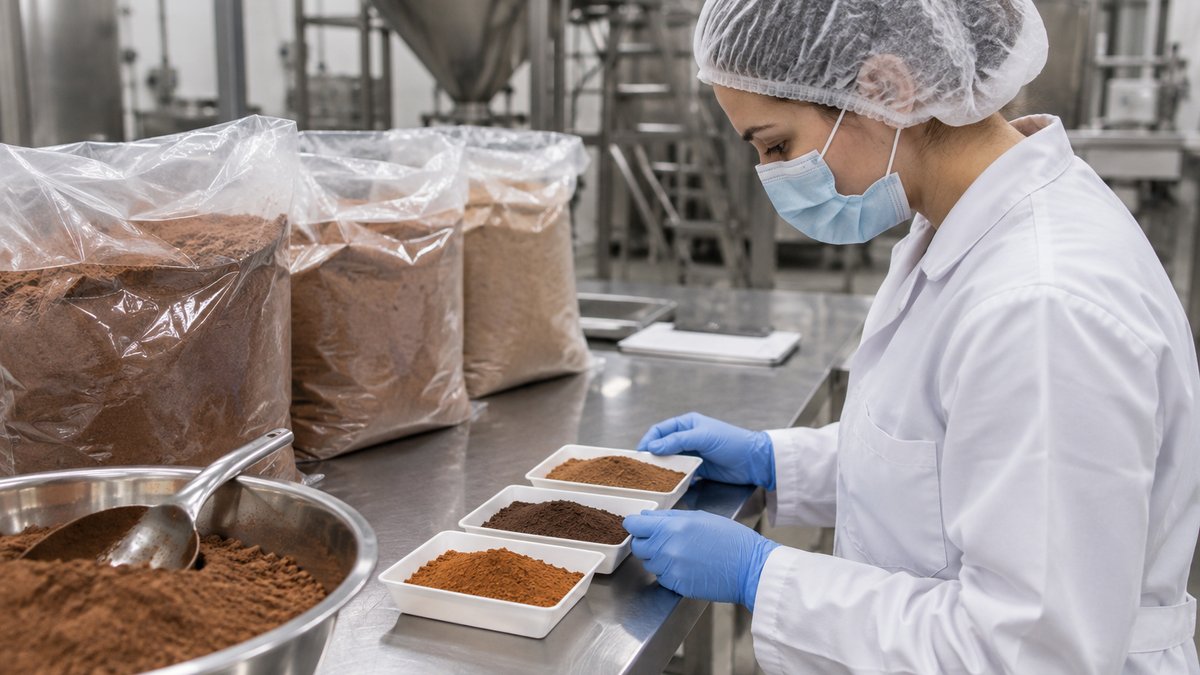
Color is a useful screening clue, not a complete specification. Alkalization often produces darker cocoa, but the shade depends on the processing conditions and the cocoa used. A buyer selecting by color alone may receive a powder that looks right but behaves differently in the finished product.
Do not treat “alkalized” as a guarantee that cocoa will dissolve fully in a drink. Cocoa powder contains solid particles, and drink performance depends on how the powder wets, disperses and stays suspended in the specific formulation. A peer-reviewed study comparing one natural and one alkalized powder found differences in measured solubility and wetting time, with the alkalized sample taking longer to wet. These results show why a supplier claim or general label should be checked against a product trial.
The cocoa’s fat level is another separate purchasing attribute. The term “natural” or “alkalized” does not state the fat percentage. Ask for the supplier’s specification and confirm that the quoted product matches the fat content and other limits used in your formulation.
Buying consideration: Compare samples made for the same application and check the supplier’s specification sheet alongside your own test results. Record the pH method, color measurement basis and fat content so that a repeat order can be matched to the approved sample.
3. How the Difference Plays Out in Beverage and Baking Orders
A beverage manufacturer choosing between the powders is balancing taste, color and performance in its actual drink base. Alkalized cocoa is often considered when the product needs a darker shade or a milder cocoa profile. A buyer should test its dispersion and suspension in the finished recipe because results can vary by powder and formulation.
A bakery buyer has an additional formulation question: how the cocoa’s acidity fits the recipe’s leavening system. Natural cocoa can contribute acidity that reacts with sodium bicarbonate, also called baking soda. Replacing it with a more alkaline cocoa can change that balance. Whether a change is needed depends on the other acidic ingredients and leavening agents in the formula, so the buyer should validate the substitution in a production-representative trial.
Color may also be a product requirement in baked goods. The De Zaan Cocoa Manual describes alkalization as one factor affecting cocoa color and notes that cocoa can influence the shade of baked products. For a buyer targeting a consistent appearance, the trial should use the proposed cocoa grade and the production recipe, not a color comparison of dry powders alone.
Illustrative buyer inquiry:
Product: Cocoa powder for a beverage mix or baked product
Processing type: Natural or alkalized, as required by the approved formulation
Technical details: Request pH with test method, color specification, fat content and product data sheet
Evaluation: Confirm performance using a sample in the intended formula
This is an illustrative inquiry format, not a universal specification. Buyers should set limits that match their product and destination-market requirements.
In either case, treat a change of cocoa type as a potential formulation change. Ask the supplier for a representative sample and technical data, then compare taste, color and processing behavior using the same production conditions. If the powder is intended for an established product, document the approved sample and its specification before placing a volume order.
Looking to Source Cocoa Powder?
Connect with verified suppliers, discover matching products, and explore sourcing opportunities from global markets.
4. Choose the Cocoa Powder That Fits the Formulation
Choose natural cocoa when the product specification or recipe calls for a non-alkalized powder, or when the formulation relies on cocoa acidity as part of its leavening balance. Confirm the actual pH and flavor profile with the supplier. A label alone does not tell you whether a particular lot matches the cocoa used in the approved recipe.
Choose alkalized cocoa when the formulation calls for Dutch-process cocoa, or when the buyer’s target color and milder flavor are better matched by an alkalized powder. Specify the required shade and pH range where the manufacturing process depends on them. “Alkalized” covers products treated to different degrees, so the buyer should approve the particular grade rather than rely on the broad category.
4.1 For baking and confectionery
Check the leavening system before substituting one type for the other. Baking soda needs an acid to generate leavening gases, and natural cocoa may contribute acidity. If an alkalized powder replaces natural cocoa, evaluate the recipe’s other acid sources and test the finished product. A formula using baking powder or other acidic ingredients may respond differently from one relying on cocoa acidity.
For bakery orders, describe the application and intended appearance, then provide the relevant formulation targets to the supplier. A cake, cookie or coating may need a different shade and taste from another product, even when both use cocoa powder. Confirm cocoa fat content as its own specification because the natural-versus-alkalized distinction does not supply that information.
4.2 For beverages
Run a drink trial if dispersion, sedimentation or mouthfeel affects the product. Ask whether the supplier has application data for the proposed powder and beverage format, then verify it in your own system. A single laboratory result for one natural and one alkalized powder cannot predict the performance of every commercial grade.
For cocoa used in ice cream, dairy products or other mixtures, check performance in the specific fat, sugar and water system. The powder’s processing type is one input; the full formulation and processing conditions also affect the finished product. Record the product grade and relevant technical values so production can compare incoming lots with the approved sample.
4.3 For sourcing and quality approval
A buyer’s specification should identify the processing type and intended use, then state the measurable requirements that matter for that use. Depending on the application, request pH and its method, color data and method, fat content, sensory description and a representative sample. Ask the supplier to identify the degree of alkalization when that information is available.
The quality team should review any destination-specific food rules and labeling obligations for the product and market. The cocoa studies and technical references cited here explain processing and product behavior; they do not replace a check of the applicable rules in the importing jurisdiction.
Buying consideration: Approve the powder against the finished-product trial and written specification, then use the same requirements when comparing quotations. This makes it easier to distinguish differences in cocoa processing from differences in fat level, color target or other product attributes.
5. Related Resources for Cocoa Powder Sourcing
When requesting quotations, send suppliers the same product description and technical requirements so their offers can be compared on a like-for-like basis. Include whether natural or alkalized cocoa is required, the intended application, requested quantity, packaging and delivery details. Ask for product specifications and a sample where those are part of your approval process.
Freshdi lists cocoa powder buying requests and supplier profiles for businesses researching sourcing options. Buyers can review Cocoa Powder buying requests, and importers can browse Cocoa Powder suppliers. Check each listing’s stated details and verify specifications and commercial terms before proceeding.
Source check: November 14, 2026. The published research cited below describes specific studies and technical guidance; use the supplier’s current product documentation and the requirements for your destination market when approving a purchase.
References
1. American Society of Baking – Cocoa Powder, Accessed November 14, 2026.
2. Akman, Perihan Kübra, et al. – Effects of different alkali mixtures on physicochemical, microstructural, and powder properties of alkalized cocoa, 2024.
3. Sioriki, Eleni, et al. – Impact of alkalization on the phytochemical content of cocoa powder and the aroma of cocoa drinks, 2021.
4. Miller, K. B., et al. – Impact of alkalization on the antioxidant and flavanol content of commercial cocoa powders, 2008.
5. American Society of Baking – The De Zaan Cocoa Manual, 2008.
6. Donnelly, S. E., et al. – Investigating the effect of different types of cocoa powder and stabilizers on suspension stability of cinnamon-cocoa drink, 2021.
Disclaimer: This article is compiled from platform data, public sources and information provided by third parties, for general informational purposes only. We do not guarantee its accuracy or completeness. Please conduct your own due diligence before making business decisions.