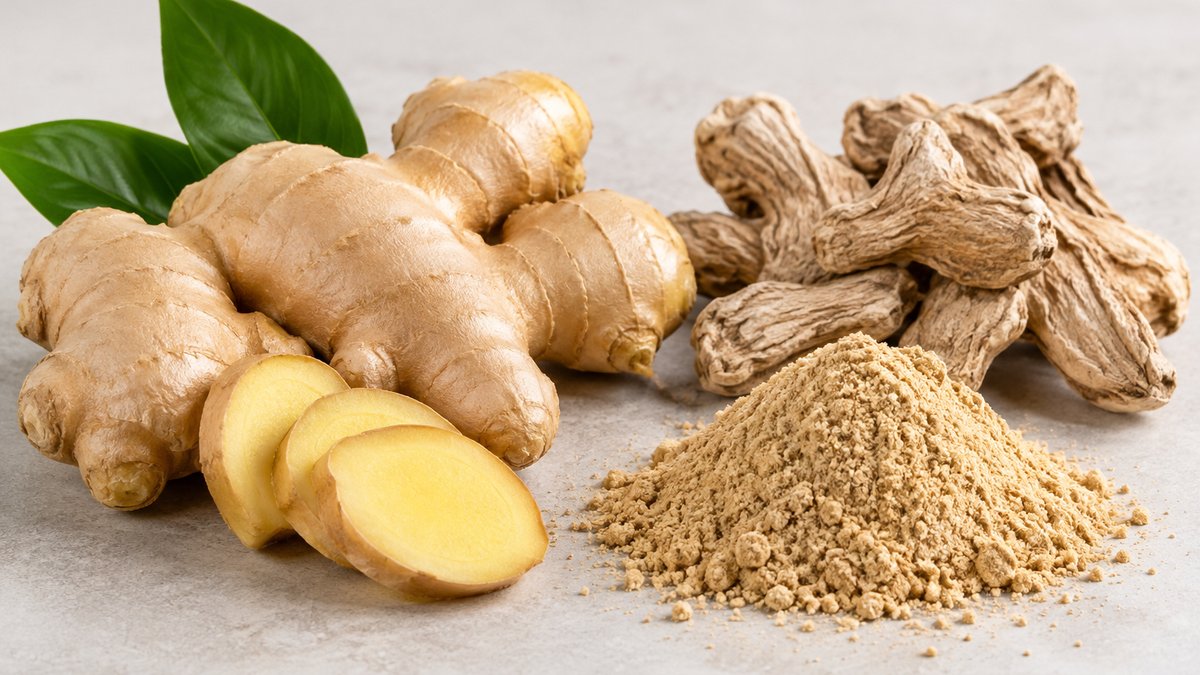

1. Dried Ginger and Fresh Ginger Differ in Processing and Supply Needs
Dried ginger and fresh ginger come from the rhizome of the same plant, Zingiber officinale, but they are different commercial products. Fresh ginger is sold as a fresh rhizome; dried ginger has been dehydrated and may be traded whole, in pieces, sliced or ground. Drying changes its moisture level, handling needs and flavor profile.
The Codex Alimentarius Commission's CXS 343-2021 covers dried or dehydrated ginger for direct consumption, food processing or repackaging. It identifies whole, pieces and ground or powdered forms. It is a product standard for dried ginger, not a specification for fresh ginger. Codex standards are international references; buyers must check whether destination-country rules or their contract make a particular requirement applicable. Standards checked November 14, 2026.
For buyers, the first decision is the product's intended use. Fresh ginger supplies moisture, texture and fresh-rhizome aroma for products such as fresh pastes, marinades and prepared foods. Dried ginger suits recipes and manufacturing processes that call for a concentrated dry ingredient, including spice blends, dry mixes and seasoning. The substitution is not usually one-for-one by weight because drying removes water and alters the ingredient's sensory properties.
Drying also changes ginger's pungent compounds. A 2020 paper in the Journal of Agricultural and Food Chemistry describes gingerols as characteristic of fresh ginger and explains that heat or drying can convert some gingerols into shogaols. The balance depends on processing conditions, so “dried” alone does not tell a buyer the exact flavor strength or chemical profile. Buyers needing a particular sensory or analytical result should specify the test and acceptance range in the contract.
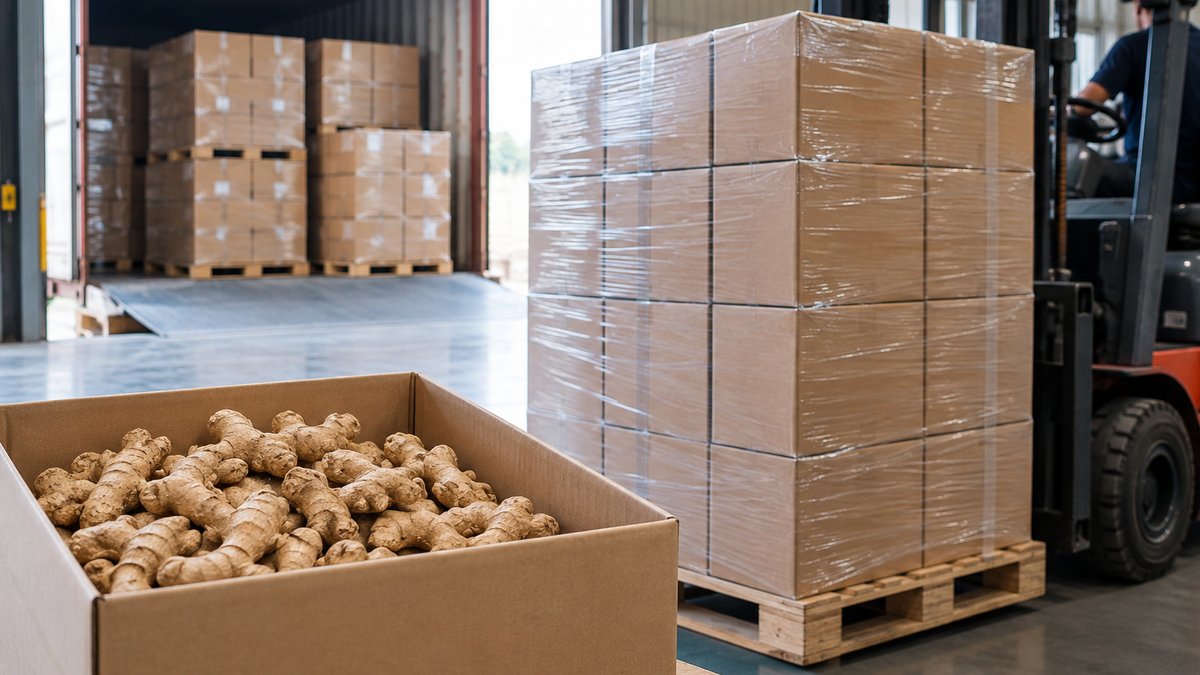
The commercial distinction extends beyond flavor. Fresh rhizomes need handling that accounts for moisture loss, physical damage and deterioration during transit. Dried ginger needs protection from moisture pickup and loss of aroma during storage. Each product therefore calls for a different packaging, storage and shipment plan.
2. Compare Ginger by Form, Use and Quality Checks
The buying specification should start with product form and intended application. A dried ginger powder and a fresh rhizome cannot be assessed using the same quality checks, and a whole dried piece is not interchangeable with ground ginger.
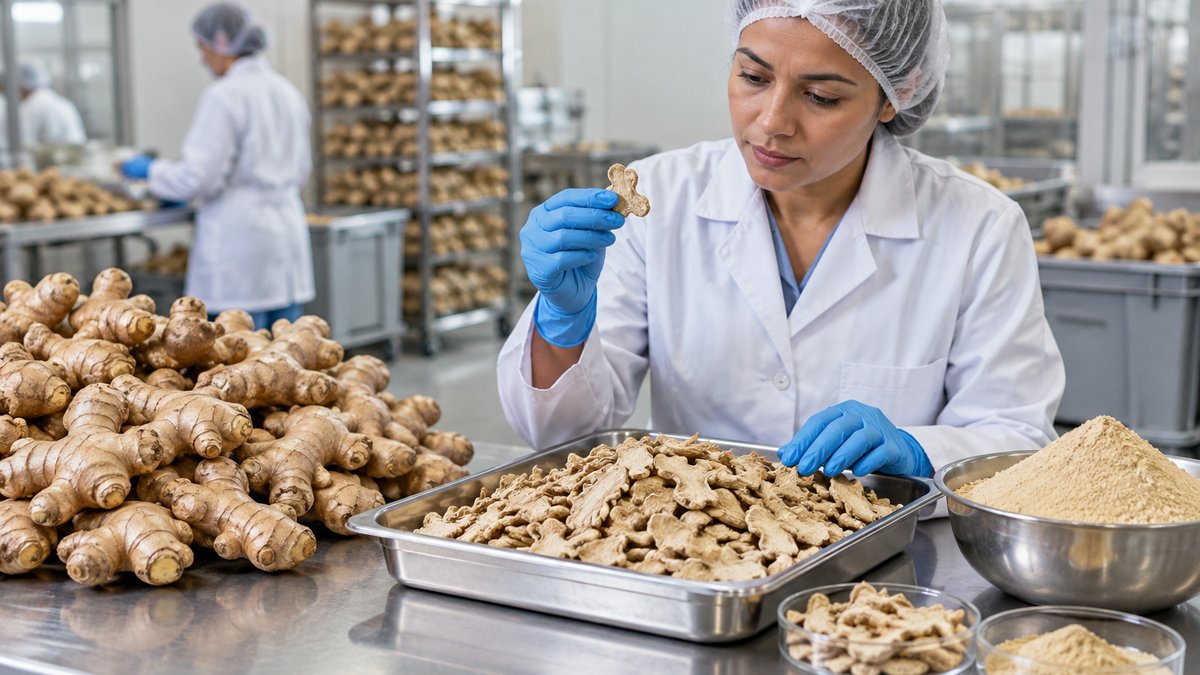
For dried ginger, Codex CXS 343-2021 sets a maximum moisture content of 12% by mass for whole, pieces and ground or powdered forms. Its chemical characteristics table also specifies minimum volatile-oil levels of 1.5 millilitres per 100 grams on a dry basis for whole and pieces, and 1.0 millilitres per 100 grams on a dry basis for ground or powdered ginger. These are Codex standard values, not a substitute for checking destination-country requirements or the contract's sampling and test methods.
Buyers sourcing dried ginger should name the form and any processing attributes they require. Depending on the application, the inquiry may need to state whole or pieces, slice dimensions, powder particle size, peeled or unpeeled condition, color, moisture limit, aroma criteria, packaging and test methods. For fresh ginger, specify the condition on delivery, rhizome size or grade if used, acceptable defects, packaging, harvest or dispatch timing, destination and handling requirements.
A 2014 study on dried ginger found that drying method and slice size affected measured quality attributes, including volatile oil and pungent constituents. A laboratory result from one process should not be treated as a universal value for all origins or production methods. Buyers comparing offers should request results for the offered lot and confirm that the method and basis match the contract.
3. A Sauce Manufacturer's Choice Depends on the Formula
Consider a sauce manufacturer deciding whether to buy fresh ginger for a wet paste or dried ginger for a dry seasoning premix. The two options come from the same crop, but each fits a different production step and requires its own purchase specification.
Illustrative sourcing scenario:
Fresh ginger: Specify rhizome condition, size range, acceptable damage, packaging, delivery schedule and the handling conditions needed for the route.
Dried ginger: Specify whole, pieces or powder; set moisture and sensory requirements; state particle size if ground; and name packaging and test methods.
Decision: Run each ingredient through the actual formula and production process, then compare product performance and total delivered cost.
This scenario is illustrative. A buyer's formula, processing equipment, destination rules and supplier offer determine the final specification.
If the recipe relies on fresh ginger's moisture, texture or fresh aroma, dried powder may change the finished product and require formula adjustment. If the plant needs a dry, measurable ingredient that disperses through a seasoning mix, fresh rhizomes add water and preparation work that the process may not be designed to handle.
The sourcing comparison should include more than the quoted price per kilogram. For fresh ginger, account for sorting, trimming or peeling, usable yield, handling losses and the time between dispatch and processing. For dried ginger, account for the specified form, processing level, packaging, test requirements and the quantity needed to achieve the desired flavor in the formula. Compare offers only when the basis, form, quality limits, delivery point and shipment conditions match.
For either form, a buyer should ask the supplier to identify the offered product clearly and provide the documents and lot details required by the destination market and contract. A generic description such as “ginger” does not establish whether the offer is fresh, dried, sliced, powdered, peeled or processed to a particular limit.
Looking to Source Dried Ginger?
Connect with verified suppliers, discover matching products, and explore sourcing opportunities from global markets.
4. Choose the Form That Fits the Production Process
Choose fresh ginger when the buyer needs the intact rhizome, its moisture or its fresh texture and aroma in the finished product. Choose dried ginger when the process calls for a dehydrated ingredient in whole, piece or powder form. The formulation and plant process should decide the product form before a buyer compares quotations.
4.1 Fresh ginger fits wet and fresh-preparation applications
Fresh ginger suits buyers who grind, chop or blend the rhizome into pastes, marinades and sauces, or who need pieces of fresh ginger in a prepared product. It can also suit processors who need to control the preparation themselves. Those buyers should assess incoming condition, usable yield and the time and facilities available for handling and processing.
Fresh ginger requires careful logistics because loss of moisture, damage and unsuitable storage conditions can reduce lot quality. FAO's post-harvest ginger guidance discusses cleaning, drying, grading, packaging and storage as separate handling stages. Buyers and exporters should agree the handling conditions for the actual route and shipment rather than assume that fresh ginger can be stored like a dry spice.
4.2 Dried ginger fits dry formulations and specified spice forms
Dried ginger fits manufacturers who need a shelf-stable spice ingredient in a defined form, subject to suitable dry storage and packaging. Whole or cut pieces retain a visible physical form, while powder is ready for blending or dispersion. Each form has different buyer checks: powder buyers may set particle-size requirements, while whole-ginger buyers may care about piece condition and appearance.
For dried ginger, buyers can use Codex CXS 343-2021 as a reference when writing a specification, then check the destination's rules and any contract-specific limits. The standard covers product identity, forms and quality factors for dried or dehydrated ginger. It does not establish that any particular offer complies; the buyer still needs appropriate sampling, testing and lot documentation.
4.3 Do not compare fresh and dried offers on price per kilogram alone
A kilogram of fresh rhizomes contains water that has been removed from dried ginger, and the two forms may require different preparation and yield calculations. Buyers should compare cost per usable ingredient in the finished process, using their own recipe trials and confirmed supplier specifications. A conversion factor should come from the buyer's process or a validated product specification, not an assumed universal ratio.
Exporters should likewise quote the product actually offered. State whether the ginger is fresh or dried, the form and processing condition, relevant quality limits, packaging, available lot information and shipment conditions. Clear descriptions make it easier for an importer to judge whether the product fits its production line.
5. Related Resources for Ginger Sourcing
For dried ginger, Codex Alimentarius CXS 343-2021 is a reference for product identity, forms and specified quality characteristics. The FAO post-harvest guidance on ginger covers handling stages for fresh and dried rhizomes. Research on ginger processing also shows why drying conditions should be part of a buyer's quality discussion when flavor or measured constituents matter.
Before sending an inquiry, prepare a product description, the form required, quality limits, intended use, quantity, packaging, destination and delivery conditions. Buyers sourcing dried ginger can review dried ginger supplier listings on Freshdi and compare the stated product information with their specification.
References
1. FAO/WHO Codex Alimentarius Commission – Standard for Dried Roots, Rhizomes and Bulbs: Dried or Dehydrated Ginger (CXS 343-2021), 2021.
2. Food and Agriculture Organization of the United Nations – Ginger: Post-harvest Operations, 2013.
3. Journal of Agricultural and Food Chemistry – Precision Research on Ginger: The Type of Ginger Matters, 2020.
4. Journal of Food Science and Technology – Quality of Dry Ginger (Zingiber officinale) by Different Drying Methods, 2014.
Disclaimer: This article is compiled from platform data, public sources and information provided by third parties, for general informational purposes only. We do not guarantee its accuracy or completeness. Please conduct your own due diligence before making business decisions.