
Canned coconut milk and UHT coconut milk can both be shelf-stable products, but the terms describe different things. “Canned” usually identifies the package and a common heat-processing method, while “UHT” identifies an ultra-high-temperature treatment, commonly paired with aseptic packaging.
For buyers and exporters, the practical difference is not simply the container. Processing and packaging can affect storage, handling and product characteristics, while coconut content, fat level, ingredients and viscosity determine whether the product suits a particular use. The Codex Alimentarius Commission’s Standard for Aqueous Coconut Products (CXS 240-2003, amended 2024) covers coconut milk and cream and calls for an appropriate description of heat treatment on the label. This comparison was checked on November 26, 2026.
Key Takeaways
- Canned coconut milk commonly receives its scheduled heat treatment in a sealed can; UHT coconut milk is heated at ultra-high temperature and is commonly filled aseptically. The terms refer to different parts of the product specification and are not necessarily mutually exclusive.
- Both formats can be shelf-stable when made and packed using a validated process that achieves commercial sterility. Confirm storage directions and shelf life on the product label or specification rather than assuming them from the format.
- Compare fat content, total solids, ingredients, viscosity, intended application and pack size—not just “canned” or “UHT”—when evaluating quotations.
- Importers should request the process and packaging details relevant to their destination market. For applicable low-acid foods sold in the United States, FDA registration and scheduled-process filing requirements apply to processors, including foreign processors exporting to the US.
1. Summary of the Key Differences
The short answer is that canned coconut milk is commonly heated after it has been filled and hermetically sealed in a can, while UHT coconut milk is heated to an ultra-high temperature for a short, controlled period and then packed under aseptic conditions. The actual scheduled process depends on the product and the manufacturer; neither label alone tells a buyer the full processing specification.
“Canned” primarily points to the container and, in common commercial practice, a retort process in which the sealed container is heat-treated. “UHT” points to the thermal treatment. UHT products are often sold in aseptic cartons, but packaging formats can vary. The US Food and Drug Administration’s guidance on aseptic processing explains that commercial sterility involves the product, processing and filling equipment, and packaging material. It also describes metal containers among the packaging systems used for aseptic foods. So, a can and UHT treatment are not inherently incompatible.
The two formats may also be made for different applications. Some canned products are formulated as relatively rich cooking ingredients; some UHT products are lighter beverages or food-service ingredients. Those are market tendencies, not definitions. Codex defines coconut milk by the coconut-kernel emulsion in water and distinguishes it from coconut cream by product definition and composition. The processing label does not, by itself, specify fat content, coconut proportion, viscosity, added stabilizers or whether the product is intended for drinking or cooking.
- Processing: canned products are commonly processed in the sealed container; UHT products are treated before aseptic filling.
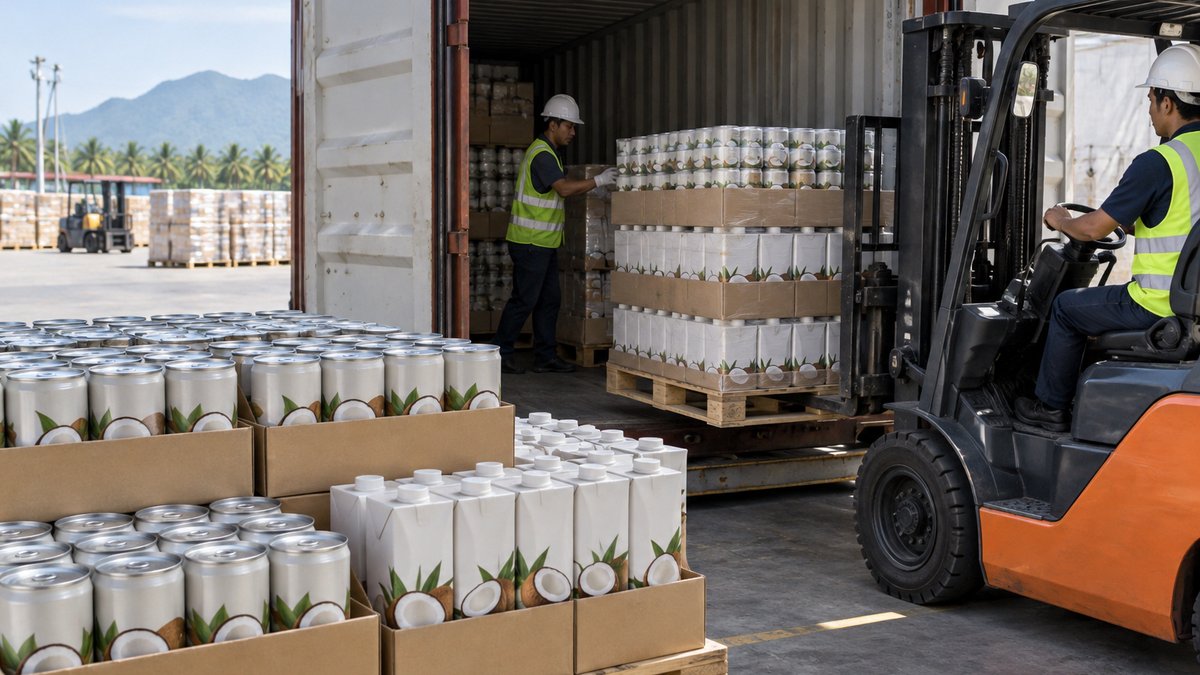
- Packaging: cans are common for retort coconut milk; UHT products commonly use aseptic cartons or other aseptic packs. Verify the actual pack format.
- Storage: either format may be shelf-stable unopened when its scheduled process and packaging support that outcome. Follow the producer’s label.
- Product character: richness and performance depend on the recipe and specification, not solely on whether a product is canned or UHT.
- Buyer decision: select against application, logistics and target-market requirements, then verify technical details with the supplier.
For a first supplier search, buyers can review coconut milk buying requests on Freshdi and compare the stated needs with their own product requirements.
2. Canned Coconut Milk vs UHT Coconut Milk: Comparison Table
The table describes common commercial formats rather than a universal rule for every product. Some manufacturers use different combinations of thermal treatment and packaging, so request the technical specification and label for the exact SKU.

| Feature | Canned coconut milk | UHT coconut milk |
|---|---|---|
| What the term describes | Usually a coconut milk product packed in a hermetically sealed can; commonly retort-processed in that container. | Coconut milk treated using ultra-high-temperature processing; often aseptically filled, commonly into cartons or other sterile packs. |
| Where heat treatment commonly occurs | After filling and sealing, as part of the container-based scheduled process. | Before filling; product and packaging are handled to maintain commercial sterility during aseptic packing. |
| Common packaging | Metal cans, in retail or food-service sizes. | Aseptic cartons, bags or other packaging formats; confirm the offered pack. |
| Unopened storage | May be shelf-stable when made under an appropriate validated process; follow the label. | May be shelf-stable when UHT treatment and aseptic packaging are controlled; follow the label. |
| Recipe and body | May be rich and thick, but fat, solids and viscosity depend on formulation. | May be a concentrated ingredient or a lighter beverage-style product; check its specification. |
| Points to compare in quotations | Can material and size, net weight, drained or usable quantity if relevant, formulation, and scheduled process information. | Pack material and size, filling system, formulation, storage directions, and aseptic-process information. |
| After opening | Follow the label’s refrigeration and use instructions; reseal or transfer only as directed. | Follow the label’s refrigeration and use instructions; pack type and closure affect handling. |
A fair comparison starts with an equivalent product. Ask whether both quotations refer to coconut milk or coconut cream, and compare fat percentage, total solids, coconut ingredients, added water, stabilizers, salt or sugar, and viscosity. Also align pack size, net weight, case configuration and delivery term. Otherwise, a price difference may reflect formulation or packaging rather than the thermal process.
Codex CXS 240-2003 (amended 2024) is a useful reference for the product names and composition of covered aqueous coconut products. It also says the heat treatment should be appropriately described on the label. Codex is an international food standard; importers still need to verify the mandatory labeling and food-safety requirements of their destination jurisdiction.
Buying consideration: Before comparing offers, ask each supplier for the product name, ingredient list, fat and total-solids specification, heat-treatment description, pack format, storage instructions and a current product label. Compare matching specifications rather than relying on the words “canned” and “UHT.”
Looking to Source Coconut Milk?
Connect with verified suppliers, discover matching products, and explore sourcing opportunities from global markets.
3. Example Scenario: Selecting Coconut Milk for a Food-Service Import
Consider an importer supplying restaurants and central kitchens. The buyer needs coconut milk for curries and sauces, plans to distribute cases through a warehouse, and wants unopened stock that can be stored without refrigeration if the product label permits it. The buyer receives one offer for canned coconut milk and another for UHT coconut milk.
The format names alone do not identify the better fit. The buyer should first compare the two products’ coconut content, fat level, total solids, viscosity and behavior in the intended recipe. A thin beverage-style UHT product may not perform like a concentrated cooking ingredient; a canned product may also vary in formulation. Request samples and evaluate them in the actual application using the buyer’s normal preparation method.
Next, compare operational details. Does the kitchen need to open a full can or use a resealable pack? How many servings come from each pack? What is the case weight, pallet configuration and storage requirement? Is the package suitable for the buyer’s warehouse and distribution route? What is the supplier’s stated unopened shelf life, and what are the instructions after opening? These answers help establish total handling and usage costs without assuming that one format is always cheaper.
The importer should also ask for the product label and process documentation appropriate to the destination. In the United States, FDA guidance states that processors of shelf-stable acidified and low-acid canned foods in hermetically sealed containers must register establishments and file scheduled processes for applicable products. FDA’s definition of low-acid canned food includes a finished equilibrium pH greater than 4.6 and water activity greater than 0.85. The specific classification and obligations depend on the product and process; buyers should not infer compliance from a “canned” or “UHT” label.
After confirming the specification, the buyer can compare coconut milk suppliers on Freshdi and ask shortlisted suppliers to quote against the same pack size, product composition and delivery requirements.
Illustrative inquiry format:
Product: Coconut milk for cooking; specify coconut milk or coconut cream
Composition: Required fat percentage, total solids, ingredient limits and viscosity target
Process and pack: State required or acceptable heat treatment, can or aseptic pack, unit size and case configuration
Quantity and delivery: Required order quantity, destination, delivery term and schedule
Documents: Current product specification, label, process information and destination-market documents
This is an illustrative inquiry format, not a universal product specification or regulatory checklist.
4. When Should Buyers Choose Canned or UHT Coconut Milk?
4.1 Canned coconut milk may suit the requirement when
- The buyer’s market or customers are familiar with cans, and the offered can sizes match retail, food-service or manufacturing use.
- The product’s tested richness, solids and viscosity fit the intended recipe or processing line.
- The importer can manage case and pallet dimensions, container handling and the supplier’s storage instructions.
- The label, process documentation and packaging meet destination-market requirements.
4.2 UHT coconut milk may suit the requirement when
- The specified product is aseptically packed and the buyer needs an unopened shelf-stable format, subject to the label’s instructions.
- Aseptic cartons or another offered pack format fit the buyer’s distribution, portioning or end-user needs.
- The formulation has the fat, solids, viscosity and sensory characteristics required for the application.
- The supplier can provide process and package details that meet the importer’s food-safety and compliance checks.
Neither format is automatically safer, higher quality, more natural or more economical. Process validation, hygiene controls, package integrity, ingredients and storage conditions matter. The FDA’s aseptic-processing guidance describes controls for achieving and maintaining commercial sterility across product processing and packaging. For US imports, its acidified and low-acid canned foods guidance describes applicable establishment registration and scheduled-process filing obligations. These US requirements should not be presented as global rules.
The term UHT also does not guarantee a particular taste or texture, and “canned” does not guarantee a specific fat level. Heat treatment and formulation can influence product performance, but buyers should test the offered SKU in its intended use. For large-volume users, confirm whether the specification remains consistent across production lots and clarify acceptable tolerances before signing the contract.
- Define the end use: beverage, cooking, food manufacturing, food service or further processing.
- Set measurable product targets, including product name, fat and total-solids ranges, ingredients, viscosity and any sensory requirements.
- Specify processing and pack details, including heat-treatment description, container type, unit size, case configuration and storage directions.
- Request samples, technical documents and applicable compliance documents; verify them against the destination market.
- Compare quotations only after confirming equivalent product, quantity, packaging, delivery term and payment conditions.
Once the application and product specification are clear, buyers can compare sourcing options and suppliers can review relevant demand.
View Latest Non Alcoholic Beverage Buying Requests →
View Potential Non Alcoholic Beverage Suppliers →
Buying consideration: Choose the format that meets the product specification and the buyer’s distribution needs—not the format name in isolation. Record all agreed characteristics in the purchase specification and require the delivered product to match it.
5. Related Resources for Coconut Milk Buyers and Suppliers
For additional sourcing context, buyers can browse coconut milk buying requests, while exporters can review coconut milk supplier listings. These listings can help users discover potential business matches; they do not replace checks of product specifications, business details, documentation or commercial terms.
Buyers sourcing across a broader category can explore non-alcoholic beverage buying requests, and suppliers can view non-alcoholic beverage supplier listings. To browse general marketplace listings, see buyers on Freshdi and suppliers on Freshdi.
For help using Freshdi’s sourcing resources, users can view the Freshdi Account Manager page. For product-level decisions, continue to rely on the current specification, label and applicable destination-market rules.
After preparing a comparable specification, buyers can use it to assess potential coconut milk suppliers.
View Related Suppliers for This Product →
Frequently Asked Questions
Is canned coconut milk the same as UHT coconut milk?
No. “Canned” usually describes the package and a common process in which the sealed can is heat-treated. “UHT” describes ultra-high-temperature treatment, commonly followed by aseptic filling. The terms describe different aspects of a product and can overlap in some manufacturing and packaging systems. Check the supplier’s exact process and package specification.
Is UHT coconut milk always sold in cartons?
No. Aseptic cartons are common, but packaging formats can vary. The FDA’s guidance on aseptic processing includes metal containers among the packaging systems used for aseptic foods. Buyers should verify the actual pack material, closure, unit size and filling method rather than assuming the package from the term UHT.
Are canned and UHT coconut milk shelf-stable?
Either may be shelf-stable unopened when the product is manufactured and packed using a suitable validated process. Shelf stability is not established by the words “canned” or “UHT” alone. Follow the product’s label for unopened storage, best-before date and after-opening instructions, and ask the supplier for product-specific documentation.
Which format is better for cooking?
Neither format is automatically better. Cooking performance depends on the specific product’s fat content, total solids, viscosity, ingredients and behavior under the buyer’s preparation conditions. Compare the technical specifications and test samples in the intended recipe before selecting a product for import.
Does UHT coconut milk contain preservatives?
UHT treatment does not, by itself, tell you whether a product contains preservatives. Ingredients vary by formulation and market. Review the ingredient list and product specification for the exact item, and confirm any ingredient restrictions with the supplier before ordering.
What should an importer request before buying coconut milk in bulk?
Request the product name, ingredient list, fat and total-solids specification, viscosity information if relevant, heat-treatment description, packaging details, storage directions, shelf-life information and a current label. Also confirm quantity, case and pallet configuration, destination-market documentation, delivery term and payment conditions. For regulated markets, verify applicable requirements with the relevant authority or qualified compliance professional.
References
1. Codex Alimentarius Commission, FAO and WHO – Standard for Aqueous Coconut Products – Coconut Milk and Coconut Cream (CXS 240-2003), 2003; amended 2024.
2. U.S. Food and Drug Administration – Aseptic Processing and Packaging for the Food Industry, Date not stated; checked November 26, 2026.
3. U.S. Food and Drug Administration – Acidified & Low-Acid Canned Foods Guidance Documents & Regulatory Information, Date not stated; checked November 26, 2026.
4. U.S. Food and Drug Administration – Guide to Inspections of Low Acid Canned Food 8, Date not stated; checked November 26, 2026.
Disclaimer: This article is compiled from platform data, public sources and information provided by third parties, for general informational purposes only. We do not guarantee its accuracy or completeness. Please conduct your own due diligence before making business decisions.