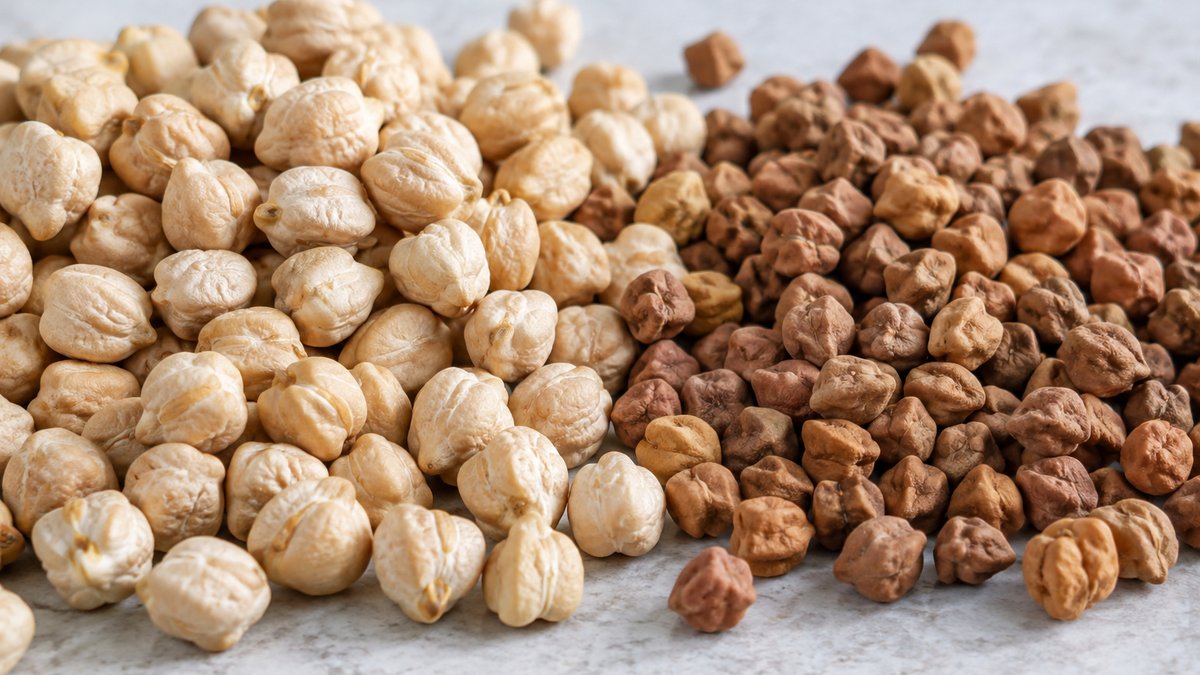

Kabuli and Desi chickpeas are two commercial types of the same crop, but they are not interchangeable in every order. Kabuli seeds are generally larger, lighter-colored and smoother, while Desi seeds are usually smaller, darker and more angular, with a thicker seed coat.
That visible difference often points to different processing and end-use needs: buyers commonly source Kabuli for whole-seed applications and Desi for uses such as split dhal and chickpea flour. But type alone does not define a lot’s quality, grade, exact size or suitability for a particular product.
For importers and exporters, the practical distinction is to name the type and then specify the measurable characteristics, processing, packaging and contract terms separately. The comparison below uses the Canadian Grain Commission’s current Official Grain Grading Guide, effective August 1, 2026, and ICRISAT’s chickpea market-segment information, checked November 26, 2026.
Key Takeaways
- Kabuli and Desi are commercial chickpea types, generally distinguished by seed size, shape and color—not separate species.
- Kabuli chickpeas are typically larger, pale and smooth; Desi chickpeas are typically smaller, colored and more angular, though varieties can vary.
- The type can suggest likely end uses, but it does not by itself establish a grade, size range, purity level, moisture limit or processing specification.
- Compare quotations only after confirming the type, size or screen, quality tolerances, processing, packaging, quantity, delivery terms and inspection method.
1. Kabuli Chickpeas vs Desi Chickpeas: The Main Differences
The shortest answer is that Kabuli chickpeas are generally larger and lighter in color, with a smoother, thinner seed coat, while Desi chickpeas are generally smaller, darker and more angular, with a thicker, rougher coat. These are broad commercial descriptions, not substitutes for a written product specification.
The Canadian Grain Commission’s Official Grain Grading Guide (2026) recognizes Kabuli and Desi as the two chickpea classes in its Canadian grading system. It describes Kabuli as typically whitish to light tan and Desi as typically brown and smaller. It also notes that Kabuli varieties can be other colors, including black or green. So color is a useful first visual cue, but it should not be used alone to identify or accept a shipment.
1.1 Kabuli: larger, pale seeds for whole-seed uses
Kabuli chickpeas are commonly described as round to angular-rounded, relatively large and pale cream, beige or whitish. Their thinner, smoother seed coat can make the whole seed’s appearance important in applications such as salads, hummus, curries and snacks. ICRISAT’s chickpea overview describes these as food market segments for Kabuli, but the buyer’s recipe and processing line determine the actual requirements.
For a buyer, “Kabuli” alone is not a complete size specification. Ask for the seller’s size range and how it is measured or reported—for example, by a stated screen size or another agreed measurement. Confirm whether the stated size applies to the cleaned product and how out-of-size kernels are handled. If appearance matters, also set expectations for color uniformity, broken or damaged seeds and foreign material.
1.2 Desi: smaller, colored seeds for further processing
Desi chickpeas are generally smaller and more angular, with a thicker, rougher seed coat and colors that can range across brown and other shades. ICRISAT describes Desi food uses including split dhal, flour, roasted snacks and other culinary applications. Depending on the intended product, the buyer may be purchasing whole Desi grain as an input for later processing, or a processed product such as split chickpeas or flour. Those are distinct product specifications and should not be conflated.
If the order is for whole Desi grain, state whether the buyer will handle dehulling, splitting or milling after delivery. If it is for dhal or flour, specify that finished form directly, along with the relevant particle or kernel requirements, packaging and quality criteria. The word “Desi” does not say whether the grain has been dehulled, split, milled or otherwise processed.
1.3 Type is not the same as grade
Kabuli and Desi identify chickpea classes or market types; a grade describes assessed quality under a particular grading system. In Canada, for example, the Grain Commission’s guide uses class as part of the grade name and has separate grading tables for Canada Western Kabuli and Canada Western Desi. This is a Canadian framework, not a universal grading rule for every origin or destination. Buyers should state which contract standard or inspection basis applies rather than assuming that a grade name has the same meaning everywhere.
In short, use type to identify the broad product, then set the details that control acceptance. A lot described as Kabuli could still be unsuitable if its size, color, condition or defect levels miss the buyer’s limits; the same applies to a Desi lot.
Once you know which chickpea type fits the intended product, you can compare sourcing options against that specification.
View Latest Bean, Nut & Seed Buying Requests →
View Potential Bean, Nut & Seed Suppliers →
2. Kabuli vs Desi Chickpeas: Comparison Table
This table summarizes typical market distinctions, not guaranteed characteristics of every variety or shipment. The Canadian Grain Commission’s Official Grain Grading Guide (2026) supports the broad class distinctions; ICRISAT’s chickpea overview describes common food applications. The buyer’s contract remains the controlling document for the lot.
| Feature | Kabuli | Desi |
|---|---|---|
| Typical appearance | Larger, pale cream to light tan; generally smoother | Generally smaller, colored and more angular; often rougher |
| Seed coat | Typically thinner | Typically thicker |
| Common food uses | Whole-seed dishes, salads, hummus, curries and snacks | Split dhal, flour, roasted snacks and other foods |
| Potential processing | Often bought whole; processing depends on the application | May be bought whole or processed into splits or flour |
| What type alone does not specify | Size, grade, color tolerance, defects, moisture or packaging | Size, variety, processing state, grade, defects or packaging |
| Buyer’s first clarification | Agree size measurement, appearance and whole-seed requirements | Confirm whole grain versus dhal, flour or another processed form |
The table should be treated as a starting point, not as an acceptance schedule. Even the broad visual descriptions allow variation: the Canadian guide notes that Kabuli varieties can be green or black, and its class determination uses size and color. A buyer who requires a particular shade, shape or size should put the limit and inspection method in the contract.
Do not compare an offer for whole Kabuli grain directly with one for split Desi dhal simply by looking at the quoted price per tonne. The product form, processing yield, usable quantity, cleaning, sorting, packaging and delivery basis may all differ. Make the quotations comparable first, then evaluate the commercial terms.
With the type and comparison points clear, buyers and sellers can explore chickpea-specific sourcing opportunities.
View Latest Bean, Nut & Seed Buying Requests →
View Potential Bean, Nut & Seed Suppliers →
Looking to Source Chickpeas?
Connect with verified suppliers, discover matching products, and explore sourcing opportunities from global markets.
3. Example Scenario: Specifying Chickpeas for a Food Manufacturer
Consider a food manufacturer planning a retail pack of whole chickpeas for cooking. The buyer’s first request says only “Kabuli chickpeas.” A supplier could reasonably need more information before quoting: the requested seed size, acceptable variation, quality basis, shipment quantity, packaging and destination are not stated.
The buyer should first confirm that the required product is whole Kabuli grain, rather than a split or milled product. Next, buyer and supplier can agree the size measure or screen, and whether the sale requires uniform appearance or allows a stated range. They should then document quality tolerances, cleaning and foreign-material expectations, packaging format, labeling, quantity and delivery terms.
Illustrative inquiry format:
Product: Whole Kabuli chickpeas
Size: State the agreed screen or other measurement and tolerance
Quality: Specify the applicable grade or agreed defect and cleanliness limits
Packaging: State bag material, net weight, labeling and outer-pack requirements
Quantity and delivery: State volume, destination, requested delivery term and schedule
Inspection: State sampling method, inspection point and acceptance procedure
This is an illustrative inquiry format, not a universal specification or grading standard.
A different manufacturer intending to produce chickpea flour might prefer Desi as its raw material, but should still define the input it needs. If it wants whole grain for its own mill, say so; if it needs a finished flour, specify that product instead. Processing status changes what is being sold, so it affects both how suppliers quote and how buyers assess yield.
The Canadian Grain Commission’s Official Grain Grading Guide (2026) includes grading factors and separate grade determination tables for Kabuli and Desi under Canada’s system. That is useful context for Canadian-origin transactions, but an importer should not assume it automatically governs another country’s shipment. The parties should name the applicable standard, inspection body or contract tolerances explicitly.
Buying consideration: Before inviting bids, send the same product description and acceptance criteria to every supplier. That makes differences in price and terms easier to assess without confusing type, size, grade and processing.
4. When Should Buyers Choose Kabuli or Desi Chickpeas?
Choose based on the finished product and processing plan, not on a general assumption that one type is better. ICRISAT’s chickpea overview associates Kabuli with applications such as salads, hummus, curries and snacks, and Desi with uses including flour, split dhal and roasted snacks. Those are common market uses, not exclusive rules: actual buyer requirements vary by recipe, equipment and market.
4.1 Kabuli may fit when whole-seed appearance matters
A buyer may consider Kabuli when the product is sold or served as whole chickpeas and the intended specification calls for a larger, lighter seed. Confirm the required size range and the visual attributes that matter to the customer. If the product is for hummus or another processed food, determine whether the buyer values a particular size or appearance after processing, or instead prioritizes processing performance, consistency and cost.
4.2 Desi may fit when the process calls for its typical end uses
A buyer may consider Desi when sourcing a raw material for split dhal, flour or other applications that use this market type. Clarify whether the supplier should deliver whole grain or perform any processing. Where dehulling or splitting is needed, agree the required output and any relevant yield or defect criteria with the processor rather than relying on the type name to imply them.
4.3 Compare total suitability, not a type-based price assumption
A higher or lower quotation cannot be explained by the words Kabuli and Desi alone. Size, variety, quality, processing, cleaning, packing, order volume, origin, shipment timing and delivery terms can influence an offer. Any market-price comparison also needs a matching date and basis, so this article does not assign a current price premium to either type.
For a like-for-like comparison, ask suppliers to quote the same product form, size or screen, quality limits, packaging, quantity, destination and delivery basis. If suppliers propose alternatives, ask them to identify each difference clearly. Buyers can then consider whether the change meets the intended application and whether it changes the cost or acceptance risk.
- Name the type and state whether the product is whole, split, dehulled or milled.
- Define size, color or appearance criteria where these matter to the end product.
- Set quality tolerances and identify the grade system or agreed inspection basis.
- Specify packaging, quantity, destination, delivery term and schedule.
- Agree sampling, inspection, documentation and the procedure for handling non-conforming goods.
Buying consideration: If the end use could accept either type, request separate, fully specified offers instead of treating the products as equivalent. Compare the specifications and delivered commercial terms against the finished product you need.
Once your specification is ready, you can use it to review suppliers offering chickpeas and ask focused questions about fit.
View Related Suppliers for This Product →
5. Related Resources for Chickpea Buyers and Exporters
A useful first step is to make the product description precise enough for a supplier to assess. Buyers can review chickpea buying requests on Freshdi for examples of sourcing needs, while exporters can explore chickpea supplier listings when researching potential sourcing connections. A listing is not a substitute for verifying product details and commercial terms directly.
For a broader category view, browse Bean, Nut & Seed buying requests or Bean, Nut & Seed suppliers. These category pages can help users explore related products, but any specific chickpea requirement should still be checked against the buyer’s stated specification.
Freshdi also provides broader pages to explore buyer activity and review supplier listings. Use them as discovery resources, then check product type, business information, availability, documentation and terms with the potential business partner before proceeding.
For help navigating sourcing steps on Freshdi, readers can learn about the Account Manager service. For any transaction, define the specification and conduct your own due diligence before making a commitment.
Frequently Asked Questions
Are Kabuli and Desi chickpeas different species?
No. They are commonly treated as two commercial classes or market types of chickpea. They differ in typical seed characteristics, including size, shape and color. The Canadian Grain Commission’s Official Grain Grading Guide (2026) recognizes Kabuli and Desi as classes within its Canadian chickpea grading system.
Which is larger, Kabuli or Desi chickpeas?
Kabuli chickpeas are typically larger, while Desi chickpeas are typically smaller. These are general distinctions; individual varieties and lots can vary. For trade, state the size requirement using an agreed measurement or screen rather than relying only on the type name.
Are Kabuli chickpeas always white or beige?
No. They are typically whitish to light tan, but the Canadian Grain Commission’s 2026 guide notes that Kabuli varieties can also be black or green. If color is important, state the required color and tolerance in the specification.
Are Desi chickpeas the same as chickpea dhal or flour?
No. Desi identifies a chickpea type, while dhal and flour describe processed products. Desi chickpeas are commonly used for split dhal and flour, but buyers should say whether they need whole grain, split chickpeas, flour or another form.
Does Kabuli or Desi mean a specific quality grade?
Not by itself. The type identifies a broad class, while a grade or contract quality standard sets further requirements. Grading rules vary by jurisdiction and contract, so specify the applicable grading system or agreed tolerances and inspection procedure.
How should buyers compare Kabuli and Desi supplier quotations?
First compare offers for the same product form and intended application. Then align size or screen, quality limits, packaging, quantity, destination, delivery term and inspection basis. If offers differ on any of these points, record the difference before comparing their commercial terms.
References
1. Canadian Grain Commission – Official Grain Grading Guide, Chapter 22: Chickpeas, Effective August 1, 2026.
2. Canadian Grain Commission – Chickpeas: Primary and export grade determination tables, Accessed November 26, 2026.
3. International Crops Research Institute for the Semi-Arid Tropics (ICRISAT) – Chickpea overview, Accessed November 26, 2026.
Disclaimer: This article is compiled from platform data, public sources and information provided by third parties, for general informational purposes only. We do not guarantee its accuracy or completeness. Please conduct your own due diligence before making business decisions.