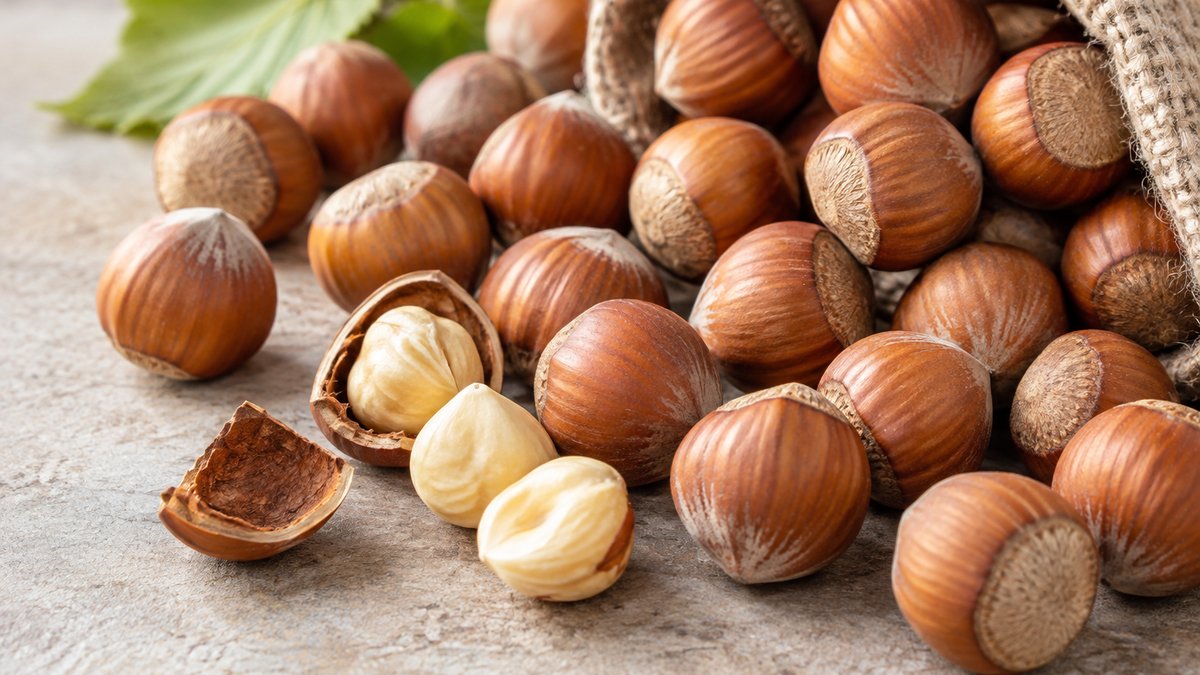

In-shell hazelnuts and hazelnut kernels come from the same crop, but they are different traded product forms. In-shell nuts retain the hard outer shell; kernels are the edible inner part after shelling. That difference affects what a buyer receives, what further processing may be needed, and how to compare offers.
For importers, processors and exporters, the key is to compare products against their intended use—not just by the price quoted per kilogram. UNECE publishes separate quality standards for in-shell hazelnuts and hazelnut kernels, reflecting that each form needs its own product description and quality checks. This article was checked on 26 November 2026.
Key Takeaways
- In-shell hazelnuts include the edible kernel and its hard shell; hazelnut kernels are the edible portion after shelling.
- The shell protects the kernel, but in-shell lots still need checks for soundness, blanks, damage and internal quality. Kernel lots need checks for defects, size, breakage and processing condition.
- There is no universal shelling yield to use for every lot. Compare in-shell and kernel offers using a representative trial or verified supplier data for the relevant lot and specification.
- State whether kernels should be whole, split, broken, blanched or roasted. The term “kernel” alone does not establish these details.
- Compare quotations only after aligning product form, grade, size, moisture, packaging, delivery terms and the buyer’s intended use.
1. The Main Difference Between In-Shell Hazelnuts and Hazelnut Kernels
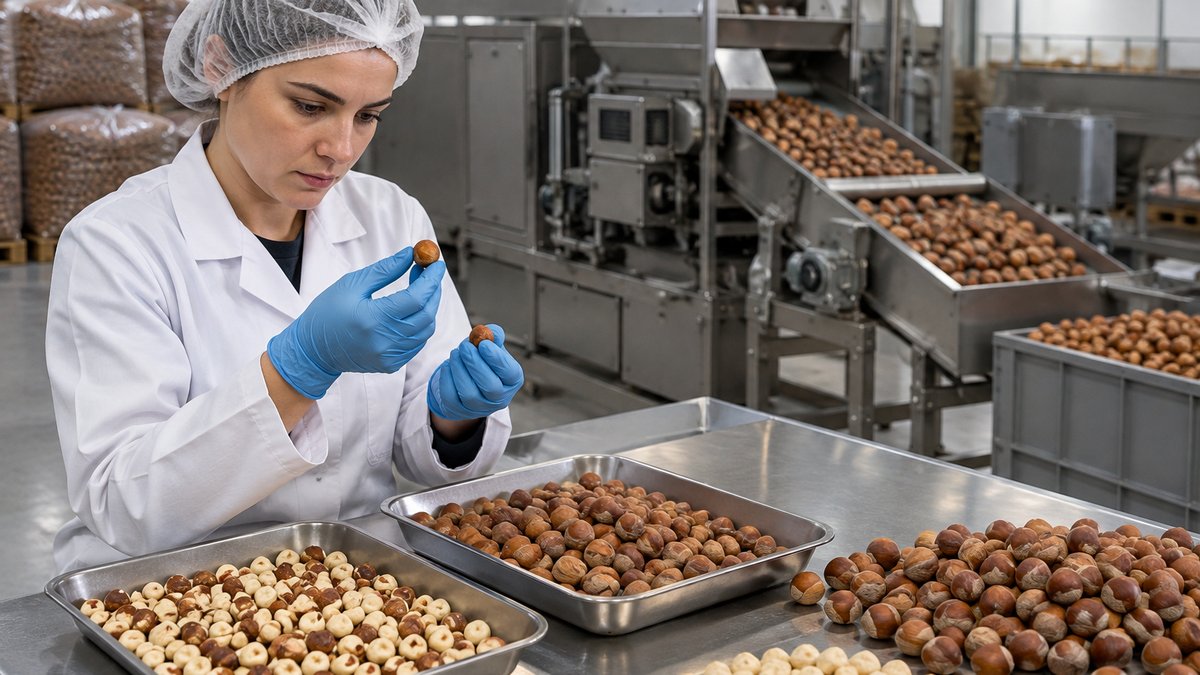
In-shell hazelnuts are whole nuts sold with the hard shell still around the edible kernel. Hazelnut kernels are the edible inner portion after that shell has been removed. The kernel may still have its thin brown skin, often called the pellicle or testa; a blanched kernel has had that skin removed. Shelling does not, by itself, mean that kernels have been blanched, roasted or cut.
The distinction is about the physical form of the traded product, not a different species or an automatic quality ranking. UNECE’s separate standards for in-shell hazelnuts and hazelnut kernels treat them as distinct product categories. UNECE’s 2022 recommended terminology also distinguishes the inedible woody shell from the edible kernel. These standards are voluntary commercial benchmarks unless made applicable through a contract or relevant regulation; they do not replace destination-market food-safety requirements.
In-shell hazelnuts are generally sold after the crop has been cleaned and dried, and may be sized and sorted before packing. Depending on the lot and buyer’s requirements, the shell may be cracked later by the buyer or a downstream processor. For kernels, shelling has already taken place. The International Nut and Dried Fruit Council’s Hazelnuts Technical Information Kit describes processing stages that can include dehusking, drying, cracking, sorting, blanching and/or roasting, followed by packaging. Not every saleable kernel goes through every step.
This difference changes what a shipment contains. A net weight of in-shell nuts includes shell weight as well as kernels; the same net weight of kernels is edible nut product, subject to the agreed grade and processing condition. Therefore, comparing prices on a per-kilogram basis without accounting for shelling, usable yield and processing requirements can lead to an incomplete cost comparison.
The shell can help shield the kernel during handling, but it does not make inspection unnecessary. A buyer still needs to assess shell condition and the kernel inside. USDA’s 2016 Inspection Instructions for Filbert/Hazelnut Kernels and Filberts in the Shell describe inspection considerations for both forms, including blanks, shell defects, internal defects and kernel condition. For a starting point in sourcing, buyers can review hazelnut buying requests on Freshdi and check what product form and specification the request actually states.
2. In-Shell Hazelnuts vs Hazelnut Kernels: Comparison Table
The table compares the two forms at a purchasing level. These are general distinctions, not a substitute for a lot-specific specification, inspection or agreed quality standard.
| Feature | In-shell hazelnuts | Hazelnut kernels |
|---|---|---|
| What the product includes | Kernel enclosed in the hard shell | Edible kernel with shell removed |
| Shell present | Yes; shell remains around the kernel | No; shelling has taken place |
| Kernel skin | Usually remains on the kernel inside the shell | May remain, or be removed by blanching; specify |
| Processing already completed | Usually cleaning and drying; sizing or sorting may be included | Shelling and separation; blanching, roasting or cutting only if specified |
| Key lot checks | Shell condition, blanks, foreign material, moisture, and sample kernels | Defects, cleanliness, moisture, kernel size, whole/broken proportion, and processing condition |
| Yield comparison | Shipment weight includes shell and potentially blanks or defective nuts | Shipment weight is kernel product, but grade and broken-piece limits still matter |
| Typical buyer consideration | Ability to shell, equipment, labor, yield and intended end use | Required kernel form, convenience, grade, packaging and further processing |
The trade-off is not simply “protected” versus “ready to use.” In-shell product leaves shelling to a later stage, while a kernel shipment has already passed through shell removal and sorting. A kernel lot may still require additional preparation, such as roasting or blanching, and in-shell product may be suitable for direct retail or wholesale sale if it meets the buyer’s requirements.
2.1 What the product name does not tell you
Neither form name alone establishes variety, origin, crop year, grade, size, moisture, defect tolerance, packaging or shelf-life conditions. “Hazelnut kernels” also does not establish whether the kernels are whole, split, broken, blanched, roasted, chopped or otherwise processed. UNECE’s proposed 2025 aligned standards for kernels and in-shell hazelnuts are documents for standards review; do not treat a draft as a mandatory rule or as proof that every buyer uses identical contract terms.
In the United States, federal marketing-order requirements for Oregon and Washington hazelnuts and USDA grade standards have defined scopes. For example, the 2024 edition of 7 CFR Part 982 includes requirements for shelled hazelnuts under that marketing order. Buyers should confirm whether any U.S. or other destination-country requirement applies to their particular product and transaction, and keep mandatory requirements separate from voluntary standards and contract specifications. To compare possible counterparties, browse hazelnut suppliers on Freshdi, then verify product and business details directly.
Looking to Source Hazelnut?
Connect with verified suppliers, discover matching products, and explore sourcing opportunities from global markets.
3. Example Scenario: Comparing an In-Shell Offer with a Kernel Offer
Imagine a food manufacturer needs hazelnuts for a product that will be blended and processed at its own facility. It receives one quotation for in-shell hazelnuts and another for kernels. The quoted prices are not directly comparable yet: the first offer includes shell weight and requires shelling, while the second has already undergone shell removal. The kernel offer may also have a different proportion of whole, split or broken pieces.
The buyer should first define the usable output needed for the recipe and production line. It can then ask the in-shell supplier for a representative sample and agreed shelling trial, or for reliable lot-specific results from an equivalent process. A trial can record the weight of accepted kernels recovered, the amount of shell and other material separated, and any kernels rejected under the buyer’s specification. There is no single yield figure that should be assumed for every lot: cultivar, nut sizing, blanks, condition and the shelling and sorting process can all affect the result.
Next, the buyer should compare like with like. For the kernel quotation, clarify the percentage of whole kernels, allowable splits and broken pieces, whether the skin remains, and whether the product is raw or roasted. For both offers, clarify grade or agreed tolerances, size basis, moisture, foreign material, packaging, net weight, delivery term, payment terms and destination requirements. If a standard is specified, identify its title and version in the contract rather than relying on the words “standard quality.”
Illustrative comparison checklist:
In-shell offer: State size, grade or tolerances, moisture, shell condition, blanks, packaging and trial basis.
Kernel offer: State grade, size, whole/split/broken proportions, skin status, raw or roasted condition and packaging.
Shared terms: Align quantity, net-weight basis, destination, delivery term, payment, inspection and applicable requirements.
Cost comparison: Compare total landed cost per accepted usable kernel quantity, using verified lot data and agreed assumptions.
This is an illustrative checklist, not a universal specification or an assumed hazelnut yield.
The result may favor either form. In-shell product could suit a buyer with shelling capacity and a process that can use its output efficiently. Kernels could suit a buyer that wants to avoid shelling operations, provided the quoted kernel grade and condition fit the production line. The right comparison is the cost and suitability of accepted material at the point of use—not merely the supplier’s unit price.
4. When Should Buyers Choose In-Shell Hazelnuts or Kernels?
Choose based on the buyer’s operation, customer and finished product. In-shell hazelnuts can fit retail or wholesale channels where customers want whole nuts, or processors that have the equipment and controls to crack, separate and sort them. Kernels can fit manufacturing and foodservice operations that need the edible portion delivered ready for the next specified process.
4.1 In-shell hazelnuts may be suitable when
- The buyer or its downstream customer has suitable shelling and sorting capacity.
- The required product presentation is a whole nut in its shell.
- The buyer is prepared to manage shelling labor, equipment, shell by-products and variation in recovered kernels.
- A sample-based inspection can assess both external condition and the kernels inside.
4.2 Hazelnut kernels may be suitable when
- The buyer wants to avoid shelling at its facility or has no shelling line.
- The recipe or production plan needs a specific kernel form, such as whole, split, broken, chopped or blanched.
- The buyer wants to specify further processing, such as roasting, separately from shell removal.
- The supplier can document the agreed kernel grade, condition, packaging and inspection basis.
For either option, do not infer quality from product form. In-shell lots need checks for shell damage, blanks and internal kernel condition; kernel lots need checks for quality defects, cleanliness, moisture and the required distribution of whole and broken pieces. Sampling and inspection should follow the agreed standard and contract. USDA’s 2024 regulation for shelled hazelnuts under Part 982, for example, sets requirements including dryness, cleanliness and freedom from specified defects within its scope; it is not a universal standard for every hazelnut shipment worldwide.
Before requesting quotations, prepare a clear specification:
- Identify the product form: in-shell hazelnuts or kernels.
- State the intended use and whether additional shelling, blanching, roasting or cutting is required.
- Specify variety or type, origin, crop year and size where required by the buyer.
- Define grade, defect tolerances, moisture and foreign-material limits, and the applicable inspection method.
- For kernels, set whole, split and broken proportions, and state whether the skin should remain.
- For in-shell nuts, define shell condition, sizing, blanks and how sample kernels will be evaluated.
- Set packaging, net-weight basis, quantity, destination, delivery term, payment terms and required documents.
These details help suppliers determine whether they can meet the requirement and make quotations easier to compare. Buyers can also review broader Bean, Nut & Seed buying requests on Freshdi when exploring adjacent sourcing needs.
Once your product form and quality requirements are clear, compare them with suppliers’ stated hazelnut offerings.
View Related Suppliers for This Product →
Buying consideration: Before confirming an order, agree how the lot will be sampled and assessed, who bears inspection costs, what happens if the goods fall outside agreed tolerances, and which contract terms govern any dispute. Keep these points in writing.
5. Related Resources for Hazelnut Buyers and Sellers
For commercial descriptions, UNECE maintains separate standards for hazelnuts in-shell and hazelnut kernels, while its recommended terminology helps distinguish the edible kernel from the inedible shell. These can be useful reference points when drafting specifications, but the contract should name the standard and version agreed by both parties. USDA’s inspection instructions and applicable U.S. regulations are relevant only within their stated scopes. Always check current destination-market requirements independently.
Hazelnut exporters can use a consistent product listing to make the distinction visible: identify in-shell or kernel form, then add size, grade or tolerances, moisture, processing condition, packaging and available shipment terms. Buyers should ask for missing information rather than assume it from a product title. Freshdi’s broader Bean, Nut & Seed supplier listings may also help when sourcing related commodities.
Buyers can explore hazelnut requests on Freshdi, while sellers can review hazelnut supplier listings to understand how products are presented. These listings are a starting point for discovery, not a guarantee that a counterparty or product meets a particular specification. Verify business information, samples, documents, capacity and terms directly before committing.
If you need general marketplace support, view buyer resources on Freshdi, view supplier resources, or learn about Freshdi account manager support. Use the resources relevant to your role and confirm the details that matter for your transaction.
With the product form and purchasing criteria defined, buyers and sellers can use Freshdi’s marketplace resources to explore relevant opportunities.
View Latest Bean, Nut & Seed Buying Requests →
View Potential Bean, Nut & Seed Suppliers →
Frequently Asked Questions
Are in-shell hazelnuts and hazelnut kernels the same product?
They are forms of the same crop, but not the same traded product. In-shell hazelnuts still have the hard shell surrounding the kernel. Hazelnut kernels are the edible inner portion after shelling. A kernel may still have its thin brown skin unless it has been blanched.
Does “hazelnut kernel” mean blanched or roasted?
No. “Kernel” indicates that the hard shell has been removed. It does not by itself say whether the thin skin remains or whether the kernel is raw, blanched, roasted, chopped or otherwise processed. Buyers should state each required condition in the specification.
Can buyers compare in-shell and kernel prices per kilogram?
They can compare the quotations, but the unit prices alone are not enough. In-shell weight includes the shell, and shelling and sorting affect the quantity of acceptable kernels recovered. Compare cost against usable output using a representative sample or verified lot-specific processing data, with matching quality, packaging and delivery assumptions.
Is there a standard shelling yield for hazelnuts?
There is no single yield that should be assumed for every shipment. The result can vary with the lot, including its size distribution, blanks and condition, as well as the shelling and sorting process and the buyer’s acceptance criteria. Agree on a sample and trial method if yield is important to the purchase.
What should an in-shell hazelnut specification include?
State the size or sizing basis, grade or defect tolerances, moisture, shell condition, blanks, cleanliness, packaging, net weight, quantity, origin and any agreed inspection method. Explain whether and how sample kernels will be examined, since external shell condition alone cannot establish internal kernel quality.
What should a hazelnut kernel specification include?
In addition to grade or defect tolerances, state size, moisture, cleanliness, and the required proportions of whole, split and broken kernels. Specify whether the brown skin should remain, and whether the product should be raw, blanched, roasted or otherwise processed. Add packaging, quantity, delivery and inspection terms.
References
1. United Nations Economic Commission for Europe (UNECE) – Dry and Dried Produce Standards: Hazelnuts, inshell (DDP-03) and Hazelnut kernels (DDP-04), Standards listed on UNECE standards page; accessed 26 November 2026.
2. United Nations Economic Commission for Europe (UNECE) – Recommended terms and definitions of defects for standards of dry and dried produce, ECE/CTCS/WP.7/2022/9, 2022.
3. International Nut and Dried Fruit Council – Hazelnuts Technical Information Kit, 2019.
4. U.S. Department of Agriculture, Agricultural Marketing Service – Filbert Inspection Instructions: Filbert/Hazelnut Kernels and Filberts in the Shell, August 2016.
5. U.S. Government Publishing Office – Code of Federal Regulations, Title 7, Part 982, including § 982.101, Grade requirements for shelled hazelnuts, 2024 edition.
Disclaimer: This article is compiled from platform data, public sources and information provided by third parties, for general informational purposes only. We do not guarantee its accuracy or completeness. Please conduct your own due diligence before making business decisions.