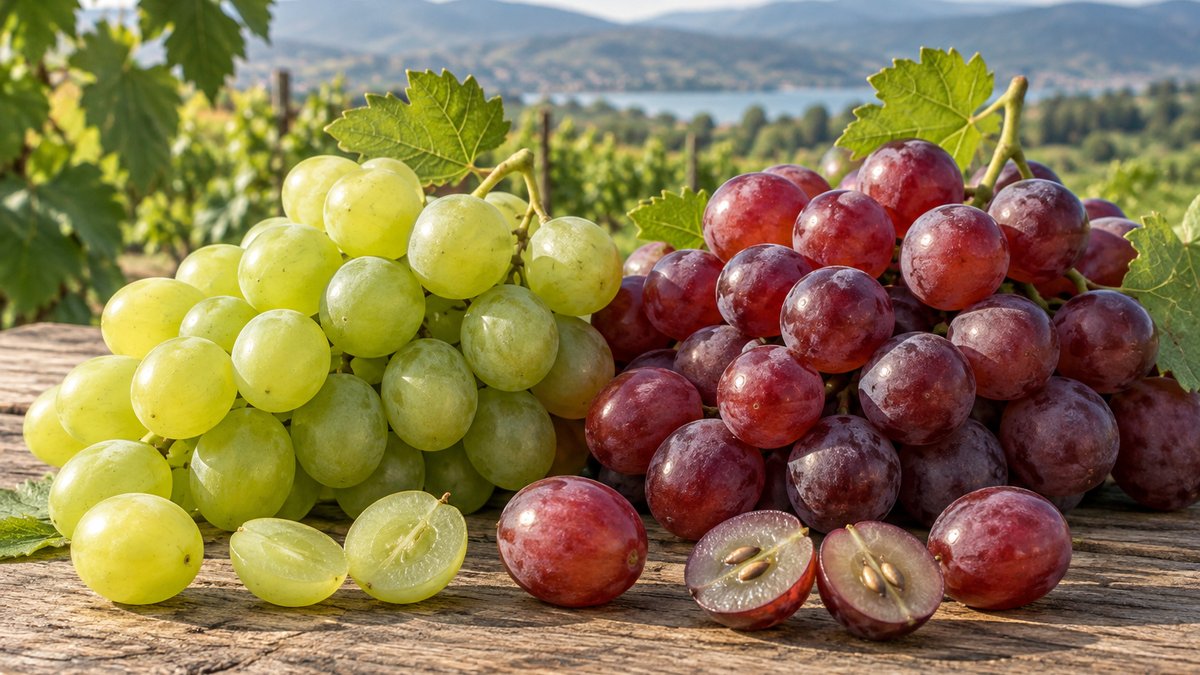

For fresh grape buyers, the main difference between seedless and seeded grapes is the seed condition inside the berry. Seedless grapes have no fully developed seeds, although some varieties can contain small, soft seed remnants. Seeded grapes have developed seeds.
That difference can affect the eating experience and help determine whether a variety suits a particular customer or sales program. It does not, by itself, tell you the grape’s size, sweetness, firmness, color, quality grade or price.
For an import or export quotation, seed status is only one part of the specification. Buyers should also identify the variety, size, maturity, pack, quality requirements and destination-market rules.
Key Takeaways
- Seedless grapes lack fully developed seeds; some varieties may still have small, undeveloped remnants.
- Seeded grapes contain developed seeds, but seed status alone does not determine taste, berry size, quality or price.
- Specify the named variety and measurable product requirements rather than using “seedless” or “seeded” as a complete specification.
- Grade and import requirements depend on the applicable standard and market; the USDA table grape standard, for example, includes variety-specific size criteria.
- Before comparing offers, align seed status, variety, quality, maturity, pack, quantity and delivery requirements.
1. The Main Differences Between Seedless and Seeded Fresh Grapes
The distinction is simple, but the commercial terms need context. Seedless describes grapes that do not have fully developed seeds. It does not always mean that no seed-like material can be felt in the berry. Oregon State University Extension notes that some varieties marketed as seedless can have small, undeveloped seed remnants.
Seeded grapes contain developed seeds. Whether consumers eat around the seeds or remove them depends on preference and use. Neither seed status makes a grape inherently superior: the specific variety and lot determine other attributes, including flavor, texture, skin, size and keeping quality.
The Centre for the Promotion of Imports from Developing Countries (CBI), in its 2025 overview of the European table grape market, lists commercial varieties in both groups. Examples include Thompson and Sweet Globe among seedless varieties and Italy among seeded varieties. These names identify varieties; they do not establish the precise quality or specification of an individual shipment.
For buyers, the practical distinction is often about the intended eating experience and the variety a customer expects. For exporters, it is important to state the variety and seed status clearly, then describe the rest of the product separately. Explore fresh grape buying requests on Freshdi and compare them with your available product details.
Once you know which grape type fits the program, you can compare buyer requirements and supplier listings across the fruit category.
View Latest Fruit Buying Requests →
View Potential Fruit Suppliers →
2. Seedless vs Seeded Fresh Grapes: Comparison Table
Use the comparison as a starting point, not as a substitute for a variety name or product specification. The details that matter most for a shipment depend on its destination, sales channel and applicable grade.
| Comparison point | Seedless fresh grapes | Seeded fresh grapes |
|---|---|---|
| Seed condition | No fully developed seeds; small remnants may occur in some varieties | Developed seeds are present |
| Eating experience | Can suit customers who prefer grapes without developed seeds | Consumers may eat around or remove the seeds |
| Variety | Name the actual seedless variety | Name the actual seeded variety |
| Color and size | Depend on variety and lot; not defined by seed status | Depend on variety and lot; not defined by seed status |
| Quality assessment | Check maturity, firmness, stems, defects and pack condition | Check maturity, firmness, stems, defects and pack condition |
| Grade and market rules | Check the relevant destination standard and variety requirements | Check the relevant destination standard and variety requirements |
The U.S. Department of Agriculture’s Agricultural Marketing Service (USDA AMS), in its U.S. Standards for Grades of Table Grapes, sets quality and size criteria for table grapes and distinguishes certain named seedless varieties from other varieties in some grade requirements. This is a U.S. grading example, not a universal rule for every origin or destination. Buyers should verify the standard that applies to their transaction.
Seed status is also not a reliable shortcut for estimating price. A fair comparison requires offers for products with comparable varieties, maturity, size, quality, packaging, volumes and delivery terms. Review fresh grape supplier listings on Freshdi alongside the buying requirements, rather than comparing a single label.
Looking to Source Fresh Grape?
Connect with verified suppliers, discover matching products, and explore sourcing opportunities from global markets.
3. Example Scenario: Specifying Grapes for a Retail Program
Imagine an importer preparing a retail offer for customers who prefer grapes without developed seeds. The buyer asks suppliers for seedless fresh grapes, but receives quotations that name different varieties and provide different pack details. The seedless label makes the offers sound comparable, but it does not show whether the grapes match in size, maturity, condition or packaging.
The buyer can make the inquiry more useful by naming the acceptable variety or varieties, stating the desired color and size range, and setting out the required maturity and quality checks. The buyer should also specify pack format, net weight, quantity, delivery point and applicable destination requirements. If more than one variety is acceptable, list them explicitly and ask suppliers to quote each option separately.
Illustrative inquiry format:
Product: Fresh table grapes; seedless
Variety: State the required variety or acceptable alternatives
Color and size: State the buyer’s required range and measurement
Quality and maturity: State the applicable grade or inspection criteria
Packing: State pack style, net weight and labeling needs
Quantity and delivery: State volume, destination and requested delivery terms
This is an illustrative inquiry format, not a universal grape specification; buyers should adapt it to the product and destination.
For a seeded grape program, the same approach applies, but the request should name the seeded variety and confirm the buyer’s required seed characteristics. Oregon State University Extension’s variety information shows why naming the variety matters: grape characteristics vary, and even entries described as seedless can have noticeable remnants of undeveloped seeds.
A clear request lets suppliers identify which details they can meet and which need discussion. Buyers can also browse Freshdi’s fruit buying requests and Freshdi’s buyer listings to review sourcing opportunities, then confirm the product and commercial requirements directly.
4. When Should Buyers Choose Seedless or Seeded Grapes?
Choose based on the customer’s preference, intended sales channel and grape variety available—not on an assumption that one type is always sweeter, larger, higher quality or more profitable.
4.1 Seedless grapes may fit when convenience is the priority
A buyer may select seedless grapes when the target customer values eating grapes without developed seeds. That can be a useful product distinction in a retail or foodservice program, but it does not guarantee acceptance. Variety, flavor, firmness, appearance, price and condition still matter.
CBI’s 2025 European market overview describes seedless varieties as popular for consumption in that market. This is a market observation about Europe, not a statement that every buyer or destination prefers seedless grapes. Confirm the intended market’s requirements and the buyer’s own preferences before setting a sourcing plan.
4.2 Seeded grapes may fit when a named variety is required
Seeded grapes may be the right choice when a customer requests a particular seeded variety or when a supplier’s offering matches an established product program. Do not assume that seeded grapes are necessarily larger, sweeter or more traditional in every market. Confirm those attributes for the named variety and lot.
4.3 Check quality independently of seed status
The USDA AMS table grape standards illustrate that grade assessment covers characteristics beyond seed condition. Its standards address matters such as maturity, firmness, attachment to the stem, defects and size. These criteria belong to the stated U.S. standard; importers should check the applicable destination requirements and any agreed contract specification.
The University of California and USDA Agricultural Research Service postharvest guidance also identifies practical quality concerns for table grapes, including stem browning, berry shatter, shriveling and decay. These issues should be assessed for both seeded and seedless product.
- Start with the customer’s required seed status and the named variety.
- Set measurable requirements for color, berry size, maturity and quality.
- Specify packaging, labeling, order quantity and destination.
- Identify the applicable grade or market-entry requirements and confirm them for the shipment.
- Compare quotations only after aligning product, pack, quantity and delivery terms.
Once your specification is ready, browse Freshdi’s fresh grape suppliers and supplier listings across the fruit category. You can also review Freshdi’s supplier directory to explore listings, then verify business information and shipment details directly.
A complete specification makes it easier to identify suppliers whose grape varieties and packing options match your requirements.
View Related Suppliers for This Product →
5. Related Resources for Fresh Grape Buyers and Exporters
For product standards, the USDA AMS page for U.S. table grape grades describes the criteria used in that U.S. standard. USDA AMS also publishes a separate page on U.S. table grape import requirements. Those import requirements apply to the United States and should not be treated as rules for other markets.
For variety examples and European market context, CBI’s 2025 report, The European market potential for table grapes, groups commercial cultivars by seed status and discusses the European market. Oregon State University Extension’s Growing Table Grapes lists characteristics of selected cultivars, while the University of California and USDA Agricultural Research Service’s Table Grapes: Postharvest Quality Maintenance Guidelines discusses handling and quality considerations.
Freshdi can help buyers and exporters explore B2B listings, but listings are a starting point for a business conversation, not a substitute for due diligence or agreed specifications. Buyers can explore fresh grape buying requests, and suppliers can review the fresh grape supplier category. For general platform assistance, visit the Freshdi Account Manager page.
Frequently Asked Questions
What is the difference between seedless and seeded fresh grapes?
Seedless grapes do not have fully developed seeds, although some varieties can contain small, undeveloped remnants. Seeded grapes have developed seeds. The distinction describes seed condition, not the grape’s size, sweetness, quality grade or price.
Are seedless grapes completely free of seed-like material?
Not always. Some varieties marketed as seedless can contain small, soft remnants of undeveloped seeds. Oregon State University Extension notes this for examples in its grape variety information. Buyers with a strict eating-experience requirement should confirm the variety and inspect a representative sample.
Are seeded grapes larger or sweeter than seedless grapes?
Not as a general rule. Size and sweetness depend on the variety, growing conditions, maturity and lot. Compare the named varieties and request measurable specifications or samples rather than inferring these qualities from seed status.
Which type of fresh grape is better for retail?
Neither type is automatically better. Seedless grapes may suit customers who prefer not to encounter developed seeds, while a retail program may require a specific seeded variety. The buyer should consider customer preferences, variety, quality, price, packaging and the requirements of the destination market.
Does seed status determine the grade of table grapes?
No. Grade requirements can address factors such as maturity, firmness, defects, bunch condition and size. The USDA AMS U.S. table grape standard includes some variety-specific size criteria, but requirements differ by standard and destination. State the applicable grade or inspection requirements in the contract.
What should I include in a fresh grape buying inquiry?
Specify whether the grapes must be seedless or seeded, the variety or acceptable alternatives, color, size, maturity and quality requirements, packaging, labeling, quantity, destination and delivery terms. Also confirm which destination-market rules apply. These details help suppliers assess whether their offer matches the request.
References
1. Centre for the Promotion of Imports from Developing Countries (CBI) – The European market potential for table grapes, Updated April 22, 2025.
2. U.S. Department of Agriculture, Agricultural Marketing Service – United States Standards for Grades of Table Grapes (European or Vinifera Type), Effective March 29, 1999.
3. U.S. Department of Agriculture, Agricultural Marketing Service – Importing Table Grapes, Accessed November 26, 2026.
4. Oregon State University Extension Service – Growing Table Grapes, Accessed November 26, 2026.
5. University of California and U.S. Department of Agriculture, Agricultural Research Service – Table Grapes: Postharvest Quality Maintenance Guidelines, Accessed November 26, 2026.
Disclaimer: This article is compiled from platform data, public sources and information provided by third parties, for general informational purposes only. We do not guarantee its accuracy or completeness. Please conduct your own due diligence before making business decisions.