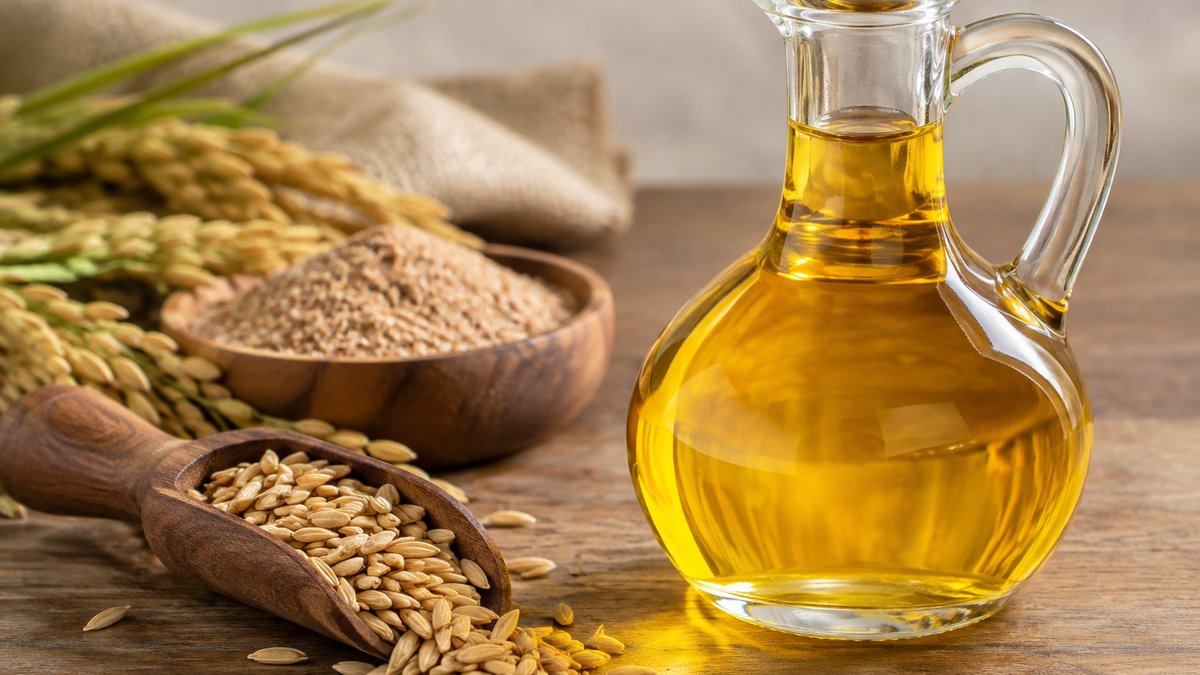

Crude rice bran oil and refined rice bran oil come from the same raw material, but they are not interchangeable products. Crude oil is an intermediate oil that retains substances removed or reduced during processing. Refined oil has undergone additional treatment to meet the quality and intended-use requirements in its destination market.
For importers and exporters, the key difference is not simply color or price. Processing status affects which specification to request, what testing to arrange, and whether the oil is suitable for the buyer’s next step. Codex Alimentarius’ Standard for Named Vegetable Oils, CXS 210-1999, provides an international reference for rice bran oil identity and quality factors; national food rules may add requirements for products sold in a particular country. The information below was checked on November 26, 2026.
Key Takeaways
- Crude rice bran oil is an unrefined intermediate; refined rice bran oil has undergone processing to remove or reduce impurities, color and odor.
- Crude oil may suit a processor with suitable refining capability, while refined oil may suit a buyer needing a finished ingredient. Verify the intended use and destination-country requirements.
- Refining can change minor components, including gamma-oryzanol. Do not assume a particular retained level; request a test result using a suitable method.
- Compare offers only after confirming processing status, specification, test methods, packaging, intended use and delivery terms.
- Codex is an international reference, not a substitute for checking the mandatory rules that apply in the destination market.
1. Key Differences Between Crude and Refined Rice Bran Oil
The short answer: crude rice bran oil has not completed refining, while refined rice bran oil has undergone additional processing to meet a defined product specification. The crude oil is generally an input for further processing, not a synonym for finished, ready-to-use oil. Whether a product can be used in food depends on its processing, quality, intended use and applicable destination-country rules.
Both products originate from the bran of rice (Oryza sativa L.). Codex Alimentarius defines rice bran oil by its source in CXS 210-1999, the Standard for Named Vegetable Oils. The terms “crude” and “refined” describe processing condition; they do not, by themselves, guarantee purity, food-grade status, a particular extraction method, or conformity with a buyer’s specification.
Crude rice bran oil can contain free fatty acids, gums or phospholipids, pigments, waxes, moisture and other minor constituents. The amount and composition vary with the bran, its handling and the extraction and stabilization process. Refining commonly involves steps such as degumming, deacidification or neutralization, bleaching and deodorization. Dewaxing or winterization may also be used where the target specification calls for it. The exact route varies by producer and product.
As a result, crude oil commonly has more pronounced color, odor and variability than refined oil. Refined oil is processed toward a more consistent appearance and flavor profile, but “refined” alone does not tell the buyer its precise color, free-fatty-acid level, peroxide value, wax content, or retained minor components. Those are specification and test-result questions.
Refining can also change naturally occurring minor components, including gamma-oryzanol and tocopherols. Their level in a finished oil depends on the raw material and the refining method. Codex CXS 210-1999 includes a gamma-oryzanol reference for crude rice bran oil; a crude-oil value should not be presented as a guaranteed value for refined oil. If a particular level matters commercially, request a batch-specific result and confirm that the analytical method is appropriate for the product.
The distinction matters for regulatory review as well. For example, India’s Food Safety and Standards Authority of India (FSSAI) regulations state that rice bran oil is to be sold for human consumption only after refining. This is an India-specific rule, not a universal statement about every jurisdiction or every industrial use. Importers should check the current rules for their own destination and intended application.
On Freshdi, buyers can review rice bran oil buying requests for stated product requirements, while suppliers can view rice bran oil supplier listings. A listing does not replace specification review or verification of a particular lot.
2. Crude Rice Bran Oil vs Refined Rice Bran Oil: Comparison Table
This table summarizes common differences. It is a starting point for a specification discussion, not a substitute for a product data sheet, laboratory report or destination-country requirements.

| Feature | Crude rice bran oil | Refined rice bran oil |
|---|---|---|
| Processing status | Extracted oil before completing refining | Oil processed through refining steps |
| Typical position in the supply chain | Intermediate input for a processor | Finished or further-processed oil, subject to specification |
| Appearance and odor | Can be darker and more variable | Usually treated to reduce color and odor; exact result varies |
| Components and impurities | May retain gums, free fatty acids, pigments, waxes and other constituents | Refining removes or reduces selected constituents; residual levels vary |
| Gamma-oryzanol and other minor components | May be present at levels influenced by the raw material and extraction | May change during refining; verify a batch result if important |
| Potential buyer | Processor with appropriate capability and regulatory clearance | Buyer needing oil that meets a defined finished-product specification |
| Key quotation checks | Free fatty acids, moisture, impurities, extraction details and intended use | Quality limits, test methods, refining status, packaging and market compliance |
Codex CXS 210-1999 sets international identity and quality references for named vegetable oils, including rice bran oil. It should not be read as proof that any offered shipment complies: conformity depends on the actual lot, the applicable requirements and suitable test evidence. National rules may differ. Keep voluntary buyer specifications separate from mandatory regulatory requirements.
A quotation that says only “rice bran oil” leaves the processing status unclear. Ask whether the offer is crude, refined, or another specifically described product, and request the complete specification. For bulk supply, compare equivalent bases—same processing condition, relevant quality limits, unit, packaging or transport format, delivery point and trade term.
Looking to Source Rice Bran Oil?
Connect with verified suppliers, discover matching products, and explore sourcing opportunities from global markets.
3. Example Scenario: Choosing Oil for a Food Manufacturing Order
Consider a food manufacturer planning to use rice bran oil as an ingredient in a finished food. The buyer wants an oil that can be assessed against the product’s technical specification and the food rules of the destination market. The seller offers two grades: crude oil for further processing and refined oil with a batch specification.
If the manufacturer does not operate an oil-refining facility, the crude offer is not automatically a practical substitute for the refined one. The buyer would need to establish whether further refining can be carried out by an approved processor, whether the resulting product will meet the required specification, and whether the costs, timing and regulatory route work for the order. If that processing step is not part of the buyer’s supply chain, a suitably specified refined oil may be the more relevant offer to assess.
If the manufacturer is itself an oil processor, crude oil may be appropriate as a feedstock—provided the buyer’s plant can handle the incoming quality and the intended output can meet the destination requirements. In that case, a low purchase price alone is not enough to assess the offer. Incoming quality can affect refining decisions, losses, processing needs and the finished oil’s characteristics.
Illustrative inquiry format:
Product: Rice bran oil; state crude or refined
Intended use: Food ingredient or further processing
Quality: Attach required specification and identify test methods
Documentation: Request batch certificate of analysis and applicable compliance documents
Commercial details: State quantity, packaging, destination, delivery term and schedule
This is an illustrative inquiry structure, not a universal specification or a claim that any particular lot meets these requirements.
The buyer should request a current certificate of analysis for the offered lot, check that the methods and units match the contract, and clarify whether tests are performed by the supplier or an independent laboratory. If the buyer needs a specific gamma-oryzanol level, that requirement should be stated separately rather than inferred from the product name or crude-oil data.
For processors and manufacturers comparing supply options, browse Freshdi’s oil and fats buying requests and check each listing for its stated product and commercial details.
4. When Should Buyers Choose Crude or Refined Rice Bran Oil?
The right choice depends on what the buyer can process, what the end product requires and what rules apply at the destination. Neither term guarantees that an offer is suitable; buyers need to match the actual lot specification to the intended use.
4.1 Consider crude rice bran oil when
- The buyer has suitable refining capability or a qualified processor arranged to complete the required treatment.
- The buyer can assess the incoming oil’s quality and has defined acceptance limits for relevant factors such as free fatty acids, moisture, impurities and other parameters.
- The buyer has checked that importing and processing crude oil is permitted for the intended use in the destination jurisdiction.
- The commercial comparison includes further-processing requirements, handling, quality risk and the specification of the finished oil—not only the crude-oil price.
4.2 Consider refined rice bran oil when
- The buyer needs an oil processed toward a finished product specification and is not planning to refine the crude input.
- The buyer’s food or manufacturing process requires defined appearance, odor or quality limits.
- The buyer can verify the batch against the destination’s mandatory requirements and its own technical specification.
- The offer includes the relevant analytical results, processing status, packaging details and commercial terms.
For both products, make sure the specification says exactly what “crude” or “refined” means in the contract. Identify the refining route if it affects the purchase, but do not assume that one route or label guarantees a particular level of minor components. Define the test method, sampling and acceptance procedure for the parameters that matter.
Buying consideration: Before sending a purchase order, compare the lot’s certificate of analysis with the agreed specification, verify destination-country requirements, and confirm responsibility for testing, inspection and any further processing.
Once your required processing status and specification are clear, compare potential suppliers against the details your order actually needs.
View Related Suppliers for This Product →
You can explore Freshdi suppliers in the oil and fats category or review rice bran oil supplier listings. Treat listings as a way to discover potential counterparties; verify business details, product information and terms before proceeding.
5. Related Resources for Rice Bran Oil Buyers and Suppliers
For international trade, begin with the Codex Alimentarius Commission’s Standard for Named Vegetable Oils, CXS 210-1999, amended through 2024, as an international reference for product identity and quality factors. Then check the mandatory food and import rules that apply in the specific destination country. Codex references and a supplier’s certificate are not a replacement for that destination-specific review.
The Food Safety and Standards Authority of India’s regulations provide an example of country-specific requirements: for human consumption in India, rice bran oil must be sold only after refining. This illustrates why a buyer should not treat “crude” and “refined” as interchangeable labels across markets. Confirm applicable rules with the relevant authority or qualified compliance professional for the destination and use.
For background on oil composition and refining, the open-access review Research Progress on the Quality, Extraction Technology, Food Application, and Physiological Function of Rice Bran Oil (2024) discusses raw-material handling, extraction and refining. The 2026 review Rice Bran Oil: A Critical Review on Its Chemistry, Nutrition, Processing Technology, and Application also surveys processing and the factors that can influence finished-oil composition. These are technical references, not a substitute for a lot-specific test report.
Buyers can see rice bran oil buying requests on Freshdi, while suppliers can review rice bran oil supplier listings. For a broader view, browse buying requests and explore supplier listings.
When you need help navigating Freshdi’s sourcing resources, view the Account Manager page. Always verify the product specification, lot documentation, applicable regulations and commercial terms with the relevant business partner before committing to a transaction.

Frequently Asked Questions
What is the main difference between crude and refined rice bran oil?
Crude rice bran oil is an intermediate oil that has not completed refining. Refined rice bran oil has undergone processing to remove or reduce selected impurities, color and odor. The terms do not alone establish a product’s complete specification or compliance.
Is crude rice bran oil ready for human consumption?
Do not assume so. Suitability depends on processing, product quality, intended use and the destination’s rules. For example, India’s FSSAI regulations state that rice bran oil is sold for human consumption only after refining. Buyers should check the rules that apply in their own market.
Does refining remove all gamma-oryzanol from rice bran oil?
No general level can be inferred from the word “refined.” The amount may change during processing and varies with the raw material and refining method. If gamma-oryzanol content matters, specify a target and request a batch-specific test result using an appropriate analytical method.
Is crude rice bran oil always cheaper than refined rice bran oil?
There is no universal price rule. Offers may differ in quality, processing, yield, packaging, quantity, delivery conditions and market availability. Compare equivalent specifications and include any further processing and testing costs relevant to the buyer.
What should a buyer check before importing rice bran oil?
Confirm whether the oil is crude or refined, the intended use, the complete specification, test methods, batch certificate of analysis, packaging, quantity, delivery term and destination-country requirements. Where necessary, clarify sampling, independent inspection and responsibility for further processing.
Does Codex compliance automatically satisfy a country’s food rules?
No. Codex CXS 210-1999 is an international food standard and reference. Buyers still need to check mandatory requirements in the destination jurisdiction and verify that the specific lot meets the applicable rules and agreed contract specification.
References
1. Codex Alimentarius Commission, FAO/WHO – Standard for Named Vegetable Oils, CXS 210-1999, Amended through 2024.
2. Food Safety and Standards Authority of India – Food Safety and Standards (Food Products Standards and Food Additives) Regulations, 2011 — Rice Bran Oil, Official regulation text.
3. Foods – Research Progress on the Quality, Extraction Technology, Food Application, and Physiological Function of Rice Bran Oil, 2024.
4. Food Reviews International – Rice Bran Oil: A Critical Review on Its Chemistry, Nutrition, Processing Technology, and Application, Published online February 16, 2026.
Disclaimer: This article is compiled from platform data, public sources and information provided by third parties, for general informational purposes only. We do not guarantee its accuracy or completeness. Please conduct your own due diligence before making business decisions.