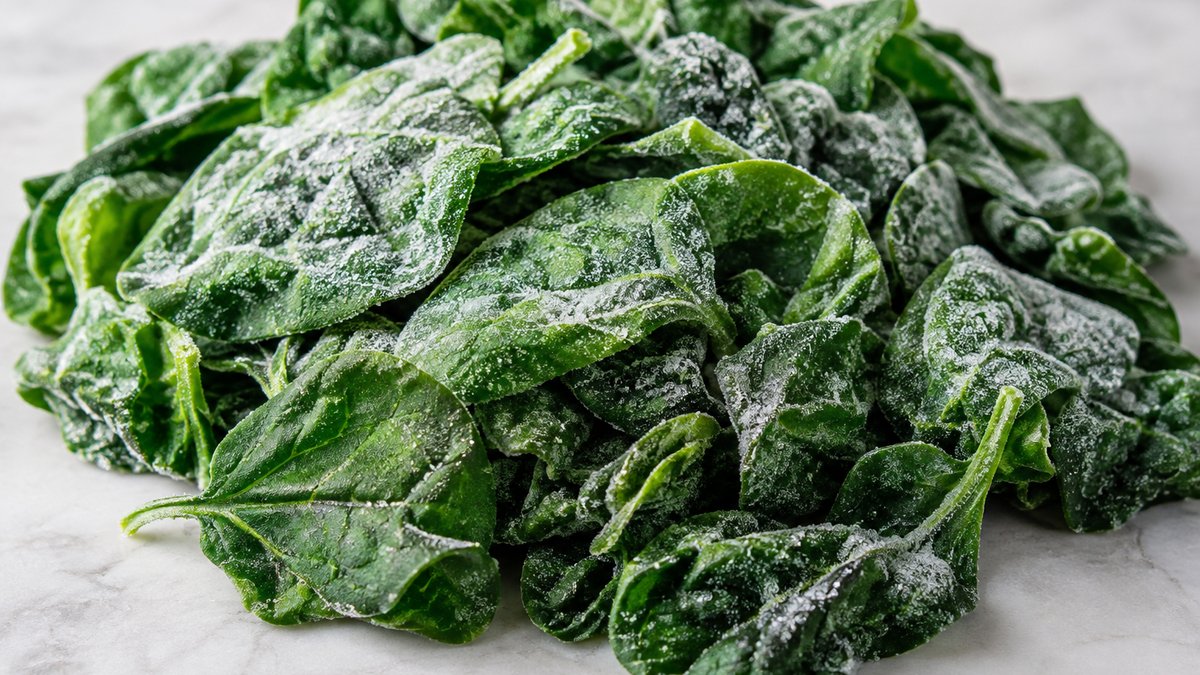

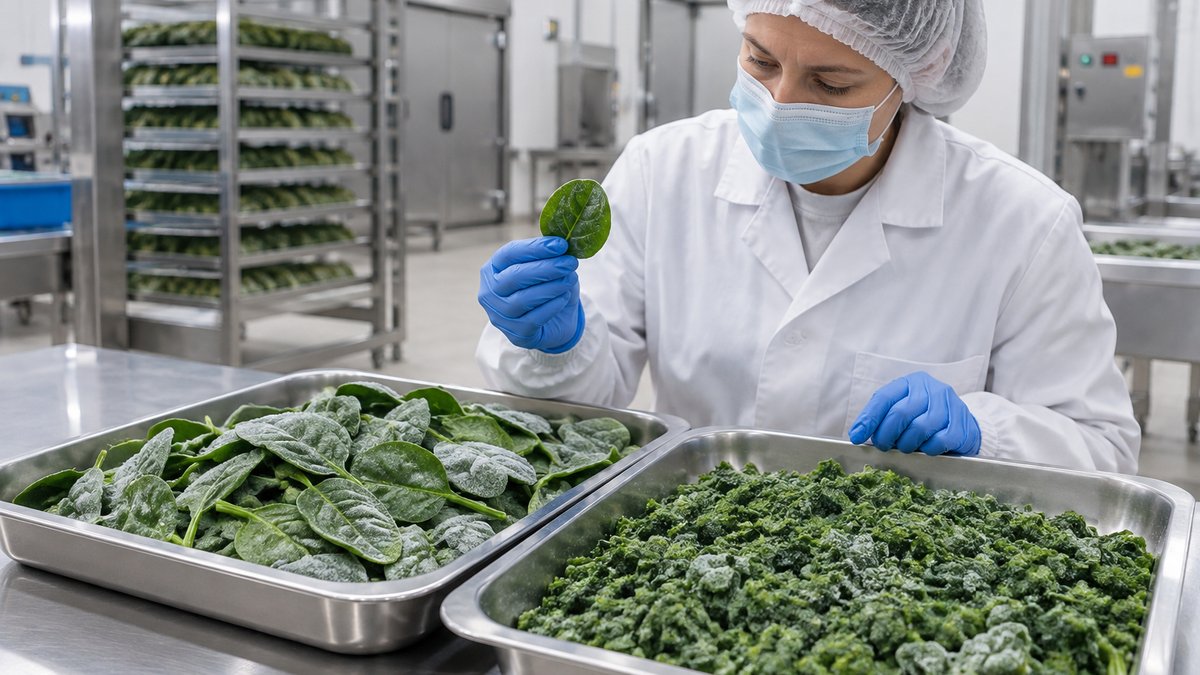
Frozen whole leaf spinach and chopped spinach differ mainly in how the leaves are cut before freezing. Whole leaf spinach keeps substantially intact leaves; chopped spinach consists of smaller cut pieces. The format can affect appearance, handling, portioning and suitability for a recipe, but it does not by itself establish the spinach's grade, freezing method, quality or price.
For buyers comparing offers, “whole leaf” and “chopped” are useful starting points—not complete specifications. The Codex Alimentarius Commission's Standard for Quick Frozen Vegetables describes leaf spinach as substantially whole leaves and chopped spinach as leaf pieces generally 3–10 mm in their largest dimension. Confirm the supplier's actual cut size, pack format and quality criteria before placing an order.
This comparison was checked on November 26, 2026. It focuses on frozen spinach for commercial sourcing; exact product terminology and applicable requirements should be confirmed for the destination market and contract.
Key Takeaways
- Whole leaf spinach retains substantially intact leaves, while chopped spinach is cut into smaller pieces; Codex describes chopped pieces as generally 3–10 mm in their largest dimension.
- The cut style is separate from the grade, freezing method, packaging, ingredient declaration and other quality or trade specifications.
- Whole leaf may fit applications where visible leaves matter; chopped spinach may suit recipes or production lines that call for smaller, more uniform pieces. These are application considerations, not universal rules.
- Specify cut style and measurable acceptance criteria, then compare offers against the same product form, pack size, freezing format, quality requirements and delivery terms.
1. Frozen Whole Leaf Spinach vs Chopped Spinach: The Main Differences
The principal difference is physical presentation. Frozen whole leaf spinach is made from substantially whole leaves, while chopped spinach is cut into smaller pieces. In Codex Alimentarius Commission's Standard for Quick Frozen Vegetables (CXS 320-2015, as listed in the Codex standards catalogue in 2022), the spinach annex describes leaf spinach as substantially whole leaves, most separated from the root crown, with a maximum stem length of 10 cm. It describes chopped spinach as leaf pieces generally 3–10 mm in their largest dimension, not reduced to puree.
The standard also distinguishes whole spinach—the complete tender or young plant with the root removed—from leaf spinach. Consequently, a commercial listing that says “whole leaf” should not automatically be read as the Codex style “whole spinach.” Buyers should state whether they require intact leaves or another presentation and have the supplier confirm what the product contains.
The cut affects what the product looks like and how it can be handled in a recipe or manufacturing process. It does not, on its own, indicate whether the spinach is IQF or block-frozen, the amount of stem material, the level of foreign matter, the grade, or the product's ingredients. Two offers using the same cut-style name can still describe products with different specifications.
Codex also sets general quality factors for quick-frozen spinach, including requirements relating to disintegration, sand and grit, drainage and discoloured leaves. These are quality considerations distinct from the simple distinction between leaves and chopped pieces. The standard is an international reference; buyers must check which legal requirements apply in their destination market and what their purchase contract requires.
USDA's Agricultural Marketing Service (AMS), in its Frozen Leafy Greens Grades and Standards (checked November 26, 2026), treats leaf-style and chopped-style spinach separately in aspects of its grade criteria, including consideration of stem material. This illustrates why cut style and grade should be agreed separately: the style names do not themselves tell a buyer that a lot meets a particular grade.
Once you know which format fits your product, compare relevant spinach sourcing opportunities and suppliers.
View Latest Processed Vegetables Buying Requests →
View Potential Processed Vegetables Suppliers →
2. Frozen Whole Leaf and Chopped Spinach Compared
The table summarizes the core distinction and the questions it raises for commercial buyers. Codex dimensions are a useful point of reference, but a contract should give the actual acceptance criteria for the order.
| Comparison point | Frozen whole leaf spinach | Frozen chopped spinach |
|---|---|---|
| Basic form | Substantially whole leaves | Leaves cut into smaller pieces |
| Codex description | Leaf spinach: substantially whole leaves, most separated from root crown; stem maximum 10 cm | Pieces generally 3–10 mm in largest dimension |
| Visual presentation | Leaf shape remains more visible | Smaller leaf pieces are mixed through the product |
| Potential buyer fit | Applications where visible leaf form is wanted | Recipes or production steps calling for smaller pieces |
| Specification to clarify | Leaf integrity, stem length and amount, and tolerance for broken leaves | Cut-size range and tolerance for pieces outside it |
| Not determined by cut style | Grade, freezing format, ingredients, packaging and delivery terms | Grade, freezing format, ingredients, packaging and delivery terms |
Codex CXS 320-2015 also allows a tolerance for non-conforming styles. That makes it especially useful for buyers to agree how style will be checked, what tolerance applies and which contract or destination-market requirements take precedence. Do not assume that a product's commercial name alone resolves these points.
For procurement, compare the product specification as a whole. For example, a whole leaf offer in a retail-size bag is not directly comparable with chopped spinach in bulk blocks if the order requires a different pack format, handling process or quality limit. The cut style identifies one attribute; it is not a substitute for a full specification.
Looking to Source Frozen Spinach?
Connect with verified suppliers, discover matching products, and explore sourcing opportunities from global markets.
3. Example Frozen Spinach Sourcing Scenarios
The following scenarios are illustrative. They show how intended use can guide the choice of cut style; they are not claims that every buyer in a particular sector prefers one format.
3.1 A prepared-food maker needs visible leaves
Imagine a manufacturer developing a filled pasta or a prepared dish where the appearance of leafy pieces is part of the intended result. Whole leaf spinach may be a more suitable format to evaluate because the leaves remain more recognizable. The buyer should still decide whether substantially intact leaves are required, whether some breakage is acceptable, and whether stems need a defined limit.
3.2 A sauce or filling line needs smaller pieces
A producer making a sauce, filling or blended component may prefer chopped spinach if smaller pieces better match the recipe and production process. The inquiry should state a cut-size target or range rather than relying only on the word “chopped.” It should also clarify whether the product will be further processed and what foreign-material, colour and drainage criteria the buyer will assess.
3.3 A distributor is comparing two supplier offers
Suppose one quotation describes frozen whole leaf spinach and another describes chopped spinach. Comparing price alone would not establish which offer is better value. The distributor first needs to check that both products meet the intended end use and compare equivalent information: product style, grade or quality limits, freezing format, net weight, packaging, storage and delivery conditions. If the specifications do not match, the quotations are not like-for-like.
For any scenario, request a product specification and, where appropriate, representative samples or agreed inspection criteria. Use the sample and specification to establish what will count as acceptable leaf integrity or chopped-piece size, rather than relying on an informal description.
4. When Should Buyers Choose Whole Leaf or Chopped Spinach?
Choose based on the finished product, production process and purchasing specification—not on a general assumption that one style is higher quality. Whole leaf is a candidate when the recipe or presentation benefits from more recognizable leaves. Chopped spinach is a candidate when the recipe calls for smaller leaf pieces or the buyer wants that form at the point of receipt.
Before requesting quotations, buyers can work through the following questions:
- What is the end use? Describe the product or process the spinach will enter and whether leaf appearance matters.
- Which style is required? Name whole leaf or chopped, and ask the supplier to define that style in the offer.
- What size or integrity limits apply? For chopped spinach, set a cut-size target or range and tolerance. For whole leaf, define acceptable breakage and any stem requirements.
- What quality criteria matter? Agree how to assess colour, foreign material, sand or grit, discoloured material, drainage and other relevant defects.
- What freezing format and packaging are needed? Specify IQF or block format if required, pack size, bulk or retail packaging, and any labeling details.
- What must match across quotations? Confirm net quantity, product composition, storage and transport conditions, delivery location, trade terms and any required documents.
- Which rules apply to the destination? Check the applicable market requirements separately from voluntary or contractual standards and grade specifications.
A clear inquiry might say: “Frozen spinach, chopped style, target cut size 3–10 mm, with agreed tolerance and inspection method; state freezing format, grade or quality criteria, net weight, packaging, storage conditions, origin, available documentation and delivery terms.” This is an illustrative format, not a universal specification. Adjust the size range and other details to the buyer's actual process and destination requirements.
If whole leaf is required, replace the cut-size instruction with measurable expectations for leaf integrity, stem material and broken-leaf tolerance. In both cases, ask the supplier to confirm whether any ingredients besides spinach are included and to provide the product and packaging details in writing.
With the style and acceptance criteria defined, you can compare frozen spinach supplier listings against your requirements.
View Related Suppliers for This Product →
5. Related Resources for Frozen Spinach Buyers
For the terminology used here, consult the Codex Alimentarius Commission's Standard for Quick Frozen Vegetables, CXS 320-2015, and the USDA AMS Frozen Leafy Greens Grades and Standards. Codex gives internationally used descriptions of spinach styles and quality factors; USDA AMS provides U.S. grade criteria for frozen leafy greens. Neither source replaces checking the binding food rules for the destination market or agreeing the contract specification.
For sourcing research, browse frozen spinach buying requests on Freshdi and frozen spinach suppliers on Freshdi. Buyers comparing a broader range can also review Processed Vegetables buying requests and Processed Vegetables suppliers. Listings are starting points for discovery; confirm the current product specification, business information and commercial terms directly with the prospective partner.
For wider marketplace discovery, explore buyer listings on Freshdi or supplier listings on Freshdi. You can also review the Freshdi Account Manager page as a platform resource. In every case, verify that a listing and its details fit your specific sourcing needs before proceeding.
Frequently Asked Questions
What is the difference between frozen whole leaf spinach and chopped spinach?
Whole leaf spinach retains substantially whole leaves, while chopped spinach is cut into smaller pieces. The Codex Alimentarius Commission's Standard for Quick Frozen Vegetables describes chopped spinach as pieces generally 3–10 mm in their largest dimension. Commercial descriptions can vary, so buyers should have the supplier confirm the actual product form and cut-size criteria.
Does whole leaf spinach mean the complete spinach plant?
Not necessarily. Codex distinguishes whole spinach—the complete tender or young plant with the root removed—from leaf spinach, which consists of substantially whole leaves. A listing that says “whole leaf” may be using commercial wording, so confirm whether it means intact leaves or another presentation.
Is chopped spinach always better for food manufacturing?
No. Chopped spinach may fit processes that call for smaller pieces, while whole leaf spinach may suit products where visible leaves are preferred. The suitable form depends on the recipe, line operations, buyer's acceptance criteria and finished product. There is no universal rule that one format is best for all manufacturers.
Does the cut style tell me whether frozen spinach is IQF or block-frozen?
No. Cut style and freezing format are separate attributes. A buyer should state whether IQF, block-frozen or another format is required and have the supplier confirm the format in the quotation and product specification.
Does chopped spinach have a lower grade than whole leaf spinach?
No grade can be inferred from the cut name alone. Codex identifies styles and quality factors, while USDA AMS has grade criteria for frozen leafy greens that address leaf-style and chopped-style spinach separately. State the required grade or quality limits and confirm how they will be assessed.
What should a buyer include in a frozen spinach inquiry?
State the product style, required cut size or leaf-integrity limits, quality criteria, freezing format, ingredients, net weight, packaging, storage conditions, quantity, destination, delivery terms and required documentation. Also ask the supplier to clarify any terms that could be interpreted differently and confirm which destination-market rules apply.
References
1. Codex Alimentarius Commission, FAO and WHO – Standard for Quick Frozen Vegetables, CXS 320-2015, Annex on Spinach; listed in the Codex standards catalogue in 2022, 2015; catalogue entry updated 2022.
2. United States Department of Agriculture, Agricultural Marketing Service – Frozen Leafy Greens Grades and Standards, Undated; checked November 26, 2026.
3. United States Department of Agriculture, Agricultural Marketing Service – Frozen Leafy Greens Standard, Undated; checked November 26, 2026.
4. Codex Alimentarius Commission, FAO and WHO – All Codex Standards: CXS 320-2015, Standard for Quick Frozen Vegetables, Catalogue checked November 26, 2026.
Disclaimer: This article is compiled from platform data, public sources and information provided by third parties, for general informational purposes only. We do not guarantee its accuracy or completeness. Please conduct your own due diligence before making business decisions.