
Introduction
CTC and orthodox describe two ways of processing black tea leaves. The method changes the shape and size of the finished tea, which affects infusion speed, common grades and the kinds of products buyers may make from it.
For importers and exporters, the distinction is a useful starting point, not a complete buying specification. Grade names vary by origin and auction system, and neither processing method alone guarantees a particular cup quality or price.
1. CTC and Orthodox Black Tea Differ in How the Leaf Is Shaped
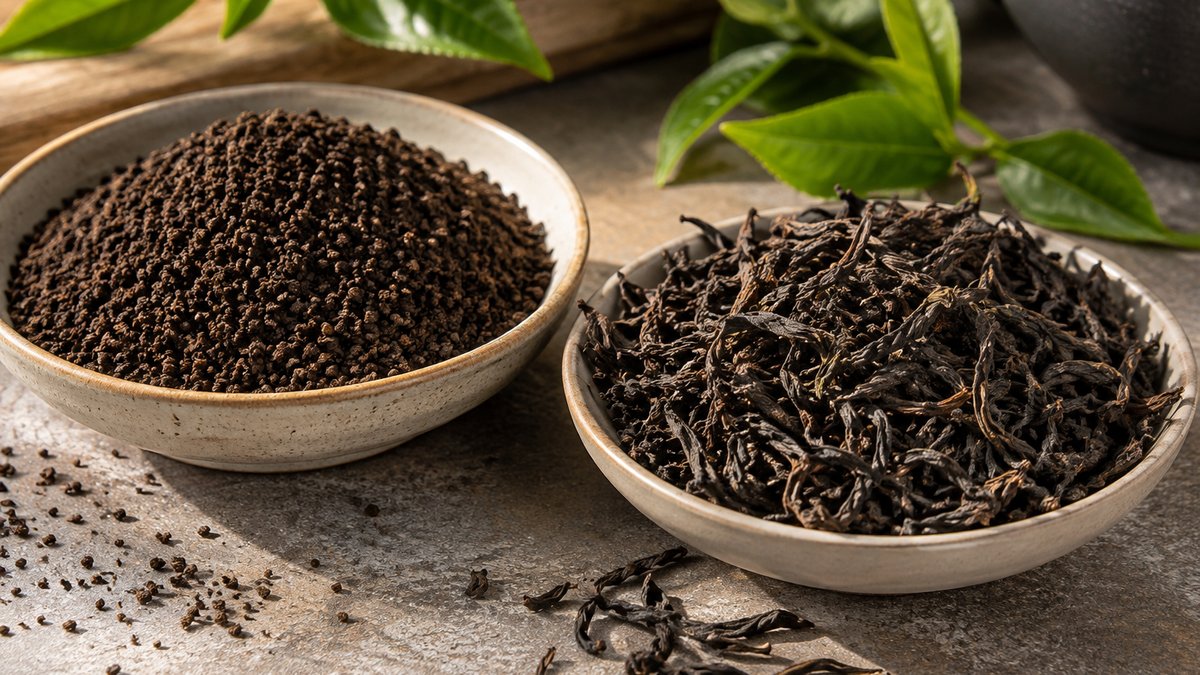
CTC stands for crush, tear, curl. After withering, machines with toothed rollers break the leaf into small, fairly uniform granules. Orthodox manufacture rolls the withered leaf, preserving more of its original shape. Both methods continue through oxidation and drying before the tea is sorted into grades. The East African Tea Trade Association (EATTA) describes these as two manufacturing routes for black tea.
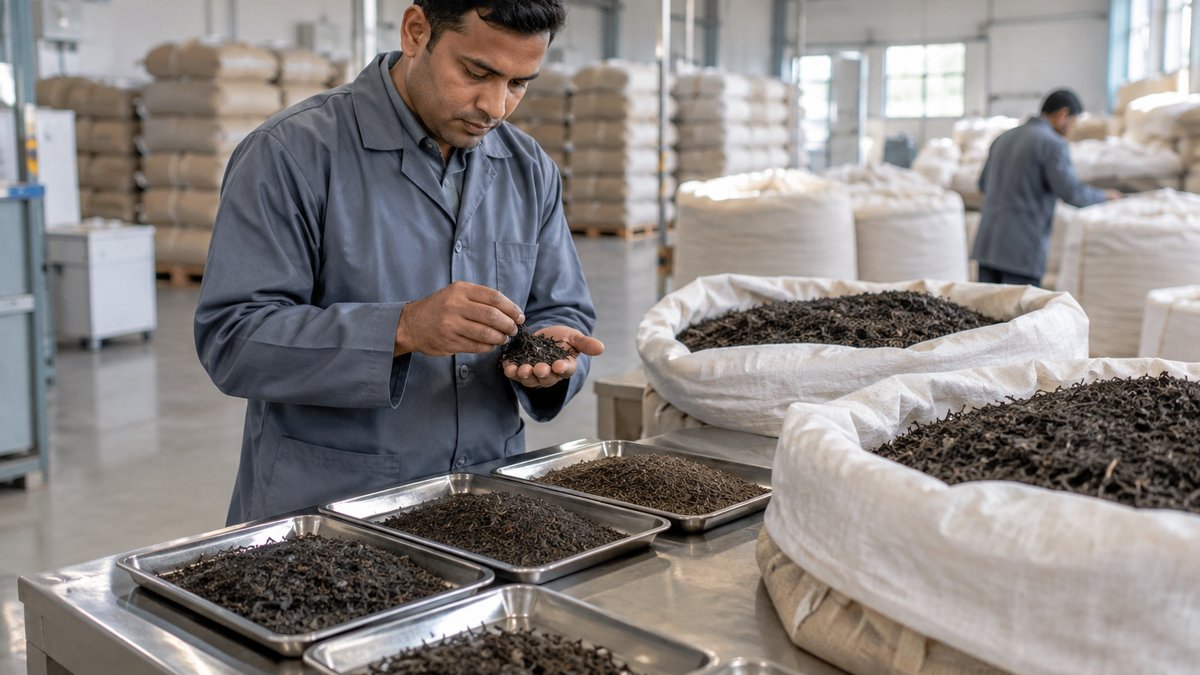
The difference in particle size changes how tea brews. Smaller CTC particles generally release colour and strength quickly, which suits short brewing times and many tea-bag blends. Orthodox tea spans a wider range of leaf sizes. Larger leaf grades brew more slowly; broken orthodox grades can infuse faster and are also used in blends and bags. The actual liquor depends on the tea lot and preparation, not just the method.
The method does not define the leaf’s origin, cultivar, plucking standard, harvest season, oxidation level, aroma or sensory quality. Buyers still need to assess the specific lot. EATTA’s grade guidance also makes a useful distinction: a grade name describes particle size or leaf style, while buyers and tasters assess quality by examining the dry and infused leaf and tasting the liquor.
CTC grades commonly include BP1, PF1, PD and D1 in the Mombasa auction system. They indicate different particle sizes, from larger granules to finer particles. Orthodox grade names include OP for Orange Pekoe and BOP for Broken Orange Pekoe; other names may indicate leaf style or the presence of tips. These examples come from EATTA’s Kenyan auction guide. Buyers should confirm the producing country’s grading convention because the same letters may not mean an identical specification across origins.
Tea bags are a common use for CTC, especially when a blender needs quick, consistent extraction. That does not mean all CTC tea is sold in bags. CTC can also be bought in bulk for blending and packing, and its grades differ in particle size. Orthodox tea is often sold as loose leaf, but smaller orthodox grades can also suit bags or blends. Specify the intended format and infusion requirements instead of treating “tea bag” and “loose leaf” as fixed synonyms for the two methods.
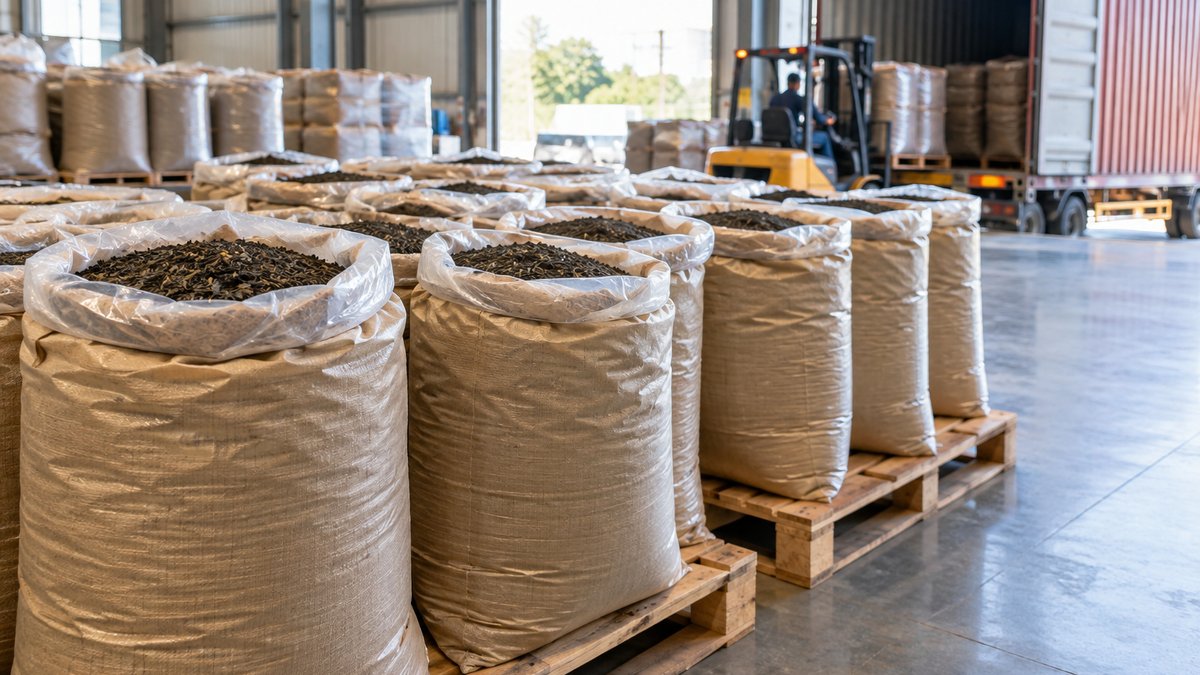
Packing is a separate decision from processing. Bulk export tea may be packed in lined sacks or other buyer-agreed bulk containers, while retail products may use smaller inner packs and cartons. The package must protect the tea from moisture, odours and handling damage, and suit the shipment and destination requirements. Tea Board India’s bulk-packaging guidance describes packaging options for Indian exports; it does not make one package universal for every origin, grade or buyer.
2. CTC vs Orthodox Black Tea: A Buyer Comparison
Compare the products by the finished grade and intended use, then verify the lot and commercial terms. The method alone does not tell you whether two quotations are comparable.
The grade examples in the table follow EATTA’s Mombasa Tea Auction guide. They are not a universal international grading standard. A buyer sourcing from another origin should request the supplier’s grade definition, particle-size specification where available, and representative samples.
Auction prices also need a like-for-like basis. Tea Board India publishes auction price information by category and auction centre, while EATTA publishes Mombasa auction statistics. Those market references are not interchangeable with a supplier’s export quotation. For a useful comparison, record the sale period, auction centre or origin, grade, currency and unit, and whether the figure is an auction price or a delivered export offer. For a private offer, also compare the Incoterm, packing, quantity and payment terms.
A general comparison of CTC and orthodox averages can mislead if it combines different origins, grades, sale periods or trade bases. The lot’s sensory profile and suitability for the buyer’s blend or finished product also affect its commercial value. Request a current sample and assess it against the buyer’s own standard before agreeing a price.
Looking to Source Black Tea?
Connect with verified suppliers, discover matching products, and explore sourcing opportunities from global markets.
3. Two Sourcing Situations Show Why the Grade Matters
A buyer’s production process helps narrow the choice, but the grade and cup specification complete the decision. These illustrative situations show how a buyer might frame the requirement; they are not universal product recommendations.
Illustrative sourcing situations
Tea-bag blender: A buyer producing a strong, quick-brewing black tea may request a CTC grade with a target liquor profile and particle-size range. The buyer should test the sample in the intended blend and brewing conditions.
Loose-leaf packer: A buyer selling visible leaf may request an orthodox whole-leaf grade, such as OP under the supplier’s stated grading system. The buyer should assess leaf appearance, aroma and liquor, then confirm how the origin defines that grade.
These are illustrative specifications only. Grade names, sensory targets and pack formats must be confirmed for the actual origin, supplier and market.
A further case is a blender making a bagged product from orthodox tea. If the buyer’s recipe needs a faster infusion or smaller particle size, a broken orthodox grade may be more suitable than a large whole-leaf grade. Conversely, a buyer making a loose-leaf product may prefer a visually distinctive orthodox grade. The method label alone cannot settle the choice.
The buyer should also separate factory and retail needs. A bulk order may arrive in a lined sack for blending or repacking, while a finished retail order may require sealed consumer packs, labels and carton specifications. A buyer should state which stage the supplier is expected to deliver and check that the quotation covers the same packing level.
4. Choose by End Use, Sample and Comparable Price Basis
Choose CTC when the product specification calls for small particles and a fast, strong infusion, as may be needed for many tea-bag blends. Choose orthodox when the product calls for a particular rolled-leaf appearance or a grade profile suited to a slower infusion or loose-leaf presentation. These are starting points for sourcing, not guarantees about taste or quality.
Before requesting quotations, define the finished product and compare samples against that use. A cup intended for milk may need a different strength and colour profile from a loose-leaf tea served without milk. Buyers should evaluate the tea under consistent brewing conditions and record the grade, origin, season or lot details supplied by the seller.
Use the grade as one part of the specification. Ask the supplier to explain the grade code used at that origin, the leaf or particle-size description, and whether the grade is a whole, broken, fannings or dust style. If the specification requires a particular particle-size range, request the supplier’s measurable range rather than assuming a grade abbreviation provides it. Confirm that the sample represents the offered lot.
When comparing prices, put each offer on the same basis. Note the currency and price unit, origin, grade, sale or quotation date, quantity, package type and delivery term. An auction average per kilogram is a market reference for its stated category and period; it is not automatically comparable with a private export offer that includes different packing or delivery costs.
For bulk orders, specify the net weight per package, liner or inner barrier, outer container, marks and pallet requirements where applicable. For retail orders, state pack size, material, labeling, case configuration and destination-market rules. Packaging should be agreed with the supplier and checked against the relevant import and transport requirements; the method of tea manufacture does not prescribe the package.
- Name the product as black tea and state CTC or orthodox manufacture.
- Give the origin and the grade code, along with the supplier’s definition of that code.
- Describe the required liquor or leaf characteristics and the intended use, such as tea bags, blending or loose-leaf retail.
- State the order quantity, bulk or retail packing, package weight and destination.
- Request a representative sample and compare it under the intended brewing conditions.
- Ask for a quotation with currency, unit, quotation date, delivery term, payment terms and any included packing or freight costs.
Buyers can review relevant black tea buying requests and supplier listings on Freshdi as one place to explore sourcing activity. A listing does not replace checking the sample, specification, business information and contract terms.
The practical decision is the tea lot that meets the buyer’s product and brewing specification on an agreed commercial basis. CTC and orthodox identify the manufacturing approach; the grade, sample, packing and contract determine what the buyer is actually purchasing.
References
1. East African Tea Trade Association – CTC or Orthodox? Two Ways to Make Black Tea, Checked 2026-11-16.
2. East African Tea Trade Association – Tea Grades Explained: What BP1, PF1 and PD Mean, Checked 2026-11-16.
3. Tea Board of India – Tea Board Bulk Packaging Circular, Annexure I and II, 2017.
4. Tea Board of India – Weekly Prices, Checked 2026-11-16.
5. Food and Agriculture Organization of the United Nations – Analysis of Incentives and Disincentives for Tea in Kenya, 2013.
Disclaimer: This article is compiled from platform data, public sources and information provided by third parties, for general informational purposes only. We do not guarantee its accuracy or completeness. Please conduct your own due diligence before making business decisions.