
1. Extra virgin and virgin olive oil differ in their quality limits
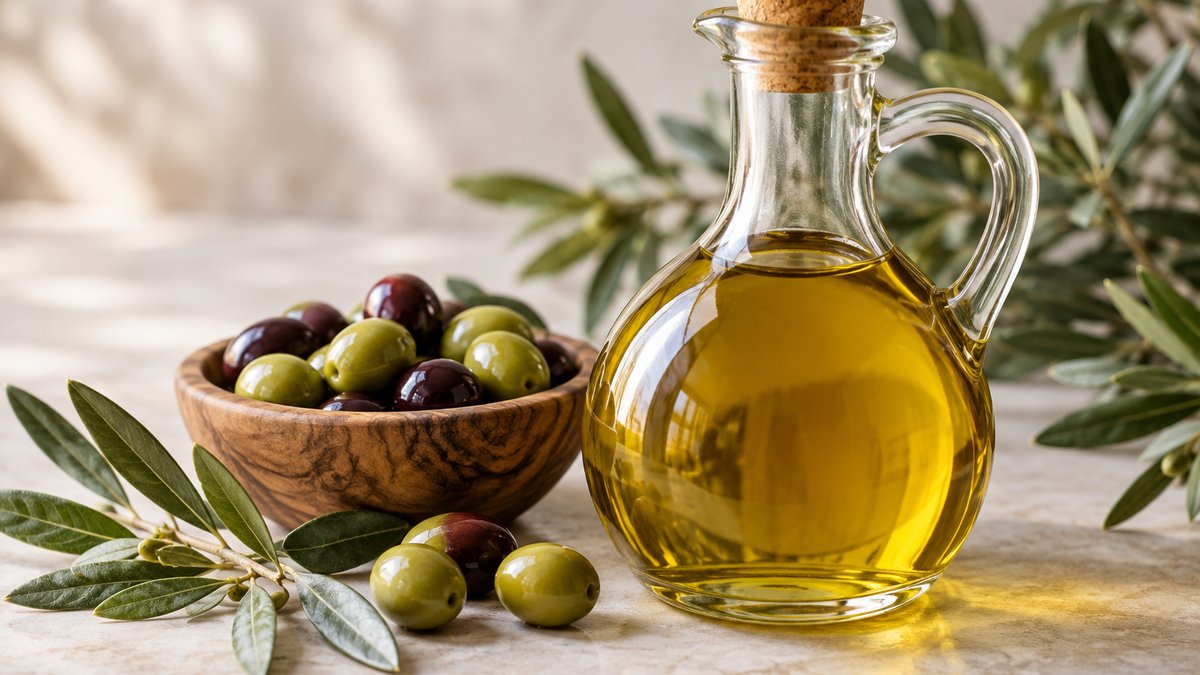
Extra virgin olive oil and virgin olive oil are both obtained from olives by mechanical or other physical means, without refining. The difference is the category criteria each oil must meet, including free acidity and sensory characteristics.
Under the International Olive Council (IOC) trade standard, extra virgin olive oil has free acidity of no more than 0.8 grams per 100 grams, expressed as oleic acid. Virgin olive oil has a limit of 2.0 grams per 100 grams. The acidity figure is one criterion, not a complete grade test: the oil must also meet the other applicable chemical and sensory requirements for its category.
The IOC classifies extra virgin and virgin olive oil as fit for consumption as they are. Extra virgin has the stricter sensory requirement: its median defect must be zero and its fruity attribute must be present. Virgin olive oil can meet its category with a median defect of up to 3.5, while still requiring a fruity attribute. A trained panel assessment is therefore relevant alongside laboratory results.
Free acidity is a laboratory measure, expressed as the percentage of free fatty acids calculated as oleic acid. It is not a direct taste score and does not, by itself, establish that an oil is extra virgin. A certificate showing acidity below 0.8 does not settle the category if the remaining required criteria have not been assessed.
The IOC publishes a trade standard for olive oils and olive-pomace oils. Its standards page lists revision 22 of the olive oil trade standard for 2026; the category definitions on the IOC olive oil page give the acidity limits and explain that each category must also meet its other standard criteria. The European Union has its own marketing rules for olive oil sold in its jurisdiction. Importers should check the rule that applies to the destination and sale.
For procurement, treat the grade name as a product specification that requires supporting evidence. Ask the supplier to state the declared category, production method, test basis and applicable conformity documents. Agree in the contract which test methods, sampling procedure and acceptance terms will apply if the cargo is inspected.
2. The main differences are the acidity ceiling and sensory limits
Both categories are unrefined virgin olive oils, but extra virgin olive oil has tighter category limits. The IOC's published category criteria distinguish them by free acidity and sensory assessment, among other applicable characteristics.

These limits are category criteria, not a price schedule. A grade name does not establish a particular origin, cultivar, harvest date, flavor intensity, packaging format or commercial value. Buyers should make those attributes separate, measurable parts of the purchase specification.
The table summarizes the IOC category distinctions. For trade with a particular destination, the contract and local rules should identify the applicable standard and how conformity will be checked. The EU's Commission Delegated Regulation 2022/2104, for example, sets olive oil characteristics and marketing standards for its stated scope; it should not be treated as a rule for every importing country.
3. A buyer's test plan should check the declared category
Consider an importer sourcing bottled olive oil for a retail label that will state “extra virgin.” The supplier's quotation and contract should identify that category, and the agreed inspection plan should check the relevant chemical and sensory criteria. A low acidity result alone would not confirm that the oil meets the whole category definition.
If the sensory result does not support the extra virgin category, the buyer and supplier need to resolve the discrepancy against their contract and the destination's rules before printing labels or releasing the shipment. The buyer should not assume that a product can retain the extra virgin designation simply because one laboratory value is within the limit.
For a bulk shipment, the same category question affects the specification and the evidence collected before dispatch. The parties can state the declared grade, sampling location and timing, tests required, laboratory or panel procedure, acceptance limits, and steps to take if results disagree. Clear terms reduce disputes about whether a report describes the sampled lot and the promised category.
In either case, distinguish the oil's category from additional product attributes. If the buyer needs a specific cultivar, harvest, origin statement, flavor profile, container or shelf-life period, those details belong in the specification and supporting documents. Neither “extra virgin” nor “virgin” supplies those details by itself.
Looking to Source Olive Oil?
Connect with verified suppliers, discover matching products, and explore sourcing opportunities from global markets.
4. Choose the grade that matches the product brief and evidence
Choose extra virgin olive oil when the product brief, price comparison and documentation require that category and the supplier can support it with the relevant test evidence. Choose virgin olive oil when that is the intended grade and it meets the buyer's product and destination requirements. The grade should follow the intended specification, not a general assumption about what one category costs or tastes like.
4.1 When extra virgin olive oil fits the specification
Use the extra virgin designation when the contract calls for the tighter category and the supplier's evidence covers all applicable criteria. For a branded retail product, confirm that the label wording is permitted in the destination market and agrees with the supplied documentation. If sensory character matters to the buyer, add the required sensory profile or acceptance method separately rather than relying on the category name.
4.2 When virgin olive oil fits the specification
Specify virgin olive oil when that is the agreed category and the oil meets the buyer's intended use and destination rules. The category is not refined oil, and it is not automatically unsuitable for food use. The contract should still define the chemical and sensory criteria, packaging, origin claims and shipment requirements that matter to the transaction.
4.3 What to put in a purchase specification
State the exact commercial category and applicable standard, then list any characteristics needed beyond that category. Include the test methods and acceptance limits for acidity and other relevant parameters, the sensory assessment procedure where required, lot identification, sampling arrangements, packaging, quantity and delivery terms. For labeled product, review destination-market naming and presentation rules before production.
Compare quotations only after checking that they describe the same category, test basis, packaging, quantity and delivery conditions. A quotation with a lower acidity figure is not automatically a better match if it omits sensory evidence or does not identify the standard used.
5. Use standards and market rules to verify the grade
Start with the IOC's current standards listing and its category definitions for the international trade context. The listing identifies the olive oil trade standard as revision 22 for 2026; the IOC page explains the distinction between extra virgin and virgin oil, including the acidity limits and the need to meet the other category characteristics. Checked on November 21, 2026.
For a shipment destined for the European Union, consult Commission Delegated Regulation (EU) 2022/2104 and its current consolidated text for the marketing standards in its scope. For any other destination, confirm the applicable national requirements with the competent authority or the buyer's regulatory team; do not assume that the EU rule automatically applies.
Importers can use Freshdi to review olive oil buying requests and olive oil suppliers while preparing a specification. A listing is a starting point for sourcing; confirm the oil category, test evidence, documents and commercial terms for each transaction.

References
1. International Olive Council – IOC Standards, Methods and Guides: Trade Standard Applying to Olive Oils and Olive-Pomace Oils, revision 22, 2026.
2. International Olive Council – Olive Oils: Designations and Definitions, 2026.
3. European Commission – Commission Delegated Regulation (EU) 2022/2104 as regards marketing standards for olive oil, 2022.
Disclaimer: This article is compiled from platform data, public sources and information provided by third parties, for general informational purposes only. We do not guarantee its accuracy or completeness. Please conduct your own due diligence before making business decisions.