
1. Green Cardamom and Black Cardamom Are Different Species
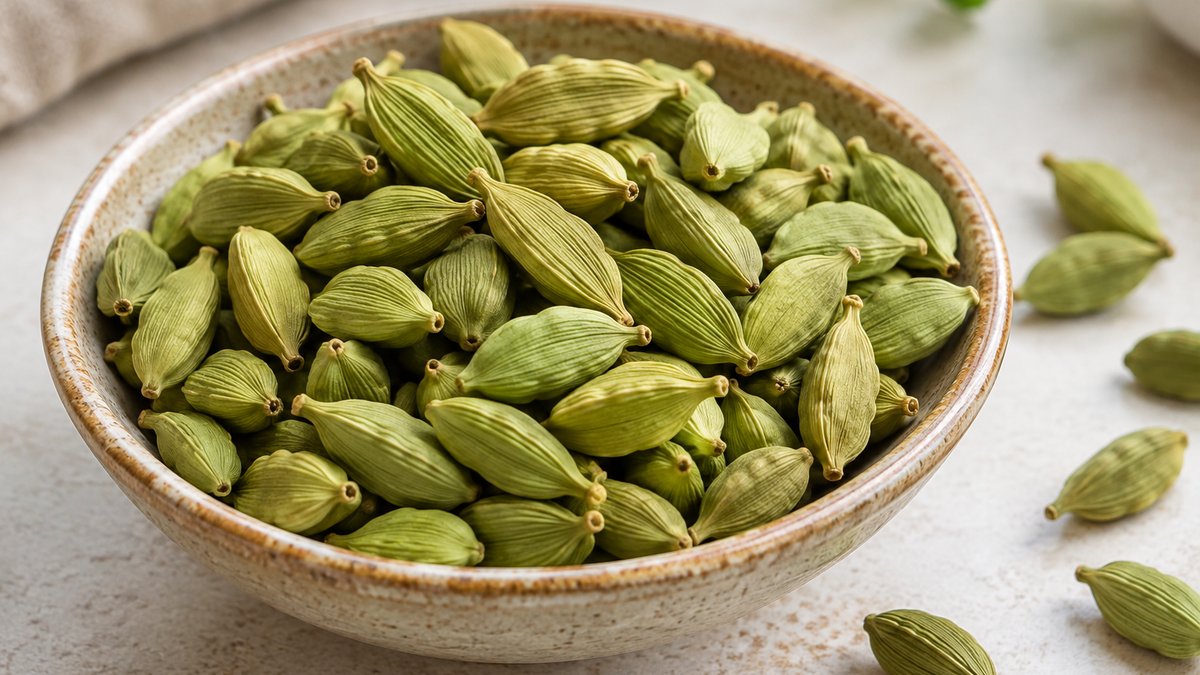
Green cardamom is the dried capsule of Elettaria cardamomum. Black cardamom, also called large cardamom in Indian trade references, is generally Amomum subulatum. The names describe two distinct spice products, so a buyer should identify the required species in the purchase specification.
The Spices Board of India lists green cardamom as small cardamom and large cardamom as a separate product. Its catalog identifies the commercial part for both as the fruit, or capsule. The board describes large cardamom capsules as reddish brown and round or oval, while its small-cardamom entry covers Elettaria cardamomum and the Indian varieties Malabar, Mysore and Vazhukka.
Capsule appearance gives buyers a useful first check during a sample review. Green cardamom is the small-cardamom product; large cardamom is a separate product with larger, darker capsules. Color alone does not establish grade, freshness, origin or compliance with a buyer's destination-market rules.
Their application profiles also differ. The Spices Board describes small cardamom uses in gahwa, beverages, confectionery, baked goods and food preparations. Its large-cardamom entry lists pulao, biryani, meat preparations and curry or masala mixtures. A buyer choosing between them should start with the recipe, finished product or processing requirement, then specify the corresponding species and form.
In commercial correspondence, the word “cardamom” by itself can leave the product identity unclear. “Green cardamom,” “small cardamom,” “black cardamom” and “large cardamom” are more informative, but the botanical name removes further ambiguity. For a shipment specification, buyers can state Elettaria cardamomum or Amomum subulatum, alongside the capsule or seed form.
The comparison is therefore between two related spices in the ginger family, not two grades of the same product. A larger capsule, a darker color or a different trade name does not make one a quality grade of the other. Grade and quality should be assessed within the selected product against agreed requirements.
2. Green Cardamom vs Black Cardamom: Trade Comparison
For procurement, the clearest distinction is botanical identity, followed by capsule presentation and intended use. Buyers should compare specifications within each product type, rather than treating green and black cardamom as interchangeable quotations.
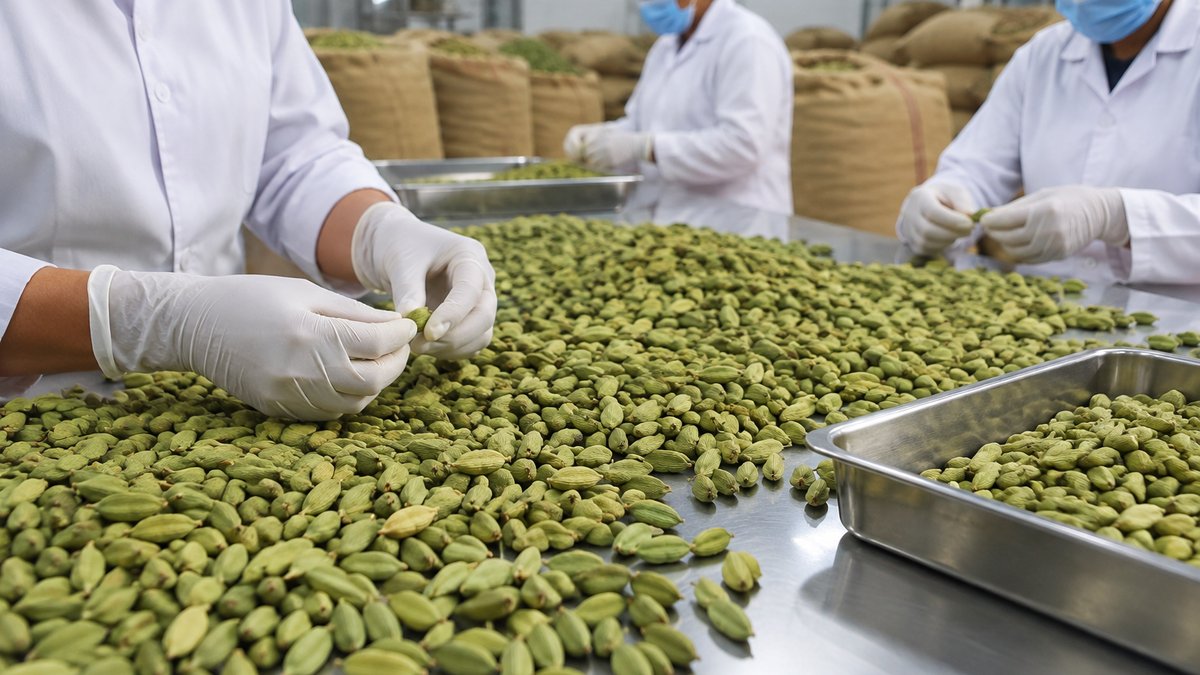
The Indian Spices Board's trade-classification page separates large cardamom from small cardamom categories such as Alleppey green and Coorg green. This is an Indian trade classification, not a universal statement of how every importing country classifies cardamom. Confirm the applicable tariff code and product description with the relevant customs authority or broker for the shipment.
Names such as Alleppey Green Extra Bold, Alleppey Green Bold and Alleppey Green Superior appear in the Spices Board's small-cardamom catalog as Indian market grade names. They refer to green-cardamom grading, not a comparison with black cardamom. A buyer should agree on the grading system, measurement method and tolerances in the contract instead of relying on a grade name alone.
A buyer can make a quotation easier to evaluate by requesting the same details from each supplier: botanical species, product form, origin, grade or size description, moisture limit, foreign matter limit, packaging and the inspection or test method. The required limits depend on the contract and destination. A value from a national standard should not be assumed to apply to every market.
3. A Sourcing Scenario: Matching Cardamom to the Product
Consider a spice buyer sourcing ingredients for two production lines: a cardamom-flavored baked product and a savory rice or meat preparation. The first line's product brief names green cardamom; the second names black cardamom. The buyer should keep those product identities separate when asking suppliers for samples and quotations.
For the baked product, the buyer can request green cardamom and specify whether the required material is whole capsules, seeds or ground spice. The Spices Board lists small cardamom as an ingredient in baked goods and confectionery. The buyer still needs to define the required grade, grind, aroma or quality parameters, package format and applicable food-safety requirements for the actual product.
For the savory line, the buyer can request black or large cardamom and state Amomum subulatum. The Spices Board lists large cardamom in preparations such as pulao, biryani and meat dishes. The buyer can then specify whether whole capsules or another form is needed and agree on the quality and delivery requirements with the supplier.
Illustrative inquiry format:
Product: Green cardamom, Elettaria cardamomum, whole capsules
Grade or quality: State the agreed grade, inspection criteria and tolerances
Product form: Whole capsules, seeds or ground, as required
Commercial details: Quantity, packaging, destination, delivery term and schedule
Documentation: State destination-market and contract requirements
This is an illustrative inquiry format. The product, grade and requirements must reflect the buyer's actual specification.
The inquiry avoids a common sourcing ambiguity: a supplier should not have to guess whether “cardamom” means small green cardamom or large black cardamom. Naming the species also gives the buyer a clearer basis for comparing samples, specifications and quotations.
Looking to Source Green Cardamom?
Connect with verified suppliers, discover matching products, and explore sourcing opportunities from global markets.
4. When Should Buyers Choose Green or Black Cardamom?
Choose green cardamom when the product brief calls for Elettaria cardamomum or for the small-cardamom applications described by the Spices Board, including gahwa, confectionery, beverages and baked goods. Choose black cardamom when the brief specifies Amomum subulatum or a large-cardamom application such as pulao, biryani, meat preparations or spice mixtures.
The recipe or manufacturing brief should make the decision before procurement begins. If a product is designed around one species, substituting the other changes the specified ingredient. A buyer considering a substitution should arrange a product trial and obtain approval from the people responsible for formulation, sensory acceptance and labeling.
4.1 Confirm the product identity
Write the common trade name and botanical name together on the inquiry, purchase order and product specification. For example, state “green cardamom (Elettaria cardamomum)” or “large cardamom (Amomum subulatum).” This makes it easier for the buyer, seller, inspector and customs broker to work from the same product description.
If the supplier's quotation uses only “cardamom,” ask the supplier to confirm the botanical identity and form before comparing prices. Check that the sample, quotation, packing list and contract refer to the same product. A name mismatch can lead to a dispute even when the shipment contains cardamom capsules.
4.2 Define the form and grade
State whether the order is for whole capsules, seeds or ground cardamom. For whole green cardamom, specify the agreed grade or size description and color requirements where relevant. For either product, document the limits for moisture, extraneous matter, damaged or empty capsules, and any other quality attributes that affect acceptance.
A grade label alone may not provide enough detail for a contract. The parties should identify the standard or buyer specification they are using, how the lot will be sampled, which test methods apply and what happens if results fall outside the agreed limits. These terms help both sides assess the same shipment using the same acceptance criteria.
4.3 Check the destination and shipment terms
Food requirements depend on the importing jurisdiction and product form. Before placing an order, check the destination's current rules for contaminants, pesticide residues, labeling and any required documents. A standard or legal limit published for one country should not be treated as a universal export requirement.
The contract should also identify origin, net weight, packaging, lot identification, delivery term, destination and inspection arrangements. If a buyer requires a certificate or test report, name it precisely and check that the issuing body and test scope meet the destination rule or contract. Do not infer that a supplier holds a certification because the product is described as export grade.
For shipments containing cardamom in more than one form, list each line separately. Keep green and black cardamom, whole capsules and seeds, and different grades distinct in the purchase order and shipping documents. Separate descriptions reduce the risk of an unintended substitution or a disagreement about which specification applies.
Buying consideration: Before confirming a purchase, compare the supplier's sample and written specification with the exact species, form, grade, destination requirements and contract terms. If any document says only “cardamom,” obtain a written clarification before shipment.
5. Related Resources for Cardamom Buyers
The Spices Board of India provides separate catalog entries for small and large cardamom, including botanical names, capsule descriptions and listed uses. Its trade-classification page also shows Indian categories for small green and large cardamom. These pages are useful for checking Indian product terminology; they do not replace the importing country's customs classification or the contract specification.
For whole green cardamom, ISO 882-1:1993 covers the specification for Elettaria cardamomum whole capsules. ISO states that the standard was reviewed and confirmed in 2025. Its scope includes requirements such as odor and flavor, freedom from insects and mould, extraneous matter, chemical properties, grading, sampling, test methods, packing and marking. The standard is a technical reference; whether it is mandatory depends on the contract and applicable national rules.
Buyers who need live sourcing information can review Green Cardamom buying requests on Freshdi. Check each listing's stated product details and requirements when assessing whether it matches the requested species and form.

References
1. Spices Board of India – Cardamom (small), 18 November 2015.
2. Spices Board of India – Cardamom (large), 18 November 2015.
3. Spices Board of India – Trade Classification (ITC HS) Code, Checked 21 November 2026.
4. International Organization for Standardization – ISO 882-1:1993, Cardamom: Specification, Part 1, Whole capsules, 1993; confirmed 2025.
Disclaimer: This article is compiled from platform data, public sources and information provided by third parties, for general informational purposes only. We do not guarantee its accuracy or completeness. Please conduct your own due diligence before making business decisions.