
1. Fine and medium desiccated coconut differ mainly in particle size
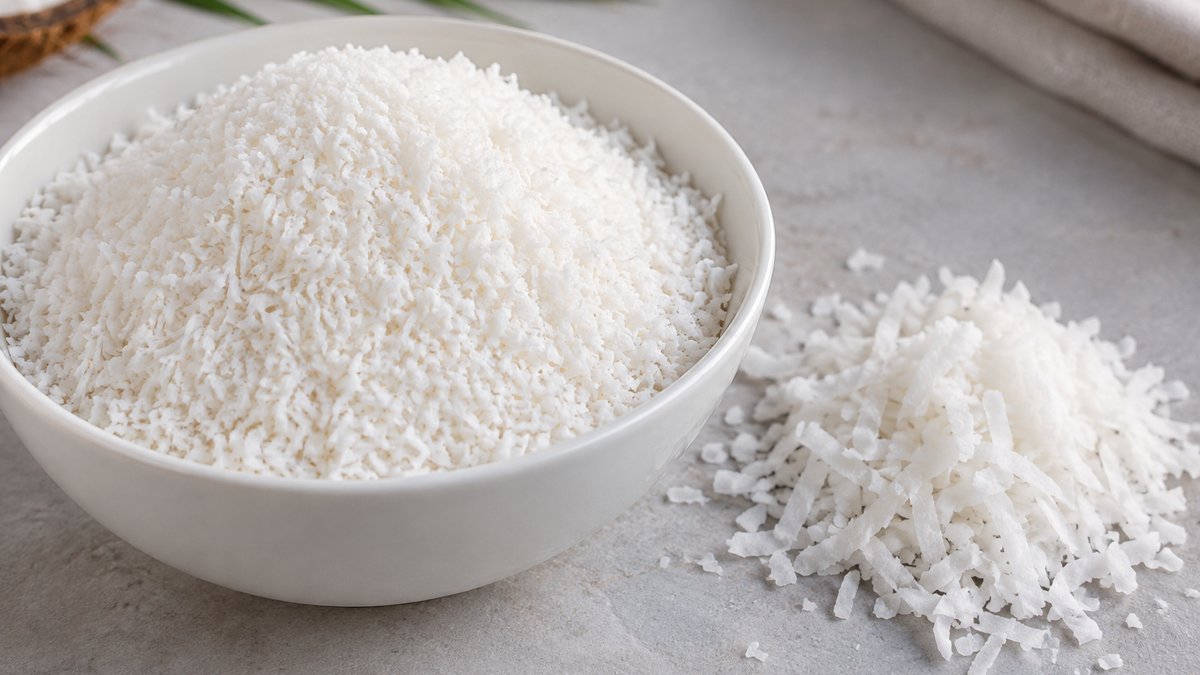
Fine and medium desiccated coconut are size descriptions for dried, comminuted coconut kernel. Fine particles are smaller; medium particles are larger. That difference changes the product’s visible texture and how it behaves in a recipe, but it does not by itself establish the coconut’s fat content, moisture, microbiological quality, origin or overall grade.
The Centre for the Promotion of Imports from Developing Countries (CBI) gives common size bands of 0.85 to 1.4 mm for fine and 1.4 to 2.8 mm for medium. CBI also lists extra fine as below 0.85 mm. Treat these as useful trade references, not a universal legal definition: buyers and suppliers may use different sieve limits or grade names.
Codex Alimentarius Standard CXS 177-1991 covers desiccated coconut and allows sizing to be indicated when applicable. It does not make the words “fine” and “medium” a complete product specification. For a purchase contract, define the particle-size distribution, test method and applicable tolerances instead of relying on a grade name alone.
In practical terms, fine coconut gives a smaller, more uniform-looking particle than medium coconut. That can suit recipes where the coconut should blend through a mixture. Medium can provide a more visible texture in a finished product. These are application considerations, not guaranteed performance claims: recipe, processing conditions and the supplier’s actual sieve distribution also affect the result.
A buyer comparing quotations should therefore separate particle size from other product attributes. A fine product is not automatically higher quality or more expensive than a medium product. Compare both against the same fat level, moisture limit, ingredient and processing requirements, packing format, quantity and delivery basis.
2. How fine and medium desiccated coconut compare
The main difference is the size distribution of the dried coconut particles. CBI’s common reference bands place fine below medium, but the contract and supplier specification should define the actual sieve results.
The size bands in the table are common trade references, not acceptance limits that apply to every contract. CBI notes that buyers use different standards and that producing countries have also set product standards. Codex treats sizing as optional, so a buyer should check the destination’s applicable rules and the agreement with the supplier.
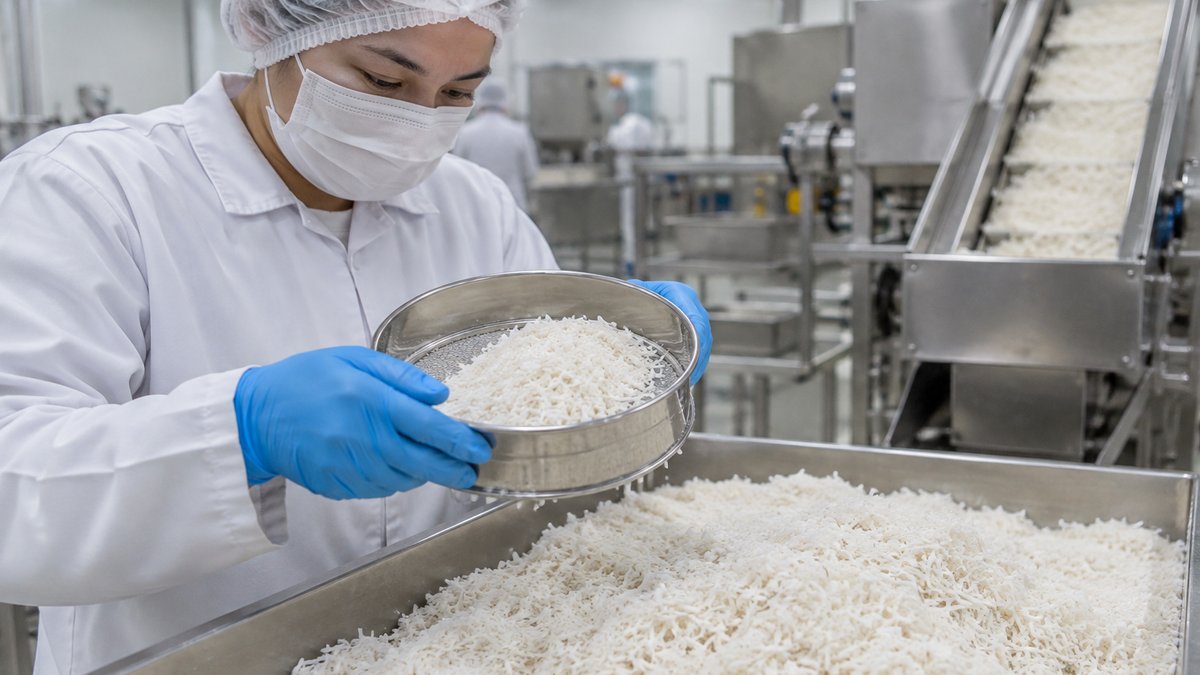
Ask for the sieve analysis on a stated sample weight. The result should show the sieve apertures and the percentage retained or passing at each point. A single nominal size can conceal a broad distribution: two lots sold as fine may contain different proportions of very small particles and larger pieces. Agree on the test method, sampling procedure, acceptable range and what happens if a lot falls outside the range.
Particle size is only one part of the purchase specification. Codex CXS 177-1991 covers product identity and other quality and hygiene provisions. CBI’s overview also lists moisture, fat, colour, flavour and odour among common quality considerations. State the limits relevant to the order separately; do not assume that the words fine or medium cover them.
3. A bakery sourcing scenario shows why grade names need a specification
Consider a bakery comparing fine and medium coconut for a filling. The buyer wants coconut distributed evenly through the filling and asks two suppliers to quote for fine grade. One supplier defines fine as 0.85 to 1.4 mm; the other gives only the word fine and provides no sieve data. The quotes do not yet describe equivalent products.
The buyer can request each supplier’s sieve distribution, then test representative samples in the intended recipe. The trial can check how the coconut mixes into the filling and whether its finished texture meets the bakery’s requirement. If larger visible pieces are preferred, the buyer can compare a medium sample using the same recipe and evaluation method. This scenario illustrates a procurement process; it does not predict how a particular product will perform.
Illustrative inquiry format:
Product: Desiccated coconut, fine or medium as specified
Particle size: State sieve apertures and required percentage retained or passing
Other product limits: State fat content, maximum moisture and any other required quality criteria
Packing and shipment: State pack size, order quantity, destination and requested delivery term
This is an illustrative specification checklist. Set the limits and terms for the actual product, destination and contract.
The same comparison matters for ingredient manufacturers. A change in particle size may alter the appearance or texture of a finished product, so a buyer should approve a sample that matches the contract specification before confirming a purchase. If the buyer accepts a particular sieve distribution, attach or reference that agreed specification in the purchase documents.
Looking to Source Desiccated Coconut?
Connect with verified suppliers, discover matching products, and explore sourcing opportunities from global markets.
4. Choose fine or medium by the finished product and a measurable specification
Choose fine when the product design calls for smaller particles or a less prominent coconut texture. Choose medium when the intended recipe or presentation calls for larger, more visible particles. Then confirm the choice with samples and sieve data. Neither grade is a general-purpose winner; the application sets the requirement.
4.1 Choose fine when smaller particles fit the recipe
Fine may be a suitable starting point for bakery fillings, confectionery mixtures or other formulations where smaller pieces are wanted. Before placing a commercial order, test the sample in the actual formulation and production process. A grade description alone cannot confirm how the ingredient will distribute in a mix or appear after processing.
Write the size requirement using the supplier’s sieve data or an agreed particle-size range. If the product must have limited oversize pieces, specify the maximum percentage retained above the chosen sieve aperture. If the recipe depends on a minimum particle size, specify the percentage retained on or above the relevant sieve. The terms “fine” and “uniform” need measurable limits to guide inspection.
4.2 Choose medium when a more visible particle is wanted
Medium may be worth testing when the finished product should show larger coconut pieces or when the buyer prefers a coarser texture. The buyer should check the supplier’s stated particle distribution against the sample and the recipe. If a product appearance is part of the purchase requirement, describe it alongside the sieve limits rather than using it as a substitute for them.
A sample can help a buyer compare products, but it should represent the commercial lot and be assessed using agreed criteria. Record the sample identity, the sieve method, the result and the application trial. The purchase specification should say whether that sample is an approved reference and how any differences between the sample and delivered lot will be handled.
4.3 Keep size separate from fat content and other quality requirements
Fine and medium describe particle size, not whether the product is full-fat or low-fat. CBI describes full-fat desiccated coconut as containing at least 60% coconut oil by mass and low-fat product as containing less than 60%. Confirm the applicable fat specification directly with the supplier and state the required limit in the contract.
Set moisture, colour, flavour, odour and microbiological requirements separately where they apply to the order. Codex CXS 177-1991 provides an international standard for desiccated coconut, while importing-country rules and buyer specifications may add requirements. Check the relevant jurisdiction and product scope before treating any standard or customer criterion as mandatory.
4.4 Make supplier quotations comparable
Send the same written specification to each supplier. Include the grade requested, sieve apertures and tolerances, fat level, moisture limit, packing, quantity, destination and requested delivery term. Ask suppliers to identify any point they cannot meet, rather than allowing a quotation to leave the difference unstated.
When quotations arrive, compare them only after confirming that the offered particle distribution and other product attributes match. If one quotation covers a different fat level or uses a different sieve range, record that difference instead of treating the prices as directly comparable. A clear specification helps the buyer evaluate the actual product being offered.
5. Related standards and sourcing resources
For product requirements, consult Codex Alimentarius Standard CXS 177-1991, Standard for Desiccated Coconut, and check whether national rules or the destination buyer’s own specification also apply. CBI’s market-entry guidance for desiccated coconut summarizes common quality criteria and particle-size references. The two resources serve different purposes: Codex provides an international product standard, while CBI gives market guidance. Neither replaces the size and quality limits agreed for a particular transaction.
For sourcing, Freshdi has desiccated coconut buying requests and desiccated coconut supplier listings. Review the product details and confirm the requested or offered grade, sieve data and other contract terms before comparing potential matches.
Suppliers preparing an offer can make comparison easier by stating the particle-size distribution and test method, as well as fat content, moisture, packaging and the requested trade terms. Buyers can then identify whether a quotation covers fine or medium product as they have defined it, rather than relying on a grade name that may vary between specifications.
References
1. Codex Alimentarius Commission – Standard for Desiccated Coconut, CXS 177-1991, 1991, amended 2023.
2. Centre for the Promotion of Imports from Developing Countries (CBI) – Entering the European market for desiccated coconut, 2023.
Disclaimer: This article is compiled from platform data, public sources and information provided by third parties, for general informational purposes only. We do not guarantee its accuracy or completeness. It is not legal, customs, tax or compliance advice. Regulations, tariffs and requirements differ by country and change frequently, so please consult a qualified professional (such as a customs broker, freight forwarder or lawyer) and confirm product specifications with the supplier before acting.