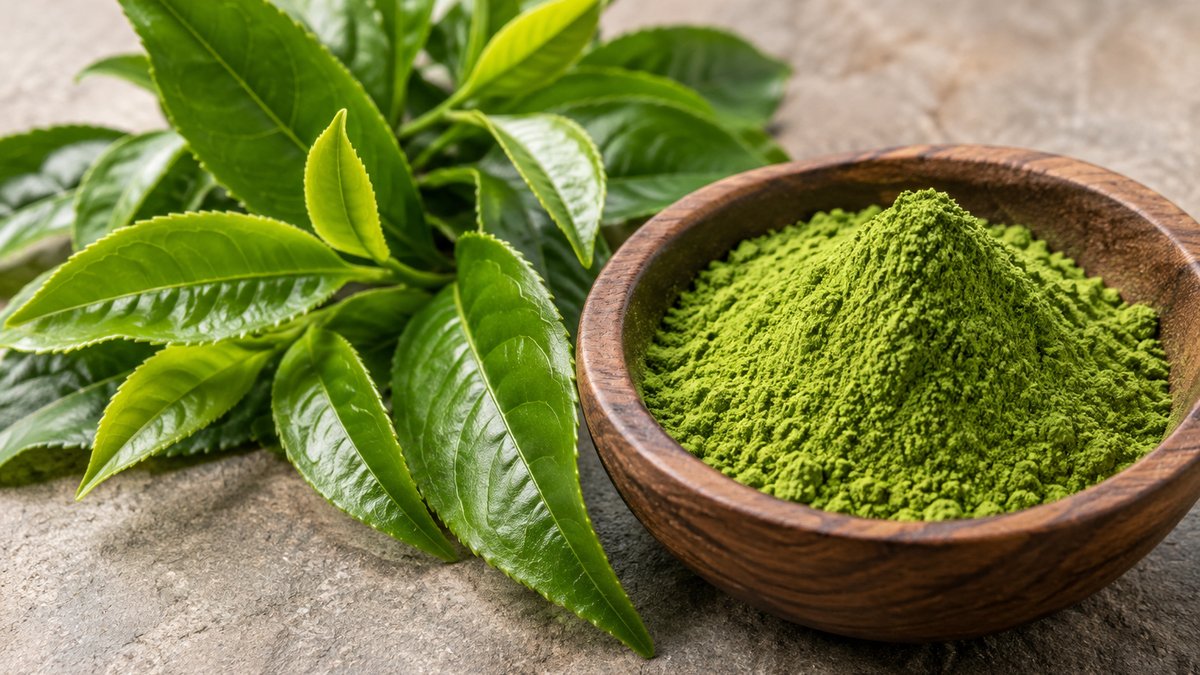

1. Green Tea vs Matcha: The Main Difference
Matcha is a kind of green tea, so the comparison usually means matcha versus leaf-style green tea, such as sencha. The difference is in the tea leaves selected and processed, the final product form and how the drink or ingredient is prepared.
Leaf-style green tea is commonly sold as loose leaves or tea bags. The buyer or end user steeps the leaves in water and removes them before drinking. Matcha is a fine powder made from tea leaves prepared as tencha. The powder is whisked or mixed into a drink, so the tea material remains in the cup rather than being strained out.
ISO 20715:2023 classifies green tea and matcha tea separately within its classification of tea types. The standard’s public definition describes matcha as powder made by finely grinding shade-grown tea leaves that are steamed and dried without rolling. That classification makes the relationship clear: matcha belongs to the green tea family, but the word “green tea” alone does not tell a buyer whether the product is matcha, sencha or another type.
Japan’s Ministry of Agriculture, Forestry and Fisheries describes sencha as steamed, rolled and dried leaves. Its description of tencha, the raw material for matcha, is different: the harvested leaves are steamed and dried without rolling, then ground into fine powder. These production routes affect the specification a supplier should quote against.
For a commercial comparison, define “green tea” more narrowly. A request for leaf-style green tea could mean sencha, another named style, or a particular origin and leaf appearance. A request for matcha should identify powder made from tencha if that is what the buyer requires. Simply comparing “green tea” with “matcha” can otherwise place a broad category beside one product type.
The distinction also changes the format the buyer receives. Leaf tea is assessed as dried leaves, including their appearance, size and condition. Matcha is assessed as powder, with the buyer setting requirements for characteristics such as color, aroma, texture and performance in the intended recipe. Those are specification points to agree with the supplier, not a universal grade system.
A supplier’s use of a label such as “ceremonial” or “culinary” does not, by itself, provide a complete purchasing specification. The buyer should ask what the label means for that supplier’s product and record measurable or testable requirements in the contract or product specification. The same principle applies to leaf tea: a name such as sencha identifies a type, but does not set every quality, origin or pack detail.
2. Green Tea vs Matcha Comparison
Leaf-style green tea and matcha differ most clearly in the material supplied and the steps used to prepare it. Buyers can use those differences to write comparable specifications, request samples and check whether the quoted product suits its intended use.
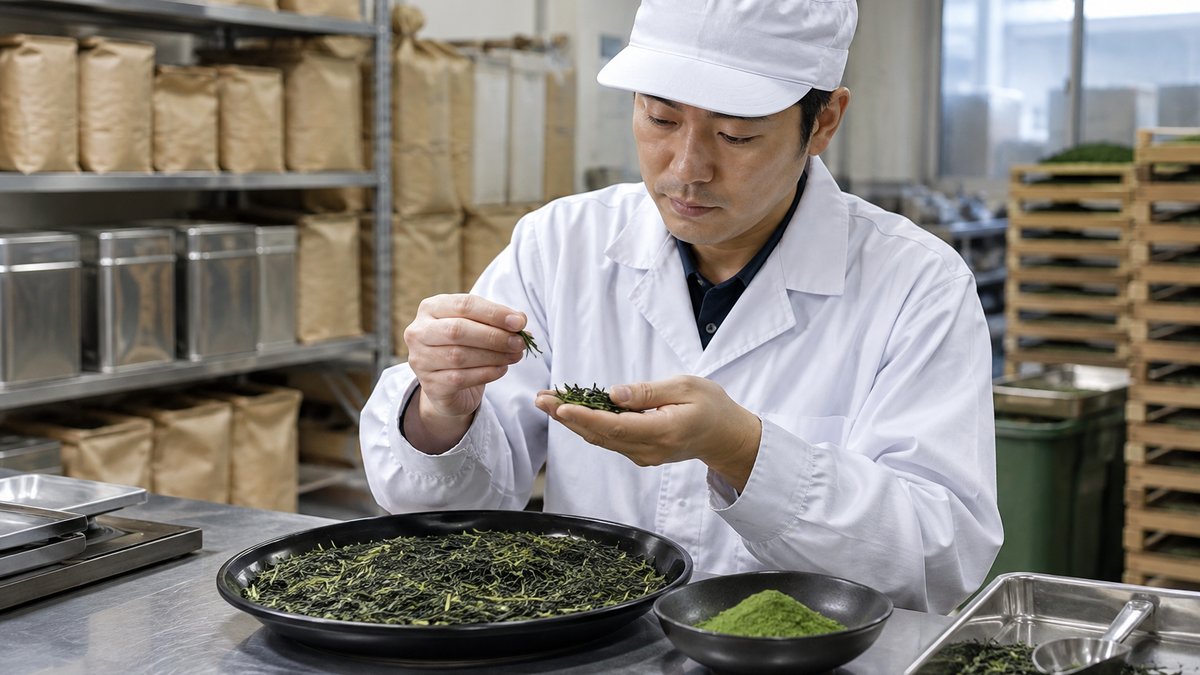
The table uses sencha as an example of leaf-style green tea, not as a definition of every green tea. Green tea types vary. MAFF also lists types such as gyokuro, kabusecha and tamaryokucha, which have their own cultivation or processing details. Some green teas are shaded, so shade cultivation alone does not establish that a product is matcha.
Buyers should also distinguish matcha from other green tea powders. JETRO describes matcha as powder produced from tencha and says powder made from tea other than tencha is categorized separately as powdered tea. A powder’s green color or fine texture therefore does not establish that it is matcha. Request the product’s raw material and processing description when the distinction matters to a label, recipe or customer requirement.
The production details should be interpreted within their stated scope. The MAFF and JETRO descriptions explain Japanese tea methods and terminology. They are useful references for specifying Japanese matcha and sencha, but they do not establish that every country’s commercial labeling rules use the same definitions. Buyers exporting or importing tea should check the rules that apply in the destination market and for the particular product and label.
A request for a quotation should identify the product before the buyer compares price. For leaf tea, state the named style and whether the product is loose or bagged. For matcha, state whether the requested product is matcha made from tencha, plus its intended use. For both, record origin, pack size, order quantity, delivery term and any applicable food safety, residue or certification requirements. These details make supplier offers easier to compare on the same basis.
The buyer should agree how the supplier will describe and verify the product. A sample can be assessed against the agreed appearance, aroma, taste and preparation performance. For powder, include how it should disperse in the buyer’s intended application; for leaf tea, define the brewing method used for sample evaluation. A sample evaluation does not replace applicable import checks or contractual quality requirements.
3. A Sourcing Scenario: Leaf Tea or Matcha Powder
Consider a beverage business planning both a brewed green tea and a matcha drink. The buyer needs two distinct product specifications because the products are prepared differently and the supplier must quote against the intended form.
For the brewed drink, the buyer might request leaf-style green tea and name the style, such as sencha, if that is the intended product. The specification can then state leaf presentation, origin, packaging, quantity and the buyer’s preferred sample-brewing method. If tea bags are required, the buyer should say so rather than assuming loose leaves and bagged tea are interchangeable.
For the matcha drink, the buyer can request matcha made from tencha and state that it will be whisked or mixed into a beverage. The buyer should define the powder’s required characteristics and provide the preparation method used to evaluate a sample. If the powder is also intended for another use, such as a baked product, the buyer should assess it in that application rather than relying on its performance in a drink.
Illustrative inquiry format:
Product: Leaf-style green tea, named type to be confirmed
Second product: Matcha made from tencha
Origin and quantity: State the required origin and order quantity for each product
Pack format: State loose leaf, tea bag, or powder pack and pack size
Evaluation: Describe the sample preparation and product characteristics to be assessed
Delivery and compliance: State destination, requested delivery term and applicable market requirements
This is an illustrative inquiry structure, not a universal product specification or a quotation.
The buyer should ask the supplier to identify whether the powder is made from tencha and how the supplier defines any commercial grade name used in the offer. If the supplier offers a different green tea powder, the buyer can decide whether that material fits the product, but should not treat it as matcha without confirming its identity and the applicable labeling rules.
In this scenario, a single request for “green tea” would leave too much unresolved. It would not tell the supplier whether to quote leaf tea or powder, which named type is required, or how the buyer intends to use it. Separate product lines and specifications let the buyer compare like with like and reduce avoidable clarification during quotation and contract review.
Looking to Source Green Tea?
Connect with verified suppliers, discover matching products, and explore sourcing opportunities from global markets.
4. When Should Buyers Choose Green Tea or Matcha?
Choose leaf-style green tea when the required product is brewed from leaves that are removed before serving. Choose matcha when the formulation calls for finely ground tea powder that is mixed into the drink or food. The decision starts with the recipe and the product form the buyer needs to purchase.
4.1 Choose leaf-style green tea for leaf infusion
Leaf tea suits a product or service built around steeping leaves. A buyer may specify sencha when that named style fits the intended product, but should not use “green tea” alone if the supplier needs to distinguish it from other green tea types. Define the pack format too, because loose leaves and tea bags require different handling and packaging.
For evaluation, brew the sample using the method expected in production or service. Record the leaf appearance and the resulting infusion against the buyer’s own requirements. If the tea is intended for retail, confirm the declared product name, ingredient information and pack details against the destination market’s rules before approving artwork.
4.2 Choose matcha when the recipe needs powdered tea
Matcha is suited to applications that call for tea powder to be whisked, mixed or incorporated into a recipe. JETRO notes its use in drinks and confectionery. The buyer should therefore evaluate the powder in the actual intended application and state whether the supplier’s product needs to meet a drink, food ingredient or more than one use case.
Ask the supplier to confirm the material’s identity and production route, especially whether it is made from tencha. Agree on powder characteristics and sample assessment criteria rather than relying only on a grade label or color description. For a finished beverage or food product, the buyer also needs to check formulation, ingredient declaration and destination-market requirements separately.
4.3 Compare costs only after product specifications match
A quotation for leaf tea and one for matcha do not describe the same form of product. Processing, packaging and intended use differ, so a price-per-kilogram comparison alone may not answer which offer fits the buyer’s product. Request quotes against explicit specifications and compare the same unit, pack basis, delivery term and other stated commercial conditions.
Buyers should also include the work required after delivery. Leaf tea needs the preparation method planned for brewing; powder needs a mixing or incorporation method that works in the finished application. If the supplier’s sample fails the buyer’s use test, discuss the product specification before negotiating a price or placing an order.
Buying consideration: Before sending a purchase inquiry, write the product name, form, intended use, origin, pack format, quantity, sample criteria and destination requirements in separate fields. Specify matcha as tencha-based powder when that identity is required, and name the leaf tea type when the buyer is not seeking matcha.
5. Resources for Green Tea Buyers and Exporters
Use the ISO tea classification to understand how green tea and matcha sit within a common classification of tea types. MAFF’s descriptions of sencha and tencha explain the Japanese production distinction, while JETRO’s matcha overview discusses the raw material and powder form. These sources support product identification; they do not replace destination-specific labeling, food safety or import requirements.
For a contract or product data sheet, keep the evidence close to the specification. Identify the named tea type, the material and process when relevant, the product form, origin, packaging and intended use. Record which characteristics the supplier guarantees and how the buyer will assess a sample or delivered lot. If an import rule applies, confirm the current official rule for the destination and product before agreeing the shipment.
Buyers looking for possible Green Tea suppliers and exporters reviewing Green Tea buying requests can use the corresponding Green Tea pages on Freshdi: view potential Green Tea suppliers and view Green Tea buying requests. Check each listing’s current details and verify product specifications and commercial terms before making a sourcing decision.
The definitions and production descriptions in this article were checked on November 13, 2026. The sources below describe tea classifications and production methods; product requirements still depend on the buyer’s specification and applicable market rules.
References
1. International Organization for Standardization – ISO 20715:2023, Tea: Classification of tea types, 2023.
2. Japan Ministry of Agriculture, Forestry and Fisheries – Please tell me about the types of green tea, 2023.
3. Japan External Trade Organization – Highlighted Japanese Ingredient: Matcha, 2026, accessed November 13.
4. Japan Ministry of Agriculture, Forestry and Fisheries – Uji Tea, Traditional Foods in Japan, 2026, accessed November 13.
Disclaimer: This article is compiled from platform data, public sources and information provided by third parties, for general informational purposes only. We do not guarantee its accuracy or completeness. It is not legal, customs, tax or compliance advice. Regulations, tariffs and requirements differ by country and change frequently, so please consult a qualified professional (such as a customs broker, freight forwarder or lawyer) and confirm product specifications with the supplier before acting.