
1. Frozen Durian and Freeze-Dried Durian Have Different Product Forms
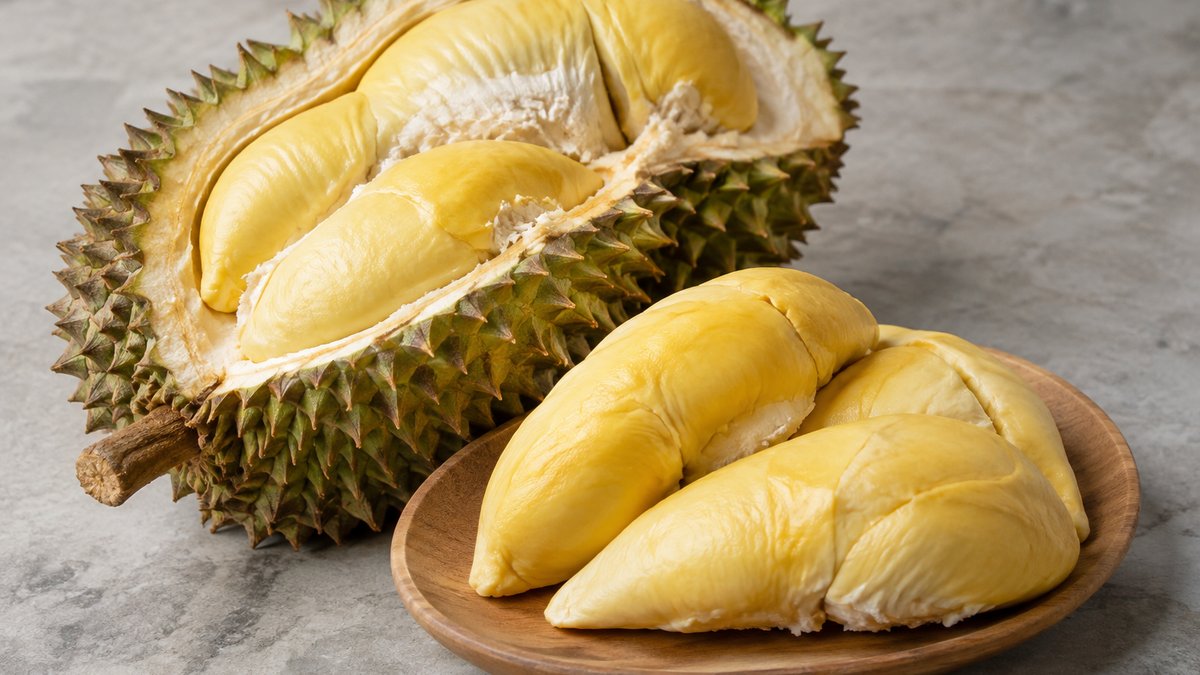
Frozen durian retains much of the fruit’s original moisture and is stored and transported as a frozen product. Freeze-dried durian is first frozen, then dried under vacuum so that ice changes directly into water vapor. The finished product has far less moisture and is usually sold as pieces, chunks or powder.
The terms describe different processing outcomes. A buyer sourcing frozen pulp is buying a moist fruit ingredient that needs frozen storage. A buyer sourcing freeze-dried pieces is buying a dried ingredient whose texture, moisture level and packaging need to suit its intended use.
Neither name alone defines the durian variety, ripeness, seed status, piece size, additives or quality grade. Frozen durian can be supplied as whole fruit, pulp or paste. Freeze-dried durian can be presented as intact pieces or smaller particles, depending on how the producer prepares it. Buyers should treat each as a separate specification, even when both products start with durian flesh.
A 2021 study of freeze-dried durian examined products dried for 30 and 36 hours and reported changes in measured flavour compounds. The result describes the study’s products and process; it does not establish a standard flavour profile or shelf life for every commercial freeze-dried durian.
Buying consideration: Use the product name to identify the processing form, then request the detailed specification. For frozen durian, confirm whether the offer is whole fruit, pulp or paste and whether it is seeded. For freeze-dried durian, confirm the physical form, moisture or water-activity specification, ingredient declaration and storage instructions.
2. Frozen Durian and Freeze-Dried Durian Compared
The main commercial difference is the condition in which the product arrives and must be handled. Frozen durian needs a continuous frozen supply chain. Freeze-dried durian is a dried product, so buyers should check its moisture specification and packaging rather than assuming it has the same storage requirements as frozen fruit.
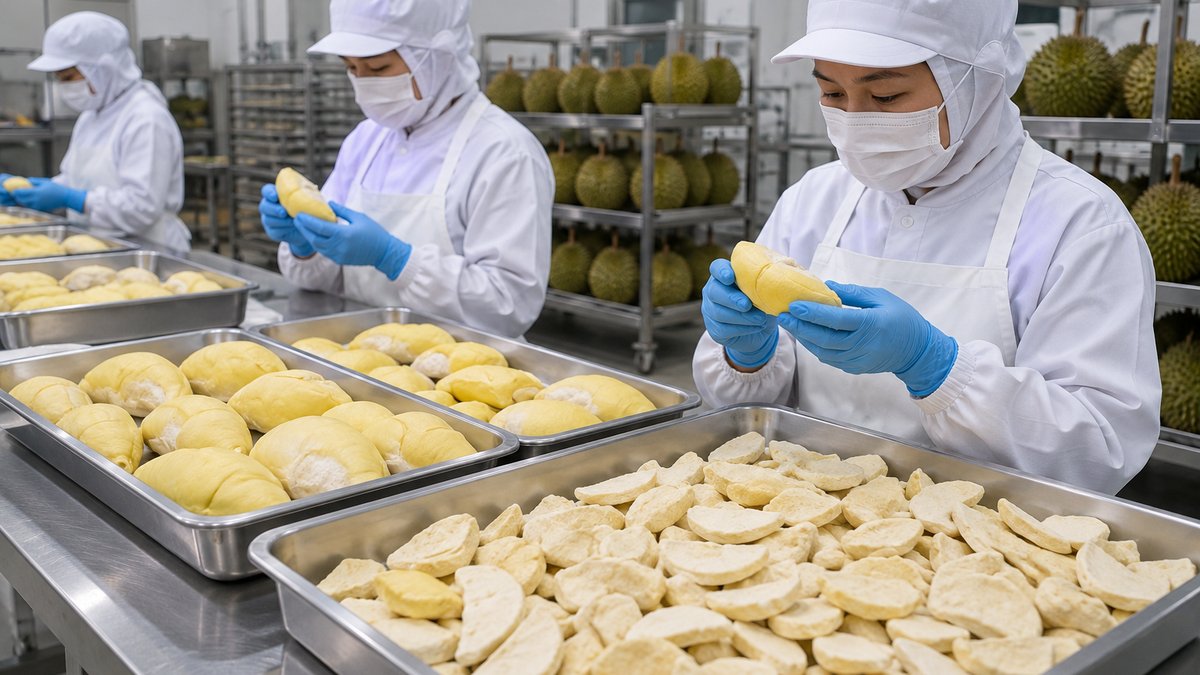
For frozen products, the storage temperature must be stated in the product specification and maintained as required by the relevant market rules and contract. Thailand’s agricultural standard for frozen durian describes storage and transport at temperatures not higher than -18°C. That national standard is relevant to its scope; it is not a universal rule for every origin and destination.
Freeze-dried products need protection from moisture uptake. Their suitable storage conditions and shelf life depend on the product and its packaging. The word “freeze-dried” alone does not confirm that a product can be stored at room temperature, how long it will keep, or whether it must be rehydrated before use.
Texture also differs. Frozen pulp is a moist ingredient that changes during freezing and thawing. Research on Musang King and D24 pulp and paste found quality changes during 12 months of frozen storage under the study conditions. Freeze-drying produces a dried form; research on durian freeze-drying has found that processing time can affect measured properties, including flavour compounds. Buyers should assess samples against their own product requirements rather than treating either process as a guarantee of unchanged sensory quality.
Buying consideration: Compare quotations only after the form, pack size, storage conditions and delivery basis are clear. A price per kilogram for frozen pulp does not describe the same product or handling cost as a price per kilogram for freeze-dried pieces.
3. A Sourcing Scenario: Durian for Ice Cream and Snack Packs
Consider a manufacturer sourcing durian for two product lines: an ice-cream filling and a dry snack mix. The filling team needs a moist durian ingredient that can be blended into a recipe. The snack team wants pieces that remain distinct in a dry mix. The two uses point to different product forms, so one generic request for “durian” would leave suppliers unsure what to quote.
Illustrative inquiry formats:
Product for ice-cream filling: Frozen durian pulp or paste; specify variety, seed status, pack size, storage temperature, quantity and destination.
Product for dry snack mix: Freeze-dried durian pieces; specify variety, piece size, ingredient declaration, moisture or water-activity requirement, pack size and storage instructions.
These are example fields for an inquiry, not universal specifications. The buyer should set values that match the recipe, destination rules and production process.
The frozen ingredient requires freezer capacity at the receiving site and a plan for temperature-controlled transport. The freeze-dried ingredient calls for a different check: whether the pieces keep their required shape and texture in the buyer’s mix, and whether the package protects them from moisture during storage and use.
Before ordering, the buyer can request a product specification and representative sample for each form. For frozen pulp, the review can cover thawed consistency, aroma, color and recipe performance. For freeze-dried pieces, it can cover piece integrity, moisture-related performance and flavor in the finished product. Any sample test should match the buyer’s actual processing and storage conditions.
The contract should also identify the agreed product form and acceptance criteria. If the transaction depends on a particular variety, seed status or ingredient composition, name it in the specification. For frozen cargo, set out the applicable temperature and handling requirements. For freeze-dried cargo, state the agreed packaging and storage conditions.
Looking to Source Frozen Durian?
Connect with verified suppliers, discover matching products, and explore sourcing opportunities from global markets.
4. Choose the Product Form That Fits the End Use
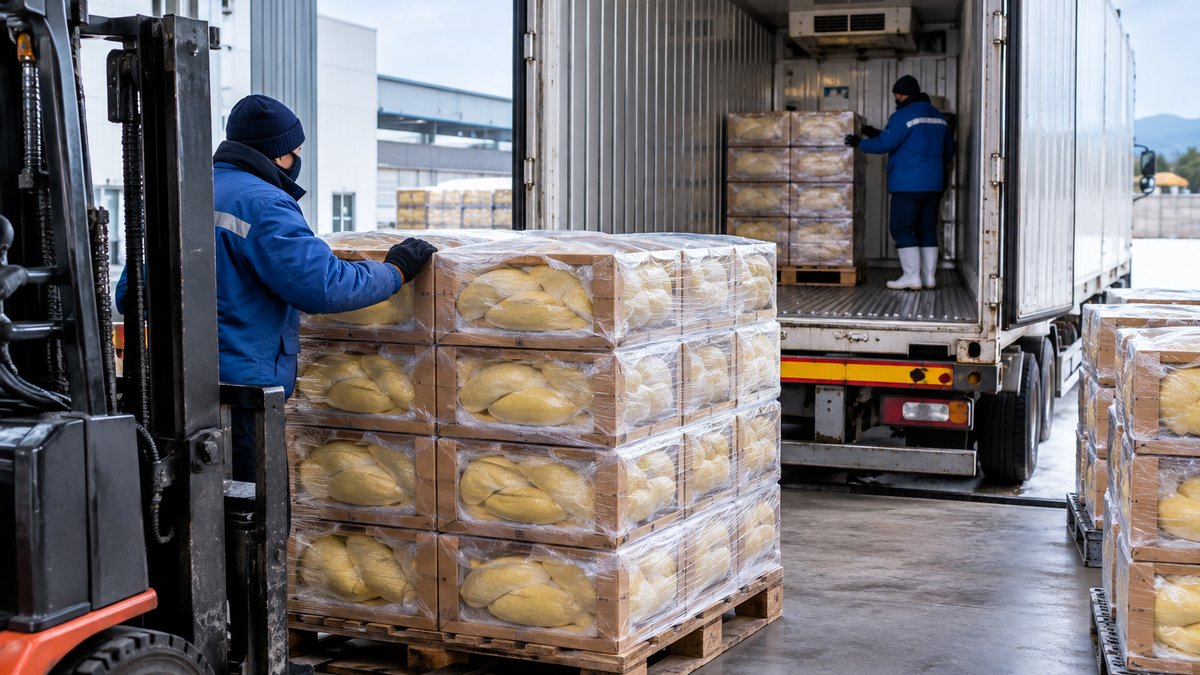
Choose frozen durian when the recipe needs moist fruit or pulp and the buyer can handle frozen storage and delivery. This form can suit applications that use durian as an ingredient, provided the product’s consistency, variety and seed status fit the process.
Choose freeze-dried durian when the formulation calls for a dried ingredient, such as pieces for a dry mix or a form that can be milled into powder. Confirm how the supplier defines the product, including its physical form, ingredient list and moisture-related specifications. Do not assume that freeze-dried fruit will behave like fresh or frozen pulp when rehydrated or mixed into a recipe.
The delivery plan can rule out an otherwise suitable option. A business without dependable freezer storage may find frozen durian difficult to receive and hold. A producer whose recipe depends on moist pulp may find freeze-dried pieces unsuitable without additional processing. The buyer should compare landed handling needs as well as the quoted product price.
Ask suppliers to state the product form, variety, processing method, ingredient composition, package format, storage conditions and shelf life on the specification. For frozen durian, request the temperature requirements and confirm the cold-chain plan for the proposed route. For freeze-dried durian, request the moisture or water-activity information and packaging details relevant to the intended storage period.
Destination requirements can differ. For example, Malaysia’s Ministry of Health describes a listing and approval process for certain frozen durian products exported to China. That requirement concerns the specified export lane and product scope; buyers and exporters should check the current rules for their own destination before contracting.
Buyers can use Freshdi’s Frozen Durian supplier listings to explore relevant suppliers, then confirm product specifications and commercial terms directly through the transaction process.
References
1. National Bureau of Agricultural Commodity and Food Standards, Thailand – Good Manufacturing Practices for Frozen Durian, 2025.
2. Codex Alimentarius Commission – Code of Practice for the Processing and Handling of Quick Frozen Foods, CXC 8-1976, 2008.
3. Darniadi S., Handoko D.D., Sunarmani S., and Widowati S. – Determination of Shelf-Life Using Accelerated Shelf-Life Testing Method and Characterization of the Flavour Components of Freeze-Dried Durian Products, 2021.
4. Tan X.Y., Misran A., Daim L.D.J., Ding P., and Pak Dek M.S. – Effect of Freezing on Minimally Processed Durian for Long Term Storage, 2020.
5. Ministry of Health Malaysia – Durian and Frozen Durian Products to China, n.d..
Disclaimer: This article is compiled from platform data, public sources and information provided by third parties, for general informational purposes only. We do not guarantee its accuracy or completeness. It is not legal, customs, tax or compliance advice. Regulations, tariffs and requirements differ by country and change frequently, so please consult a qualified professional (such as a customs broker, freight forwarder or lawyer) and confirm product specifications with the supplier before acting.