
Introduction
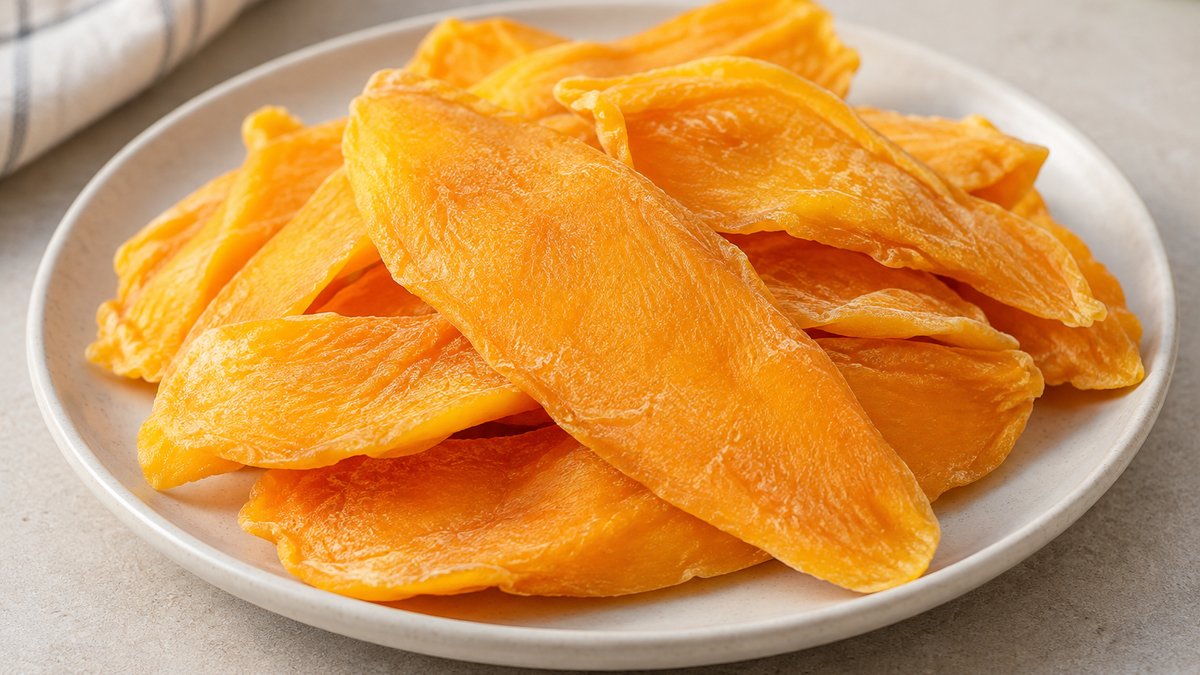
Sweetened dried mango has sugar or another sweetening ingredient added during processing; unsweetened dried mango has no sweetener added. Both still contain the sugars naturally present in mango, and either product may also contain preservatives or other additives.
For importers and exporters, the distinction affects the ingredient declaration, sweetness, texture and intended use. A product name alone may not settle the specification: buyers should confirm the ingredient list, processing details and destination-market labeling requirements before comparing offers.
1. Sweetened and unsweetened dried mango differ by added sweetener
The difference is whether a sweetening ingredient is added, not whether the finished fruit contains sugar. Mango naturally contains sugars, so an unsweetened product is not sugar-free. A sweetened product may use sugar, syrup or another sweetening ingredient; buyers should check the actual ingredients rather than infer them from color or softness.
A 2014 product guide from the Centre for the Promotion of Imports from Developing Countries describes sweetened dried mango as mango pieces treated with a sugar solution before drying. It describes natural dried mango as having no added sugar, dyes or other additives. Those descriptions help explain common product types, but the report is dated and should not be treated as a current market-share estimate or a universal product definition.
The words used in trade and on packaging can vary. Some sellers use “natural” or “no added sugar” for a product without added sweetener, while other products described as conventional may contain preservatives. “Unsweetened” by itself does not tell a buyer whether sulfur dioxide, oil, acidulants or another processing aid was used. Confirm each ingredient separately.
The distinction also does not identify the mango variety, ripeness, slice thickness, moisture level, drying method or grade. Those attributes can affect sweetness, chewiness, color and performance in the buyer’s process. A specification that states only “sweetened dried mango” leaves those points open.
For a contract, define the product by its ingredients and measurable attributes. State whether sweetener may be added, which ingredients are permitted, and whether the buyer requires an ingredient declaration or other documents for the destination market. Then add the physical product details, such as cut, size range, moisture limit and packaging.
2. How sweetened and unsweetened dried mango compare
Sweetener changes the recipe, but it does not establish a single standard for taste, texture or keeping quality. Drying conditions, mango variety, slice thickness, moisture and any preservatives also affect the finished product. The following comparison describes common distinctions buyers should verify with a supplier.
The table does not assign a fixed moisture level or shelf life to either type. The CBI guide reports ranges and product descriptions for particular dried mango types, but those details reflect its report and should not be copied into a purchase specification without checking the supplier’s current product and the buyer’s requirements.
Color is not a reliable test for added sugar. Mango variety, ripeness, pretreatment and drying can all change appearance. Nor does a soft texture prove that sugar was added. Buyers should use the ingredient declaration, a product specification and, where needed, an agreed laboratory or inspection method.
“No added sugar” also needs careful wording in a contract. Ask the supplier to confirm that no sugar, syrup or other sweetening ingredient is added, and request the full ingredient list. If the buyer needs a particular claim on retail packaging, the claim must be reviewed against the rules of the destination market. A trade description does not replace that review.
Buying consideration: Before comparing quotations, match the ingredient policy, cut, size, moisture specification, packaging and delivery basis. A lower price for one product is not a like-for-like comparison if its recipe or moisture limit differs.
Looking to Source Dried Mango?
Connect with verified suppliers, discover matching products, and explore sourcing opportunities from global markets.
3. A sourcing scenario shows why the ingredient list matters
Consider a snack importer comparing two offers for sliced dried mango. One seller quotes a product that contains mango and sugar; another describes its product as unsweetened. The importer cannot compare the offers on the product name alone. The slice dimensions, moisture, permitted additives, packaging and shipment terms may also differ.
The importer first confirms the ingredient lists. If the retail product must have no added sweetener, the supplier’s confirmation should cover sugar, syrups and other sweetening ingredients, not just the phrase “unsweetened.” The importer then checks whether either product contains preservatives or other additives that affect the ingredient declaration or the buyer’s market requirements.
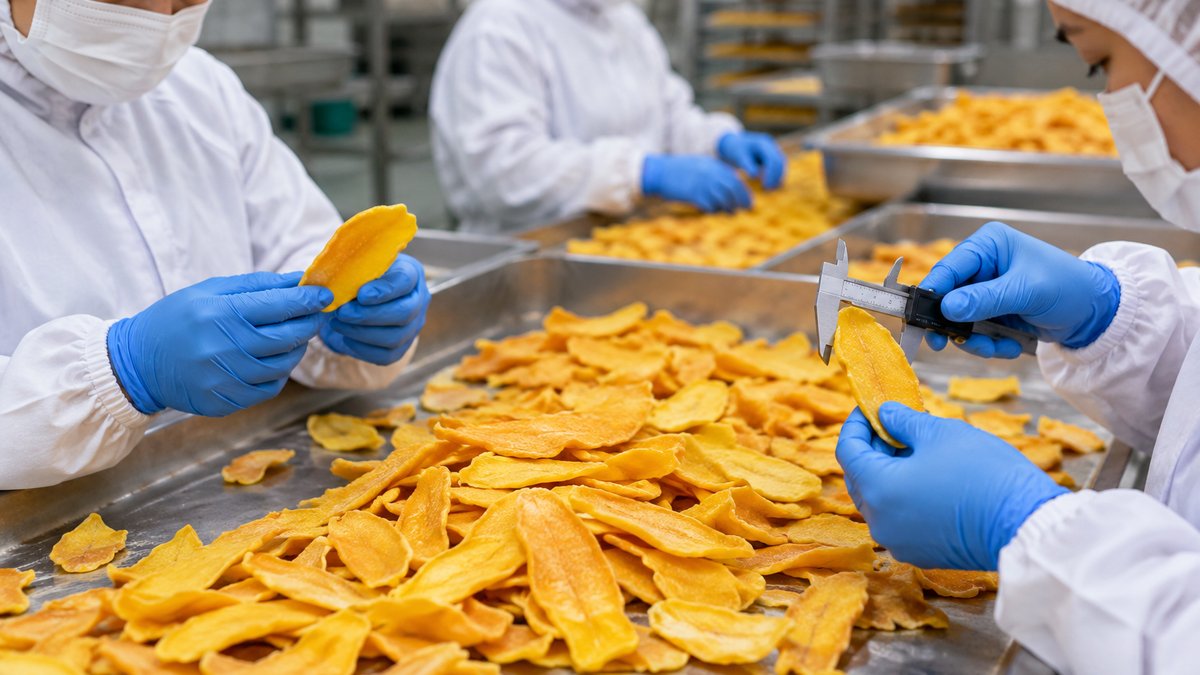
Next, the importer sets comparable physical specifications. The contract can state the mango variety if required, the slice or strip dimensions, the permitted range of broken pieces, the moisture limit and the packaging format. If texture matters to the finished product, the buyer can define an agreed sample or test method rather than relying on words such as “soft” or “chewy.”
Illustrative dried mango inquiry:
Product: Sliced dried mango
Sweetener: No added sugar or syrup; supplier to declare all ingredients
Other additives: List each additive and preservative in the offer
Physical specification: State agreed slice dimensions and moisture limit
Packaging and shipment: State pack format, order quantity, destination and requested delivery term
This is an illustrative inquiry format, not a universal dried mango specification. The buyer should set values and requirements for the product and destination.
The same checks apply when a processor buys mango as an ingredient for cereal, bars or another food. The processor may want to control the sweetness of the finished recipe, but the dried mango’s cut, moisture and ingredient profile can matter just as much. A trial batch can help confirm whether the pieces feed, mix or rehydrate as expected.
Samples should be tied to the commercial specification. Buyers can record the sample lot, recipe, ingredient statement and physical measurements, then require the shipment to match the approved specification. A retained sample from the approved lot can assist if the delivered product differs in sweetness, texture or appearance.
4. Choose the product that fits the recipe and label
Choose sweetened dried mango when the intended product calls for added sweetness and the buyer accepts the supplier’s declared ingredients. Choose unsweetened dried mango when the buyer wants no sweetener added or needs to control sweetness in a later recipe. The decision depends on the finished use, ingredient policy and label, not on a general ranking of one type over the other.
4.1 When sweetened dried mango may fit
A snack pack designed for a distinctly sweet taste may suit a sweetened product, subject to the buyer’s nutrition, ingredient and labeling requirements. A food manufacturer may also consider it when the added sweetness is part of the product formula and the supplier can meet the required cut, texture and consistency.
Buyers should specify which sweetener is acceptable and whether the supplier may change the recipe. If the buyer needs a particular sweetness level, a written ingredient declaration alone may not be enough; the buyer and supplier should agree on a measurable specification or an approved sample. Any nutrition or label claims should be checked for the destination market.
4.2 When unsweetened dried mango may fit
An unsweetened product may suit a buyer who wants mango flavor without added sweetener, or a processor that adjusts sweetness elsewhere in its recipe. It may also fit a retail product whose ingredient policy excludes added sugar. Buyers still need to check naturally occurring sugars, any other ingredients and the applicable label rules.
For either type, request the complete ingredient list and product specification before approving a label or placing an order. If the supplier’s “unsweetened” product includes an additive, the label and buyer’s requirements need to account for it. If a product is described as “natural,” ask what that term means in the supplier’s specification rather than treating it as proof that no additives were used.
A buyer can use this checklist to prepare a request:
- State whether added sweetener is allowed. If it is allowed, identify the permitted sweetener or recipe requirements.
- Request the complete ingredient declaration, including preservatives and other additives.
- Define the mango form, such as slices, strips, chunks or dice, and specify dimensions or tolerances.
- Set the moisture limit and any agreed method for measuring it.
- Describe the required texture, color and defect tolerances with a written specification or approved sample.
- State the package type, pack size, quantity, destination and delivery term.
- Check labeling and food requirements for the destination and the product’s intended use.
Buying consideration: Ask suppliers to quote against the same written specification. That lets the buyer compare the recipe, product condition, packaging and delivery terms without mistaking different products for equivalent offers.
5. Related resources for dried mango buyers and sellers
The UNECE standard for dried mangoes gives a product-specific reference for quality and presentation. Codex lists a general standard for dried fruits. These documents can inform a specification, but buyers should check their scope and status and confirm which national rules apply to the product and destination.
The CBI product-characteristics guide describes sweetened, conventional and natural dried mango as distinct product types. It was published in 2014, so use it for background on the distinctions rather than current market figures or current legal requirements.
For a commercial request, share the ingredient policy and physical specification with prospective suppliers. Buyers can review dried mango buying requests on Freshdi, and exporters can review dried mango supplier listings on Freshdi when assessing relevant sourcing opportunities.
References
1. United Nations Economic Commission for Europe – Standard for Dried Mangoes, DDP-25, 2013.
2. Food and Agriculture Organization of the United Nations and World Health Organization, Codex Alimentarius – General Standard for Dried Fruits, CXS 360-2020, 2020.
3. Centre for the Promotion of Imports from Developing Countries – Product Characteristics for Dried Mangoes, 2014.
Disclaimer: This article is compiled from platform data, public sources and information provided by third parties, for general informational purposes only. We do not guarantee its accuracy or completeness. It is not legal, customs, tax or compliance advice. Regulations, tariffs and requirements differ by country and change frequently, so please consult a qualified professional (such as a customs broker, freight forwarder or lawyer) and confirm product specifications with the supplier before acting.