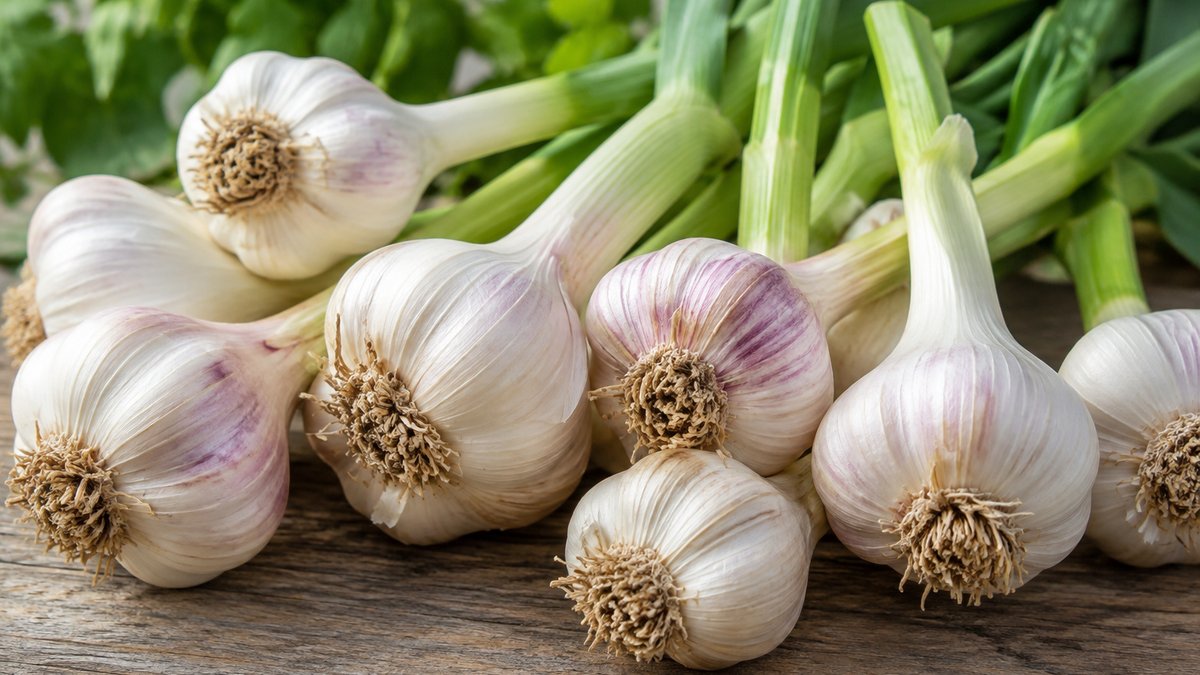

Fresh garlic and semi-dry garlic are distinguished mainly by the condition of the stem and the bulb’s outer skin—not by a different species or variety. Under the Codex Standard for Fresh Garlic, fresh garlic retains moisture and turgidity in the stem, with a soft, flexible outer skin; semi-dry garlic has a stem and outer skin that are not completely dry.
The terminology can be confusing because semi-dry garlic is included within the Codex standard for fresh garlic. Buyers and exporters should therefore state the requested condition explicitly rather than assuming that “fresh garlic” means the same thing in every quotation or contract.
This comparison explains the terms, shows what to include in a product specification, and gives an illustrative sourcing scenario. Codex and UNECE standards are useful references, but buyers should also check the rules and contract terms applicable to their own destination and transaction. The sources in this article were checked on November 23, 2026.
Key Takeaways
- Under Codex CXS 337-2020, fresh garlic retains moisture and turgidity in the stem, while semi-dry garlic has a stem and outer skin that are not completely dry.
- Both terms describe condition within the fresh-garlic standard; they do not identify a variety, grade, size, origin or packaging format.
- Specify the requested condition alongside variety or commercial type, grade, size, origin, packaging and other contract requirements.
- Do not confuse semi-dry garlic with green garlic, which Codex excludes from its fresh-garlic standard when it has full leaves and undeveloped cloves.
1. Fresh Garlic vs Semi-Dry Garlic: The Main Difference
The main difference is the degree of dryness in the stem and bulb covering. The FAO/WHO Codex Alimentarius Commission’s Standard for Fresh Garlic (CXS 337-2020) defines fresh garlic as produce that preserves moisture and turgidity in the stem, with the bulb’s outer skin soft and flexible. Semi-dry garlic is described as produce whose stem and outer skin are not completely dry.
These are related descriptions, not two separate garlic species. Codex includes fresh, semi-dry and dry garlic within its standard for fresh garlic, while defining each by its condition. Dry garlic is the category in which the stem, outer skin of the bulb and skin surrounding each clove are completely dry. That distinction matters when a buyer expects a particular presentation at delivery.
The terms do not, by themselves, state whether bulbs are hardneck or softneck, identify a color or commercial variety, establish a quality class, or set a size. Nor do they tell the buyer the origin, packing format, quantity or shipping condition. Those details need to be agreed separately.
There is also a practical naming issue: a seller may use “fresh garlic” broadly to describe the commodity, while a buyer may intend the more specific Codex condition of fresh garlic rather than semi-dry or dry garlic. To avoid that ambiguity, specify the condition in writing and ask the supplier to confirm it in the product description and sales documents.
Do not use “semi-dry” as a synonym for green garlic. Codex CXS 337-2020 excludes green garlic with full leaves and undeveloped cloves from its scope. The Codex standard also sets out quality, sizing, presentation and labelling provisions. These provisions are a recognized reference; whether a standard is mandatory for a particular shipment depends on applicable destination requirements and the parties’ contract.
Once the required garlic condition is clear, compare product offers and supplier capabilities against the same specification.
View Latest Vegetables Buying Requests →
View Potential Vegetables Suppliers →
2. Fresh Garlic vs Semi-Dry Garlic: Comparison Table
The table summarizes the terminology in Codex CXS 337-2020. It is a comparison of condition descriptors, not a ranking of quality or a substitute for a full commercial specification.
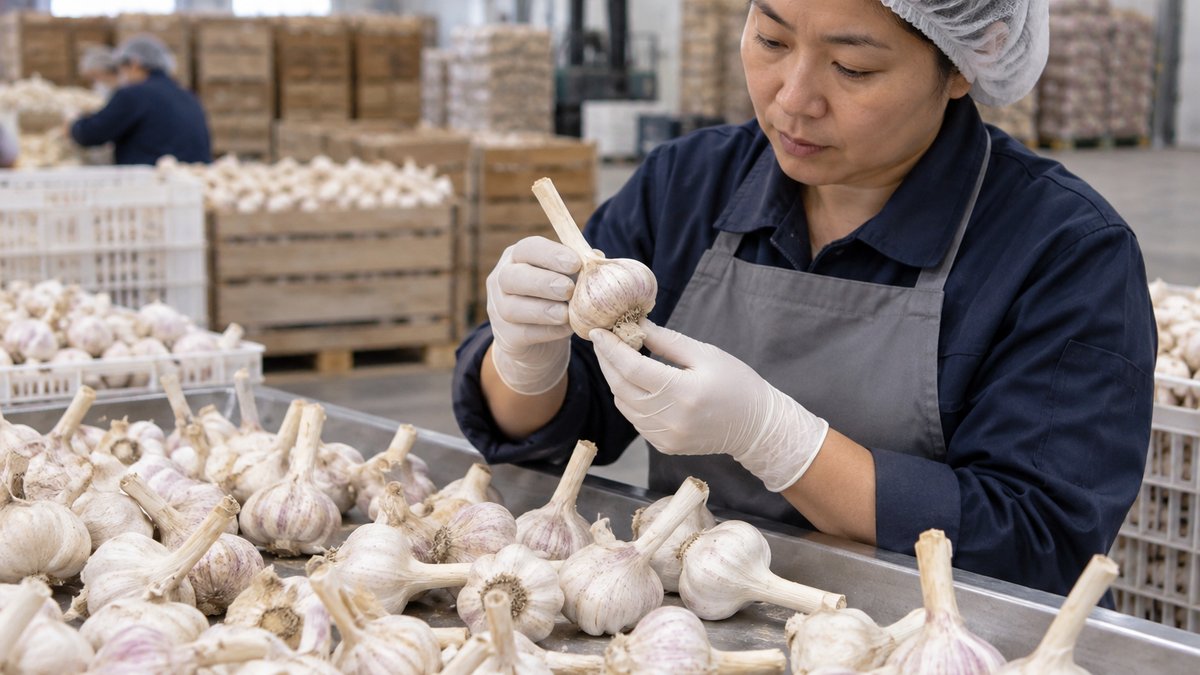
| Feature | Fresh garlic | Semi-dry garlic |
|---|---|---|
| Meaning in Codex CXS 337-2020 | Moisture and turgidity are preserved in the stem; the outer skin is soft and flexible. | The stem and outer skin of the bulb are not completely dry. |
| What the term describes | The condition of the stem and bulb covering. | The condition of the stem and bulb covering. |
| What the term does not define | Variety, grade, size, origin or pack format. | Variety, grade, size, origin or pack format. |
| Relationship to the standard | One of the conditions covered by the standard for fresh garlic. | Another condition covered by the same standard. |
| Useful buyer action | Describe the expected stem and outer-skin condition and confirm it with the supplier. | State that the order calls for semi-dry garlic and agree how the condition will be assessed. |
Codex also covers dry garlic, in which the stem, bulb’s outer skin and skin around each clove are completely dry. That category helps show why the label “fresh garlic” alone may not communicate the buyer’s exact expectation: the standard uses it as the name of the commodity scope while distinguishing several degrees of dryness within that scope.
Other commercial attributes remain separate. For example, Codex uses quality classes and provides for sizing by diameter or existing trade practice. A class describes quality characteristics and permitted defects; a size describes the bulb dimensions or agreed sizing method. Neither is a substitute for specifying whether the garlic should be fresh, semi-dry or dry.
The United Nations Economic Commission for Europe’s UNECE Standard FFV-18: Garlic (2023) also describes fresh, semi-dry and dry garlic as conditions distinguished by stem and bulb-skin dryness. It sets quality and marketing provisions for garlic after preparation and packaging. The language in a buyer’s contract should identify which standard or customer specification is being used, rather than assuming that all parties apply the same terminology.
Buying consideration: When comparing quotations, check that each supplier is offering the same garlic condition, commercial type, quality class, size basis and packaging. If the stem or skin condition is important to acceptance, state the expected condition and inspection method in the contract.
Looking to Source Fresh Garlic?
Connect with verified suppliers, discover matching products, and explore sourcing opportunities from global markets.
3. Example Scenario: Specifying Semi-Dry Garlic
Consider an importer preparing a purchase request for bulbs that should arrive with the stem and outer skin not completely dry. The buyer can describe the requested condition as semi-dry garlic, then add the other characteristics needed for the transaction. This gives suppliers a more useful request than “fresh garlic” alone, which may be interpreted broadly.
Illustrative inquiry format:
Product: Fresh garlic bulbs
Condition: Semi-dry; stem and outer skin not completely dry
Variety or commercial type: State the required type, or ask the supplier to identify the offered type
Quality class: State the agreed standard or buyer requirement
Size: State the required diameter range or agreed sizing method
Origin and quantity: State the required origin and order quantity
Packaging and delivery: State the pack format, destination and agreed delivery terms
Supporting details: Request current product specifications and available lot information
This is an illustrative inquiry format, not a universal garlic specification; buyers should set values and requirements for their own order.
The key is to separate the product’s condition from its other commercial attributes. A supplier’s confirmation of “semi-dry” does not, on its own, confirm variety, size, grade, packaging or suitability for a specific destination. Those points should be stated or requested independently.
The buyer and supplier should also agree how the stated condition will be checked. They can refer to the applicable standard, establish acceptance criteria in the contract, and confirm what product information will accompany the shipment. If the purchase depends on a particular appearance, the parties should agree how representative samples or inspections will be handled before shipment.
Codex CXS 337-2020 contains provisions for product name and origin labelling, commercial identification, quality class and size in relevant presentations. The exact labelling and documentation obligations for a transaction can depend on the destination’s rules and the contract. Treat the standard as a specification reference, then verify what is required for the actual route and sale.
A similar approach works when the buyer wants fresh garlic in the narrower Codex sense: say so explicitly, describe the stem and outer-skin condition expected, and distinguish that requirement from dry garlic. That helps both parties identify misunderstandings before they affect packing, inspection or acceptance.
4. When Should Buyers Choose Fresh or Semi-Dry Garlic?
Neither condition is automatically better. Choose the description that matches the product condition your business actually needs and can assess. The right specification depends on the buyer’s intended handling, presentation and customer requirements, as well as the supplier’s available product.
4.1 Choose fresh garlic when the specified condition is important
If the contract calls for garlic with moisture and turgidity preserved in the stem and a soft, flexible outer skin, specify fresh garlic in those terms. This is more precise than relying on the word “fresh” in isolation, particularly when a supplier uses it as a general product name.
Ask the supplier to confirm that condition for the offered lot and clarify how it will be described in the product specification. Also state the required variety or commercial type, size, quality class, origin and packaging. These details help prevent a correct condition label from being mistaken for a complete specification.
4.2 Choose semi-dry garlic when that is the agreed arrival condition
If the product should have a stem and outer skin that are not completely dry, identify it as semi-dry garlic and make that condition part of the order. This is especially useful when the buyer’s receiving criteria distinguish semi-dry from fully dry bulbs.
Confirm which characteristics will be used to assess the lot and whether the parties are referring to Codex CXS 337-2020, UNECE FFV-18 or a buyer-specific requirement. Avoid assuming that either standard automatically governs every shipment; state the agreed reference in the contract and check applicable destination requirements.
4.3 Use a different description for a different product state
If the order calls for garlic whose stem, outer skin and skin around each clove are completely dry, “dry garlic” is the relevant Codex description. Green garlic is different again: Codex excludes green garlic with full leaves and undeveloped cloves from its fresh-garlic standard. Do not use “semi-dry” to describe either of these states.
For any of the three conditions, compare offers only after aligning the full specification. Check whether suppliers quote the same bulb condition, quality class, size, commercial type, quantity, packing and delivery basis. A product name alone is not enough to establish that offers are like-for-like.
- Name the requested condition: fresh, semi-dry or dry garlic.
- Identify the standard or customer specification used to define and assess that condition.
- State the variety or commercial type, quality class and size requirements.
- Confirm origin, quantity, packaging and relevant shipment details.
- Agree what documents, lot information or inspection evidence will support acceptance.
Buying consideration: Before requesting a quotation, write the condition and acceptance criteria into the same product specification as the grade, size and packing requirements. Then ask each supplier to confirm the complete specification rather than responding with a generic “fresh garlic” offer.
With the condition and purchase requirements defined, buyers can look for suppliers whose listed products and capabilities match the request.
View Related Suppliers for This Product →
5. Related Resources for Fresh Garlic Buyers
The Codex Alimentarius Commission’s Standard for Fresh Garlic (CXS 337-2020, 2020) is the key reference for the definitions and product provisions discussed here. UNECE’s Standard FFV-18: Garlic (2023) is another useful reference for commercial quality and marketing descriptions. Both describe the fresh, semi-dry and dry conditions; neither changes the need to check destination requirements and the terms agreed by buyer and seller.
For U.S. transactions, USDA Agricultural Marketing Service publishes United States Standards for Grades of Garlic (2016). It describes U.S. grade requirements, including “U.S. No. 1,” and uses criteria such as maturity, curing, compactness, defects and bulb diameter. Those grade provisions address quality assessment; they do not replace the buyer’s need to specify the condition and complete product requirements.
For sourcing, buyers can review Fresh Garlic buying requests and explore Fresh Garlic suppliers. If they are comparing across the parent category, they can also browse Vegetable buying requests and view Vegetable suppliers.
Freshdi’s broader buyer directory and supplier directory provide additional places to explore marketplace listings. Buyers should review each listing, confirm product condition and specifications directly, and conduct their own due diligence before agreeing a transaction.
If you need assistance navigating sourcing options, you can learn about Freshdi’s Account Manager service. The account page is a platform resource; it does not replace independent checks of product details, supplier information or contract requirements.
The practical takeaway is to use standards to make terminology clearer, then put the exact condition, acceptance criteria and remaining commercial details into the purchase specification. For Fresh Garlic, a short confirmation of “fresh,” “semi-dry” or “dry” should be supported by a fuller description of what the buyer expects to receive.
Frequently Asked Questions
Is semi-dry garlic a type of fresh garlic?
In Codex CXS 337-2020, yes: semi-dry garlic is one of the conditions covered by the Standard for Fresh Garlic. The term describes garlic whose stem and outer skin are not completely dry. It does not identify a separate variety.
What is the difference between fresh and semi-dry garlic?
Codex describes fresh garlic as preserving moisture and turgidity in the stem, with the outer skin soft and flexible. For semi-dry garlic, the stem and outer skin are not completely dry. Buyers should state the intended condition and agree how it will be assessed.
Is semi-dry garlic the same as dry garlic?
No. Under Codex CXS 337-2020, dry garlic has a completely dry stem, bulb outer skin and skin around each clove. Semi-dry garlic has a stem and outer skin that are not completely dry.
Is green garlic the same as semi-dry garlic?
No. Codex excludes green garlic with full leaves and undeveloped cloves from the scope of its fresh-garlic standard. Semi-dry garlic is defined by the condition of the stem and outer skin, not by the green-garlic description.
What should a buyer include in a fresh garlic inquiry?
Specify whether the required condition is fresh, semi-dry or dry, and identify the standard or acceptance criteria being used. Also include the variety or commercial type, quality class, size, origin, quantity, packaging and shipment details relevant to the order.
Are Codex or UNECE garlic standards automatically mandatory?
Do not assume that a standard automatically governs every transaction. Its applicability can depend on destination requirements and the buyer-supplier contract. Identify the standard or specification agreed for the order and check the requirements that apply to the actual destination.
References
1. FAO/WHO Codex Alimentarius Commission – Standard for Fresh Garlic (CXS 337-2020), 2020.
2. United Nations Economic Commission for Europe – UNECE Standard FFV-18: Garlic, 2023.
3. United States Department of Agriculture, Agricultural Marketing Service – United States Standards for Grades of Garlic, September 6, 2016.
Disclaimer: This article is compiled from platform data, public sources and information provided by third parties, for general informational purposes only. We do not guarantee its accuracy or completeness. Please conduct your own due diligence before making business decisions.