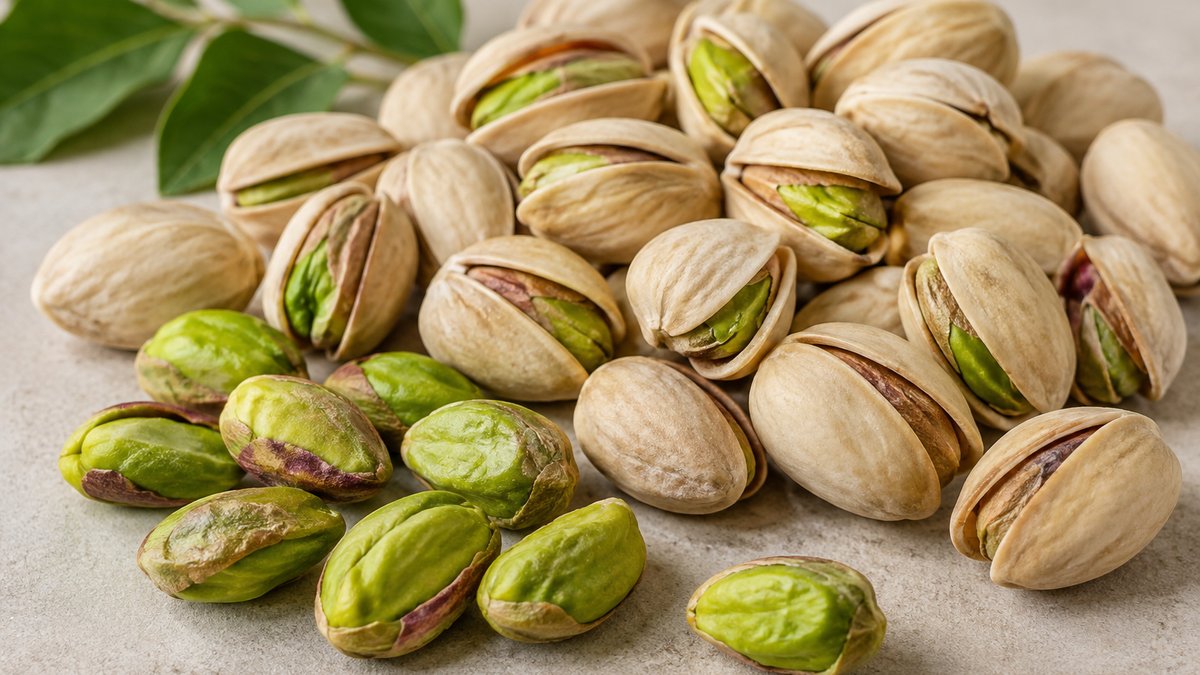

In-shell pistachios and pistachio kernels come from the same crop, but they arrive at the buyer in different forms. In-shell nuts retain the hard shell around each kernel; kernels have been removed from it.
That difference affects what a buyer inspects, how the product can be used next and which details belong in a purchase specification. A snack seller may want nuts presented in their shells, while an ingredient buyer may need kernels for sorting, packing or further processing.
This comparison focuses on product form and commercial specification—not on a universal quality or price ranking. Standards and product references were checked on 23 November 2026.
Key Takeaways
- In-shell pistachios are supplied with the shell; pistachio kernels are shelled. The terms describe product form, not a complete grade or processing specification.
- Inspection points differ: in-shell lots include shell condition as well as kernel quality, while kernel specifications can address whole, split or broken pieces and foreign material.
- Choose the form that fits the next step in your supply chain. Kernels remove the cracking step, but may still require sorting or processing.
- Name the product form, condition, grade reference, tolerances, packaging and inspection basis in the inquiry so supplier quotations can be compared fairly.
1. Summary of the Differences Between In-Shell Pistachios and Pistachio Kernels
In-shell pistachios are nuts delivered with the hard shell surrounding the edible kernel. Pistachio kernels, also called shelled pistachios, have had that shell removed. The distinction is the form in which the product is supplied.
Neither term alone tells a buyer whether the product is raw or roasted, salted or unsalted, naturally or artificially opened, or intended for a particular recipe. Those details need to be specified separately. A kernel order may also need to identify whether the buyer wants whole kernels, split kernels or a mixture.
Recognized standards treat the forms separately. The U.S. Department of Agriculture’s Agricultural Marketing Service (USDA AMS), in its United States standards for in-shell and shelled pistachios, describes quality and inspection criteria suited to each product. The Codex Alimentarius Commission’s Standard for Unshelled Pistachio Nuts (1981) addresses unshelled product, while UNECE’s DDP-10 standard (2010) covers pistachio kernels and peeled pistachio kernels. These are useful references; buyers and suppliers should agree which standard applies rather than assume every reference governs every transaction.
In practice, the choice often follows the next supply-chain step. In-shell product can fit sales or service where the shell remains part of the presentation, or operations equipped to crack and sort nuts. Kernels can fit applications that need the edible portion without first cracking whole nuts. They may still need additional sorting, roasting, chopping, grinding or packing.
The distinction also changes inspection language. USDA AMS’s in-shell standard considers shell conditions alongside kernel condition. Its shelled-pistachio standard focuses on kernels, including their condition, size classification and foreign material. For either form, a standard or grade name is only one part of a complete commercial description.
Once you have defined which form fits your operation, compare the stated requirements with available sourcing opportunities.
View Latest Bean, Nut & Seed Buying Requests →
View Potential Bean, Nut & Seed Suppliers →
2. In-Shell Pistachios vs Pistachio Kernels: Comparison Table
The main difference is what arrives in the shipment. The following comparison highlights the specification questions that change with the form; exact requirements depend on the product, contract and destination.
| Buyer consideration | In-shell pistachios | Pistachio kernels |
|---|---|---|
| Product delivered | Kernel enclosed in its shell | Kernel removed from the shell |
| Common next step | Sell or serve shell-on; or crack and sort | Sort, pack, roast or use as an ingredient |
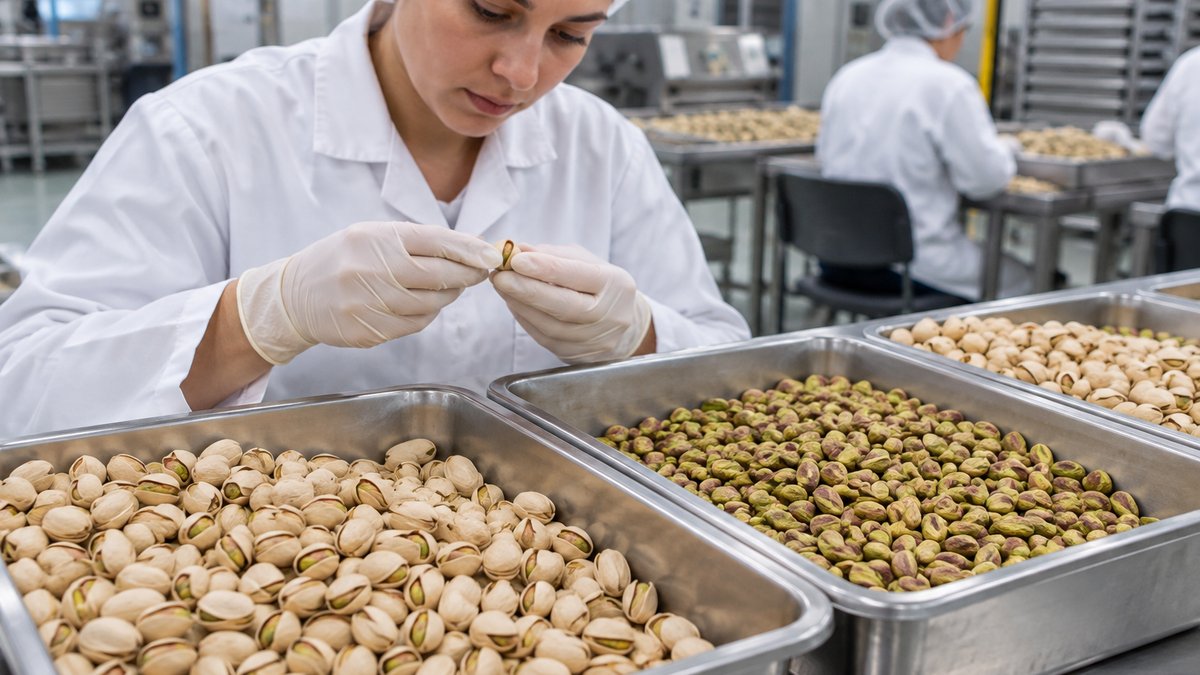
| Inspection focus | Shell presentation and defects, plus kernel condition | Kernel condition, form, size and foreign material |
| Useful form details | Opening, size, shell condition and kernel condition | Whole, split or broken form; size and color if needed |
| Processing to state separately | Raw or roasted; salted or unsalted; other treatment | Raw or processed; peeled or unpeeled where relevant |
| What the term does not establish | Grade, taste, safety compliance or roasting status | Grade, intended recipe, safety compliance or readiness for use |
USDA AMS’s standards illustrate why the inspection points are not interchangeable. Its in-shell grade descriptions include shell-related conditions, while the shelled-pistachio standard provides kernel classifications such as whole, split and mixed whole-and-broken. If another grading system is used, state its name and the agreed tolerances instead of assuming similarly named categories are equivalent.
The comparison also does not establish a universal price relationship. A quotation for kernels and one for in-shell nuts represent different delivered forms. Buyers should compare products against the same agreed quality requirements, packaging basis, quantity, delivery terms and intended use—not just the quoted amount per unit of weight.
For example, a buyer planning to sell shell-on snack packs is comparing a different product to a manufacturer sourcing kernels for an ingredient line. Ask pistachio suppliers on Freshdi to quote the form and specification you actually need.
Looking to Source Pistachio?
Connect with verified suppliers, discover matching products, and explore sourcing opportunities from global markets.
3. Example Scenario: Two Buyers, Two Pistachio Specifications
Consider two illustrative purchase inquiries. A snack business plans to sell pistachios with the shell intact. A food manufacturer needs edible pistachio pieces for a product in which the nuts will be incorporated into a recipe. Their requirements start with different product forms, even though both inquiries concern pistachios.
Illustrative inquiry formats:
Snack product: In-shell pistachios; state raw or roasted and salted or unsalted; define size, opening and shell-condition requirements; specify packaging and inspection basis.
Ingredient order: Pistachio kernels; state whole, split or broken form; define size, color and defect requirements if relevant; specify processing condition, packaging and inspection basis.
Both inquiries: Add quantity, delivery schedule, destination, delivery term and required documents for the transaction.
These are illustrative specification prompts, not universal grades, legal requirements or quotations.
The snack buyer should explain whether shell appearance or opening matters to the sale. If the product will be roasted or salted, the inquiry should state that condition and clarify which party is responsible for processing. The buyer can also identify how the lot will be checked and what tolerances are acceptable.
The ingredient buyer should specify the kernel form the production process needs. Whole kernels may be important when visible pieces matter; broken kernels may be appropriate where the ingredient will be chopped or ground. Neither form should be assumed from the broad phrase “pistachio kernels.”
In both cases, separate product requirements from commercial terms. Quality, form and processing describe what is being purchased; quantity, destination and delivery schedule describe how the transaction is arranged. Buyers can review pistachio buying requests on Freshdi for examples of stated sourcing needs, while treating every request as a specific listing rather than a general measure of demand.
4. When Should Buyers Choose In-Shell Pistachios or Pistachio Kernels?
Choose based on the form your customer, process or production line needs. The shell is not just a grading detail: it is part of the delivered product and determines whether cracking is still needed after arrival.
4.1 Choose in-shell pistachios when the shell is part of the product
In-shell pistachios may suit buyers selling or serving shell-on nuts, or buyers with an operation that can crack and sort them. This form lets the buyer specify shell presentation as part of the purchase. The specification should also address kernel condition, since a shell-on appearance alone does not describe the edible contents.
- State whether the product is raw, roasted, salted or otherwise treated.
- Describe the required size and whether opening or shell appearance matters.
- Name the applicable grade reference, if one is agreed, and define any additional tolerances.
- Specify packaging, inspection method and the documents required for the destination.
4.2 Choose kernels when the next step needs shelled nuts
Kernels may suit ingredient buyers and processors who need pistachios without first cracking whole nuts. The shell has already been removed, but the term does not mean the kernels are ready for every process. Buyers may still need to sort, roast, chop, grind or pack them.
- Specify whole, split, broken or mixed kernels when the production use calls for it.
- Add size, color and defect tolerances when they matter to the end product.
- State whether the kernels are raw, roasted, salted, peeled or otherwise processed.
- Clarify how shell fragments and other foreign material will be assessed.
For either form, identify the standard and edition the parties agree to use. Confirm that any food-safety documents, test results and destination requirements apply to the exact product and market. A grade reference describes specified quality factors; it does not by itself establish compliance with every importing-market rule.
Buying consideration: Before requesting offers, write the product form first, then add condition, grade reference, tolerances, packaging, inspection basis and shipment details. Ask suppliers to quote against that same specification so the offers can be compared on a like-for-like basis.
Once your specification is clear, you can review pistachio suppliers on Freshdi or browse supplier listings. Buyers can also explore buying requests on Freshdi and view pistachio-specific requests.
A clearly stated product form and inspection basis give suppliers a more useful starting point for responding to your inquiry.
View Related Suppliers for This Product →
5. Related Resources for Pistachio Buyers and Sellers
Standards can help buyers and suppliers use consistent quality language, but they should be matched to the product form and written into the contract when intended to govern the lot. USDA AMS publishes separate United States standards for pistachios in the shell and shelled pistachio nuts. The Codex Alimentarius Commission’s Standard for Unshelled Pistachio Nuts (1981) is a reference for unshelled product. UNECE’s DDP-10 (2010) addresses pistachio kernels and peeled pistachio kernels.
These references have different scopes. For example, the UNECE DDP-10 description covers kernels intended for direct consumption or use in foods for direct consumption without further processing, and excludes specified processed forms such as roasted, salted, sugared or flavoured kernels and kernels for industrial processing. Check the standard’s scope before applying it to a particular order.
For a transaction, identify the product form and condition, then agree on the relevant quality reference, sample and inspection procedure, tolerances, packaging and documentation. Verify destination-market food-safety requirements separately; a voluntary or contractual quality standard should not be confused with a mandatory import rule.
You can compare pistachio sourcing requests on Freshdi, browse pistachio suppliers, or contact a Freshdi account manager for platform-related assistance.
Frequently Asked Questions
What is the difference between in-shell pistachios and pistachio kernels?
In-shell pistachios are supplied with the hard shell around the kernel. Pistachio kernels, also called shelled pistachios, have been removed from that shell. The terms describe product form; they do not, by themselves, specify grade, processing condition or intended use.
Are pistachio kernels ready to use as an ingredient?
Not necessarily. Kernels do not need to be cracked after delivery, but they may still need sorting, roasting, chopping, grinding or other processing. State the kernel form and condition required for your production process.
Do pistachio kernels and in-shell pistachios use the same grade standard?
Not always. Standards can address different product forms and inspection attributes. USDA AMS publishes separate grade standards for in-shell pistachios and shelled pistachio nuts. In a contract, identify the agreed standard and its scope rather than assuming one applies to both forms.
What should a buyer include in a pistachio quotation request?
Name in-shell pistachios or kernels, then specify raw or processed condition, size, any required opening or kernel form, grade reference, tolerances, packaging, inspection basis, quantity, destination and delivery details. Include relevant food-safety documentation requirements for the destination.
Are pistachio kernels always whole?
No. A kernel order can require whole, split, broken or mixed pieces. If the piece form affects appearance or production, specify it and state any acceptable tolerances instead of relying on the general term “pistachio kernels.”
Does a pistachio grade guarantee import-market compliance?
A grade standard addresses the quality factors within its scope; it does not automatically establish compliance with every destination-market rule. Buyers should check applicable requirements for the destination and product, and agree on required documents and tests for the transaction.
References
1. U.S. Department of Agriculture, Agricultural Marketing Service – Pistachios in the Shell Grades and Standards, Accessed 23 November 2026.
2. U.S. Department of Agriculture, Agricultural Marketing Service – United States Standards for Grades of Shelled Pistachio Nuts, Accessed 23 November 2026.
3. Codex Alimentarius Commission – Standard for Unshelled Pistachio Nuts, CODEX STAN 131-1981, 1981.
4. United Nations Economic Commission for Europe – DDP-10: Standard for Pistachio Kernels and Peeled Pistachio Kernels, 2010.
Disclaimer: This article is compiled from platform data, public sources and information provided by third parties, for general informational purposes only. We do not guarantee its accuracy or completeness. Please conduct your own due diligence before making business decisions.