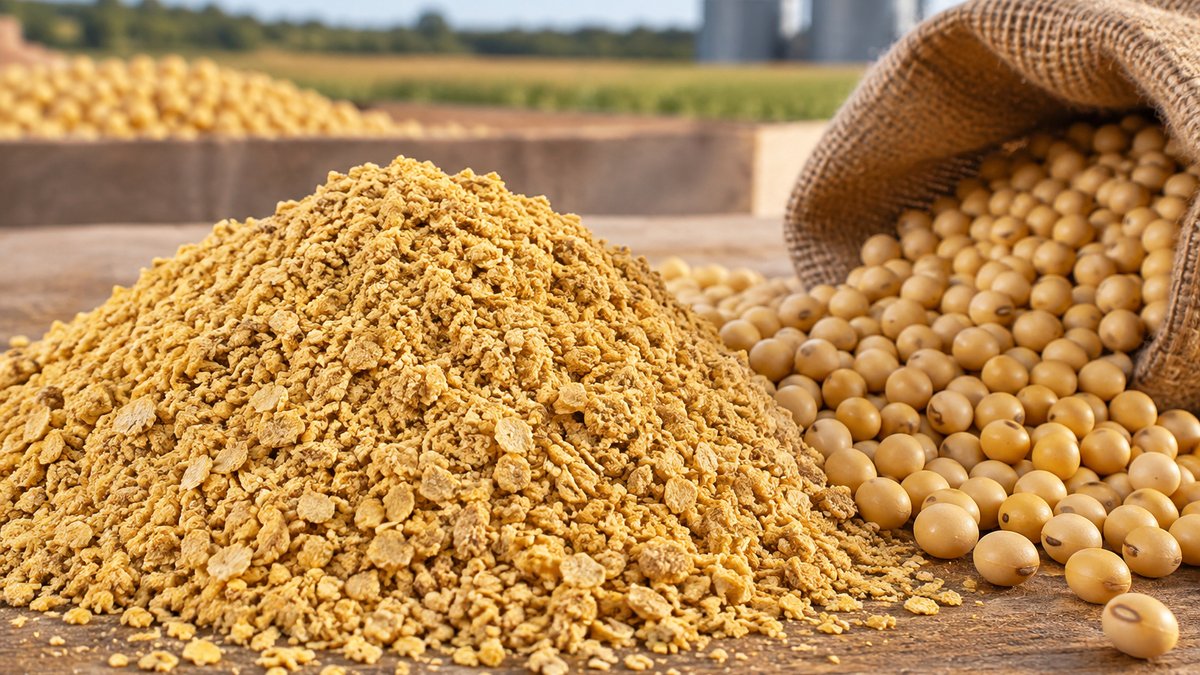

Soybean meal and soybean cake are both by-products of soybean oil production, and their names are sometimes used interchangeably. In a common technical distinction, soybean meal is associated with solvent extraction, while soybean cake is the solid residue from mechanical pressing. The extraction route can affect residual oil and composition, but the product name alone is not enough to compare two offers.
For importers, feed manufacturers and exporters, the practical answer is to specify the extraction process and verify the product analysis rather than rely on “meal” or “cake” alone. This distinction and the sourcing guidance below were checked on 23 November 2026.
Key Takeaways
- In a common technical convention, soybean meal refers to solvent-extracted material and soybean cake to material left after mechanical pressing; commercial usage may overlap.
- Mechanical pressing generally leaves more residual oil than solvent extraction, so products can differ in energy value, protein concentration and other composition measures.
- Neither name alone establishes protein content, hull content, heat treatment, quality or suitability for a particular feed formulation.
- Buyers should request an agreed specification and recent certificate of analysis, including the analytical basis and relevant processing details, before comparing quotations.
1. Summary of the Differences Between Soybean Meal and Soybean Cake
The main distinction is usually the oil-removal process. The Food and Agriculture Organization of the United Nations (FAO), in Technology of Production of Edible Flours and Protein Products from Soybeans (n.d.), describes the common convention: “meal” refers to the product of solvent extraction, while “cake” refers to the residue from expeller pressing. FAO also notes that the terms are sometimes used interchangeably, so a label should not be treated as a complete technical specification.
In mechanical extraction, pressure forces oil from prepared soybeans. The resulting press cake can be cooled and ground. In solvent extraction, flakes are treated to remove more of the oil, and the remaining material is processed into meal. Feedipedia’s Soybean meal entry (n.d.) explains that mechanically extracted material generally retains more oil than solvent-extracted soybean meal. That difference can affect the composition and feeding value, but it does not establish a universal nutritional or commercial ranking.
- Soybean meal is commonly associated with solvent extraction; soybean cake is commonly associated with mechanical pressing.
- Mechanical extraction generally leaves more residual oil; actual values depend on the process and lot.
- The terms may overlap in trade and product listings, so buyers should confirm the extraction method directly.
- Protein, fibre, moisture, hull content, heat treatment and other relevant properties must be checked in the specification and analysis.
The USDA Agricultural Marketing Service’s Livestock, Poultry and Grain Feedstuffs Terms (n.d.) defines soybean meal broadly as the ground solid residue of soybean oil production. This broad description is useful for understanding why a buyer may encounter variable naming. It is not a substitute for a contract description that states the intended process and quality parameters.
Once you know whether your requirement is for solvent-extracted meal or mechanically pressed cake, you can compare relevant sourcing opportunities across the agricultural by-products category.
View Latest Agricultural By-products Buying Requests →
View Potential Agricultural By-products Suppliers →
2. Soybean Meal vs Soybean Cake: Comparison Table
The comparison below describes common usage, not a guarantee that every supplier uses the terms consistently. FAO’s distinction is process-based, while USDA’s broader feedstuffs description and international trade usage show why the name alone can be ambiguous. Confirm the production method and product analysis in writing.
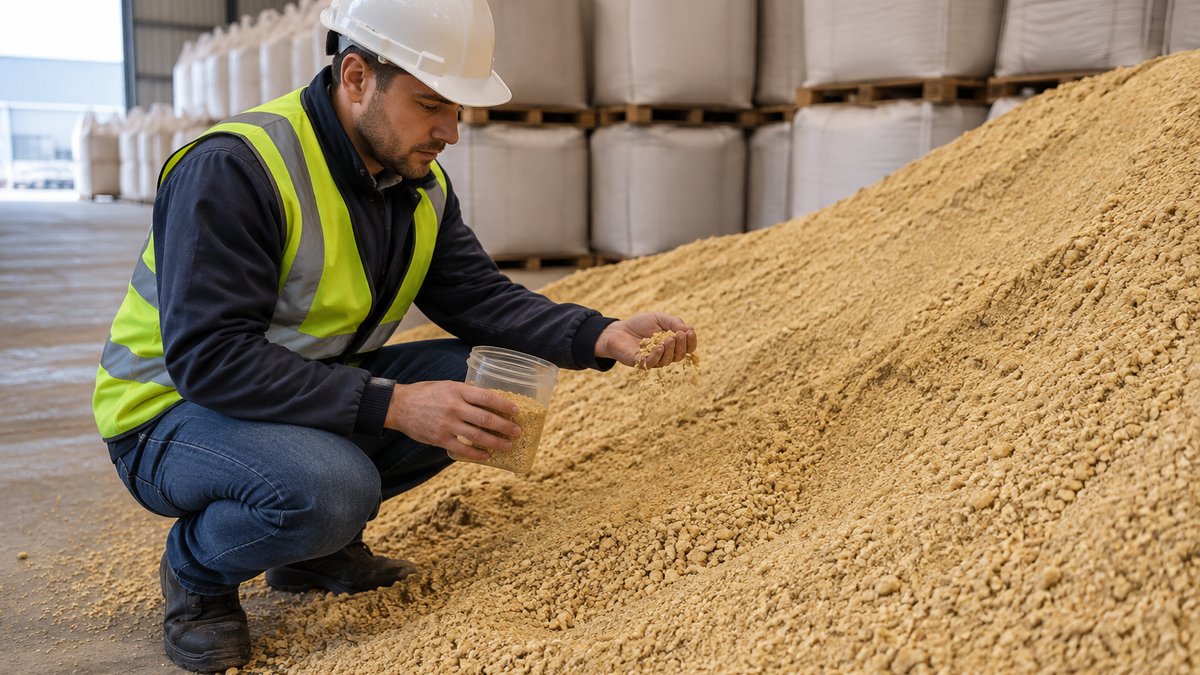
| Comparison point | Soybean meal | Soybean cake |
|---|---|---|
| Common process convention | Often associated with solvent extraction | Often associated with mechanical pressing |
| Material form | Ground oil-extraction residue; may be sold in other physical forms if specified | Press residue; may be supplied as cake, flakes or ground material |
| Residual oil | Generally lower after more complete oil removal | Generally higher after mechanical pressing |
| Composition | Varies with processing, hulls, source beans and specification | Varies with pressing conditions, source beans and specification |
| What the name does not confirm | Exact protein, fibre, moisture, heat treatment or grade | Exact residual oil, protein, fibre, moisture or grade |
| Buyer’s key check | Extraction route and recent analysis | Pressing method and recent analysis |
The table is a starting point, not a feed formulation guide. FAO’s Feed Ingredients and Fertilizers for Farmed Aquatic Animals (2011) distinguishes mechanically and solvent-extracted soybean meal in its ingredient descriptions. Feedipedia likewise explains the process difference and notes that the higher residual oil commonly found in expeller products may influence energy value. Neither source supports assuming that every cake will have a particular composition or that every meal will meet the same grade.
2.1 Why protein and oil figures need context
A protein percentage is only comparable when both offers use the same reporting basis, such as as-fed or dry matter. The feed ingredient may also differ in whether soybean hulls were removed or added back. FAO’s soybean processing chapter notes that hull handling and the extent of heat treatment can characterize different meal types. For this reason, a supplier’s product name or a single headline protein figure does not tell the whole story.
The certificate of analysis should match the lot being offered and state the measured values and analytical basis. Buyers can request the parameters relevant to their feed formulation, such as crude protein, crude fat, crude fibre and moisture, plus any processing or quality indicators required by their technical team. Agree on acceptable tolerances and sampling arrangements before shipment.
Buying consideration: When two offers use different names, do not compare price per tonne until the extraction method, physical form, analysis basis, delivery terms and other specifications are aligned.
Looking to Source Soybean Meal?
Connect with verified suppliers, discover matching products, and explore sourcing opportunities from global markets.
3. Example Scenario: Comparing Two Soybean By-Product Offers
Consider a feed manufacturer reviewing two offers for a planned production run. One is described as “soybean meal,” and the other as “soybean cake.” The buyer cannot yet tell whether the offers are equivalent: the labels do not establish the extraction process, composition, heat treatment, or whether the figures in the attached analyses use the same basis.
Illustrative inquiry format:
Product and form: Soybean oil-extraction by-product; state whether solvent-extracted meal or mechanically pressed cake, and whether ground, flaked or another form
Analysis: Request a lot-specific certificate of analysis; identify required parameters and whether values are as-fed or dry matter
Processing details: State hull handling and request relevant heat-treatment or quality indicators
Commercial details: State quantity, packaging, loading point, destination, requested delivery term and shipment window
Verification: Agree on sample, inspection and document requirements before contract confirmation
This is an illustrative inquiry format, not a universal soybean meal or soybean cake specification.
The manufacturer should compare each offer against its own formulation and receiving requirements, not assume that the cake is automatically a higher-energy substitute or that meal is automatically a higher-protein product. If the product analyses use different bases, the buyer’s technical team should normalize or otherwise assess the figures before making a like-for-like comparison.
A clear request can also help exporters respond more accurately. Rather than listing a generic “soy product,” state the process, physical form, requested analytical parameters and intended use. If a buyer is still deciding between options, the request can say which parameters are essential and which may be discussed, avoiding an accidental substitution that does not match the buyer’s requirements.
Use the Soybean Meal buying-request listings on Freshdi to review sourcing requests, and compare them with your product’s actual specification. A listing is a sourcing lead, not verification that a particular lot or supplier meets your requirements.
4. When Should Buyers Choose Soybean Meal or Soybean Cake?
There is no universally preferable option. The suitable ingredient depends on the buyer’s formula, nutritional targets, processing requirements, availability and total delivered cost. A nutritionist or feed-formulation specialist should assess how the product’s verified composition fits the intended ration.
4.1 When soybean meal may fit the requirement
Solvent-extracted soybean meal may be appropriate when the buyer’s specification calls for a solvent-extracted product and the measured composition fits the formulation. Its commonly lower residual oil can be relevant to a formulation’s energy and handling calculations, but the actual lot analysis—not the category name—should guide the decision. Buyers should also check hull content and heat treatment where these affect the intended use.
4.2 When soybean cake may fit the requirement
Mechanically pressed soybean cake may suit a buyer whose formulation and process can use a product with the verified residual oil and nutrient profile offered. Feedipedia’s Soybean meal entry (n.d.) describes mechanically extracted material as generally retaining more oil than solvent-extracted meal. That can affect energy value, but higher residual oil is not automatically an advantage: it must fit the feed specification, storage and handling plan, and formulation.
4.3 A practical buyer checklist
- Name the ingredient and state the extraction process required or acceptable.
- Specify the physical form, such as ground material, flakes or cake, and the packaging or bulk-handling format.
- List the analysis parameters that matter to the formulation and state the reporting basis.
- Ask for a lot-specific certificate of analysis and clarify how a representative sample will be agreed and tested.
- Confirm relevant processing information, including hull handling and heat-treatment indicators where required by the buyer’s technical specification.
- Compare offers only after quantity, loading point, destination, delivery term, shipment timing and other commercial conditions are aligned.
- Agree on inspection, documentation, tolerances and procedures for resolving a specification discrepancy before concluding the contract.
These checks are useful for exporters too. A quotation that states the extraction route, physical form, analysis basis and available lot documents gives importers a clearer basis for assessment. Avoid presenting one product as interchangeable with the other unless the buyer has reviewed the actual specification and accepted the difference.
Buyers can browse Soybean Meal suppliers on Freshdi as a starting point for identifying potential counterparties. Review the listing information, request missing technical details and conduct independent commercial due diligence before agreeing to a transaction.
Once your process and quality requirements are clear, you can use them to approach potential soybean meal suppliers with a more comparable request.
View Related Suppliers for This Product →
5. Related Resources for Soybean Meal and Soybean Cake Sourcing
For the process distinction, consult FAO’s Technology of Production of Edible Flours and Protein Products from Soybeans (n.d.), which explains the common meal-versus-cake convention and notes that names may be used interchangeably. For ingredient definitions in an animal-feed context, USDA Agricultural Marketing Service’s Livestock, Poultry and Grain Feedstuffs Terms (n.d.) describes soybean meal as ground solid residue from soybean oil production. FAO’s Feed Ingredients and Fertilizers for Farmed Aquatic Animals (2011) provides further ingredient descriptions, while Feedipedia’s Soybean meal entry (n.d.) discusses mechanical extraction and residual oil.
On Freshdi, buyers can browse Soybean Meal buying requests and suppliers can review Soybean Meal supplier listings. For broader category discovery, see Agricultural By-products buying requests and Agricultural By-products suppliers. These listings can help users discover potential trade connections; verify specifications and counterparties independently.
If you are exploring the platform, browse Freshdi buyers or Freshdi suppliers. For further platform assistance, see the Freshdi Account Manager page.
Frequently Asked Questions
What is the difference between soybean meal and soybean cake?
In a common technical convention, soybean meal is the product of solvent extraction and soybean cake is the residue from mechanical pressing. FAO notes that the terms are also sometimes used interchangeably. Because trade naming can vary, buyers should confirm the extraction process and product analysis instead of relying on the name alone.
Does soybean cake have more oil than soybean meal?
Mechanically pressed soybean products generally retain more residual oil than solvent-extracted meal. The amount varies by process and lot, so a buyer should verify the crude-fat or relevant oil result on a lot-specific analysis and confirm the reporting basis.
Is soybean meal always higher in protein than soybean cake?
No. The product name alone does not establish protein content. Composition can vary with extraction, soybean source, hull removal or addition, and other processing factors. Compare certificates of analysis on the same basis and evaluate them against the intended feed specification.
Can soybean cake replace soybean meal in a feed formulation?
Not automatically. The products may differ in residual oil and other compositional characteristics, and a substitution can affect the formulation. A qualified feed formulator should assess the verified product analysis, animal requirements and intended ration before a change is made.
What should an importer request before buying soybean meal or cake?
Request the extraction method, physical form, lot-specific certificate of analysis, analytical basis and any processing details required by your specification. Also agree on quantity, packaging, delivery conditions, shipment timing, inspection and document requirements before confirming the contract.
Are soybean meal and soybean cake grades standardized everywhere?
Do not assume that the commercial names identify one universal grade across markets. A buyer should state the required parameters, units, test basis and tolerances in the purchase specification, then confirm that the supplier’s documents and contract use the same definitions.
References
1. Food and Agriculture Organization of the United Nations – Technology of Production of Edible Flours and Protein Products from Soybeans, Chapter 2, n.d..
2. U.S. Department of Agriculture, Agricultural Marketing Service – Livestock, Poultry and Grain Feedstuffs Terms, n.d..
3. Food and Agriculture Organization of the United Nations – Feed Ingredients and Fertilizers for Farmed Aquatic Animals: Sources and Composition, 2011.
4. Feedipedia – Soybean meal, n.d..
Disclaimer: This article is compiled from platform data, public sources and information provided by third parties, for general informational purposes only. We do not guarantee its accuracy or completeness. Please conduct your own due diligence before making business decisions.