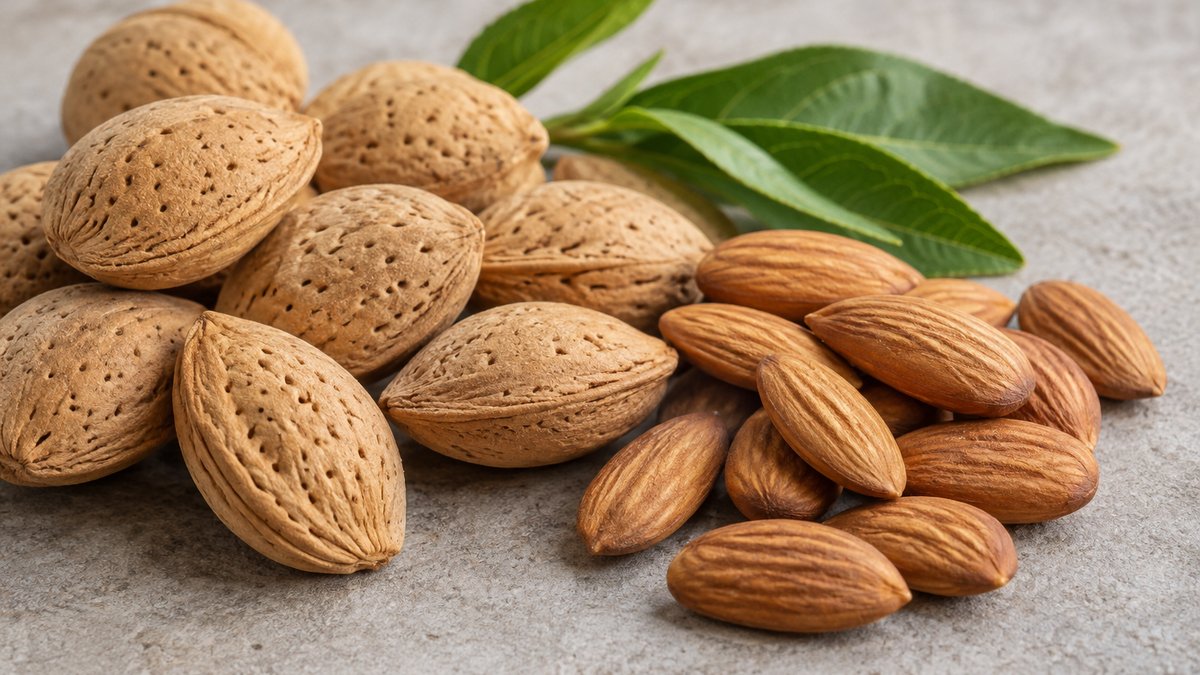

In almond trading, “in-shell” and “shelled” describe whether the hard outer shell remains around the edible kernel. The distinction changes how a shipment is inspected, handled, prepared and specified—not the almond variety or grade.
For importers and exporters, the right form depends on the next step in the supply chain. A buyer planning to sell whole almonds for cracking may request in-shell product; a manufacturer needing kernels for processing may prefer shelled almonds. The intended use, quality requirements and delivered cost should guide the comparison.
Key Takeaways
- In-shell almonds retain the hard shell around the kernel; shelled almonds are supplied as kernels without that shell.
- The forms have different inspection and grading considerations. USDA standards describe separate grades for almonds in the shell and shelled almonds.
- In-shell shipment weight includes shells, so compare offers using the buyer’s expected usable kernel yield and the costs of cracking, sorting and handling.
- State the form, variety, size basis, grade or defect limits, packaging, quantity and delivery terms when requesting a quotation.
1. In-Shell vs. Shelled Almonds: A Comparison
The short answer is that in-shell almonds are sold with the hard shell intact, while shelled almonds are sold as kernels after shelling. These are product-form descriptions, not quality grades. Neither form is inherently higher quality, fresher or more suitable for every buyer.
The distinction affects what a buyer receives and what processing remains. An in-shell lot may need cracking and kernel sorting before the kernels can be used. Shelled almonds are ready for kernel-level inspection and further uses such as roasting, blanching, slicing or grinding, subject to the buyer’s specification.
| Buyer consideration | In-shell almonds | Shelled almonds |
|---|---|---|
| Physical form | Kernel remains inside the hard shell | Kernel supplied without the hard shell |
| What shipment weight includes | Shell and kernel | Kernels, plus any packaging or other stated inclusions |
| Inspection focus | Shell condition and appearance, plus kernel condition where assessed | Kernel appearance, size, damage, foreign material and other defects |
| Potential next step | Cracking, kernel recovery and sorting may be needed | May be used as kernels or sent for further processing |
| Common sourcing question | What kernel yield and shell condition should be expected? | What kernel size, style, grade and defect limits are required? |
The table describes the physical and commercial distinction; it does not establish a universal quality ranking. The U.S. Department of Agriculture’s Agricultural Marketing Service (USDA AMS) publishes separate U.S. grade standards for almonds in the shell and shelled almonds. The Almond Board of California’s 2023 Technical Toolkit describes USDA almond grades as voluntary standards. Buyers should confirm whether a named grade is incorporated into their contract and what other product or destination-market requirements apply.
For U.S. No. 1 in-shell almonds, the USDA standard considers factors including shell condition and internal kernel defects. Shelled almond standards instead describe kernel characteristics and tolerances for defects such as chips and scratches, doubles, split or broken kernels, and foreign material. These are not interchangeable inspection checklists: a grade for one form does not automatically describe the other.
For a starting point, buyers can review almond buying requests on Freshdi and compare them with almond supplier listings on Freshdi.
Once you know which almond form fits the intended use, compare the relevant buying and supply opportunities.
View Latest Bean, Nut & Seed Buying Requests →
View Potential Bean, Nut & Seed Suppliers →
2. Example: Choosing an Almond Form for a Processing Order
Consider a food manufacturer planning to use almond kernels in a recipe. If the manufacturer buys in-shell almonds, the shipment must be cracked before the kernels can enter production. The buyer should allow for shells and any kernels that do not meet the agreed acceptance criteria when assessing how much usable product the order will provide.
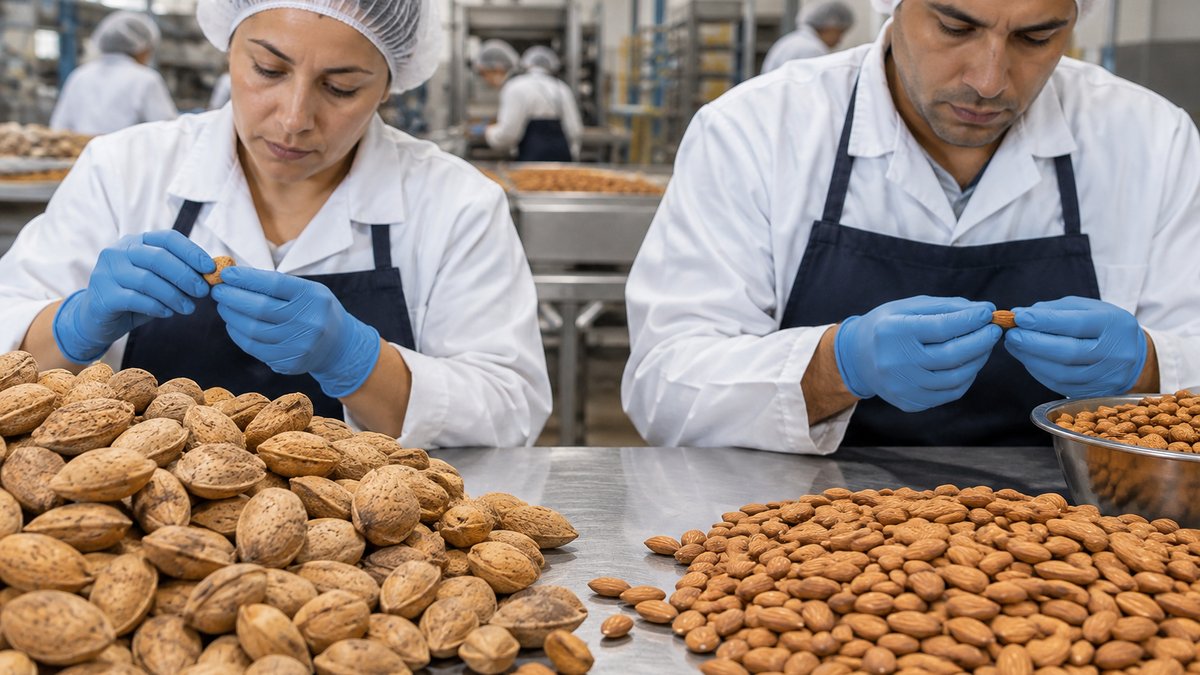
If the manufacturer buys shelled almonds, cracking is no longer part of its own receiving process. The buyer can instead specify kernel characteristics directly—for example, whether whole kernels are essential or whether split and broken pieces are acceptable for the application. The product may still need additional processing, such as roasting or slicing, depending on the recipe.
A fair comparison is not simply the quoted price per kilogram for each form. In-shell almonds include shell weight, while shelled almonds are quoted as kernels. Buyers evaluating in-shell product should account for expected kernel recovery, cracking and sorting costs, and any losses against the agreed specification. For shelled product, they should also account for the required grade, size, style and any further processing.
The buyer should ask suppliers to state the basis of the quotation clearly: product form, net product weight, packaging, and whether the price applies to almonds before or after any specified processing. If the order is priced by a unit of weight, confirm that the compared offers use the same basis.
Illustrative inquiry format:
Product form: Shelled almonds
Intended use: Ingredient for further food processing
Kernel style and size: State required style and sizing basis
Quality: State agreed grade or defect limits
Commercial details: State quantity, packaging, destination and delivery terms
This is an illustrative inquiry format, not a universal almond specification.
For another application, such as retail sale of almonds consumers will crack themselves, in-shell product may be a better fit. The buyer would then need to assess the shell presentation, kernel condition, packaging and the customer’s expected use. The point is to start with the product’s role in the buyer’s process, then request quotes on comparable specifications.
Looking to Source Almonds?
Connect with verified suppliers, discover matching products, and explore sourcing opportunities from global markets.
3. When Should Buyers Choose In-Shell or Shelled Almonds?
Choose the form that fits the next step after delivery. In-shell almonds may suit buyers who need the intact-shell presentation or have a cracking and sorting operation. Shelled almonds may suit buyers whose requirements are focused on kernels for direct sale or further processing.
3.1 In-shell almonds may suit these requirements
- The intended customer wants almonds sold in their shells, or the buyer has a process for cracking them.
- The buyer wants to assess or manage shelling as part of its own operation.
- The buyer can evaluate the economics using an agreed basis for expected kernel recovery, processing and sorting.
The U.S. grade standard for almonds in the shell assesses the lot as an in-shell product, including shell characteristics and kernel condition. USDA AMS lists grades such as U.S. No. 1 and U.S. No. 2 for this form. Do not assume those names alone settle the buyer’s needs: specify the applicable standard, the inspection method and any additional contract tolerances.
3.2 Shelled almonds may suit these requirements
- The buyer needs kernels for ingredient use, packing, retail or further processing.
- The buyer wants to specify kernel style, size, appearance and defect tolerances directly.
- The buyer wants to avoid conducting shelling as part of its own receiving or production process.
USDA AMS lists multiple grades and styles for shelled almonds, including whole and broken forms. The Almond Board of California’s 2023 Technical Toolkit notes that different grades can be relevant to different applications. For example, a buyer whose finished product uses almond pieces as an ingredient may have different appearance requirements from one selling whole kernels. Discuss the actual end use and acceptance criteria with suppliers rather than treating one grade label as a complete specification.
Before requesting quotations for either form, confirm the following:
- Product form: in-shell or shelled, and whether any additional processing is required.
- Variety or type, where relevant to the application and available supply.
- Grade, size and defect tolerances, with the named standard and inspection basis if applicable.
- For in-shell almonds, how kernel condition or recovery will be assessed if it matters to the contract.
- For shelled almonds, whether whole kernels, halves, pieces or a mixture are acceptable.
- Packaging, net weight, order quantity, destination, shipment schedule and delivery terms.
- Documents, testing or market-access requirements applicable to the product and destination.
Freshdi offers almond buying requests and almond supplier listings to help businesses explore sourcing opportunities. Buyers can also browse buying requests across the Bean, Nut & Seed category, while suppliers can review supplier listings in that category. Listings are a starting point; confirm current specifications and business details with the relevant trading partner.
After preparing a clear almond specification, review suppliers whose stated product range and terms may fit the order.
View Related Suppliers for This Product →
4. Related Resources for Almond Buyers and Exporters
For U.S. grade terminology, consult USDA AMS’s U.S. grade standards for almonds in the shell and its shelled almond grade standards. The standards use different criteria for the two product forms. The Almond Board of California’s Technical Toolkit provides additional explanation of grading concepts and their relationship to commercial applications.
These references concern U.S. grade standards; they are not a substitute for checking the mandatory food-safety, import or labeling requirements that apply to the product and destination country. Where a contract cites a grade or standard, identify the exact standard and edition, and agree on inspection and acceptance procedures before shipment.
Businesses can explore almond buying opportunities on Freshdi, almond suppliers on Freshdi, or broader buyer listings and supplier listings. For assistance navigating the platform, see the Freshdi Account Manager page. Check listing details and verify product specifications and commercial terms directly before entering a transaction.
Information checked November 23, 2026. Grade standards and platform listings may be updated; confirm the applicable source and listing details when preparing a purchase or sale.
Frequently Asked Questions
What is the difference between in-shell and shelled almonds?
In-shell almonds are supplied with the hard shell around the kernel. Shelled almonds are supplied as kernels without that shell. The distinction describes product form, not the almond’s variety or grade.
Are shelled almonds better quality than in-shell almonds?
Not automatically. The two forms are assessed using different criteria, and quality depends on the agreed specification, condition, grade and intended use. USDA AMS publishes separate U.S. grade standards for almonds in the shell and shelled almonds.
How should buyers compare the price of in-shell and shelled almonds?
First confirm that the price basis and specifications are comparable. In-shell shipment weight includes shells, so buyers assessing usable kernel supply should consider kernel recovery, cracking, sorting and agreed acceptance criteria. For shelled almonds, confirm kernel style, size, grade, packaging and any further processing.
Do USDA almond grades apply to both forms?
USDA AMS publishes separate standards for almonds in the shell and shelled almonds. A grade for one form should not be assumed to define the other. Confirm the exact standard, edition and contract requirements with the supplier.
What should an almond buyer include in a request for quotation?
State whether the almonds should be in-shell or shelled, then specify the variety or type if relevant, size basis, grade or defect limits, packaging, quantity, destination, delivery schedule and trade terms. Add any processing, testing or documentation requirements that apply to the order.
References
1. U.S. Department of Agriculture, Agricultural Marketing Service – Almonds in the Shell Grades and Standards, U.S. standard dated April 8, 2013; page accessed November 23, 2026.
2. U.S. Department of Agriculture, Agricultural Marketing Service – Shelled Almonds Grades and Standards, Page accessed November 23, 2026.
3. Almond Board of California – Technical Toolkit: Standards & Grades, 2023.
Disclaimer: This article is compiled from platform data, public sources and information provided by third parties, for general informational purposes only. We do not guarantee its accuracy or completeness. Please conduct your own due diligence before making business decisions.