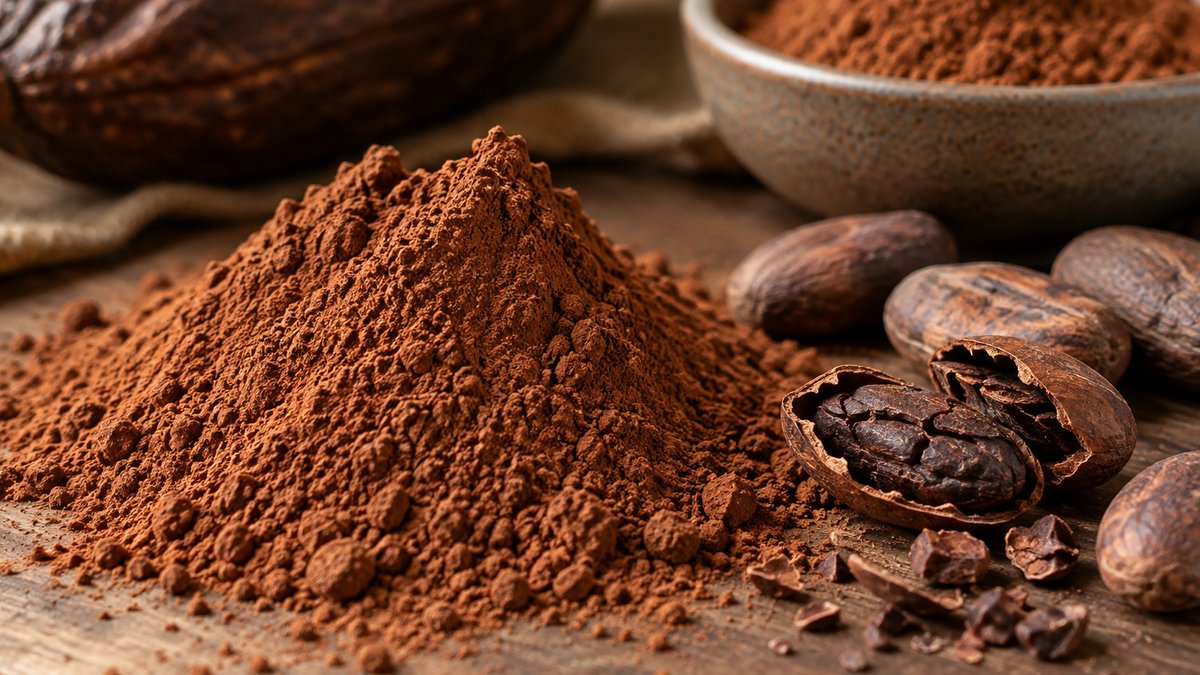

Cocoa powder specifications can look similar on a quotation while producing different results in a finished product. One key distinction is whether the powder is supplied in its natural, non-alkalized form or treated with alkali, often called Dutch processing.
For cocoa importers, exporters and food manufacturers, the difference can affect color, flavor, acidity and how the ingredient performs in a formulation. The terms describe processing, not a complete grade: buyers still need to confirm fat content, product composition and other requirements before comparing offers.
Key Takeaways
- Natural cocoa powder is not alkalized after cocoa cake is made into powder; Dutch-process cocoa powder has been treated with an alkaline ingredient.
- Alkalization typically raises pH and changes cocoa powder’s color and flavor, but the result varies with processing conditions.
- “Natural” and “Dutch-process” describe processing, not cocoa butter content, origin, quality grade or a complete product specification.
- Compare samples and specifications for pH, color, cocoa butter content, particle size, moisture, packaging and intended application before approving a supply.
1. Natural Cocoa Powder vs Dutch-Process Cocoa Powder: The Main Difference
The difference is whether the cocoa material is alkalized. Natural cocoa powder is made from cocoa cake that is ground into powder without an alkalization step. Dutch-process cocoa powder, also called alkalized cocoa powder, is treated with a food-grade alkaline ingredient during processing. The treatment changes the powder’s acidity and can modify its color, flavor and behavior in a recipe or beverage.
The terms do not, by themselves, specify cocoa bean origin, cocoa butter content, quality, particle size or a guaranteed color. Dutch-process powders can also differ from one another: the alkali, concentration, temperature and treatment time influence the final characteristics. A buyer should therefore treat “Dutch-process” as a useful processing description, not as a complete purchase specification.
Research supports this distinction. A 2020 study in the Journal of Food Science and Technology, “The influence of three different types and dosage of alkaline on the inherent properties in cocoa powder,” found that alkali type and dosage affected properties including color and pH. A 2024 open-access study in Foods, “Comparison of Physicochemical Properties, Antioxidants, and Aroma Profiles of Water- and Sodium-Hydroxide-Treated Natural Cocoa Powder,” likewise describes alkalization as a process that raises pH and changes color. These outcomes depend on the process; buyers should not assume all alkalized powders share one exact pH or appearance.
The distinction is separate from the cocoa powder categories in Codex Alimentarius’ Standard for Cocoa Powders (CXS 105-1981). That standard identifies cocoa powder categories by cocoa butter content, including fat-reduced and highly fat-reduced cocoa powder. It does not make “natural” and “Dutch-process” interchangeable with those fat-content categories. A product can need both processing information and a fat-content specification.
For the United States, check the applicable product identity and labeling rules rather than relying on informal terminology alone. Under 21 CFR § 163.112, the U.S. standard of identity for breakfast cocoa provides for alkali ingredients and requires the food name to be accompanied by “Processed with alkali” or the specific alkali name when an optional alkali ingredient is used. This is a U.S. labeling provision for the products covered by that regulation; it is not a universal rule for every destination.
If you are starting a procurement comparison, review cocoa powder buying requests on Freshdi to see stated sourcing needs, then confirm the detailed specification directly with the prospective business partner.
2. Natural Cocoa Powder vs Dutch-Process Cocoa Powder: Comparison Table
The table summarizes common differences for sourcing discussions. They are general characteristics, not guaranteed limits or a substitute for a supplier’s specification and sample. The 2020 cocoa alkalization study cited above found that process conditions affect the final product, so buyers should request measurable requirements where these characteristics matter.
| Feature | Natural cocoa powder | Dutch-process cocoa powder |
|---|---|---|
| Processing | Not alkalized after powder production | Treated with an alkaline ingredient |
| Acidity and pH | Typically more acidic | Alkalization raises pH; final value varies |
| Color | Often lighter or reddish-brown | Can range from lighter brown to very dark |
| Flavor | Can have a sharper, more acidic cocoa profile | Often described as milder; treatment affects flavor |
| Formulation considerations | Acidity may matter in recipes using baking soda | May suit formulations designed around alkalized cocoa |
| What the term does not specify | Fat content, origin, grade or exact pH | Alkali treatment details, fat content, origin or exact color |
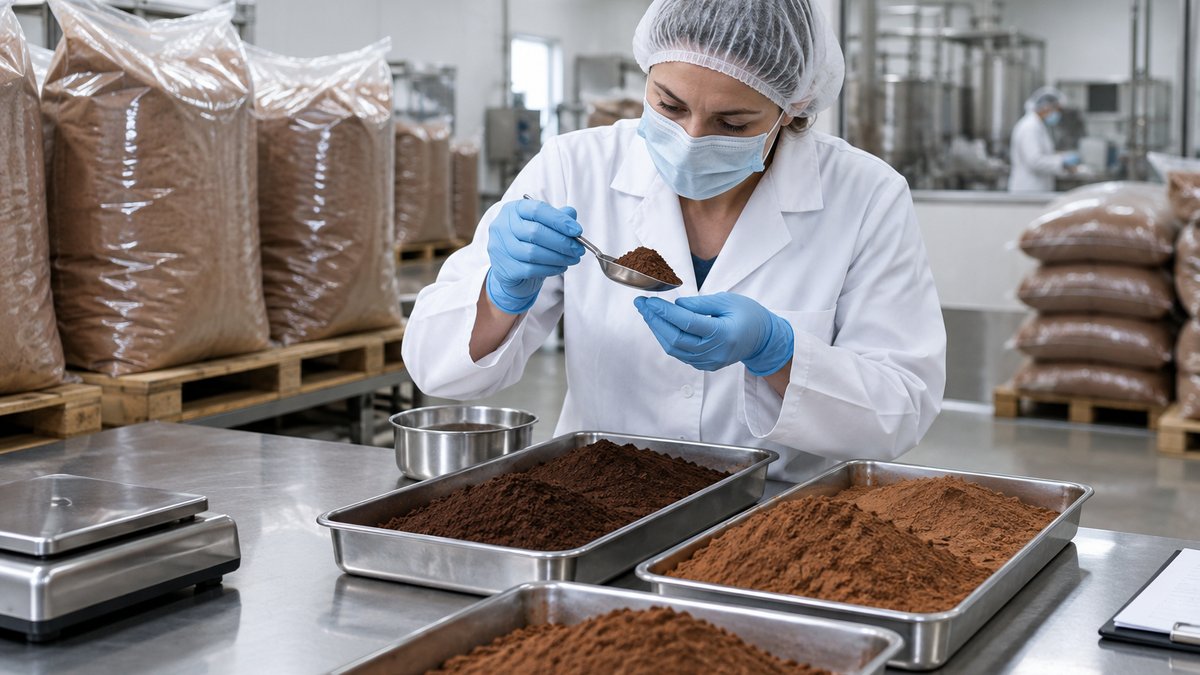
Color is a visual clue, not a dependable substitute for a declaration or test. Alkalization can darken cocoa, but treatment strength and other product characteristics affect the result. Similarly, “mild” and “sharp” are sensory descriptions, not standardized grades. When a product depends on a particular shade or taste, buyers should set acceptance criteria and assess a representative sample.
For product classification, Codex CXS 105-1981 distinguishes cocoa powders by cocoa butter content. For U.S. labeling, 21 CFR § 163.112 addresses declaration when alkali is used in the covered breakfast cocoa product. These references answer different questions: one describes cocoa powder categories, while the other sets requirements for a specific U.S. product identity. Neither removes the need to define the buyer’s full commercial specification.
Once you know whether the application calls for natural or alkalized cocoa, compare the stated product details with current sourcing needs and available supply.
View Latest Bean, Nut & Seed Buying Requests →
View Potential Bean, Nut & Seed Suppliers →
You can also review Bean, Nut & Seed supplier listings on Freshdi and compare them with cocoa powder supplier listings. A listing is a starting point for discovery, not a substitute for verifying the product, business information and commercial terms.
Looking to Source Cocoa Powder?
Connect with verified suppliers, discover matching products, and explore sourcing opportunities from global markets.
3. Example Scenario: Choosing Cocoa Powder for a Beverage Mix
Consider a food manufacturer developing a cocoa beverage mix for preparation with milk or water. The team wants a consistent brown color and a flavor that works in its existing formula. A supplier offers natural cocoa powder and Dutch-process cocoa powder, but both quotations list only “cocoa powder” and a price per unit.
The manufacturer cannot make a sound like-for-like comparison from those two labels alone. It should first clarify whether each powder has been alkalized and request the relevant technical specifications. If the finished drink’s shade is important, the team can assess color measurements and a sample under its own mixing and preparation conditions. If taste is important, a controlled sensory check can help determine which sample matches the target profile.
Next, the buyer should compare cocoa butter content, moisture, particle size, dispersibility or other application-specific performance data, and the agreed packaging. If the product is for a dry beverage mix, test the powder in the actual blend and preparation method rather than assuming that a supplier’s general description guarantees performance. If it is for baking, the formulation team should check the recipe’s acid and leavening system before changing the cocoa type.
Illustrative inquiry format:
Product: Natural or alkalized cocoa powder; state which is required
Application: Cocoa beverage mix or specified baked product
Technical details: Request pH, color, cocoa butter content, moisture and particle size
Commercial details: Quantity, packaging, destination and requested delivery terms
Approval: Representative sample and agreed acceptance criteria
This is an illustrative inquiry format, not a universal cocoa powder specification.
This example shows why price alone may not identify the better fit. A product that matches the formula, processing line and finished-product target can be more useful than a lower-priced powder with unresolved characteristics. To explore broader sourcing options, buyers can browse Freshdi’s buyer directory and supplier directory; verify each prospective partner and specification independently.
4. When Should Buyers Choose Each Type?
There is no universal winner. The choice depends on the product being made, the existing formulation, the desired color and flavor, and the supplier’s ability to meet the required specification. The following guidance is a starting point for discussion with product development and quality teams.
4.1 When natural cocoa powder may fit
- The formulation is designed around natural cocoa’s acidity, including a leavening system that depends on an acidic ingredient. Do not assume cocoa is the only acid in a recipe; check the full formula before making a substitution.
- The product developer wants the flavor and color profile of the approved natural cocoa sample.
- The buyer needs a non-alkalized powder and can clearly state that requirement in the purchase specification.
- The buyer has evaluated performance in the actual application and confirmed that color, taste and processing results meet its requirements.
4.2 When Dutch-process cocoa powder may fit
- The formulation is designed for alkalized cocoa and the manufacturer has validated the powder in production.
- The desired product profile calls for a particular cocoa color or flavor that an approved alkalized sample provides.
- The application requires a defined functional performance, such as the powder’s behavior in a beverage or other food matrix, and testing confirms the selected product works.
- The buyer can specify the required alkalization status and supporting quality parameters instead of relying on color or a broad trade name alone.
For either type, request the same core commercial information from each supplier. At a minimum, clarify product identity, natural or alkalized status, cocoa butter content, moisture, particle size, packaging, batch documentation, available test results, minimum order quantity, lead time and delivery terms. Add any destination-market documentation or customer requirements that apply to the transaction.
In the United States, the U.S. Food and Drug Administration’s regulation at 21 CFR § 163.112 includes labeling provisions for alkali-treated breakfast cocoa. Buyers importing into other countries should check the applicable rules for the destination and product rather than treating U.S. labeling language as a worldwide requirement.
Before issuing a purchase order, align the specification, sample approval and agreed test methods with the supplier. If a characteristic such as color, pH or fat content is essential, state the acceptable range and how it will be checked. This makes quotations easier to compare and helps both parties identify differences before shipment.
With the product type and acceptance criteria defined, buyers can look for suppliers whose stated offerings match the specification.
View Related Suppliers for This Product →
Use Freshdi’s cocoa powder supplier listings as one place to discover potential suppliers, then request the technical documents and samples needed for your own assessment.
5. Related Resources for Cocoa Powder Buyers
The sources below clarify the distinction between cocoa powder processing, cocoa powder categories and labeling. Checked 23 November 2026. Standards and regulations have specific scopes: confirm the current requirements that apply to the product and destination before importing or labeling.
- Codex Alimentarius, Standard for Cocoa Powders (Cocoas) and Dry Mixtures of Cocoa and Sugars, CXS 105-1981: a reference for cocoa powder categories and composition.
- U.S. Government Publishing Office, 21 CFR § 163.112, Breakfast cocoa: U.S. identity and labeling provisions for the product covered by that section.
- Journal of Food Science and Technology, “The influence of three different types and dosage of alkaline on the inherent properties in cocoa powder,” 2020: research on the effect of alkali type and dosage.
- Foods, “Comparison of Physicochemical Properties, Antioxidants, and Aroma Profiles of Water- and Sodium-Hydroxide-Treated Natural Cocoa Powder,” 2024: open-access research on processing effects.
For help navigating sourcing options, Freshdi’s account manager page provides a platform resource. For any transaction, verify the supplier, sample, documentation, specification and agreed commercial terms directly.
The practical conclusion is simple: select natural or Dutch-process cocoa based on the formulation and approved product performance, then specify the details that the processing term does not cover.
Frequently Asked Questions
What is the difference between natural cocoa powder and Dutch-process cocoa powder?
Natural cocoa powder is not alkalized after it is produced as powder. Dutch-process cocoa powder is treated with an alkaline ingredient. The treatment typically raises pH and can change color and flavor. Neither term alone tells you the cocoa butter content, origin, grade or exact product performance.
Is Dutch-process cocoa powder the same as alkalized cocoa powder?
In common trade and food-industry usage, Dutch-process cocoa powder refers to cocoa powder that has been alkalized. Buyers should still ask suppliers to confirm the processing status and provide the relevant product specification, because the term does not describe the alkali, treatment strength or final pH.
Does Dutch-process cocoa powder always have a darker color?
Alkalization can darken cocoa powder, but the resulting color varies with processing conditions and the product. A dark appearance is not reliable proof of a particular treatment or specification. If color matters, request an agreed color measurement and assess a representative sample.
Which type of cocoa powder should a food manufacturer choose?
Choose the type that performs in the intended formulation and matches the approved flavor, color and processing requirements. Natural cocoa may suit a formulation that relies on its acidity, while Dutch-process cocoa may suit a formula designed for alkalized cocoa. Validate any change in the full recipe or production process.
Are natural and Dutch-process cocoa powder official fat-content grades?
No. These terms describe processing status. Codex CXS 105-1981 identifies cocoa powder categories by cocoa butter content, including fat-reduced and highly fat-reduced cocoa powder. A buyer may need to specify both whether the product is alkalized and the required cocoa butter content.
What should buyers include in a cocoa powder inquiry?
State whether natural or alkalized powder is required, the application, cocoa butter content, and any required parameters such as pH, color, moisture and particle size. Also include quantity, packaging, destination, delivery terms and any documentation or sample-approval requirements. Confirm which test methods and acceptance criteria apply.
References
1. Codex Alimentarius Commission, FAO/WHO – Standard for Cocoa Powders (Cocoas) and Dry Mixtures of Cocoa and Sugars, CXS 105-1981, 1981; current Codex listing checked 23 November 2026.
2. U.S. Government Publishing Office – 21 CFR § 163.112, Breakfast cocoa, 2025 edition.
3. Journal of Food Science and Technology – The influence of three different types and dosage of alkaline on the inherent properties in cocoa powder, 2020.
4. Foods – Comparison of Physicochemical Properties, Antioxidants, and Aroma Profiles of Water- and Sodium-Hydroxide-Treated Natural Cocoa Powder, 2024.
Disclaimer: This article is compiled from platform data, public sources and information provided by third parties, for general informational purposes only. We do not guarantee its accuracy or completeness. Please conduct your own due diligence before making business decisions.