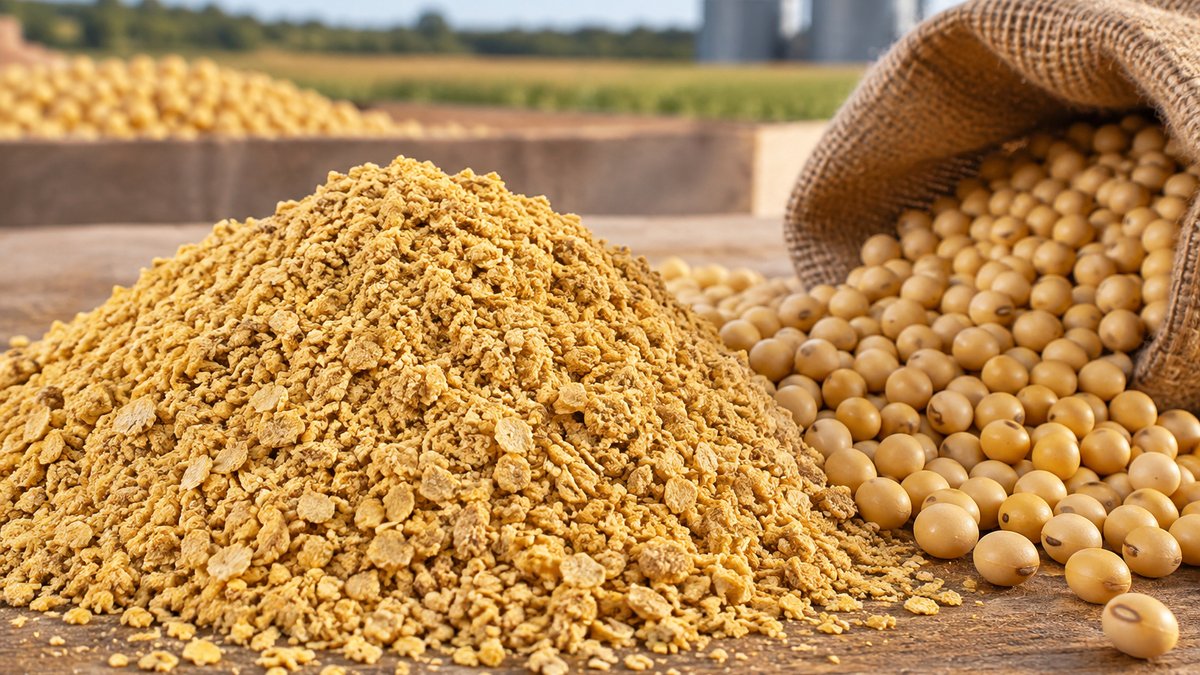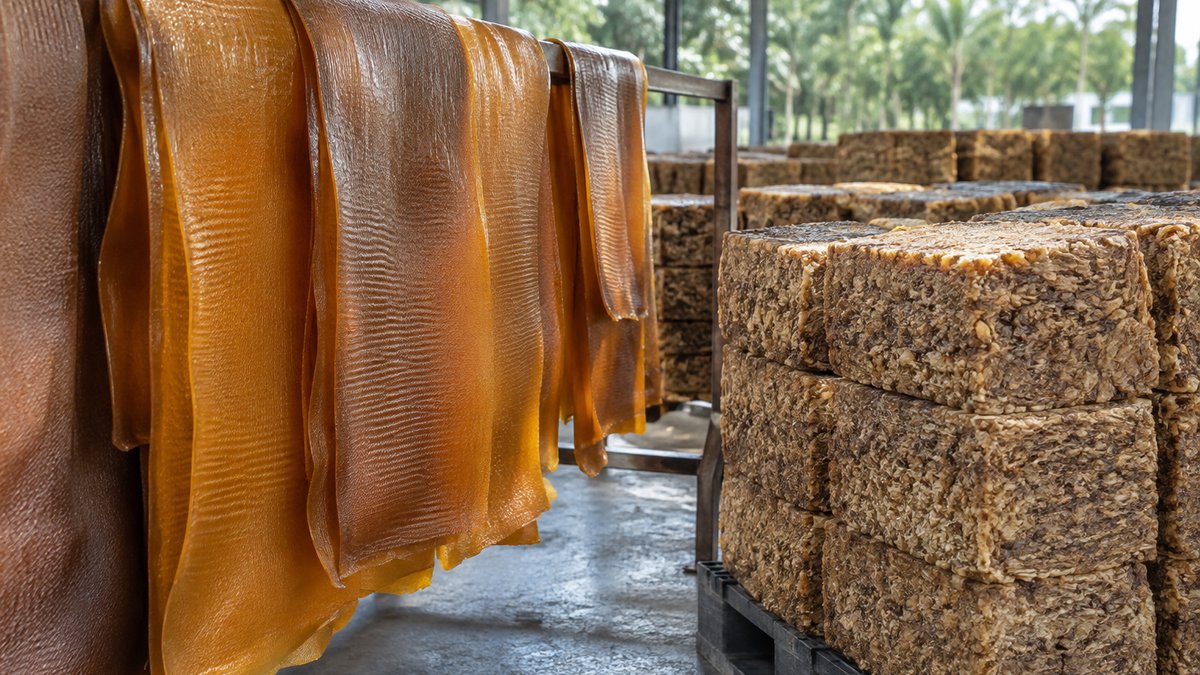

RSS and TSR are two traded forms of natural rubber, but they are identified and assessed differently. Ribbed smoked sheet (RSS) is supplied as dried sheets and graded mainly through visual inspection. Technically specified rubber (TSR) is generally supplied in blocks and classified against agreed technical properties.
For importers and exporters, the practical distinction is how the material is prepared, described and checked—not that one form is automatically better. The right choice depends on a buyer's processing line, specification and quality-control requirements. Information in this article was checked on November 23, 2026.
Key Takeaways
- RSS is sheet rubber commonly graded by visual assessment; TSR is a broader category of rubber generally supplied in blocks and classified by technical properties.
- RSS grade names such as RSS 1 and RSS 3 are not interchangeable with TSR grades such as 10 or 20. The labels describe different grading approaches.
- TSR is not a single grade or a guarantee of identical performance. Buyers should specify the required grade, test methods, limits and raw-material category.
- Choose between RSS and TSR based on the production process and product specification, then compare quotations only when the required properties and delivery terms match.
1. RSS vs TSR: The Main Differences
RSS stands for ribbed smoked sheet. It is natural rubber coagulated and formed into sheets, which are dried and smoked. The familiar ribbed surface comes from the sheeting process. Traditional RSS grades are assigned mainly through visual inspection of factors such as appearance, cleanliness, drying and visible defects. The International Standards of Quality and Packing for Natural Rubber Grades, often called the Green Book, describes the conventional grade system.
TSR stands for technically specified rubber. It is natural rubber classified against technical characteristics rather than being defined by the appearance of a sheet. It is commonly processed and packed as blocks, making it a different physical presentation from RSS. ISO 2000:2020, Rubber, raw natural — Guidelines for the specification of technically specified rubber (TSR), describes a grading approach based on the origin of the rubber material and its properties. ISO confirmed this edition in 2025; its status was checked on November 23, 2026.
The terms do not refer to two grades on one shared scale. RSS 3 is not the equivalent of TSR 10 or TSR 20, for example. The Green Book-style RSS categories and the technical classifications used for TSR describe different product forms and assessment systems. A quotation that names only “RSS” or “TSR” leaves important specification details open.
The ISO 2000:2020 guidance also makes clear that TSR is not one uniform product. It groups rubber according to raw-material categories and technical characteristics. Depending on the category and specification, the grade designations include CV or LoV, L, WF, 5, 10, 20, 10 CV and 20 CV. Buyers should not assume that every TSR grade uses the same raw material or has identical properties.
| Comparison point | RSS | TSR |
|---|---|---|
| Full name | Ribbed smoked sheet | Technically specified rubber |
| Common form | Dried sheets, typically baled | Usually processed and packed in blocks |
| How it is classified | Conventional grades assessed mainly by visual inspection | Grade based on raw-material category and specified technical properties |
| Examples of grade labels | RSS 1X and RSS 1–RSS 5 | Examples include 5, 10, 20, 10 CV and 20 CV |
| What the label alone tells a buyer | A sheet-rubber grade; confirm grade criteria and condition | A TSR category or grade; confirm the detailed limits and test basis |
| Key sourcing check | Sheet condition, visual defects, grade and packaging | Grade, test results, raw-material category and agreed limits |
The table summarizes common distinctions, not a complete purchasing specification. The Green Book descriptions and ISO's TSR guidance serve different purposes; the exact contract specification and test documents should govern the transaction.
Once you know whether your process calls for sheet rubber or technically specified rubber, compare the product requirements with what suppliers can offer.
View Latest Rubber Materials Buying Requests →
View Potential Rubber Materials Suppliers →
Buying consideration: When requesting offers, name the form and grade, then attach the complete specification. Do not rely on an RSS or TSR label alone to establish that two quotations are equivalent.
2. RSS and TSR Compared for Procurement
For procurement, the difference matters most when a supplier's product description is turned into acceptance criteria. RSS is commonly inspected as sheets, while TSR is purchased by grade and technical specification. Both descriptions still need supporting details: the product grade, applicable tests, agreed limits, packaging, sampling and inspection arrangements.
2.1 Processing and physical presentation
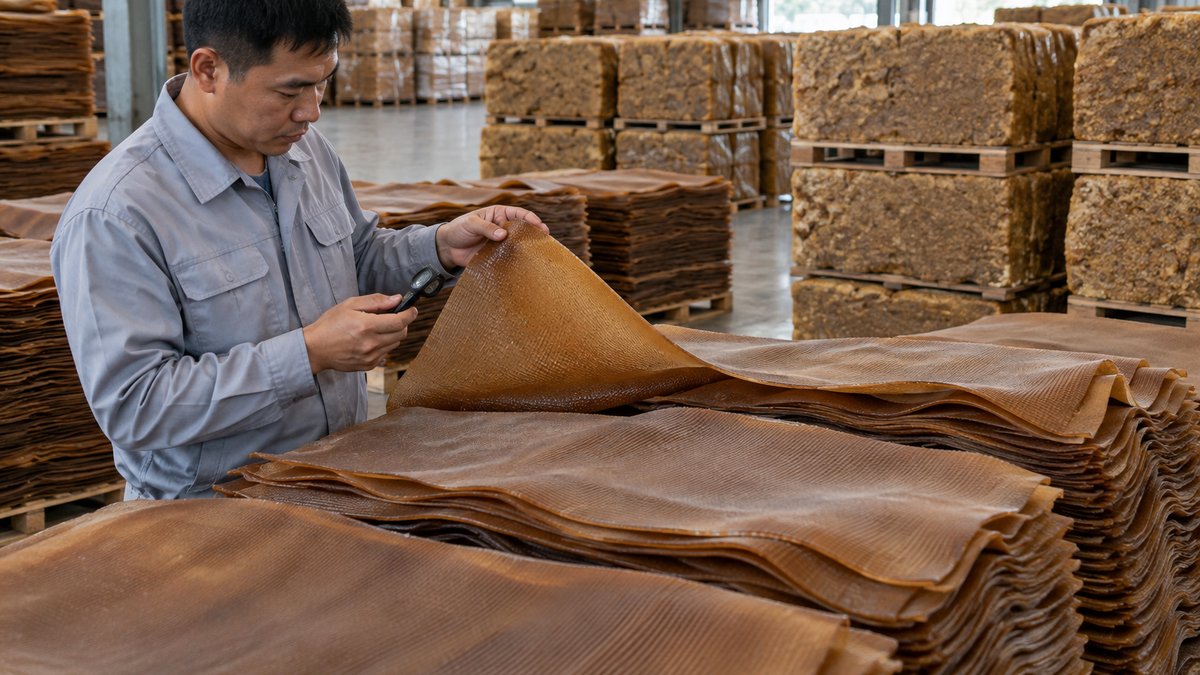
RSS begins with rubber formed into sheets and then dried and smoked. In the conventional RSS system, buyers assess the delivered sheets and bales for the conditions associated with the named grade. The German Insurance Association's Transport Information Service describes RSS grades as visually assessed and notes that defects such as under-curing, burning and oxidation can affect acceptability.
TSR is a classification for technically specified natural rubber, commonly supplied as blocks. The ISO 2000:2020 guidance distinguishes categories by the material used and its properties. The exact processing route and raw material can differ by grade and origin, so block form alone does not establish a particular grade or performance.
2.2 Grading and quality evidence
For RSS, the visual grade is central to the product description. Buyers should agree what grade is required and how inspection will be conducted, including how bales or sheets are sampled and how visible defects are treated. A grade name is useful, but it does not replace clear acceptance terms in the sales contract.
For TSR, the technical basis needs to be explicit. ISO's guidance points procurement parties toward a specification suited to the particular case, rather than treating a generic TSR label as a complete requirement. Ask which grade is offered, which tests and methods apply, and whether the supplier can provide batch-specific test results. Agree any property limits and remedies before shipment.
2.3 What not to infer from a label
- Do not infer that an RSS grade number maps directly to a TSR grade number.
- Do not assume all TSR products have the same origin, raw-material category or technical properties.
- Do not assume a visually acceptable RSS bale will meet a separate technical property requirement unless that requirement is specified and checked.
- Do not treat block or sheet packaging as proof of quality, consistency, origin or suitability for a particular manufacturing line.
For buyers comparing quotations, equivalent terms mean more than the same product family. Confirm the grade, specification, test methods, sampling plan, packaging, quantity, shipment term and payment conditions. This makes the quality comparison more meaningful than comparing price per tonne alone.
Buying consideration: Ask the supplier for the grade description and supporting inspection or laboratory documentation that match the contract. If a required test, limit or inspection procedure is not stated, treat it as a point to resolve before placing the order.
Looking to Source Natural Rubber?
Connect with verified suppliers, discover matching products, and explore sourcing opportunities from global markets.
3. An Example Sourcing Scenario
Consider a tire-component manufacturer reviewing two offers for natural rubber. One supplier offers an RSS grade in bales; another offers TSR blocks. Both products are natural rubber, but the offers are not directly comparable just because they share the same broad product category. The buyer needs to determine which form and specification suit its process.
The production team may first check how each form enters its storage, handling and mixing operations. If the line is set up to receive and inspect sheet rubber, the RSS offer may fit the current workflow. If the line is designed around block rubber and purchasing relies on technical acceptance criteria, the TSR offer may be more aligned. These are process-based considerations, not a universal rule that one form is preferable for all tire manufacturers.
Illustrative inquiry format:
Product: Natural rubber; state RSS or TSR
Grade: Specify the required grade and grading basis
Quality evidence: State visual inspection or technical test requirements
Quantity and packaging: State required quantity and acceptable bale or block packing
Delivery: State destination, delivery term and requested schedule
This is an illustrative inquiry format, not a universal natural-rubber specification.
The buyer should then request complete offers against the same requirements. For the RSS offer, clarify the grade description, inspection procedure and any agreed treatment of visible defects. For the TSR offer, clarify the grade, material category, test methods, property limits and batch documentation. For either offer, agree how samples and disputes will be handled.
If the buyer has not fixed the required form, it can ask production and quality teams to review both samples or specifications before choosing. A change from sheets to blocks may require adjustments to handling or processing, while a change in grade can affect the property's fit to the manufacturing process. The buyer should verify these points through its own technical review rather than assume that a form or grade label guarantees performance.
Buying consideration: Use the scenario to build a like-for-like request: define the rubber form, grade, acceptance criteria and shipment conditions first, then ask suppliers to quote against those terms.
4. When Should Buyers Choose RSS or TSR?
There is no single answer for every natural-rubber buyer. The decision turns on what the receiving plant can process and how the buyer's quality system defines acceptable material. A manufacturer already purchasing a named RSS grade may prioritize continuity with its existing inspection and production process. A manufacturer that purchases by technical properties may prefer to specify an appropriate TSR grade and agree the test basis.
4.1 RSS may fit when
- The production process or purchasing specification calls for ribbed smoked sheet.
- The buyer's inspection process is based on the applicable visual grade description.
- The receiving and storage operation is equipped for the supplier's sheet and bale format.
- The buyer can define the grade, condition, inspection procedure and packaging needed for acceptance.
4.2 TSR may fit when
- The plant's process and handling arrangements are designed for block rubber.
- The buyer specifies raw-material category and technical properties rather than relying only on sheet appearance.
- The supplier can provide test evidence against the agreed grade and methods.
- The buyer and supplier can set clear property limits, sampling and acceptance arrangements in the contract.
In some cases, the plant's established formulation or equipment may limit the options; in others, the buyer may have room to evaluate alternatives. Before switching, have the technical team confirm compatibility and arrange any necessary trial or incoming-quality checks. These steps help distinguish a commercial preference from a validated production requirement.
A practical comparison checklist is:
- Confirm the form your process is designed to receive: RSS sheets or TSR blocks.
- Write the required grade and identify the grading or specification basis.
- State the tests, methods, limits and documents needed for acceptance.
- Agree sample size, inspection timing, sampling method and the process for handling nonconforming material.
- Compare offers with the same quantity, packaging, delivery term, destination and payment conditions.
- Review the complete specification with production and quality staff before approving a change of form or grade.
The RSS-versus-TSR decision should not be reduced to a price-per-tonne comparison. Differences in specification, inspection, handling and production fit can affect the buyer's full procurement decision. Make sure quotations cover the same requirements before comparing their commercial terms.
After setting the form, grade and acceptance criteria, review potential suppliers whose natural-rubber offers can be checked against your specification.
View Related Suppliers for This Product →
Buying consideration: Choose the form that meets the plant's documented requirements, then verify each shipment against the agreed contract specification. If the requirement is uncertain, resolve it with the technical team before issuing a purchase order.
5. Related Natural Rubber Resources
For TSR procurement, ISO 2000:2020, Rubber, raw natural — Guidelines for the specification of technically specified rubber (TSR), is a useful starting point for understanding the grade framework. The International Standards of Quality and Packing for Natural Rubber Grades (the Green Book) provides the conventional RSS grade descriptions. Read the applicable documents and state the requirements needed for your contract; a general reference does not replace the purchase specification.
Buyers can review natural rubber buying opportunities on Freshdi and browse broader Rubber Materials buying requests. Suppliers can explore natural rubber supplier listings or review the broader Rubber Materials supplier category. Listing information is a starting point; verify product grade, availability, business details and commercial terms directly with the prospective counterparty.
If you are preparing to source or supply, Freshdi also provides pages for buyers and suppliers. For guidance on using Freshdi's sourcing resources, view the Account Manager page.
The key point is simple: RSS and TSR are different natural-rubber forms with different grading approaches. Define the required form and acceptance criteria before comparing offers, and confirm that the supplier's documentation supports the specification you intend to buy.

Frequently Asked Questions
What is the main difference between RSS and TSR natural rubber?
RSS is ribbed smoked sheet rubber, commonly graded mainly by visual assessment. TSR is technically specified rubber, commonly supplied as blocks and classified by raw-material category and technical properties. They use different grading approaches, so their grade labels do not map directly onto one another.
Is RSS 3 equivalent to TSR 10?
No direct equivalence should be assumed. RSS 3 is an RSS grade under the conventional sheet-rubber grading system, while TSR 10 is a designation within a technically specified rubber system. Compare the actual requirements, applicable tests and acceptance criteria rather than matching numbers.
Is TSR always better than RSS?
No. Neither form is universally better. A suitable choice depends on the manufacturing process, purchasing specification, handling arrangements and quality-control requirements. Buyers should confirm that the product's grade and evidence meet their application needs.
What should an RSS buyer specify?
State the RSS grade and applicable grade basis, required condition, inspection and sampling arrangements, packaging, quantity, destination and delivery terms. If the contract requires technical properties beyond the visual grade description, state those tests and limits separately.
What should a TSR buyer check before ordering?
Confirm the TSR grade and raw-material category, the applicable test methods and required property limits, and whether batch-specific test results are available. Also agree sampling, acceptance, packaging, quantity and delivery terms. ISO 2000:2020 provides guidance for specifying TSR, but the parties should define the requirements for their particular contract.
Can I compare RSS and TSR offers by price per tonne?
Only after confirming that the offers meet comparable requirements. Check form, grade, technical or visual acceptance criteria, inspection evidence, packaging, quantity and delivery conditions. If the specification differs, the quoted prices may not represent equivalent products.
References
1. International Organization for Standardization (ISO) – ISO 2000:2020, Rubber, raw natural — Guidelines for the specification of technically specified rubber (TSR), 2020; confirmed 2025.
2. International Organization for Standardization (ISO) – ISO 2000:2020 — Preview, 2020.
3. Myanmar Trade Portal, Ministry of Commerce – International Natural Rubber Type and Grade Description (RSS), 2017.
4. Gesamtverband der Deutschen Versicherungswirtschaft (GDV), Transport Information Service – Natural Rubber, Accessed November 23, 2026.
5. GAPKINDO – Download — Natural Rubber Standards, Accessed November 23, 2026.
Disclaimer: This article is compiled from platform data, public sources and information provided by third parties, for general informational purposes only. We do not guarantee its accuracy or completeness. Please conduct your own due diligence before making business decisions.