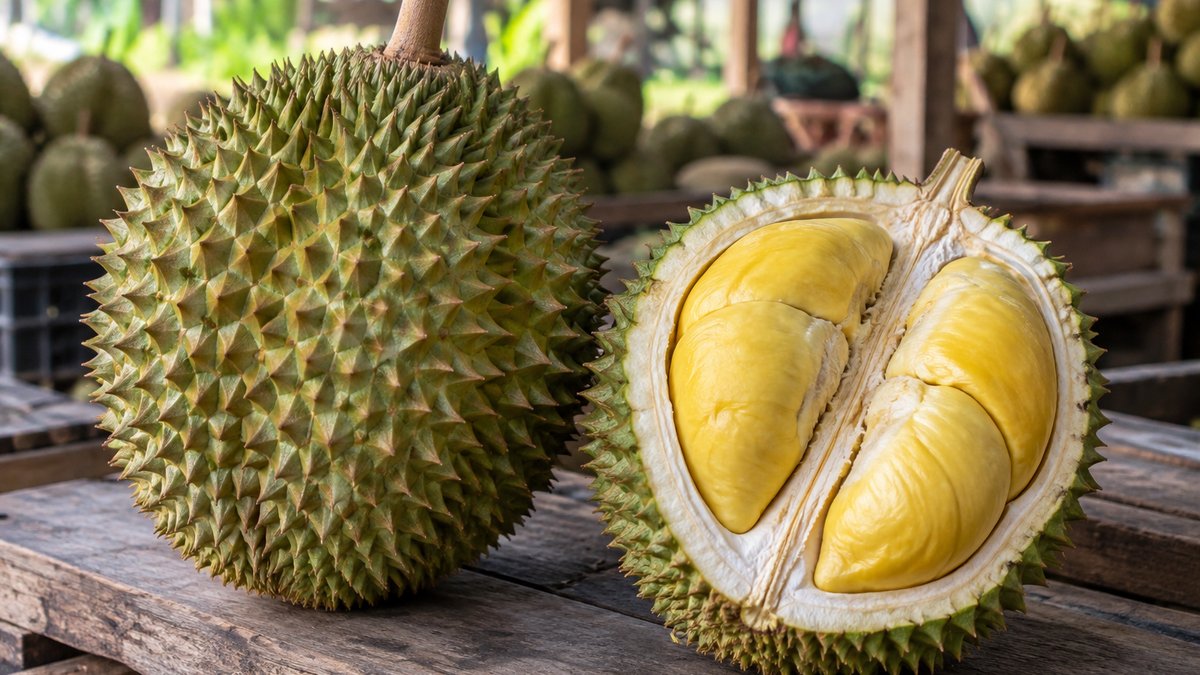

Musang King and Monthong are two distinct fresh durian varieties, not grades of the same product. Malaysian Department of Agriculture material identifies Musang King as Raja Kunyit (D197), while Thai agricultural sources recognize Monthong as a separate cultivar. In the Malaysian variety guide, Musang King is described as having very yellow, thick flesh with a rich, sweet and bitter taste.
For importers and exporters, the practical choice is not simply which variety is “better.” It is which variety, maturity, quality class, size, condition and packing specification suit the buyer’s intended market and use. The Codex Alimentarius Commission’s 2014 Standard for Durian sets general quality and presentation criteria for fresh durians; it does not rank Musang King against Monthong.
This comparison was checked on November 23, 2026. It uses variety descriptions as identifying references, not guarantees about every fruit: growing conditions, maturity, harvest and handling can influence the delivered product.
Key Takeaways
- Musang King is the common name associated with the Malaysian-registered Raja Kunyit (D197); Monthong is a separate durian variety recognized in Thai agricultural materials.
- Malaysia’s Department of Agriculture describes Musang King flesh as very yellow and thick, with a rich, sweet and bitter taste. Fruit characteristics can vary, so confirm the actual lot.
- Neither variety name alone specifies quality class, maturity, size, origin, condition, packaging or the buyer’s required delivery arrangements.
- Use the Codex Standard for Durian as a general quality and presentation reference, then verify which destination-market requirements apply to the shipment.
- Compare quotations only after suppliers confirm the cultivar and the same commercial specifications.
1. Musang King vs Monthong: The Main Differences
Musang King and Monthong are cultivar names used in fresh durian trade. The first distinction buyers should establish is identity: Malaysian Department of Agriculture material identifies Raja Kunyit, registered as D197, as the variety commonly known as Musang King. Thailand’s Department of Agriculture variety material separately identifies Monthong. They are not two grades within one standardized category.
A variety name can help buyers communicate the type of fruit they want, but it does not settle the full specification. A shipment labeled Musang King or Monthong still needs details such as country and area of origin, maturity or harvest stage, size, quality class, lot uniformity, packaging, and condition requirements. If those points are missing, buyers may receive offers that cannot be compared on an equivalent basis.
1.1 Cultivar identity and naming
For Musang King, the Malaysian Department of Agriculture’s guide to popular Malaysian durian varieties describes Raja Kunyit (D197) and says it is better known by that name. It gives identifying features including an elliptic or obovate fruit shape, bright green skin, and very yellow, thick flesh. The same guide describes the taste as rich, sweet and bitter. These are reference characteristics, not a promise that every fruit in a commercial lot will look or taste exactly the same.
Monthong is listed separately in Thai Department of Agriculture materials on durian varieties. The botanical and cultivar references distinguish it from Musang King; a supplier should therefore state the variety clearly rather than relying on a broad description such as “premium durian.” Where a market uses translated, local or transliterated names, buyers can ask for the cultivar name used on farm, packing and shipment documents to reduce ambiguity.
1.2 Fruit characteristics are not a quality grade
The Penang state government’s 2026 durian brochure lists Musang King’s flesh as orangey yellow, creamy, and sweet with slight bitterness. The difference in wording from the Department of Agriculture description is a useful reminder: published variety profiles are practical guides, not a substitute for inspecting the offered lot. Fruit can vary with growing environment, tree age and condition after harvest. Ask for representative product photos or an agreed inspection process where appropriate.
The Codex Alimentarius Commission’s Standard for Durian, CXS 317-2014, addresses fresh durian quality, classes, sizing, presentation and marking. It requires fruit to meet minimum condition and maturity-related requirements and describes Extra, Class I and Class II. Those classes address specified quality criteria; they do not mean that one cultivar is inherently a higher class than the other. Codex is an international reference. Buyers should check the destination’s applicable rules rather than assuming the standard is automatically a binding legal requirement in every market.
In short, use the variety name to define the cultivar, and use the contract specification to define what condition and quality the supplier must deliver. Keep the two questions separate when negotiating.
2. Musang King vs Monthong Comparison Table
The table summarizes documented cultivar identification and the points buyers should confirm. It avoids treating descriptive profiles as guaranteed product attributes or implying that the variety name alone establishes grade.
| Buyer comparison point | Musang King | Monthong |
|---|---|---|
| Cultivar identity | Raja Kunyit, registered as D197 in Malaysia; commonly known as Musang King | A separate variety identified in Thai Department of Agriculture materials |
| Published profile | Malaysian Department of Agriculture describes bright green skin and very yellow, thick flesh; rich, sweet and bitter taste | Confirm the offered lot’s characteristics with the supplier; descriptions can vary by source and fruit condition |
| What the name tells you | The claimed cultivar, subject to verification | The claimed cultivar, subject to verification |
| What the name does not specify | Class, size, maturity, origin, packing or condition | Class, size, maturity, origin, packing or condition |
| Useful reference | Malaysia’s Department of Agriculture variety guide | Thailand’s Department of Agriculture variety materials |
| Shared trade checks | Confirm lot identity, maturity, class, sizing, uniformity, packaging and destination requirements | Confirm lot identity, maturity, class, sizing, uniformity, packaging and destination requirements |
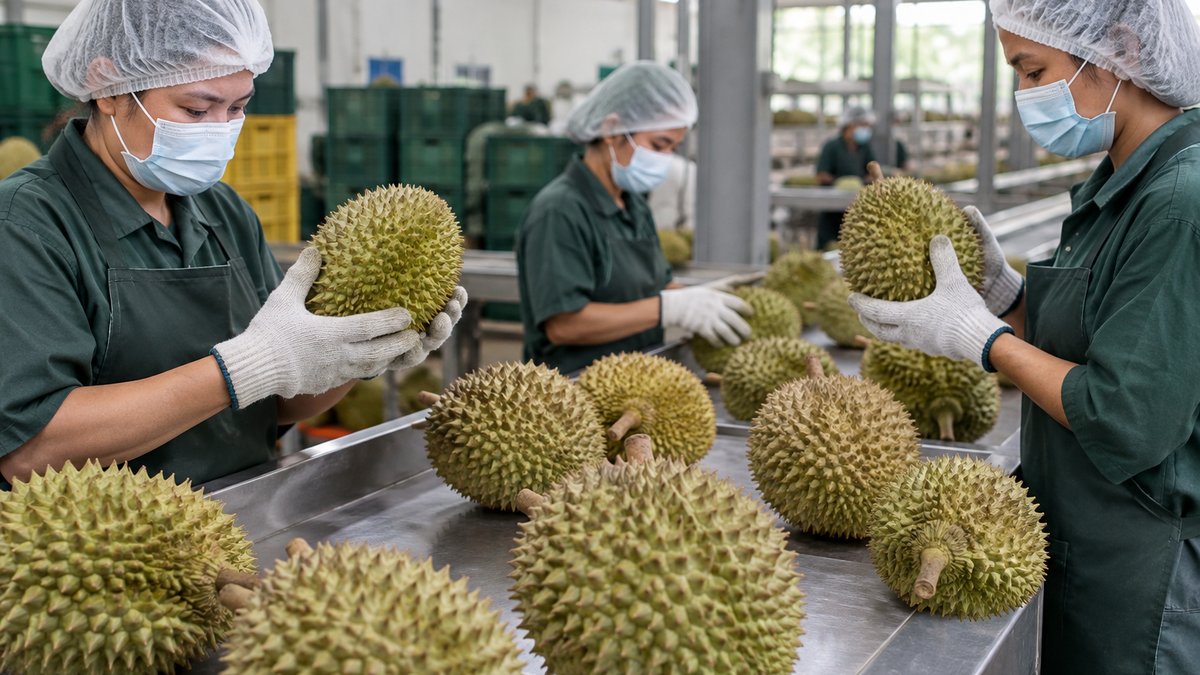
Codex CXS 317-2014 allows durian sizing by weight or count and calls for packages to contain fruit of the same variety and quality. When the standard is used as a reference, state the class and size basis in the purchase specification rather than assuming the cultivar name determines either. The standard also includes marking particulars for non-retail containers, including the variety name as optional and class and size as commercial identification.
For meaningful quotation comparisons, request offers against the same specification: cultivar, country of origin, quality class or agreed defect tolerances, size range or count, maturity and ripeness expectations, packaging, net weight basis, inspection arrangements, quantity, destination and delivery terms. If offers differ on any of these points, note the difference before comparing prices.
Looking to Source Fresh Durian?
Connect with verified suppliers, discover matching products, and explore sourcing opportunities from global markets.
3. Example Sourcing Scenario
Consider an importer evaluating offers for fresh durian for a retail program. One supplier offers Musang King and another offers Monthong. The first quotation states only the variety and unit price; the second includes the cultivar, origin, fruit size range, packing format and a proposed inspection point. The importer does not yet have enough information to conclude that either offer is the better value.
The buyer can first check whether the intended program has a specific cultivar preference. If the product name is central to the retail offer, the buyer should request evidence that the fruit is the named cultivar and confirm how the lot will be identified in packing and shipment documents. If the program instead prioritizes fruit condition, consistent sizing or a particular presentation, the buyer should describe those requirements directly rather than assuming that one variety name guarantees them.
Next, the buyer asks both suppliers to quote on a shared basis. The request identifies fresh fruit, the requested cultivar, origin, agreed size basis, required class or acceptance criteria, packaging and labeling needs, order quantity, destination, delivery term and expected shipment window. It also asks suppliers to explain their maturity or ripeness specification and how they handle inspection or claims for nonconforming fruit.
The buyer then reviews representative lot information. This may include current photographs, sample details where feasible, packing specifications and documents relevant to the destination. The buyer checks that the proposed fruit is commercially suitable for the intended distribution channel and that the supplier’s stated specifications match the contract. A photograph can help identify visible characteristics, but it cannot by itself confirm internal condition, taste or the full contents of a shipment.
This scenario does not imply that either cultivar is universally preferred, more reliable or more profitable. It shows how a buyer can separate cultivar preference from delivery specification. If the two offers still differ in product attributes or delivery terms, the buyer should record those differences and avoid treating the quoted price as a like-for-like comparison.
Illustrative inquiry format:
Product: Fresh durian; specify Musang King or Monthong
Origin: State the required or offered country and growing area
Quality: Specify the agreed class or acceptance criteria
Sizing: State the weight range or count basis
Packing: State packaging, labeling and net weight requirements
Commercial details: Quantity, destination, delivery term and shipment window
This is an illustrative inquiry format, not a universal durian specification.
4. When Should Buyers Choose Each Variety?
Choose by matching the cultivar to the buyer’s product brief, customer expectations and verified supplier offer. Neither variety is the automatic choice for every importer. A decision based only on a reputation, a tasting description or a name on an offer can miss the commercial details that determine whether the shipment meets the buyer’s requirements.
4.1 When Musang King may fit
Musang King may fit a program that specifically calls for the Malaysian cultivar known as Raja Kunyit (D197), or where the buyer’s target customer recognizes and requests that name. The Malaysian Department of Agriculture’s published description—very yellow, thick flesh, with a rich, sweet and bitter taste—can help frame the initial product discussion. It should not replace a specification, sample assessment or agreed acceptance criteria.
Buyers considering Musang King should confirm cultivar identity and origin, then define maturity, size, class, handling, packaging and delivery requirements. If the product will be sold under a named variety, make sure the supplier’s labeling and shipment documents use consistent terminology. Ask how the supplier distinguishes the offered cultivar from other durians in the lot and what information is available for verification.
4.2 When Monthong may fit
Monthong may fit a buyer’s plan when that is the variety specified by its customer, product brief or sourcing program. Because cultivar descriptions and market naming can vary, buyers should ask suppliers to state the variety name, origin and identifying basis in writing. Request information about the actual offered lot rather than assuming a general description applies to every shipment.
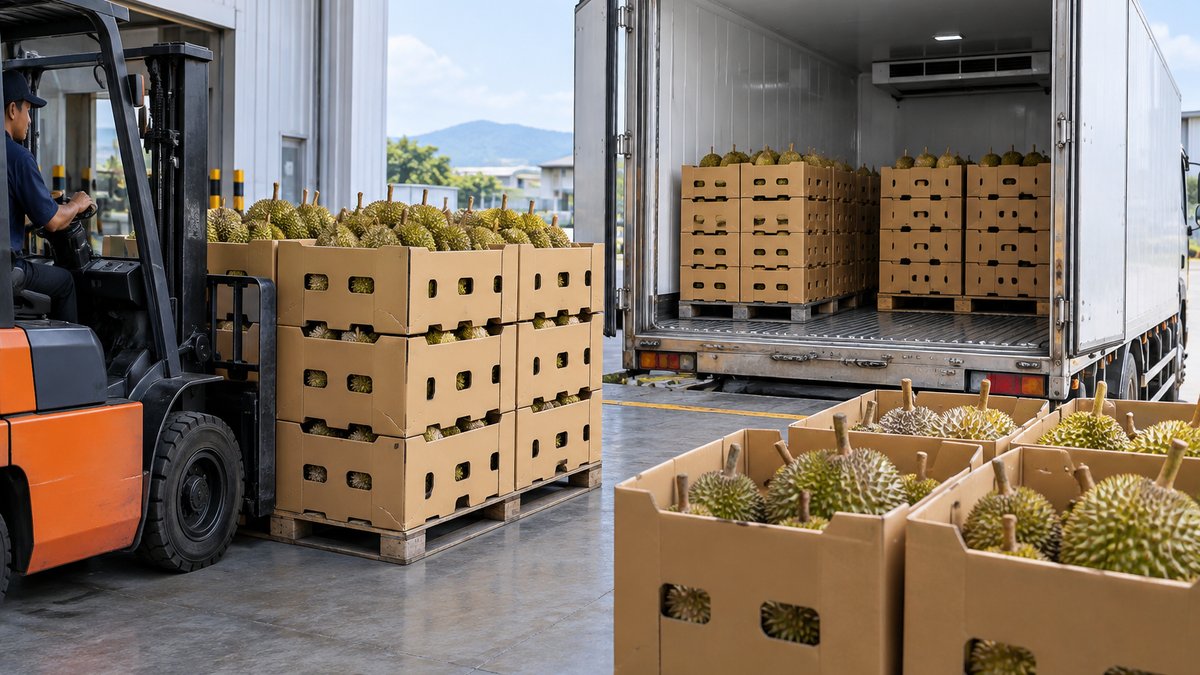
For either variety, review the same commercial fundamentals: condition on dispatch, maturity and ripeness expectations, sizing method, lot uniformity, packaging strength and ventilation, labeling, shipment schedule and destination requirements. Fresh produce is sensitive to harvest and handling conditions, so agree in advance what inspection evidence will be used and how any deviation from the contract will be documented.
4.3 A buyer’s decision checklist
- Confirm the exact cultivar name and country or area of origin.
- Specify whether the purchase is for whole fresh fruit and state the intended customer or channel.
- Agree a quality class or clear acceptance criteria, including relevant defects and tolerances.
- State the size basis, such as weight range or count per package.
- Define maturity or ripeness expectations and the point at which the condition will be assessed.
- Set packaging, labeling, lot uniformity, quantity and shipment requirements.
- Check destination-market rules and documentation with the relevant authorities or qualified trade advisers.
- Compare quotations only after product specifications and delivery terms are aligned.
Once the specification is clear, buyers can review Fresh Durian supplier listings on Freshdi and compare the available information with their requirements.
With the cultivar and shipment requirements defined, buyers can explore suppliers whose listed products may fit the specification.
View Related Suppliers for This Product →
For broader category discovery, buyers can also browse Fruit suppliers on Freshdi. Listings are a starting point for a sourcing conversation, not a substitute for verifying cultivar, product condition, business information and agreed commercial terms.
5. Related Durian Sourcing Resources
Before sending an inquiry, keep the distinction clear: Musang King and Monthong are cultivar names, while grade, size and condition are separate specification points. The Codex Standard for Durian can help structure discussions of quality classes, sizing, packing and marking, but destination-specific legal requirements still need to be checked for the actual shipment.
Buyers can browse Fresh Durian buying requests on Freshdi to see sourcing opportunities, and explore Fruit buying requests for the wider product category. A request is a lead to assess, not confirmation that a particular variety, volume or delivery schedule is suitable.
Businesses can also view buyer listings on Freshdi and view supplier listings on Freshdi. Review each listing’s stated details and confirm product specifications and commercial terms directly with the prospective business partner.
For another route to explore sourcing opportunities, buyers and exporters can visit Freshdi’s Account Manager page. For durian suppliers and buyers, the most useful starting point remains a clear brief: identify the cultivar, describe the required fruit and set out the shipment conditions.
After defining whether the requirement is for Musang King or Monthong and setting the shipment details, buyers and sellers can explore Fresh Durian sourcing opportunities on Freshdi.
View Latest Fruit Buying Requests →
View Potential Fruit Suppliers →
Frequently Asked Questions
Are Musang King and Monthong the same durian variety?
No. They are separate cultivar names. Malaysia’s Department of Agriculture identifies Raja Kunyit (D197) as commonly known as Musang King, while Thai Department of Agriculture materials identify Monthong separately. Buyers should state the required cultivar explicitly in inquiries and contracts.
What is the difference between Musang King and Monthong?
The primary distinction is cultivar identity. The Malaysian Department of Agriculture describes Musang King as having very yellow, thick flesh with a rich, sweet and bitter taste. Fruit characteristics vary, and buyers should request details for the actual Monthong or Musang King lot rather than relying on a general profile alone.
Does the variety name tell me the durian’s quality grade?
No. Cultivar and quality class are separate. The Codex Standard for Durian describes quality classes and minimum requirements for fresh durians, but the variety name alone does not assign a class. State the agreed class or acceptance criteria in the purchase specification and check destination-market requirements.
Can buyers compare prices for Musang King and Monthong directly?
They can compare offers only after checking that the quoted products and terms are comparable. Align cultivar, origin, class or acceptance criteria, size basis, maturity, packaging, quantity, destination and delivery terms. A price comparison that ignores these differences may not represent equivalent offers.
What should a fresh durian import inquiry include?
Specify the cultivar, origin, quality class or acceptance criteria, size basis, maturity or ripeness expectations, packaging, labeling, quantity, destination, delivery term and shipment window. Ask suppliers how they identify the cultivar and what inspection information is available for the offered lot.
Does Codex CXS 317-2014 automatically apply as a law in every market?
No. It is an international Codex standard and a useful reference for fresh durian quality, sizing, presentation and marking. Whether its provisions are legally binding for a particular shipment depends on applicable destination-market requirements. Buyers should check the rules relevant to their product and destination.
References
1. Department of Agriculture Malaysia – Mengenali Varieti Durian Popular di Malaysia (Recognizing Popular Durian Varieties in Malaysia), Undated; accessed November 23, 2026.
2. Department of Agriculture, Thailand – Durian: Plant Variety Characteristics, 2019.
3. Codex Alimentarius Commission, FAO/WHO – Standard for Durian, CXS 317-2014, 2014.
4. Penang Global Tourism – Durian Varieties and Taste, Durian Brochure, 2026.
5. University of Hawai‘i at Mānoa, College of Tropical Agriculture and Human Resources – Fruit, Nut, and Beverage Crops, Undated; accessed November 23, 2026.
Disclaimer: This article is compiled from platform data, public sources and information provided by third parties, for general informational purposes only. We do not guarantee its accuracy or completeness. Please conduct your own due diligence before making business decisions.