
Introduction
Frozen yellowfin tuna and frozen skipjack tuna are different species sold in overlapping frozen product forms. Yellowfin is Thunnus albacares; skipjack is Katsuwonus pelamis. A buyer comparing offers should first confirm the species, then compare the cut, grade, handling history and delivery terms.
For Philippine exporters, the two products also appear differently in official trade classifications. The Philippine Statistics Authority's 2023 commodity fact sheet reports exports of frozen yellowfin tuna separately from frozen skipjack, with separate figures for skipjack frozen fillets. Those figures describe specific product categories and a past reporting year, not current availability or a price comparison.
The practical choice depends on the product the buyer's customer or processing line requires. A species name alone does not specify whether the fish is whole, dressed, a loin or a fillet, nor does “frozen” establish the freezing method, temperature history, packaging or final quality.
1. Frozen Yellowfin Tuna and Frozen Skipjack Tuna Compared
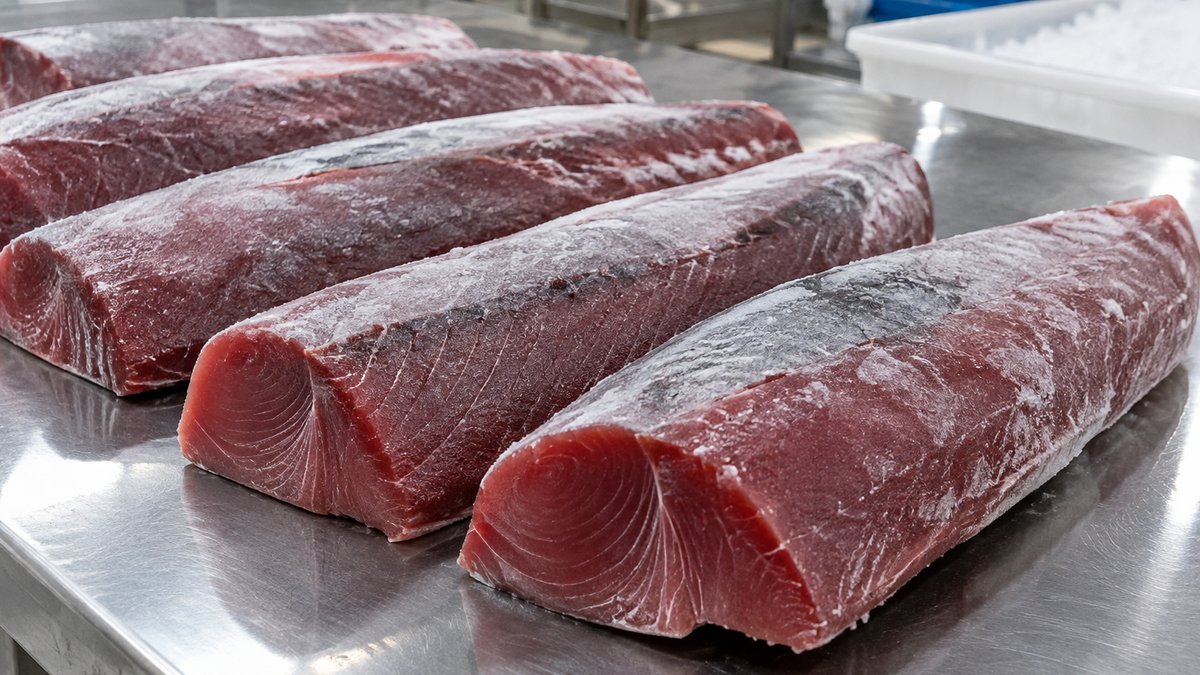
The first difference is biological: yellowfin and skipjack are separate tuna species. Their names do not describe a grade or a processing method. A frozen product can be whole, dressed, cut into loins or made into fillets, so buyers need the product form alongside the species before comparing offers.
Yellowfin is a large tuna species found in tropical and subtropical seas. The Food and Agriculture Organization describes its distinguishing features, including notably elongated second dorsal and anal fins on some larger fish. These are identification details; they do not establish the quality or commercial grade of a frozen lot.
Skipjack is also a tropical tuna, but it belongs to a different genus. The FAO identifies it as Katsuwonus pelamis and treats it separately from yellowfin in its tuna species references. In trade, a buyer should use the scientific name when a common name or local market name could be ambiguous.
The available product-form information can differ between species. NOAA Fisheries describes Pacific yellowfin meat as mild and meaty, with firm, moist texture and large flakes. That description applies to yellowfin, not automatically to every cut, frozen process or lot. For skipjack, buyers should assess the actual sample against their required product specification rather than assume that a broad species description predicts the performance of a particular shipment.
A comparison by price also needs matched specifications. A whole fish and a trimmed loin do not have the same processing yield. A skin-on loin and a skinless, boneless loin are not interchangeable. Differences in size, cut, trim, glaze, packaging, inspection results and delivery basis can change a quotation even when both offers are for the same species.
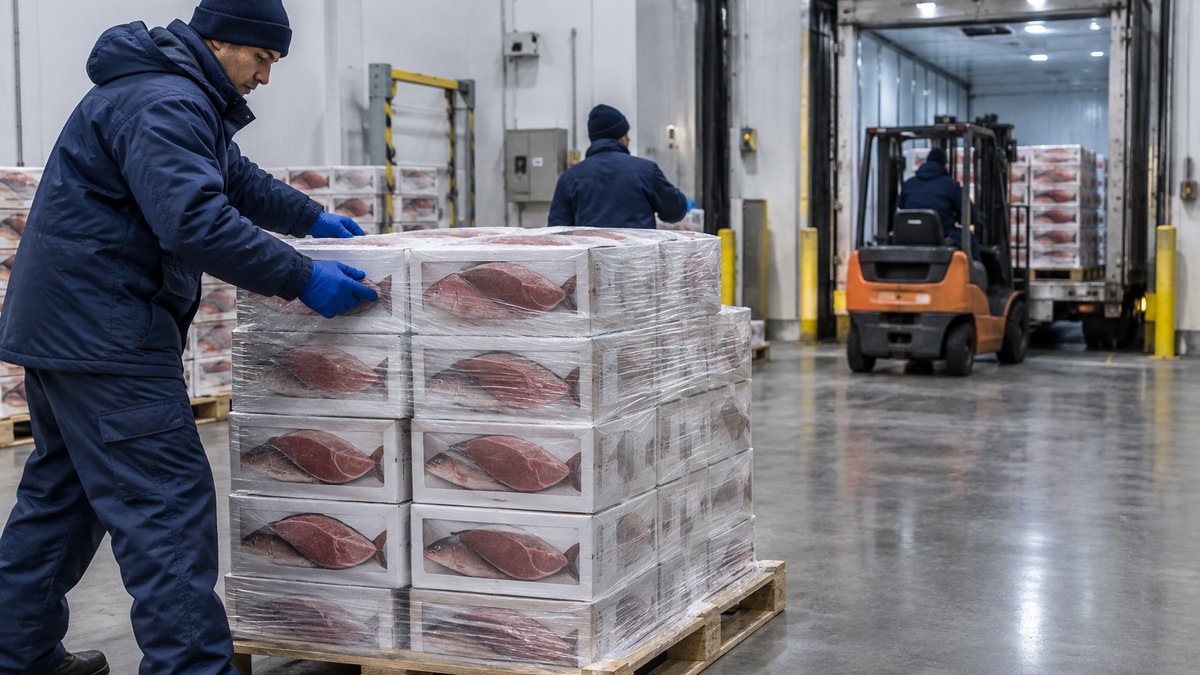
The word “frozen” also leaves important details open. It does not tell the buyer whether the fish was frozen whole or after cutting, whether it was individually quick frozen or block frozen, what packaging is used, or what storage and temperature records accompany the lot. Buyers should request those details directly and confirm that the specification matches their intended processing and resale.
Species identification and product quality are separate checks. Confirm the species on the product specification and relevant lot documents, then review the condition and characteristics required by the contract. The species name alone is not evidence of a specific grade, catch method, certificate, origin claim or processing capability.
2. A Philippine Export Scenario: Compare Equivalent Tuna Products
Consider an importer sourcing frozen tuna from a Philippine exporter for a processing line. The importer has two offers, one for yellowfin and one for skipjack, but each offer describes a different cut. The importer cannot make a fair species comparison until the supplier states the product form and the buyer decides whether both forms fit the same use.
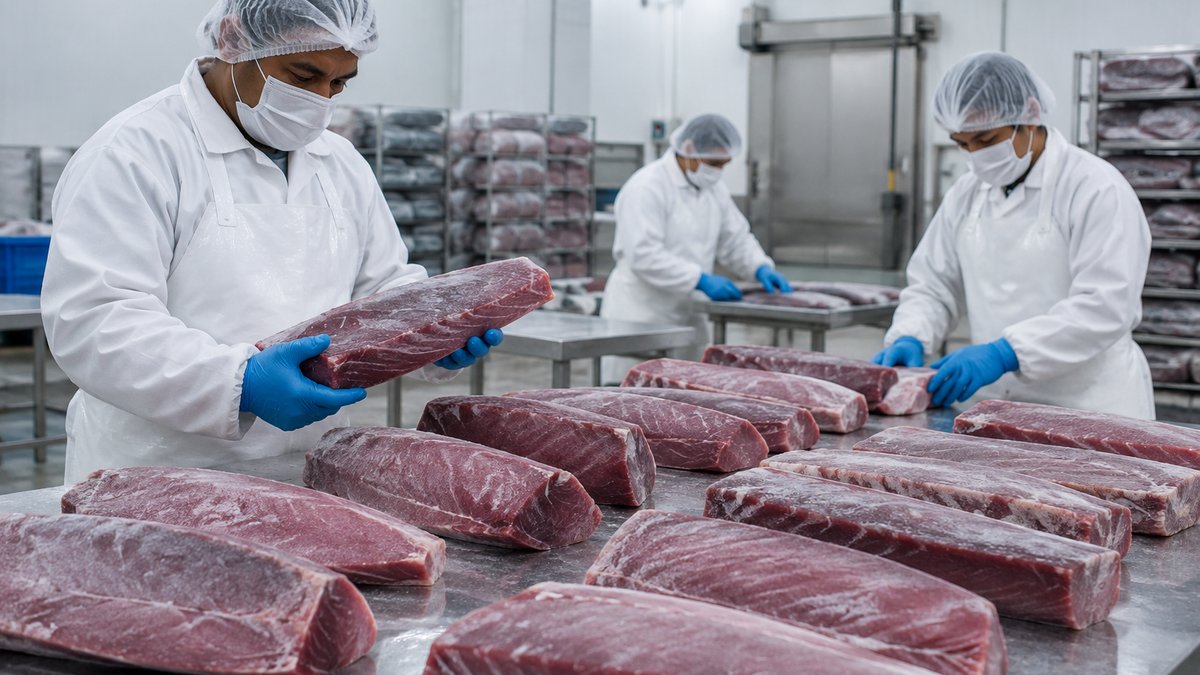
For example, the yellowfin offer might be for frozen loins while the skipjack offer is for whole fish. The importer would need to account for the extra processing required for the whole fish and the usable yield after cutting. Comparing only the quoted price per kilogram would omit those differences. The importer should request matched forms or calculate the cost against the usable product required by the production plan.
The reverse problem occurs when the buyer needs whole frozen fish for its own processing but receives a quotation for trimmed portions. That offer may include processing the buyer does not need and may not fit the buyer's equipment or yield calculations. State the required form before requesting quotations, rather than trying to infer it from “frozen tuna.”
Illustrative request for comparable offers:
Species: Yellowfin tuna or skipjack tuna, stated separately
Product form: Specify whole, dressed, loin, steak or fillet
Condition: Frozen; state the required freezing and packaging details
Quality specification: State the buyer's grade, trim, size and defect requirements
Quantity and delivery: State quantity, destination, delivery term and shipment schedule
Documents: List the certificates and lot or catch documents required for the destination
This is an illustrative inquiry format, not a universal specification. Buyers should set requirements for their product, processing line and destination market.
The importer should then ask suppliers to identify what each quoted price includes. Does the weight refer to net fish weight or packed weight? Is glaze included, and how is it declared? What packaging and carton size are offered? What product inspection or temperature records are available? These questions help uncover differences that a species comparison cannot resolve.
Origin requires its own check. A supplier based in the Philippines, a fish landed at a Philippine port and fish caught in Philippine waters are not automatically the same claim. The buyer should specify which origin or catch information is required and verify it from the documents applicable to the shipment. Do not infer catch area from the seller's address or the port of loading.
If the buyer is evaluating the species for a new product, request representative samples and agree on an assessment method before purchasing commercial volume. The buyer can compare appearance, trim, texture after thawing and processing performance against the intended product. The result should be recorded against the relevant lot and specification; it should not be treated as proof that every shipment of the species will perform identically.
A useful comparison therefore has two stages. First, verify that the products are the species and forms named in the offers. Then compare the usable yield, quality, handling evidence and landed cost for the buyer's actual application. If the products differ in cut or specification, record those differences instead of presenting the offers as a direct yellowfin-versus-skipjack price test.
Looking to Source Frozen Yellowfin Tuna?
Connect with verified suppliers, discover matching products, and explore sourcing opportunities from global markets.
3. When Should Buyers Choose Yellowfin or Skipjack?
Choose by the buyer's required species and end product, then check whether the supplier can meet the requested form and lot specification. Yellowfin may suit a buyer whose product specification calls for yellowfin's identified meat characteristics, including its firm, moist texture described by NOAA Fisheries. Skipjack is the appropriate option when the buyer's product or customer specification calls for skipjack. Neither species is a universal substitute for the other.
For a buyer making tuna portions or other products from frozen loins, compare like cuts and the same preparation requirements. Ask whether the loins are skin-on or skinless, whether bones are removed, how trim is defined and what size range is supplied. If the buyer needs steaks or portions, confirm whether those are included in the offer or produced after receipt.
For a buyer purchasing whole fish, compare the size range, dressing requirements, condition on arrival and expected processing yield. The buyer's own team can assess how the fish fits its equipment and output plan. A whole-fish quotation should not be compared directly with a quotation for cleaned loins without accounting for yield and processing costs.
For a prepared or preserved product, specify the final form rather than relying on a general tuna label. The Philippine Statistics Authority's 2023 commodity fact sheet separates frozen skipjack exports from skipjack frozen fillets and also reports prepared or preserved tuna categories. The classifications show that product form matters in reporting; they do not tell a buyer which form a particular supplier can deliver today.
A buyer comparing species for a recipe or manufactured product should run a product trial when practical. Evaluate the thawed product under the same preparation conditions and measure the characteristics that affect the finished item, such as portion consistency, trim loss or texture after cooking. Set the acceptable range before the trial so the team can compare results against a clear purchasing requirement.
A buyer with a fixed customer label, recipe or specification should confirm that the species is acceptable before negotiating price. A different species can change product identity, labeling review or customer approval. Where the buyer has flexibility, a substitution should be approved and documented by the responsible quality and product teams before the contract is amended.
Quality and food-safety checks remain necessary for either species. Tuna is a perishable fish product, and freezing does not remove the need to review the supplier's handling controls and shipment records. Set the required temperature and condition criteria in the purchase specification, agree how they will be checked, and define the action for a failed inspection before shipment.
The buyer should also compare the delivery basis. A price quoted at origin is not directly comparable with one that includes freight or insurance. State the requested Incoterm, named place or port, shipment period, payment terms and required documents. If the offers use different delivery bases, keep those differences visible in the comparison rather than treating the lowest figure as the lowest landed cost.
Buying consideration: Before choosing, write one complete specification for each acceptable product: species, cut, size, grade, frozen condition, packaging, quantity, documents and delivery basis. Ask every supplier to quote against that specification, or clearly list the differences when a supplier cannot match it.
4. Related Resources for Frozen Tuna Sourcing
For Philippine trade context, the Philippine Statistics Authority's Commodity Fact Sheets 2023 provide species-specific export categories for frozen yellowfin tuna and frozen skipjack. The report lists 16,503.05 metric tons of frozen yellowfin exports, excluding fillets, for 2023. It lists 200 kilograms of frozen skipjack exports in the corresponding category, while separately reporting 2,100.22 metric tons of skipjack frozen fillets. These are official figures for 2023, published in the PSA fact sheet; they are not current shipment offers or a measure of present-day supplier capacity.
Those categories should not be combined into a single frozen-skipjack total without explaining the product-form difference. The yellowfin figure cited here excludes fillets, while the PSA presents skipjack fillets in another line. The statistics also do not provide a matched price comparison, quality grade, processing yield or proof that a named supplier has stock. Buyers should use them as historical trade context and verify current product availability and terms with the prospective supplier.
The FAO tuna references are useful for checking the scientific names and biological distinction between yellowfin and skipjack. NOAA Fisheries' Pacific yellowfin species page provides a description of yellowfin meat characteristics, but its seafood information is not a specification for Philippine frozen shipments. For a purchase contract, use the buyer's destination requirements and the supplier's lot-specific documents rather than treating general species references as product certifications.
Buyers and exporters can use Freshdi to review relevant frozen yellowfin tuna buying requests and potential frozen yellowfin tuna suppliers. A listing is a starting point for reviewing stated product information; verify the species, specifications, documents and commercial terms for the shipment directly through the transaction process.
Buyers checking current sourcing options can review related seafood requests and supplier listings on Freshdi.
View Latest Seafood & Aquatic Products Buying Requests →View Potential Seafood & Aquatic Products Suppliers →
When a buyer is considering both species, keep the sourcing search and the product specification separate. Find possible suppliers, then ask each one to state the species, product form and shipment details in writing. Freshdi is a place to find relevant seafood buying requests and suppliers; each buyer and seller remains responsible for confirming the product and agreeing the transaction.
References
1. Philippine Statistics Authority – Commodity Fact Sheets 2023, 2024.
2. Food and Agriculture Organization of the United Nations – Resources, Fishing and Biology of the Tropical Tunas of the Eastern Central Atlantic, 1991.
3. Food and Agriculture Organization of the United Nations – Interactions of Pacific Tuna Fisheries, 1990.
4. NOAA Fisheries – Pacific Yellowfin Tuna, 2026.
Disclaimer: This article is compiled from platform data, public sources and information provided by third parties, for general informational purposes only. We do not guarantee its accuracy or completeness. Please conduct your own due diligence before making business decisions.