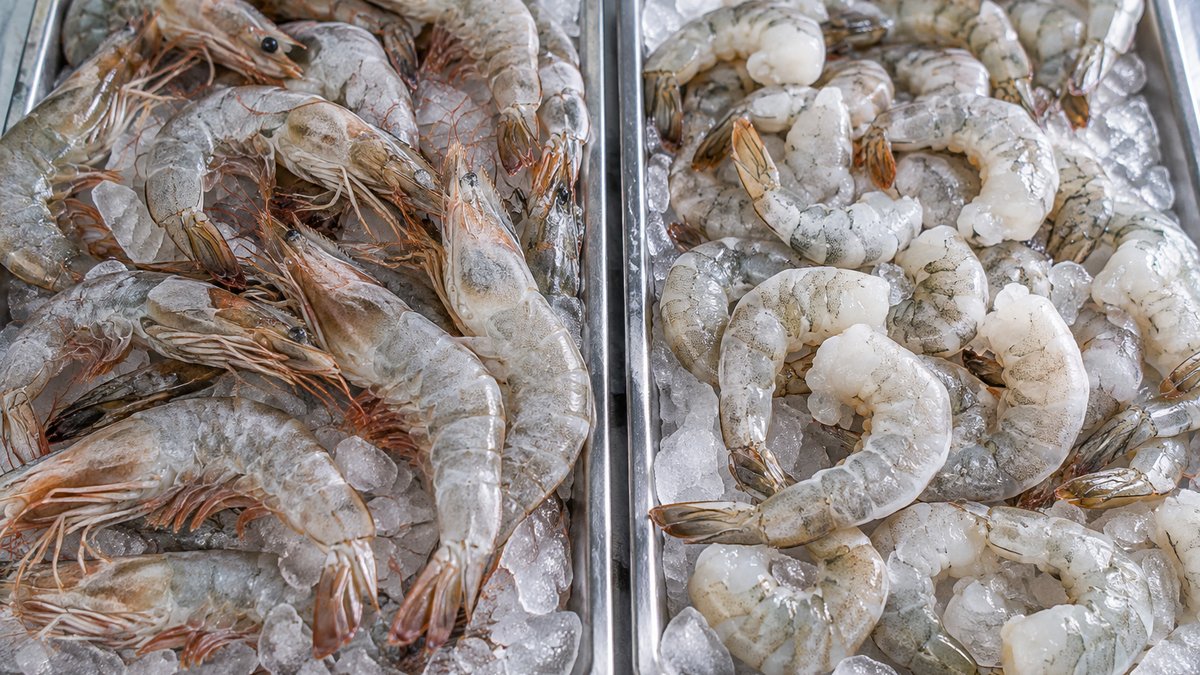

1. HOSO and HLSO Frozen Shrimp Differ by Whether the Head Is Removed
HOSO means head-on, shell-on; HLSO means headless, shell-on. Both forms retain the shell, while HLSO has had the head removed. The abbreviations describe presentation, not species, size, cooking state, freezing method, grade or origin.
The distinction changes what arrives in the carton and how much preparation remains for the buyer. HOSO arrives with the head attached. HLSO has undergone head removal but still needs peeling unless the buyer processes or serves it shell-on. Those differences affect handling and the amount of usable meat per shipment weight, so quotations need to identify the requested form.
The US Grade Standard for Chilled or Frozen Shrimp, published by NOAA Fisheries and revised in December 2024, uses formal descriptions such as “round, head-on,” “round, head-off” and “unpeeled, tail-on.” HOSO and HLSO are common trade abbreviations that correspond broadly to those physical presentations. Buyers should make the full description part of the order specification because the abbreviation alone does not state every product attribute.
Codex’s Standard for Quick Frozen Shrimps or Prawns allows different product presentations when they meet the standard and the label describes them clearly enough to avoid confusion. It also distinguishes raw, partially cooked and fully cooked product. That approach is useful in trade: identify the physical form in plain language and state the other attributes separately.
2. Compare HOSO and HLSO by Presentation and Buyer Work
The practical difference is the head. Shell and tail remain on both forms, while the buyer receives HOSO whole or receives HLSO after head removal. That change affects preparation, presentation and how buyers calculate usable product.

NOAA’s standard separates product style from product form. It lists “round, head-on” and “round, head-off” as styles, while form descriptions separately state whether the shrimp is unpeeled, peeled, deveined, tail-on or tail-off. That distinction helps prevent a purchase order from treating head removal as a complete specification.
For example, “HLSO frozen shrimp” does not establish whether the product is raw or cooked, IQF or block frozen, or what count range the supplier should pack. It also does not establish the glazing arrangement, net weight basis, packaging or accepted tolerance. Buyers should add those details when they affect the intended application or quotation.
The delivered weight also includes different components. HOSO includes the head and shell; HLSO excludes the head but retains the shell. A price comparison by carton or kilogram therefore does not, by itself, show which form gives the buyer a lower cost for the intended finished product. Buyers should compare equivalent specifications and account for their own yield, processing and handling.
Do not infer that one form is universally more expensive. Processing, species, size, origin, quality, packing and contract terms all affect a quotation. To compare offers, ask suppliers to quote the same form and specification, then evaluate the cost against the product the buyer can actually use.
Use the terms consistently throughout the inquiry, quotation and contract. If the buyer requires headless, shell-on shrimp, write that description alongside HLSO. If the buyer requires whole head-on shrimp, write that alongside HOSO. A shared abbreviation can shorten communication, while the full wording records what the parties agreed to supply.
3. A Buyer’s Product Use Determines Whether HOSO or HLSO Fits
A buyer planning to sell or serve shrimp with the head attached should assess HOSO. A buyer whose process removes or does not use the head can assess HLSO, which arrives after that step. The appropriate choice depends on the buyer’s product, preparation line and customer specification.
Consider a seafood distributor supplying restaurants with two different menu needs. One customer wants whole shrimp for a dish where the intact appearance is part of the presentation; the distributor can request HOSO. Another customer wants shell-on shrimp with the head removed for its own preparation; the distributor can request HLSO. This is a planning example, not a claim about a particular market’s buying pattern.
The same distinction applies to a processor deciding where head removal should take place. If the processor has equipment and labor for that step, HOSO may fit its incoming-material plan. If the buyer wants the head removed before shipment, HLSO states that requirement. The buyer should compare the complete offers, including any handling and processing costs under its own operation.
Illustrative inquiry format:
Product: Frozen shrimp, HLSO, headless and shell-on
Condition: State raw or cooked
Size: State the required count range and unit
Freezing and packing: State the required method, pack size and glazing details
Shipment: State quantity, destination, delivery term and required documents
This example shows fields a buyer may specify. Actual requirements depend on the product, destination and contract.
The inquiry should state whether the head is attached or removed, then define the other product and shipment requirements that suppliers need to quote. If a buyer is flexible about one detail, the inquiry can say so directly. Leaving a detail unstated invites suppliers to quote different products under similar shorthand.
Looking to Source Frozen Shrimp?
Connect with verified suppliers, discover matching products, and explore sourcing opportunities from global markets.
4. Choose HOSO for Whole Presentation and HLSO When the Head Is Removed
Choose HOSO when the buyer needs the shrimp delivered with head and shell intact. Choose HLSO when the buyer requires head removal before delivery and wants the shell retained. These are specification decisions; neither abbreviation alone determines quality or suitability.
4.1 Choose HOSO when the head-on form fits the product
HOSO is a direct fit when the buyer’s sales specification, preparation method or presentation calls for whole shrimp. The receiving team can check that the head and shell are present, then inspect the remaining requirements against the contract. The buyer should still state species, count or size basis, raw or cooked state, freezing method and packing.
A whole presentation also means the shipment weight includes the head. Buyers estimating usable yield should account for the parts removed during their own processing and should not compare the gross weight directly with a peeled or headless product as if the contents were equivalent.
4.2 Choose HLSO when the buyer needs headless, shell-on shrimp
HLSO fits a specification that calls for the head to be removed while the shell remains. Buyers can assess it when their next processing step starts with shell-on, headless shrimp, or when that is the form they sell or serve. Confirm the tail presentation in the specification rather than relying on the abbreviation alone.
Removing the head changes the product’s delivered form and weight composition. Buyers should check how that affects their processing plan and compare the quotation with the expected usable output. A supplier’s quote should describe the same processing state, pack and trade terms as competing offers.
4.3 Check the full frozen shrimp specification before confirming
For either form, state the species, count range and unit, raw or cooked condition, freezing method, glazing and net-weight basis, packaging, quantity and destination. Add any applicable quality criteria, documentation and delivery terms. The Codex standard calls for the product’s presentation to be described clearly and for the label to state whether shrimp is raw, partially cooked or cooked.
Keep product form separate from freezing method. NOAA’s standard lists IQF, or individually quick frozen, and block-frozen products as product types, then describes head-on and head-off styles and peeled or unpeeled forms separately. A buyer can therefore request an HOSO or HLSO presentation and specify IQF or block freezing independently, if that combination fits the order.
Confirm that every supplier is quoting the same product before comparing price, lead time or shipment terms. Resolve differences in count units, net weight, glaze, packaging and product form in writing. The contract should use the agreed description rather than relying on an abbreviation that could be interpreted differently.
5. Use Official Descriptions and Sourcing Resources to Confirm the Order
NOAA Fisheries’ US Grade Standard for Chilled or Frozen Shrimp provides formal descriptions of head-on and head-off styles and of peeled, unpeeled, tail-on and deveined forms. It is a US grade standard for designated lots under the NOAA Seafood Inspection Program, not a universal legal requirement for every shipment. The applicable destination rules and contract determine which requirements apply.
The Codex Standard for Quick Frozen Shrimps or Prawns addresses quick-frozen raw, partially cooked and cooked shrimp, including peeled and unpeeled presentations. It sets an international standard; buyers still need to check the importing country’s rules and the exact product scope of any requirement they plan to apply.
When reviewing supplier quotations, compare the written product description and the commercial terms. Ask for clarification where the offer gives only HOSO or HLSO, especially if tail status, count basis, processing state, freezing method or glaze affects the buyer’s use or cost calculation.
Buyers and exporters can also review relevant frozen shrimp buying requests on Freshdi or potential frozen shrimp suppliers on Freshdi as sourcing references; listing information should be checked against the buyer’s specification and transaction requirements.

References
1. NOAA Fisheries – US Grade Standard for Chilled or Frozen Shrimp, Seafood Inspection Program Part 5, Revised December 2024; document accessed November 2026.
2. Codex Alimentarius Commission – Codex Standard for Quick Frozen Shrimps or Prawns, CODEX STAN 92-1981, Revised 1995.
Disclaimer: This article is compiled from platform data, public sources and information provided by third parties, for general informational purposes only. We do not guarantee its accuracy or completeness. Please conduct your own due diligence before making business decisions.