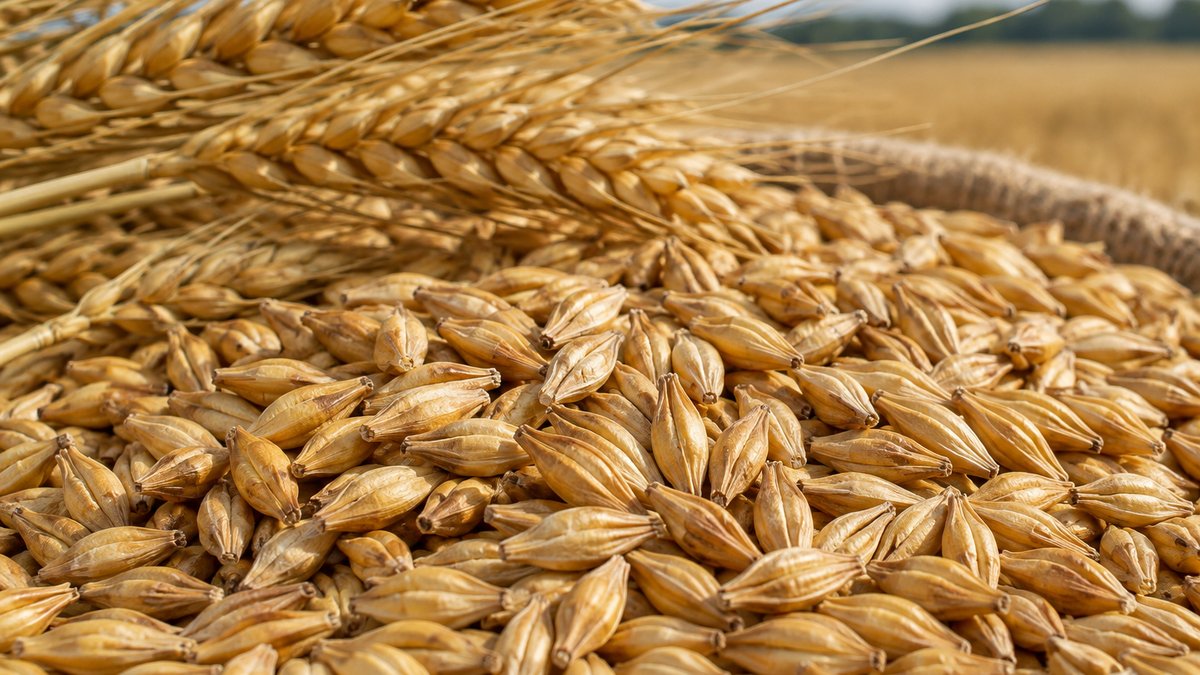

Malting barley and feed barley are both barley, but they are bought for different end uses. Malting barley must be suitable for germination and conversion into malt; feed barley is purchased for livestock rations and related feed uses.
The distinction is not simply appearance or a universal grade name. Variety, grain condition, germination, buyer specifications and the grading system used in the country of origin all matter. A lot may be useful as feed without meeting a maltster’s requirements.
For importers, exporters and trade staff, the practical question is whether the lot fits the buyer’s process—and whether the contract and inspection terms describe that fit clearly. The comparison below summarizes the differences, then walks through a purchase scenario and a specification checklist.
Key Takeaways
- Malting barley is selected for its ability to germinate and produce malt that meets a maltster’s or brewer’s requirements; feed barley is intended primarily for animal feed.
- Malting suitability can depend on variety, germination, protein, moisture, kernel condition and purity. Exact limits vary by buyer, market and applicable grading system.
- A grade or description used in one country is not automatically equivalent to a buyer’s contract specification in another.
- Before comparing quotations, agree on intended use, barley type and variety, quality parameters, sampling and testing, delivery terms and what happens if the lot does not meet specification.
- As of November 23, 2026, the Canadian Grain Commission’s Official Grain Grading Guide identifies malting, food and general-purpose barley classes; general-purpose barley is used primarily for animal feed.
1. Key Differences Between Malting Barley and Feed Barley
The shortest distinction is intended use. Malting barley is bought as a viable grain that can germinate evenly during malting. Feed barley is bought as a feed ingredient, with acceptance based on the purchaser’s feed requirements and the applicable contract or local grade.
During malting, barley is germinated under controlled conditions and then dried to produce malt. Germination is therefore central to malting barley’s commercial purpose. Feed buyers generally assess the grain for its suitability in an animal ration, rather than whether it can complete a malting process. The Government of Saskatchewan’s guidance describes malting barley as grain delivered in a living state and lists germination, variety, protein, moisture and kernel condition among relevant quality characteristics.
The labels do not, by themselves, establish a universal quality ranking. “Feed barley” does not necessarily mean damaged or unsafe grain; it describes an intended commercial use. Likewise, a seller’s description of barley as “malting” does not prove it will meet a particular maltster’s acceptance limits. Buyers should request the specification and supporting test results for the actual lot.
Official categories also vary. The Canadian Grain Commission’s 2026 Official Grain Grading Guide divides barley by end use into malting, food and general-purpose classes. It says general-purpose barley is used primarily for animal feed, while eligibility for Canadian malting grades includes variety-designation requirements. The guide also states that companies selecting barley for malting apply their own criteria and specifications.
In the United States, USDA’s Official United States Standards for Grain include separate grade requirements for malting barley, with factors such as test weight, suitable malting type, sound barley and limits on certain defects. Those U.S. standards should not be treated as interchangeable with Canadian grades or a buyer’s private contract specification.
That distinction matters in international trade: a national grade can describe how grain is inspected under that system, while the contract still needs to say what the buyer accepts. For a starting point, buyers can review barley buying requests on Freshdi, and sellers can review barley supplier listings. Listings are a discovery resource, not a substitute for verifying the specific lot and contractual terms.
2. Malting Barley vs Feed Barley: Comparison Table
The comparison below describes common commercial distinctions, not a single global standard. A contract, national grading system or end user may define additional or different requirements. In particular, exact malting acceptance limits should be confirmed with the intended maltster or buyer.
| Comparison point | Malting barley | Feed barley |
|---|---|---|
| Primary end use | Malted for brewing, distilling or other malt applications | Used as an ingredient in livestock feed |
| Key functional requirement | Viable grain that can germinate evenly and perform in malting | Grain that meets the feed buyer’s ingredient and contract requirements |
| Common quality focus | Variety, germination, protein, moisture, plumpness, damage and purity | Contract grade, condition, moisture, contaminants and feed suitability |
| Variety acceptance | May be restricted to varieties approved or selected by the maltster or grading system | Depends on the buyer’s ration needs and purchasing specification |
| Testing emphasis | Germination and malting-related quality tests, alongside physical grading | Tests and inspection parameters stated by the feed buyer and contract |
| Grade terminology | May have a designated malting class or grade in a national system | May be described by a general-purpose grade, feed grade or contract wording |
| If the lot misses its intended specification | May be rejected for malting or offered under another agreed use or grade | Acceptance depends on feed specification, safety requirements and buyer approval |
Malting requirements are not identical across regions or customers. For example, the Maltsters’ Association of Great Britain describes UK brewing barley protein requirements in relation to the needs of malt and brewer customers, while Canadian grading uses its own classes and grade tables. These are examples of market-specific frameworks, not a global set of limits.
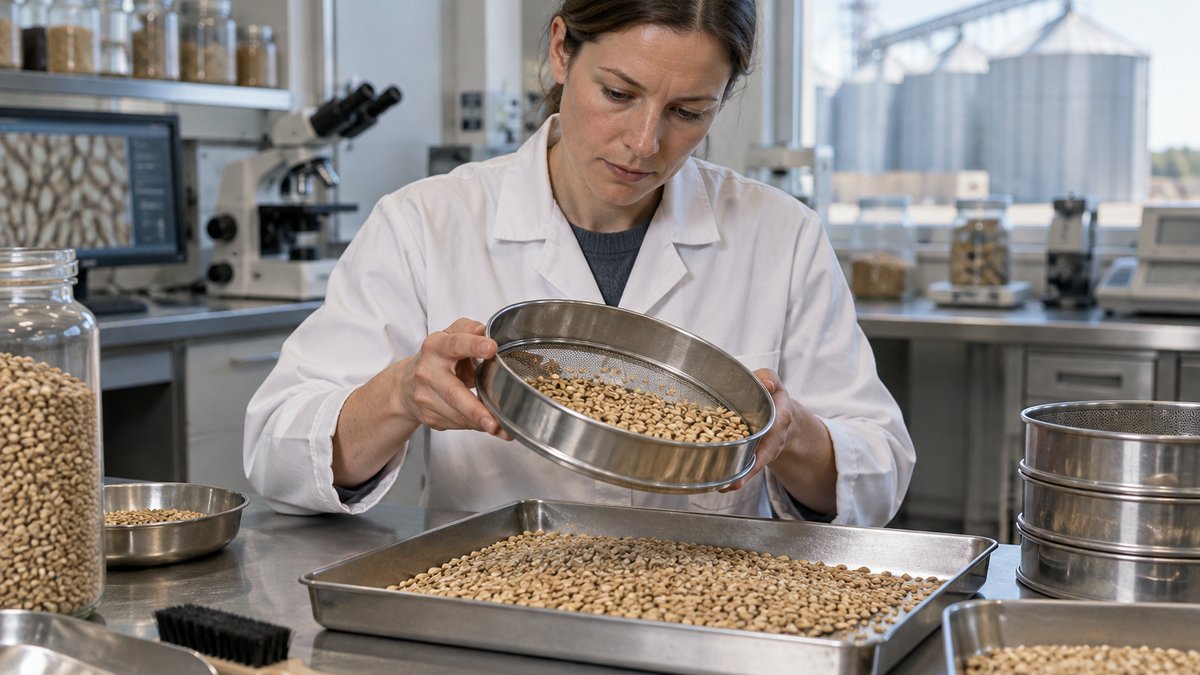
Do not rely on a generic label such as “high quality barley” to settle acceptance. Define measurable factors, the method and timing of testing, and whether the result is determined at loading, discharge or another agreed point. Buyers can compare barley-related buying opportunities or explore suppliers in the grains, cereals and legumes category while preparing a specification.
Once the required end use and quality parameters are clear, buyers and sellers can look for relevant barley sourcing opportunities.
View Latest Grains, Cereal & Legumes Buying Requests →
View Potential Grains, Cereal & Legumes Suppliers →
3. Example Scenario: One Barley Lot, Two Different Buyers
Consider an exporter offering a bulk barley lot to two prospective customers. A maltster wants grain for a named malt product. A feed mill wants barley as a component of a livestock ration. The buyers may be considering the same crop and shipment, but they will not necessarily assess it against the same acceptance criteria.
3.1 The maltster’s inquiry
The maltster asks for the variety and crop information, the applicable malting grade or designation, germination results, protein and moisture values, and details of screenings, broken kernels and other relevant defects. The buyer may also request a sample for its own laboratory or a malting assessment. The exact list depends on the maltster’s requirements and destination market; the Canadian Grain Commission’s guide and the UK Maltsters’ Association requirements illustrate that selection criteria and malting specifications are not identical everywhere.
A seller’s general grade certificate may be useful, but it may not answer every question about malting performance. The parties should agree whether a test result is for information or a binding acceptance condition, what laboratory or method applies, and how a disputed result will be handled.
3.2 The feed mill’s inquiry
The feed mill asks for the commercial grade or agreed feed specification, moisture and condition, crop origin, available contaminant test results and any other parameters needed for its intended ration. The buyer should state any limits or documentation it requires rather than assuming that the phrase “feed barley” supplies those details. Any applicable food or feed safety and import requirements also need to be checked for the specific product and destination.
The same lot should not be represented as suitable for both uses merely because it is barley. It may meet the feed mill’s agreed parameters but fail the maltster’s germination, variety or processing criteria. Alternatively, a lot selected for malting may also be acceptable to a feed buyer, if the buyer’s specification and commercial terms permit it. Acceptance is a decision against the relevant contract—not a conclusion based on the label alone.
Illustrative inquiry format:
Product: Barley; state intended use: malting or feed
Type and variety: State two-row or six-row, covered or hulless where relevant, and variety
Quality: Attach available grade certificate and laboratory results; list required parameters
Quantity and delivery: State quantity, shipment window, destination and requested trade term
Acceptance: Agree sampling, testing, tolerances and remedy for an out-of-specification lot
This is an illustrative inquiry format, not a universal barley specification or a guarantee of acceptance.
To find potential counterparties, buyers can browse barley requests and exporters can browse barley suppliers and product listings. Review each listing’s stated details and confirm specifications and commercial terms directly with the prospective business partner.
4. When Should Buyers Choose Malting Barley or Feed Barley?
Choose according to the production process, not just the product name. A maltster, brewer or distiller should source barley against the intended malt process and end-product requirements. A feed manufacturer should source against its ration formulation, ingredient specification and applicable safety requirements.
4.1 Choose malting barley when the lot must produce malt
- The buyer has a defined malting or brewing use and can identify the maltster’s acceptance criteria.
- The seller can document the variety and provide relevant quality results, including germination and the other parameters required by the buyer.
- The parties can agree on representative sampling, testing methods, tolerances and how acceptance disputes will be resolved.
- The buyer has confirmed that any national grade or designation cited in the offer is relevant to the destination and contract.
This is a specification-led purchase. The Government of Saskatchewan’s malting guidance identifies germination, variety, protein, moisture, kernel uniformity and grain condition among characteristics relevant to malting, but values and acceptance criteria should be confirmed for the buyer’s actual program.
4.2 Choose feed barley when the requirement is a feed ingredient
- The barley is intended for a feed formulation rather than for malting.
- The buyer has stated the quality, condition, testing and documentation requirements relevant to its feed use.
- The quotation and contract identify the grade or specification, moisture basis, quantity, delivery point and agreed inspection process.
- The buyer has verified any destination-specific import and feed requirements that apply to the shipment.
Avoid paying for a malting description if the buyer does not need malting performance, but do not assume a cheaper or less specific offer is suitable for feed. The feed buyer still needs to assess the lot against its own specification and intended use.
4.3 Before comparing offers
- Write down the intended use and the exact product description, including barley type and variety where relevant.
- List the required quality parameters, units, tolerances and test methods. Distinguish mandatory contract limits from preferred targets.
- Request recent lot-specific certificates or laboratory results and clarify who will take the binding sample.
- Agree on loading and discharge inspection, retesting rights, claim timing and the consequences of a result outside tolerance.
- Compare commercial terms on the same basis: quantity, delivery location, shipment period, packaging or bulk handling, and payment terms.
Buying consideration: Before placing an order, confirm that the buyer’s specification, seller’s test results and contract acceptance procedure refer to the same lot and the same quality basis.
If the required product is still being defined, Freshdi users can review current buying requests across grains and cereals or explore suppliers in that category. These pages can help identify possible trade connections; buyers should verify each counterparty and product information independently.
With the end use and inspection points set, buyers can look for barley suppliers whose stated offer matches the required specification.
View Related Suppliers for This Product →
5. Related Resources for Barley Buyers and Sellers
Use the grading system that applies to the shipment, then check whether the buyer’s contract adds requirements beyond that system. The Canadian Grain Commission’s Official Grain Grading Guide, dated August 1, 2026, sets out Canadian barley classes and grading factors. USDA’s official barley standards provide a separate U.S. framework. Neither should be assumed to define a private buyer’s acceptance criteria in another market.
For malting quality, refer to the intended maltster’s current requirements. The Maltsters’ Association of Great Britain and the Government of Saskatchewan describe malting-related characteristics and the importance of buyer-specific criteria; their guidance is useful context, not a substitute for the customer’s written specification.
As of November 23, 2026, the sources cited here were checked for this article. Their scope is limited to the stated grading systems and guidance; regulations and commercial requirements can differ by origin, destination and intended use. For sourcing, users can view barley buying requests, explore barley supplier listings, or browse broader buyer opportunities and supplier listings.
For help navigating Freshdi’s sourcing resources, users can learn about the account manager service. Confirm any product, company and transaction details directly before making a purchasing decision.
After reviewing the specification and sourcing options, buyers and sellers can explore relevant barley opportunities on Freshdi.
View Latest Grains, Cereal & Legumes Buying Requests →
View Potential Grains, Cereal & Legumes Suppliers →
Frequently Asked Questions
What is the main difference between malting barley and feed barley?
The main difference is intended use. Malting barley must be suitable for germination and malt production under the buyer’s requirements. Feed barley is purchased as an animal-feed ingredient and must meet the feed buyer’s specification. A general product label alone does not establish that a particular lot meets either buyer’s requirements.
Can feed barley be used for malting?
Not automatically. A lot described or sold for feed may not meet a maltster’s variety, germination or other quality criteria. The buyer would need lot-specific evidence and the maltster’s acceptance before treating it as suitable for malting.
Is malting barley always a higher grade than feed barley?
There is no universal ranking implied by those terms. They refer to different intended uses and may be defined differently by national grading systems, sellers and buyers. Compare the actual grade, test results and contract specification rather than the label alone.
Which tests should buyers request for malting barley?
Ask the intended maltster which tests and limits apply. Germination, variety, protein, moisture, kernel size or plumpness, damage and purity can be relevant, but the exact requirements vary. Agree on the sampling and testing procedure and whether results are binding for acceptance.
What should a feed barley purchase specification include?
State the barley description and intended feed use, the applicable grade or agreed quality parameters, moisture basis, quantity, delivery point, shipment period, sampling and inspection process, and any required test results or documentation. Check requirements for the destination and the buyer’s own ration before contracting.
Are malting barley grades the same in every country?
No. National grading systems and private maltster specifications may use different classes, designations and limits. For example, Canadian and U.S. official standards are separate frameworks. A buyer and seller should name the applicable standard in the contract and set out any additional acceptance criteria.
References
1. Canadian Grain Commission – Official Grain Grading Guide: Barley, August 1, 2026.
2. Canadian Grain Commission – Barley: Grading, Accessed November 23, 2026.
3. Canadian Grain Commission – Barley: Primary and export grade determination tables for malting barley, Accessed November 23, 2026.
4. U.S. Department of Agriculture, Agricultural Marketing Service – Subpart B—United States Standards for Barley, August 2018.
5. Government of Saskatchewan – Barley: Malting, Accessed November 23, 2026.
6. The Maltsters’ Association of Great Britain – Barley Requirements, Accessed November 23, 2026.
Disclaimer: This article is compiled from platform data, public sources and information provided by third parties, for general informational purposes only. We do not guarantee its accuracy or completeness. Please conduct your own due diligence before making business decisions.