
1. Raw Cashew Nuts and Cashew Kernels Are Different Trade Products
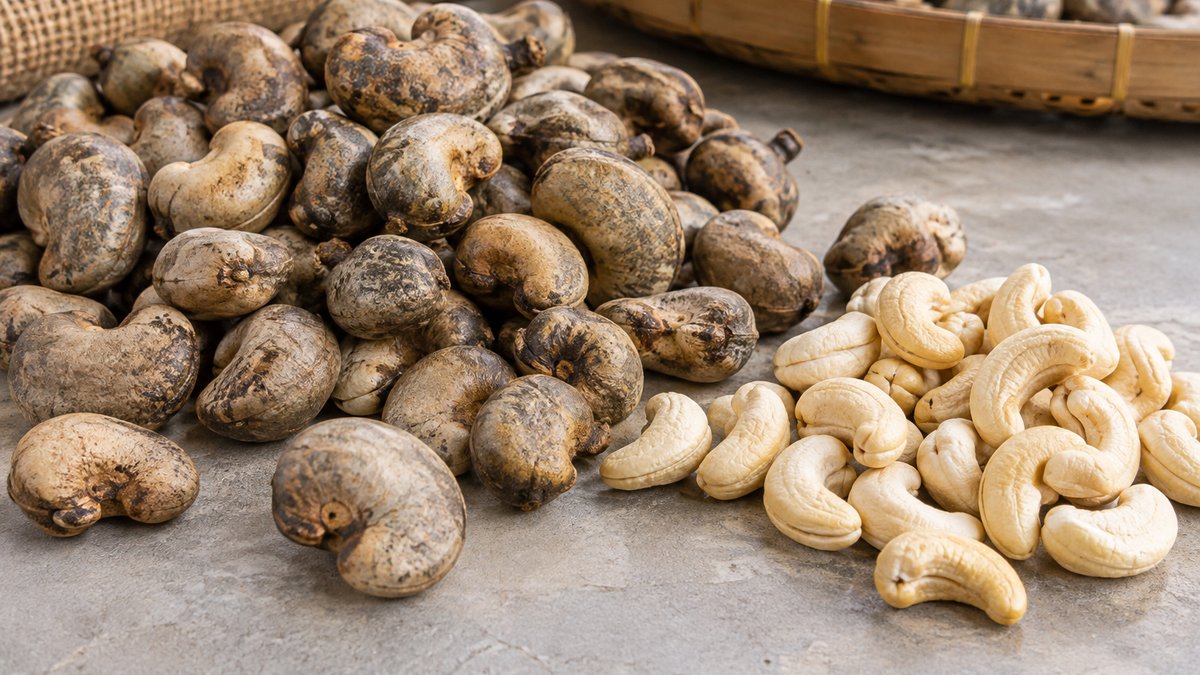
Raw cashew nuts are traded with the hard shell intact, usually as an input for processors. Cashew kernels are the edible inner portion removed from that shell and prepared for food use or further processing. The distinction changes the product being bought, the work required after delivery and the specifications that belong in a contract.
The word “raw” can cause confusion. In this comparison, raw cashew nuts means nuts in shell, not kernels that are necessarily safe to crack or eat without processing. Buyers may also encounter “raw cashew kernels” to describe shelled kernels that have not been roasted or otherwise seasoned. Because usage varies, contracts should state whether the product is in shell or shelled, and describe any heating, drying, roasting or other processing.
A cashew nut has a hard outer shell surrounding the kernel. The shell contains cashew nut shell liquid (CNSL), a caustic material that can irritate or injure skin during shelling. Commercial processors use controlled operations to remove the shell and kernel safely. Raw nuts in shell should therefore be specified as processing material, not as ready-to-eat consumer nuts.
The change from in-shell nut to kernel is a processing step, not simply a change in the product’s name. Shelling separates the kernel; peeling removes its thin skin. The resulting kernels can then be sorted by form and quality, packed and sold for food use. Heating, shelling and peeling are part of the product scope in the United Nations Economic Commission for Europe’s DDP-17 cashew kernel standard.
For trade classification, the World Customs Organization’s Harmonized System separates fresh or dried cashew nuts in shell, heading 0801.31, from shelled cashew nuts, heading 0801.32. National tariff schedules may add further digits or subdivisions, so the six-digit distinction is a starting point rather than a complete import declaration. Check the destination’s applicable tariff schedule and product description before filing.
Checked 14 November 2026. The basic distinction is physical and commercial: the in-shell nut is the processor’s input; the kernel is the shelled product whose size, form and quality must be specified for its intended market.
2. Compare the Products by Processing Stage and Specification
The main difference is whether the shell remains around the kernel. That determines how the product is handled and which quality measures are relevant. The comparison below separates common trade characteristics; the sales contract and destination rules determine the exact requirements.
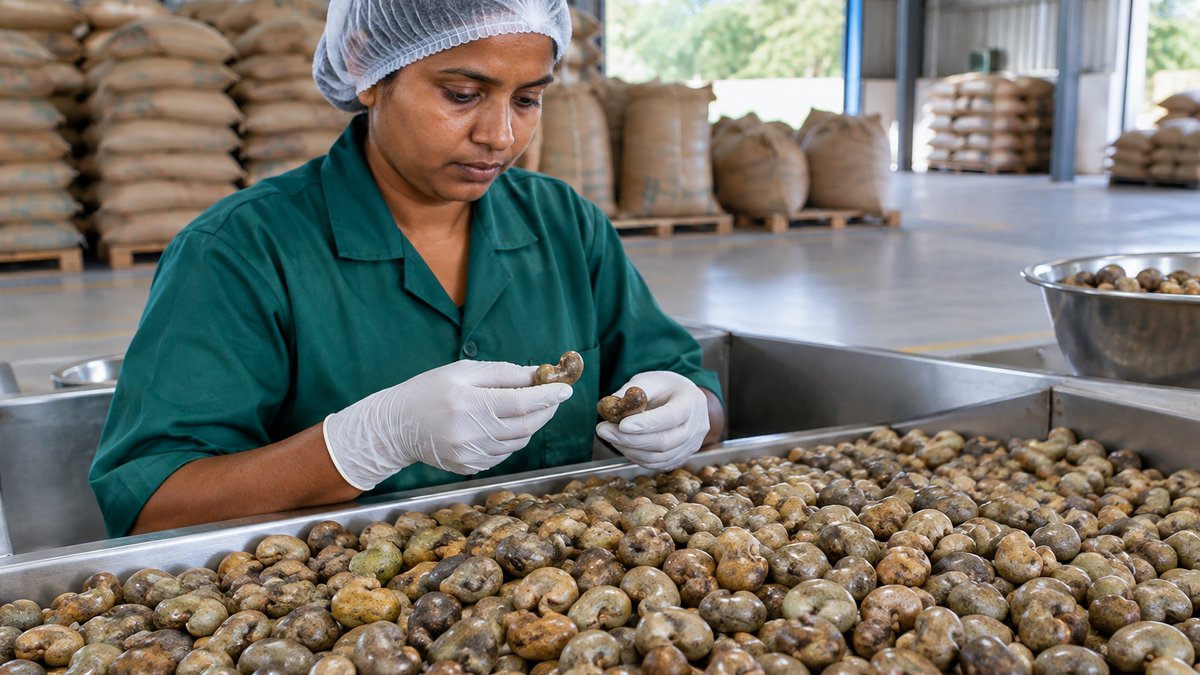
Raw-nut buyers assess the lot as a source of recoverable kernels. Their contract may define moisture, nut count by weight, visible defects and the method for establishing outturn, meaning the kernel recovery used to assess the lot. Agree on the sampling and measurement procedure before shipment or inspection. A recovery figure is meaningful only when both parties understand how it is measured.
Kernel buyers assess the product delivered, including the proportion of whole kernels or broken pieces, colour, defects, moisture and packaging. UNECE DDP-17 describes whole kernels as having more than seven-eighths of the kernel intact; kernels with one-eighth or more broken off fall under its broken-kernel categories. The standard also sets quality provisions and defines classes. Buyers should name the standard and agreed class in the contract rather than relying on a grade label alone.
The comparison also affects how a quotation should be read. A price per tonne of in-shell nuts refers to the full nut, including shell. A price per tonne of kernels refers to the shelled product. Those figures are not directly comparable without accounting for processing yield, quality, processing costs, packing and the delivery basis. Avoid treating an assumed recovery rate as guaranteed unless the contract establishes it.
Neither product name alone defines every quality or safety condition. For kernels, state whether they are whole or broken, the required style or class, moisture limit, acceptable defects, packaging and whether they are unroasted, roasted, salted or otherwise processed. DDP-17 covers kernels obtained through heating, shelling and peeling, and excludes kernels that are salted, sugared, flavoured, roasted, oil-fried or intended for industrial processing. Check whether the standard’s scope matches the product you are buying.
3. A Sourcing Scenario Shows Why the Product Name Matters
Consider a food manufacturer that needs cashew kernels for a snack mix. A request for “raw cashew nuts” could lead suppliers to quote in-shell processing material, which is not the ready-to-use ingredient the manufacturer needs. A request for “cashew kernels” is closer, but still leaves important choices open.
The buyer should specify whether the kernels must be whole or broken, the required grade or quality standard, colour, moisture limit, acceptable defects, processing status and packaging. The buyer should also state the intended use if it affects the required form. Whole kernels may suit a product where appearance matters; broken pieces may be acceptable for a mix or an ingredient application, subject to the buyer’s own product specification.
Now consider a processor buying raw cashew nuts. That buyer needs nuts in shell and should assess the lot for processing suitability. The inquiry should define the quality measures used for acceptance, including how outturn or kernel recovery will be sampled and calculated. The processor should also agree on moisture, visible defects, packing, shipment quantity, delivery terms and inspection arrangements.
For either purchase, the contract should identify the product stage explicitly. Write “raw cashew nuts in shell” or “shelled cashew kernels,” then add the agreed product specifications. If the shipment is classified under a customs code, confirm the destination country’s full tariff code and declaration requirements with the responsible customs authority or broker.
Illustrative product description:
Product: Shelled cashew kernels
Form: Whole kernels or the specifically agreed broken style
Quality: Named grade or standard, with agreed moisture and defect limits
Processing: State whether unroasted, roasted, salted or otherwise processed
Packing: Agreed food-grade packaging and pack size
This is an illustrative checklist, not a universal specification. Set the actual requirements for the product, destination and end use.
Looking to Source Raw Cashew Nut?
Connect with verified suppliers, discover matching products, and explore sourcing opportunities from global markets.
4. Choose the Product That Fits Your Operation
Choose raw cashew nuts in shell when your business is equipped to process them and your purchase decision depends on the characteristics of the incoming nut lot. Confirm that you can manage the shelling operation safely, including the handling risks from CNSL, and that your process can produce the kernel form your customers need.
Before buying in-shell nuts, agree on the acceptance method for moisture, nut count, defects and outturn. Define the inspection point and who may conduct it. If recovery is part of the commercial calculation, specify the sampling method and calculation in writing. Without that agreement, buyer and seller may interpret the same lot differently.
Choose cashew kernels when you need the shelled product for food distribution, manufacturing or retail packing, or when your business does not intend to shell the nuts itself. Focus the specification on kernel form and quality. “Whole” and “broken” are not interchangeable descriptions: UNECE DDP-17 distinguishes whole kernels from broken styles, including butts, splits and pieces.
A buyer who selects kernels should compare like with like. Match the form, class or grade, moisture basis, processing status, packaging, quantity and delivery conditions across quotations. A quotation for whole kernels cannot be compared fairly with one for broken kernels if the intended application or quality requirements differ.
For both product stages, put the complete description into the purchase specification, invoice and shipping documents. State the product’s in-shell or shelled condition rather than relying on “raw” alone. Confirm the relevant national tariff code, food requirements and any required certificates for the destination; a trade classification does not itself establish that a shipment meets import rules.
5. Related Resources for Cashew Buyers and Sellers
Useful references include the UNECE DDP-17 standard for cashew kernel commercial quality, the World Customs Organization’s Harmonized System nomenclature for the in-shell and shelled distinction, and the Food and Agriculture Organization’s cashew processing overview. Check the destination’s current tariff schedule and import requirements separately, since international classification and national import rules serve different purposes.
Buyers and exporters comparing sourcing opportunities can review Raw Cashew Nut buying requests on Freshdi and Raw Cashew Nut supplier listings on Freshdi. Confirm product form and specifications with the relevant business partner before agreeing to a transaction.
References
1. United Nations Economic Commission for Europe – UNECE Standard DDP-17: Cashew Kernels, 2023.
2. World Customs Organization – Harmonized System Nomenclature 2022, Section II, 2022.
3. Food and Agriculture Organization of the United Nations – Minor Oil Crops: Individual Monographs, Cashew Nut, 1992.
4. Agricultural and Processed Food Products Export Development Authority – Cashew, 2026.
Disclaimer: This article is compiled from platform data, public sources and information provided by third parties, for general informational purposes only. We do not guarantee its accuracy or completeness. Please conduct your own due diligence before making business decisions.