
1. RBD Palm Olein and Crude Palm Oil Differ in Processing and Form
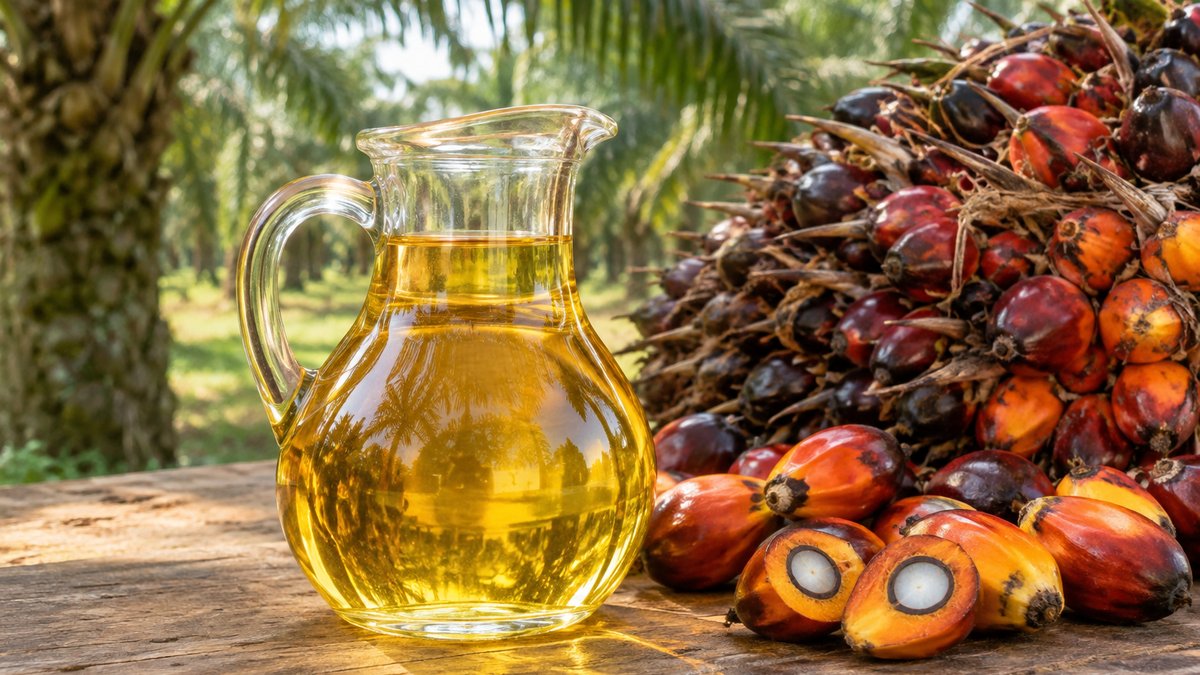
RBD palm olein is a refined, bleached and deodorized liquid fraction of palm oil. Crude palm oil (CPO) is the unrefined oil extracted from the fleshy part of the oil palm fruit. Both come from the same fruit, but they are at different stages of processing and serve different points in the supply chain.
The distinction has two parts. Refining removes or reduces components such as gums, pigments, free fatty acids and odor compounds. Fractionation then separates palm oil into fractions with different melting behavior. RBD palm olein has undergone both processes; CPO has not. Codex defines palm olein as the liquid fraction produced by fractionating palm oil, while the Malaysian Palm Oil Board describes refining and fractionation as separate operations.
The name “RBD” describes the refining steps: refining, bleaching and deodorization. In common physical refining, the oil is pretreated, bleached and filtered, then deacidified and deodorized. Chemical refining follows a different route, including neutralization. These routes produce refined palm oil; fractionation is a further operation used to obtain olein and the higher-melting stearin fraction.
For buyers, this means the two names do not describe interchangeable grades of the same ready-to-use product. A food manufacturer that needs a specified refined oil should evaluate RBD palm olein against the required properties and food rules. A refinery or other processor buying CPO is purchasing an input that needs further processing for its intended use.
“Crude” does not identify a single detailed quality specification. CPO lots can differ in measurable properties, including free fatty acid content, moisture and impurities, depending on the lot and handling. Likewise, “RBD palm olein” does not state every property a buyer needs. The term alone does not settle the olein grade, cloud point, packaging, permitted contaminants, additives or delivery conditions. Buyers should agree those details in the purchase specification.
The two products also occupy different commercial positions. CPO is a crude feedstock traded for refining or other processing. RBD palm olein is a processed fraction sold for applications requiring a liquid palm-based oil at the relevant handling temperature. Its liquid behavior depends on the specification and temperature; the product name is not a promise that it will stay clear under every storage or transit condition.
For an Indonesian shipment, the product description also affects how an exporter classifies the goods. Indonesia’s Ministry of Trade regulation on palm-oil derivative exports lists crude palm oil separately from refined palm olein product descriptions. The applicable tariff line and export requirements depend on the product’s actual form and the current rules. Exporters should confirm the classification for the specific shipment rather than applying a code from a different palm product.
2. Compare the Products by Processing Stage and Buyer Requirements
Compare CPO and RBD palm olein by what has happened to the oil, what the buyer will do with it, and which specification controls acceptance. The names alone do not establish that two offers meet the same purpose or quality conditions.

The table gives a trade-level comparison, not a substitute for a product specification. Codex’s Standard for Named Vegetable Oils provides product definitions and compositional and quality provisions for named oils. The standard is a recognized reference; the parties still need to confirm which provisions apply to their product and contract. Importing-country law may set additional requirements.
Terms such as “food grade,” “edible,” or “premium” do not fill in missing technical limits. A buyer should name the test method and acceptance limit for each property that affects the intended process or destination market. For olein, relevant agreed properties may include the product grade and crystallization behavior. For CPO, buyers and sellers commonly need to agree the quality measures that govern acceptance at loading or arrival.
The quality certificate should identify the product being tested and the sampling point. A certificate for CPO cannot establish the properties of RBD palm olein that will be made later, because refining and fractionation change the product. For a finished olein shipment, request test results tied to that finished lot and the contract specification. For CPO, define when and where the sample is taken, who tests it and how a disputed result is handled.
Packaging and logistics also differ with the stage of processing and the buyer’s operation. A bulk processor may receive oil in a bulk shipment and transfer it to storage tanks. A packer may require an olein grade in a form compatible with its filling line. The contract should identify packaging or bulk delivery, quantity basis, storage and transport conditions, and the temperature arrangements needed to preserve the agreed condition.
A quotation comparison is meaningful only after the buyer confirms that each offer refers to the same product stage. Compare CPO offers with CPO offers and refined olein offers with equivalent olein specifications. Then compare the commercial terms, including quantity, delivery basis, shipment window and payment conditions. A lower price for crude material does not show that it is a lower-cost substitute for finished olein; refining, fractionation, losses, testing and logistics remain part of the buyer’s calculation.
3. A Food Manufacturer and a Refinery Need Different Products
Consider a food manufacturer in Indonesia preparing a purchase request for an oil used in a finished food product. Its production line and product specification call for a refined palm-based liquid fraction. The sourcing team should ask suppliers to quote RBD palm olein that meets the manufacturer’s documented requirements, rather than asking for CPO and assuming it can go straight into production.
Illustrative purchase decision:
Buyer: Food manufacturer seeking an input for a specified food process
Product requested: RBD palm olein, with the required grade and agreed test limits
Supplier evidence: Finished-lot specification, test results, packing or bulk details, and shipment terms
Acceptance basis: Contract limits, agreed sampling point, test method and destination requirements
This scenario is illustrative. The buyer’s actual product, limits and legal requirements must come from its own process and destination market.
A refinery purchasing oil for processing faces a different decision. It may request CPO and assess whether the offered lot suits its refining process, expected output and operating parameters. Its purchase specification should define quality limits, sampling, inspection and the consequences of a result outside the contract range. Buying finished olein would make sense only if the refinery needed that product for a separate downstream operation.
The manufacturer should not compare a CPO offer with an olein offer on price per tonne alone. The CPO buyer must account for the next processing stages and the output those stages can produce. The olein buyer is purchasing a processed product, so the comparison should focus on equivalent olein specifications and the buyer’s actual use. Each buyer should also confirm whether the quoted quantity is net product weight and how the contract handles packaging or other weight deductions.
For either buyer, a clear inquiry reduces avoidable back-and-forth. State the product name and stage precisely, then include the grade or required limits, quantity, packaging or bulk form, delivery location, timing and requested trade term. Identify the documents required for the destination and the evidence needed to release or accept the goods. If the buyer can accept more than one grade, describe the alternatives as separate options with their own specifications.
Looking to Source Palm Olein?
Connect with verified suppliers, discover matching products, and explore sourcing opportunities from global markets.
4. Choose RBD Palm Olein for a Finished Fraction and CPO for Processing
Choose RBD palm olein when the operation needs the refined liquid fraction and the offered grade matches the buyer’s use. Choose CPO when the buyer’s business is equipped and authorized to process crude oil, and the material meets the refinery’s intake specification. The buyer’s intended production stage is the first filter.
4.1 Choose RBD palm olein when the buyer needs a refined input
A food manufacturer, cooking-oil packer or downstream user may specify RBD palm olein when its process requires the refined, fractionated product. Before approving a supplier, the buyer should establish which olein grade is required, what quality results must fall within limits, and how the oil is expected to behave during storage, handling and use. A product name by itself cannot settle these requirements.
The buyer should also check that the supplier’s documents correspond to the finished product and shipment. Request the product specification, lot-specific certificate of analysis, packing or bulk-shipment details and applicable food-safety or regulatory documents. Confirm that the tests and limits match the contract and importing market. When the buyer has a process-sensitive requirement, it should agree on a sample approval or inspection procedure before shipment.
4.2 Choose CPO when the buyer will refine or process the oil
CPO suits a buyer that purchases an intermediate material for refining or another industrial process. The buyer needs a facility and process capable of handling the crude input, plus a receiving specification that accounts for variation between lots. The procurement team should confirm the origin, lot documentation, sampling arrangement and the tests that determine acceptance.
CPO may also be the relevant product for a processor that plans to make refined palm oil and then separate palm olein and palm stearin. The buyer should assess the crude material against its process needs, rather than expecting the CPO contract to guarantee a particular finished fraction or output. Processing results depend on the input and the plant operation; any yield or finished-product commitment needs explicit commercial and technical terms.
Neither option is inherently the better purchase. RBD palm olein may be unsuitable if the buyer actually needs crude feedstock for its refinery. CPO may be unsuitable if the buyer lacks refining capability or needs a finished ingredient for immediate use. If the business is uncertain which stage it needs, its technical and procurement teams should first map the product’s role in the process and write the receiving specification.
Buying consideration: Before requesting quotations, write down the intended use, required processing stage, acceptance limits, quantity, delivery form and destination rules. Ask each supplier to quote against the same specification, and resolve any unstated property or testing method before comparing offers.
5. Use Standards and Product Listings to Confirm the Right Specification
Use Codex CXS 210-1999 as an international reference for the definitions and quality provisions of named vegetable oils, including palm oil and palm olein. Codex describes palm oil as oil from the fleshy mesocarp of the oil palm fruit and palm olein as the liquid fraction obtained from fractionating palm oil. Codex is a reference point for trade; buyers must still check applicable national rules and the contract’s product scope.
For processing context, the Malaysian Palm Oil Board’s technical material explains the refining stages and describes fractionation as the operation that separates liquid olein from the higher-melting stearin fraction. These sources help buyers distinguish the product names. They do not replace a supplier’s current specification, a shipment’s test certificate or destination-market compliance checks.
Indonesian exporters should check the current Ministry of Trade rules and tariff schedule for the specific product form and shipment. The regulation’s product descriptions distinguish CPO from refined palm olein, while amendments and other applicable measures can affect the current requirements. Classification should follow the actual goods and current official rules, not a general description copied from an earlier shipment.
Buyers sourcing either product can review related palm olein buying requests on Freshdi and compare them with their own requirements. A listing can help identify stated product needs; buyers should verify specifications, documents and commercial terms for each transaction.

References
1. Codex Alimentarius Commission – Standard for Named Vegetable Oils, CXS 210-1999, 1999, amended through 2024.
2. Food and Agriculture Organization of the United Nations – Codex Standards for Fats and Oils from Vegetable Sources, 2003.
3. Malaysian Palm Oil Board – Refining of Crude Palm Oil: Refining Processes, 1990.
4. Malaysian Palm Oil Board – Life Cycle Assessment for Palm Oil Refining and Fractionation, 2020.
5. Ministry of Trade of the Republic of Indonesia – Regulation No. 26 of 2024 on Export Requirements for Palm Oil Derivative Products, 2024, amended in 2025.
Disclaimer: This article is compiled from platform data, public sources and information provided by third parties, for general informational purposes only. We do not guarantee its accuracy or completeness. Please conduct your own due diligence before making business decisions.