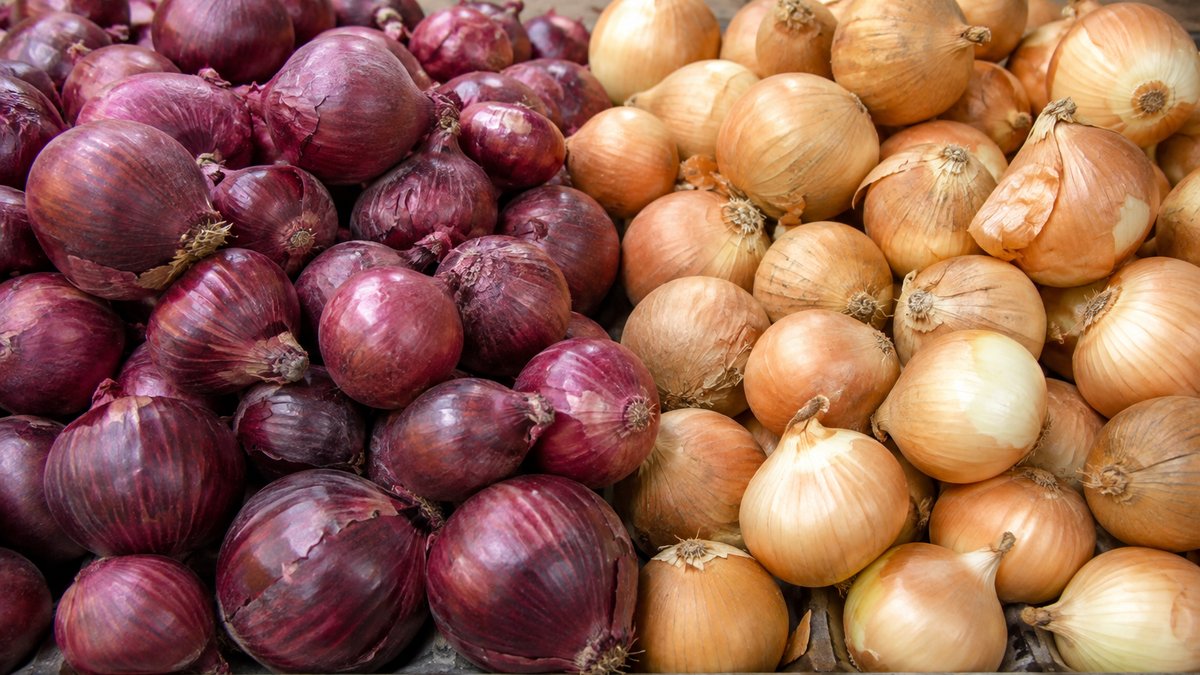

1. Red and yellow onions differ in color, common uses and buyer preferences
Red and yellow onions are color categories of bulb onion, not grades that establish quality or a fixed flavor. Red bulbs have red to purplish outer skin and colored rings; yellow bulbs have yellow to brown skin and pale flesh. For bulk buyers, color is a useful first product description, but the intended use, variety, size, curing and condition determine whether a lot meets the order.
The University of Utah State University Extension explains that onion color, flavor, shape and market use vary across varieties. Color alone therefore does not tell a buyer whether a bulb is sweet or pungent, suited to storage, or intended for fresh sale or processing. Buyers comparing offers should request the variety or type where available, along with the measurable requirements that matter to their operation.
In common kitchen use, yellow onions are often selected for cooking across a broad range of dishes. The University of Massachusetts Amherst describes yellow onions as all-purpose and notes that cooking makes them sweeter. Red onions are commonly chosen for raw preparations or when the colored rings contribute to appearance; UMass describes them as sweeter and more balanced in flavor than yellow or white onions. These are general culinary descriptions, not guarantees for every cultivar or lot.
For a foodservice buyer, the relevant distinction may be how the onion tastes and looks after preparation. A salad or sandwich program may specify red bulbs for color and raw use. A processor making soups, sauces or cooked fillings may favor yellow onions because they suit a broad range of cooked recipes. A buyer should test a representative sample when flavor, color retention or cooking behavior affects the finished product.
Commercial standards also separate color from grade. The USDA Agricultural Marketing Service standard for onions lists maturity, firmness, shape, defects and size among grade considerations. It treats red, yellow and brown onions within the applicable color and size language; a color name does not by itself certify a grade. The buyer and seller should state the grade standard and tolerances they intend to use in the contract.
The word “fresh” does not resolve whether an order is for newly harvested onions, cured dry bulbs, or a particular shelf-life target. USDA Foods' bulb-onion specification distinguishes seasonal type and color as separate ordering details, and notes that not all types are available year-round. Buyers should name the product form and expected condition rather than relying on “fresh onion” as the complete specification.
2. Compare red and yellow onions by the specification that affects the order
The clearest comparison separates appearance and likely use from the attributes that must be agreed for each shipment. Red and yellow are color descriptions; grade, size, packing, maturity and condition need their own terms.
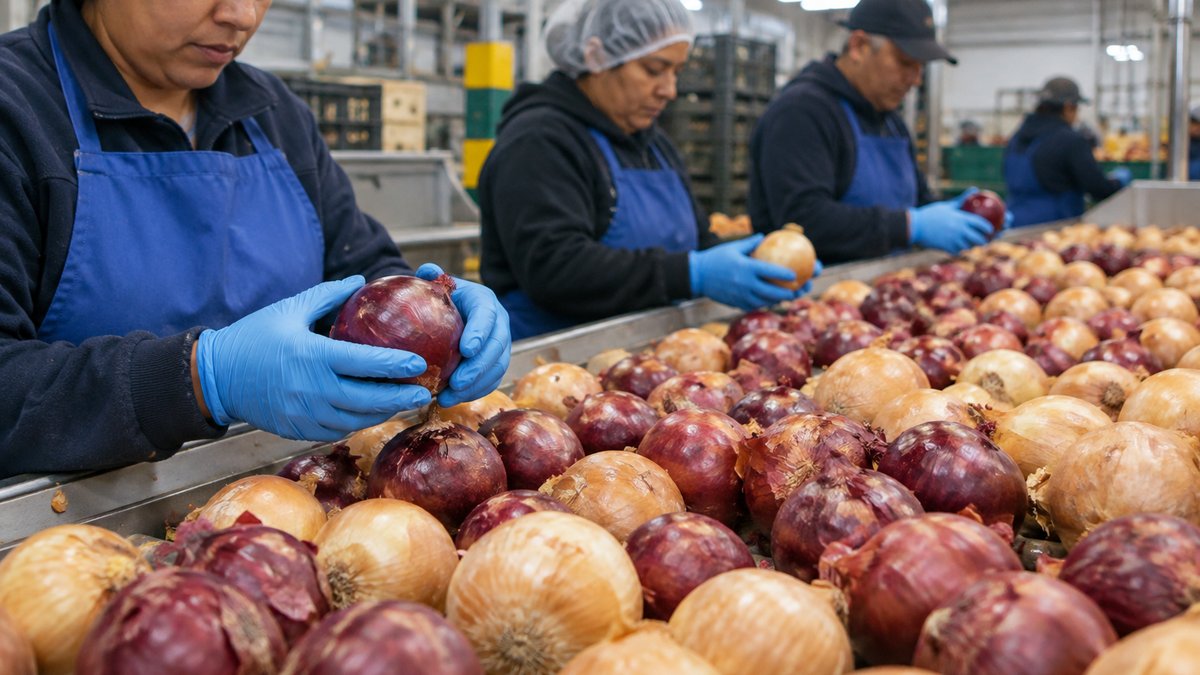
Use the table as a starting point for a product specification, not as a promise about every lot. Utah State University Extension notes that varieties differ in flavor and market use, while USDA grade language addresses physical condition and size. A supplier should confirm the crop variety, harvest or packing period, and any attributes the buyer needs to inspect.
For commercial comparison, keep the offer basis consistent. Compare the same currency and quantity basis, delivery point, packaging, size range and grade standard. A red-onion offer and a yellow-onion offer with different pack weights or defect tolerances are not directly comparable simply because both are quoted per metric ton.
Color may also affect the buyer's packing and presentation requirements. If the product is sold whole, specify the permitted color mix and the appearance expected in the retail or foodservice pack. If it is peeled, cut or processed, describe the required form and finished-product use. USDA Foods' ordering specification lists color and style separately, which is a practical model for keeping those requirements distinct.
Before agreeing to substitution, define whether a different color is acceptable. A supplier who cannot fill a red-onion order should not assume yellow onions are equivalent for a customer-facing recipe or branded pack. The buyer can allow substitution in writing when the end use permits it, with the revised price, quantity, pack and delivery conditions recorded.
3. A buyer choosing onions for two product lines should specify each use separately
Consider a distributor supplying both salad kitchens and manufacturers of cooked sauces. The salad customers request red onions for raw slices and visible color. The sauce customers need yellow onions for cooking. The distributor can source both colors from the same supplier, but the two purchase lines still need separate specifications.
For the red-onion line, the distributor can describe the intended raw use and ask for whole bulbs with the required diameter range, appearance, packing format and quality standard. If the buyer needs a consistent red appearance after slicing, that requirement should be stated and checked on samples. The supplier should also identify the variety or growing region when that information is available, since the color category alone does not establish flavor or appearance in every lot.
For the yellow-onion line, the distributor can state the sauce application, the desired bulb size, the required grade and the accepted level of trimming or visible defects. If the processor needs a particular cooking result, it can evaluate a sample in its own process. A general label such as “yellow, suitable for cooking” is less useful than the specific dimensions and condition the receiving team will inspect.
The distributor should ask both suppliers to quote on the same basis: same delivery point, pack weight, order quantity and agreed inspection terms. The contract can state how the parties handle out-of-range sizes, decay or other defects, and whether a pre-shipment inspection or arrival inspection will determine acceptance. These controls matter for both colors; red onions do not automatically require a higher grade, and yellow onions do not automatically have longer storage life.
If the distributor plans to hold inventory, it should request the specific variety and postharvest handling information relevant to the planned storage period. Utah State University Extension treats storage quality as a variety-selection factor, and the University of Minnesota Extension notes that curing is important for onion storage. The buyer should therefore evaluate actual crop and handling information instead of using color as a proxy for keeping quality.
A sample inspection can include firmness, dry outer skin, neck condition, visible sprouting, decay and the size distribution. These checks should match the contract standard and the buyer's actual receiving procedure. If the onions will be processed, the buyer may also assess yield, peeling loss, cutting behavior and the consistency of the prepared product.
Looking to Source Fresh Onion?
Connect with verified suppliers, discover matching products, and explore sourcing opportunities from global markets.
4. Choose red or yellow onions by end use, then contract on measurable details
Choose red onions when the order depends on red color in the finished dish or on a product commonly served raw, such as salad or sandwich toppings. Choose yellow onions when the buyer needs a broadly used cooking onion for products such as soups, sauces or roasted dishes. These are practical starting points; the variety and the buyer's own product test should settle flavor-sensitive decisions.
4.1 Choose red onions when appearance or raw use drives the purchase
A red-onion specification makes sense for foodservice and retail programs where consumers see the sliced rings or where the recipe calls for a distinct color. Buyers should confirm the desired color consistency, bulb size, firmness and pack style. When the onion will be eaten raw, request a sample and evaluate the flavor with the intended recipe rather than assuming all red varieties taste mild.
For processing, describe what the red onion must do in the finished product. A buyer of diced onions may need a defined cut size and color appearance; a buyer of pickled onions may have a separate recipe and processing specification. The word “red” does not define these processing requirements or establish a food-safety certification.
4.2 Choose yellow onions when the operation needs a versatile cooking onion
Yellow onions suit buyers serving multiple cooked applications or seeking a familiar all-purpose color category. UMass Extension describes yellow onions as suitable for cooking and notes that heat brings out sweetness. A manufacturer should still test the offered variety in its own production process, especially when recipe flavor, solids or finished color must remain consistent.
For a storage program, request evidence about the variety, curing and proposed storage conditions. Yellow color alone does not guarantee a specific storage duration. A buyer should set its own receiving limits and stock rotation plan around the supplier's crop information and the requirements of the buyer's facility.
4.3 Write a specification that lets suppliers quote the same product
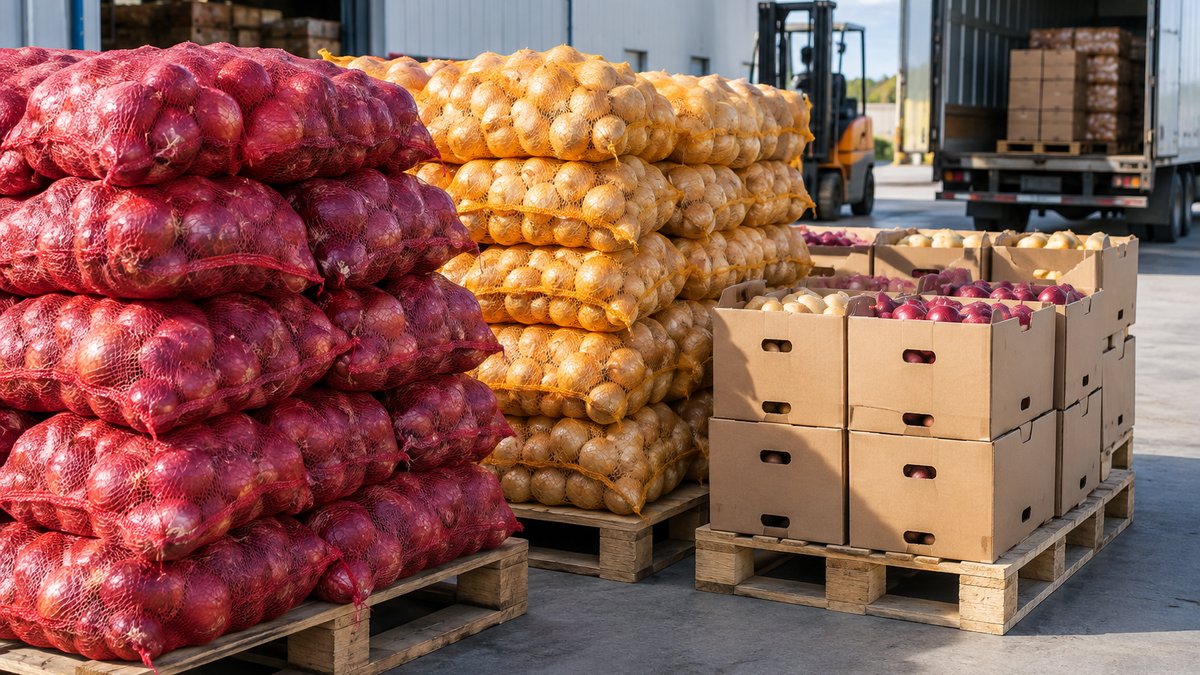
A bulk inquiry should state the color, whole or processed form, variety if known, size range, grade or inspection standard, pack type and weight, order quantity, destination, delivery term and requested shipment period. Add limits for defects or size distribution when those points affect acceptance. State whether the buyer permits a color or size substitution and how approval must be recorded.
- Name the color and product form, such as whole red bulbs or peeled yellow onions.
- Set the bulb diameter or processing dimensions, grade standard and acceptable tolerances.
- Identify packaging, net weight per pack, case or bag format, and pallet requirements.
- State quantity, destination, requested delivery term and shipment window.
- Request variety and harvest or curing information when flavor or storage is part of the buying decision.
- Agree on sample approval, inspection method and the process for handling nonconforming goods.
Illustrative bulk inquiry:
Product: Whole red bulb onions
Use: Fresh slicing for foodservice
Size and quality: Buyer-defined diameter range and agreed grade standard
Packing: Buyer-defined net weight and ventilated pack format
Quantity and delivery: Buyer to state order volume, destination and requested delivery term
This is an illustrative inquiry format, not a universal onion specification. Set the values to match the buyer's market, recipe and contract.
Buyers comparing possible sources can review Fresh Onion buying requests on Freshdi and Fresh Onion supplier listings. Check each listing's stated product details and verify specifications and commercial terms with the prospective business partner.
References
1. USDA Agricultural Marketing Service – Onions (Other Than Bermuda-Granex-Grano and Creole Type) Grades and Standards, Accessed November 18, 2026.
2. USDA Agricultural Marketing Service – A-A-20193D, Onions, Bulb, Ready-to-Use, 2016.
3. Utah State University Extension – Varietal Selection: Onion Types, Accessed November 18, 2026.
4. University of Massachusetts Amherst – Onions: Produce Spotlight, Accessed November 18, 2026.
5. University of Minnesota Extension – Growing Onions in Home Gardens, Accessed November 18, 2026.
Disclaimer: This article is compiled from platform data, public sources and information provided by third parties, for general informational purposes only. We do not guarantee its accuracy or completeness. Please conduct your own due diligence before making business decisions.