
1. W240 and W320 cashew kernels differ mainly in size count
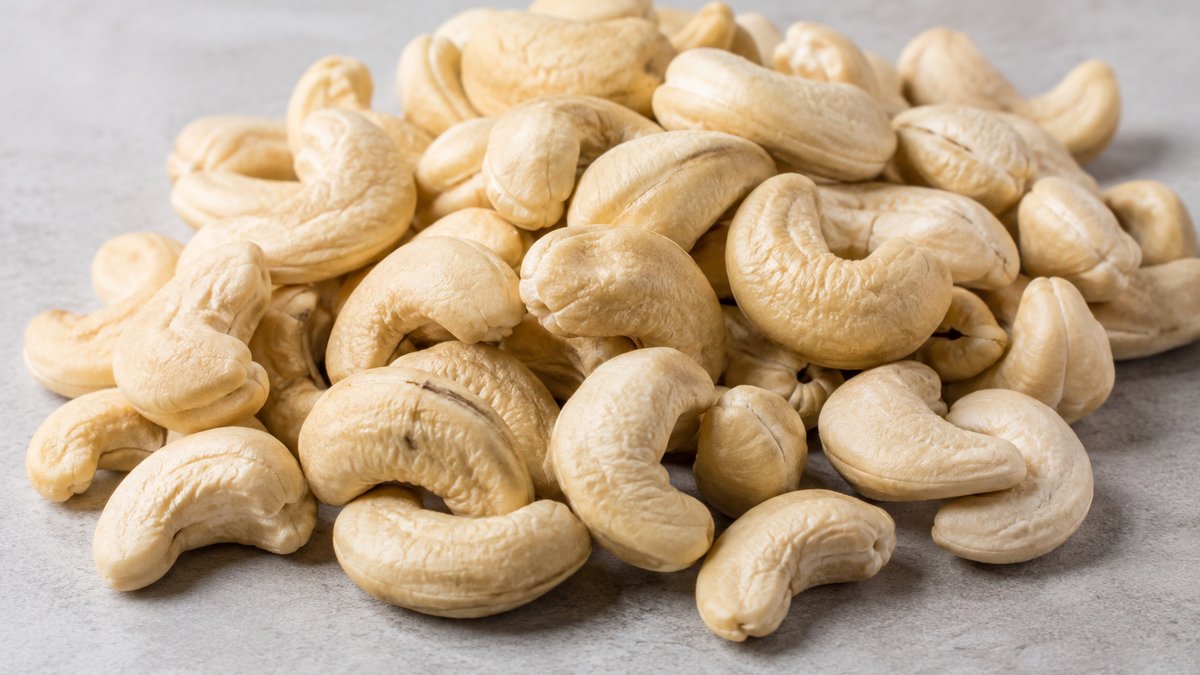
W240 and W320 identify size ranges for whole cashew kernels. The number refers to the approximate count of kernels in one pound: AFI’s September 2023 specification gives W240 a range of 220 to 240 kernels per pound and W320 a range of 300 to 320. A W240 kernel is therefore larger on average than a W320 kernel.
The grade number does not, by itself, describe every quality feature of a shipment. Color, defects, breakage, moisture, processing condition and packaging need their own agreed specifications. The buyer and seller should also identify the standard they are using, because standards may describe size counts and tolerances differently.
In the AFI specifications, “whole” kernels are identified by their characteristic shape and by a limit on how much of a kernel may be broken off. AFI lists size separately from quality classifications such as First Quality Fancy and Second Quality Scorched. Buyers should therefore avoid treating a size code as a complete quality grade.
Commercial shorthand often combines a color or quality description with the size count, as in “white whole W240.” Confirm what the letters mean in the seller’s specification. AFI uses W to designate a whole kernel, while its quality and color descriptions are addressed separately. A contract should spell out the required color or quality, size count and condition rather than relying on an abbreviation alone.
The UNECE DDP-17 standard, revised and adopted in 2023, also sets size codes by kernel count per pound or kilogram. Under that standard, sizing is mandatory for Extra Class kernels and optional for Class I and Class II. AFI’s September 2023 specification makes sizing compulsory for first-quality/fancy kernels and optional for other whole grades. The standard named in the contract determines which provisions apply.
2. W240 vs W320 cashew kernels: count and specification comparison
The practical size difference is visible in the count range: a pound of W240 contains fewer, larger kernels than a pound of W320. AFI’s corresponding ranges per kilogram are 485 to 530 for size 240 and 660 to 706 for size 320. These are grading ranges, not a promise that every kernel in a shipment has an identical weight or appearance.

The per-kilogram ranges above come from AFI’s cashew kernel specification adopted in September 2023. The UNECE DDP-17 table gives maximum counts of 530 kernels per kilogram for size 240 and 706 for size 320. Read the count together with the named standard and its grading method; do not assume that every supplier uses identical wording or tolerances.
Neither size code establishes the color or defect level. AFI separates size from classifications such as First Quality Fancy, Second Quality Scorched, lightly blemished grades and other categories. UNECE DDP-17 uses Extra Class, Class I and Class II. Those categories are not interchangeable labels. If appearance matters to the intended sale, write the required color or class into the purchase specification.
A buyer comparing quotations should check whether both offers cover the same kernel condition and quality provisions. Confirm whether the kernels are raw, roasted or otherwise processed; whether the quoted grade refers to whole kernels; what count method and tolerance apply; and how the lot will be sampled. The UNECE standard covers cashew kernels obtained by heating, shelling and peeling and excludes kernels processed by salting, sugaring, flavoring, roasting, frying or for industrial processing.
Packaging and shipment details also belong in the specification. AFI’s U.S.-shipment guidance includes requirements for packaging and product condition, while the applicable importing-market rules and buyer contract determine which requirements govern a particular transaction. A buyer should not infer that a size code establishes packaging, food-safety compliance or suitability for a destination.
Buying consideration: When requesting offers, ask each supplier to quote against the same named standard and state the size count, class or color, kernel form, defect limits, moisture requirement, packing, quantity and delivery term. Then compare the same product basis rather than comparing W240 and W320 as if the number alone defined the entire lot.
3. How W240 and W320 can fit different buying situations
A buyer choosing between W240 and W320 should start with the finished product and the size the customer expects. Larger kernels may suit a use where whole-kernel appearance is important; a smaller count grade may suit a product where the kernel is portioned, mixed or processed further. These are purchasing examples, not rules imposed by either grade standard.
Consider a confectionery manufacturer preparing a pack in which whole cashews remain visible. The buyer may request W240 if its larger average kernel size fits the recipe and pack presentation. Before ordering, the manufacturer should test the grade in the actual line and confirm color, breakage tolerance, kernel condition and pack size. The W240 code alone does not promise a particular appearance or finished-product yield.
Now consider a buyer making a mixed nut product that uses smaller whole kernels, or a processor that will cut kernels during production. W320 could be a candidate if its count range and delivered cost suit the process. If the process requires pieces rather than whole kernels, the buyer should request a pieces grade with its own size specification instead of assuming W320 is a substitute.
A further comparison may be needed when suppliers quote different units or count bases. Confirm whether the stated count is per pound or per kilogram, whether the lot is graded before or after a particular processing step, and whether the offer uses AFI, UNECE or another named specification. Do not convert one supplier’s range into another standard’s grade without checking its tolerances and method.
Illustrative inquiry format:
Product: Whole cashew kernels, W240 or W320 as separately quoted
Standard: State the agreed grading standard and edition
Quality: State the required class or color and defect limits
Quantity and packing: Enter the buyer’s actual order quantity and packing requirements
Delivery: Enter the destination, requested delivery term and schedule
This is an illustrative inquiry format. The buyer should set values that match the product, market and contract.
For a fair cost comparison, calculate the cost against the quantity and usable form needed for production. A larger average kernel may not reduce costs if the recipe needs smaller pieces, while a lower price per kilogram may not help if the buyer must add processing. Requesting W240 and W320 quotations under otherwise matching terms lets the buyer assess the trade-off using its own recipe and customer requirements.
Looking to Source Cashew Nut?
Connect with verified suppliers, discover matching products, and explore sourcing opportunities from global markets.
4. When should buyers choose W240 or W320?
Choose W240 when the buyer’s product specification calls for the larger average whole-kernel size and the intended presentation or process justifies it. Choose W320 when the smaller average size meets the finished-product requirement. Neither grade is universally preferable; the right choice depends on the specification, production process and customer’s acceptance criteria.
Use appearance-led criteria when the kernels will remain whole and visible. Ask for the required color or class, the acceptable proportion of broken kernels and the inspection method. A size code cannot replace a pre-shipment sample or written quality limits when those details matter to the buyer.
Use process-led criteria when the cashews will be cut, blended or incorporated into another product. Confirm whether whole kernels are needed at all. Where the process calls for pieces, define the required piece size and grade directly; UNECE DDP-17, for example, defines piece categories by sieve aperture rather than by the whole-kernel count used for W240 and W320.
Before signing, put the code and its meaning in the contract: the named standard and edition, count range and unit, whole-kernel definition, color or class, defect tolerances, sampling method, moisture requirement, packaging and applicable destination requirements. If the seller uses “W240” or “W320” differently from the buyer, resolve that difference in the specification rather than after shipment.
Buyers comparing current offers can also review cashew nut buying requests on Freshdi and compare the stated requirements with their own specification. The requests are a sourcing reference; confirm product details and commercial terms for each transaction.
References
1. Association of Food Industries – AFI Specifications for Cashew Kernels, September 2023.
2. United Nations Economic Commission for Europe – UNECE Standard DDP-17: Cashew Kernels, 20 December 2023.
3. Centre for the Promotion of Imports from Developing Countries – Entering the European market for cashew nuts, 2026.
Disclaimer: This article is compiled from platform data, public sources and information provided by third parties, for general informational purposes only. We do not guarantee its accuracy or completeness. It is not legal, customs, tax or compliance advice. Regulations, tariffs and requirements differ by country and change frequently, so please consult a qualified professional (such as a customs broker, freight forwarder or lawyer) and confirm product specifications with the supplier before acting.