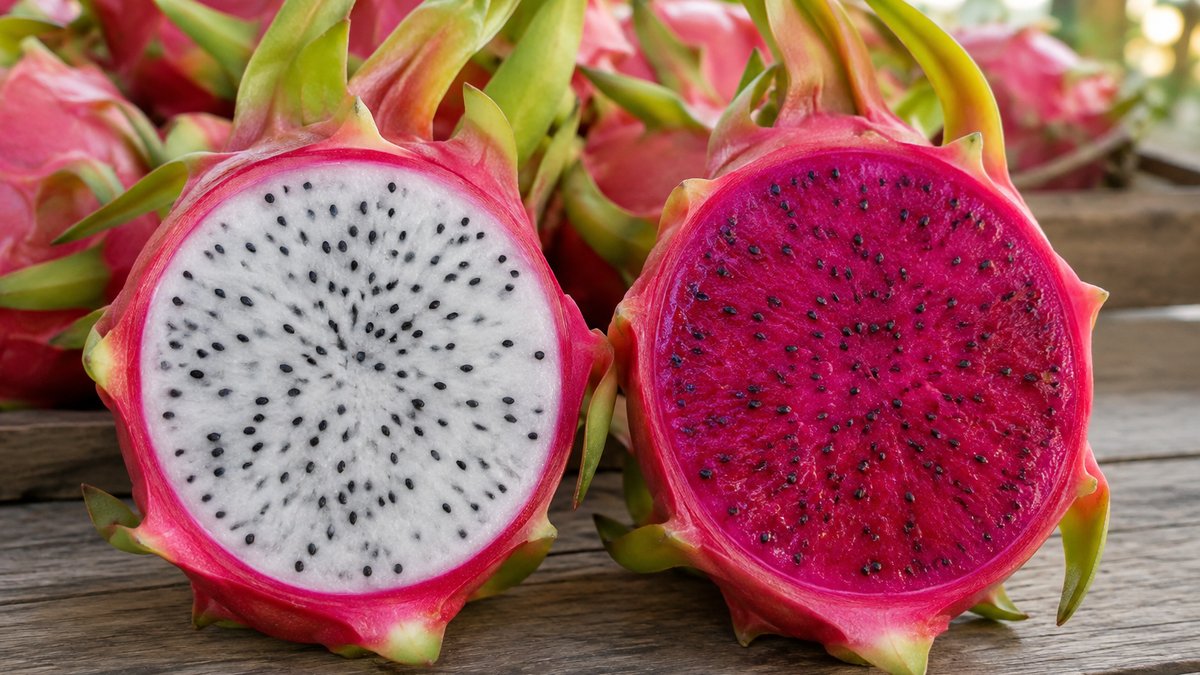

1. Summary of the Differences Between White and Red Flesh Dragon Fruit
White flesh and red flesh dragon fruit are usually distinguished by the color of the edible pulp. In Vietnam, both commonly have pink to red skin with green bracts, so skin color alone may not tell a buyer which flesh color is inside. For a purchase, name the flesh color and cultivar or commercial type in the specification.
The most visible difference appears after cutting: white-flesh fruit has pale pulp with small black seeds, while red-flesh fruit has red to magenta pulp. Vietnamese agricultural and trade sources commonly associate white-flesh fruit with Hylocereus undatus and red-flesh fruit with Hylocereus polyrhizus. Cultivars and hybrids vary, so those names are useful identifiers only when confirmed by the supplier.
The color difference can affect how the fruit is presented and used. Red flesh supplies a strong natural color to cut-fruit displays and processed products. White flesh gives a pale base with contrasting black seeds. Neither color, by itself, guarantees a particular sweetness, firmness, size, shelf life or price.
For buyers, the commercial decision depends on the product format and customer specification. A fresh-fruit importer may care about appearance, maturity, firmness, size and pack-out. A processor may care about pulp color, soluble solids, acidity, usable yield and color retention in the intended product. Those attributes need confirmation for the actual lot.
The Codex standard for fresh pitahayas sets general quality provisions for covered commercial species and varieties. It addresses condition, maturity, defects and preparation for fresh sale; it does not establish white and red flesh as separate quality grades. Buyers should therefore assess each color type against the same destination requirements and agreed product specification.
2. Comparison Table for White and Red Flesh Dragon Fruit
The table compares common trade descriptions for Vietnamese dragon fruit. Cultivar, maturity, growing conditions and postharvest handling can change the traits of an individual lot, so color is a starting point for identification rather than a full specification.
2.1 Color identifies the pulp, not the grade
A white or red interior does not indicate whether a fruit meets an export grade. Codex's fresh-pitahaya standard sets general requirements such as being whole, clean, sound, firm and fresh in appearance, with maturity assessed in relation to the variety or commercial type and growing area. Importing-country rules, buyer specifications and any relevant inspection conditions must also be checked for the shipment.
The standard's general provisions make color a product identity detail, not a substitute for condition or maturity checks. A buyer should agree how the lot will be assessed for defects, maturity, size and firmness, and how those criteria will be sampled. If the contract calls for a specific commercial class or size range, put that requirement in the specification rather than treating flesh color as evidence of compliance.
2.2 Sweetness needs a lot-specific check
Buyers should avoid treating red flesh as a reliable promise of greater sweetness. Total soluble solids, often measured in degrees Brix, provide one indicator of soluble material in fruit juice; they do not fully describe perceived sweetness or eating quality. Results change with cultivar, growing conditions, maturity at harvest and handling.
Research has found differences between flesh-color types, but the direction is not a safe universal rule for commercial buying. A study of two dragon fruit types introduced from Vietnam reported higher soluble-solids readings for its red-flesh fruit than for its white-flesh fruit. In a separate study using fruit grown in Brazil, the white-pulp sample had a higher reading than the red-pulp sample. These results came from different material and conditions, so neither should be used as a quotation specification or prediction for a Vietnamese shipment.
If sweetness matters to the buyer's product, request the supplier's measurement method, sampling basis and result for the offered lot. Agree on the maturity stage and acceptable range before shipment, and consider an inspection or sample-testing arrangement where the contract and logistics allow it. This is more useful than assuming flesh color determines taste.
2.3 Ripeness and handling affect both colors
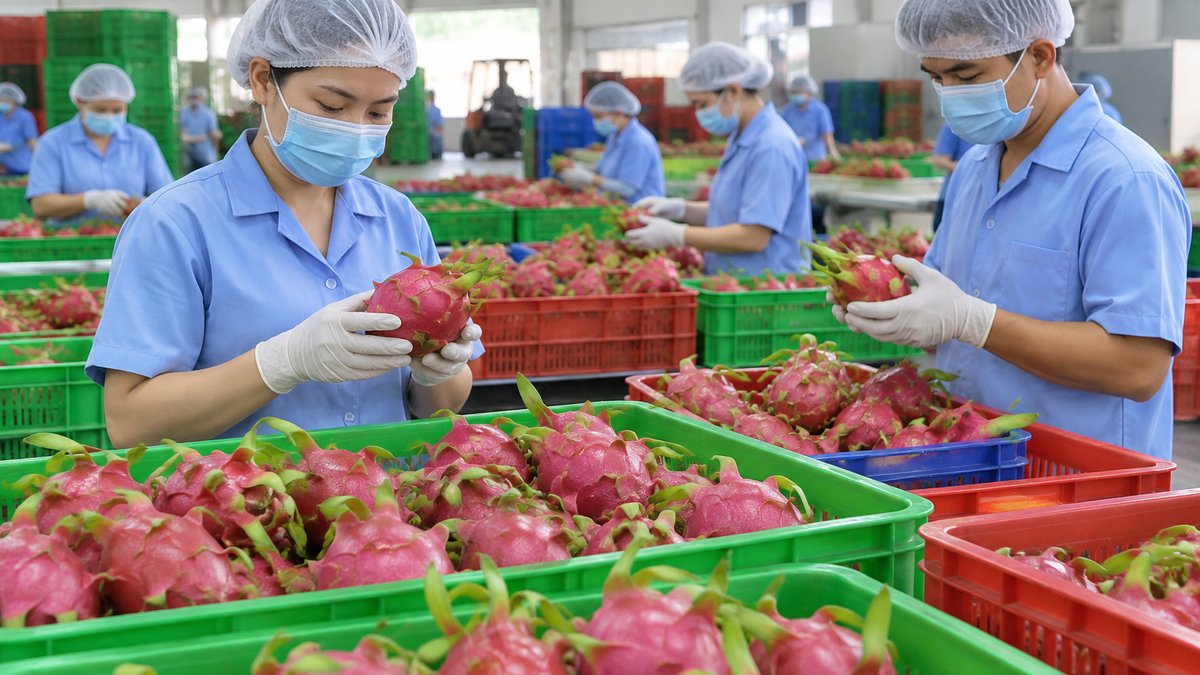
Harvest maturity affects eating quality and firmness in both types. The University of California, Davis Postharvest Research and Extension Center notes that dragon fruit is generally harvested close to full ripeness because it does not continue to ripen after harvest. Its guidance also describes soluble solids as increasing during maturation while firmness declines, which makes harvest stage relevant to both eating quality and transport planning.
For an export lot, buyers should agree on the maturity indicators that can be checked before loading, including the supplier's method for assessing skin color and the fruit's firmness. The same agreement should cover acceptable defects, the condition of the bracts, packaging and the intended transit conditions. Flesh color does not establish that fruit will withstand the buyer's route or storage plan.
Buying consideration: When comparing offers, hold the commercial specification constant: flesh color and cultivar, size range, maturity, firmness, defect tolerances, packaging, quantity, destination and delivery terms. Ask suppliers to state which details they can document or test for the specific lot.
3. Example Scenario: Choosing Dragon Fruit for a Fresh or Processed Product
Consider a buyer evaluating fruit for two different product lines: whole fruit for retail display and pulp for a colored beverage. The buyer's decision should follow the intended product specification, not an assumption that one flesh color is universally better.
3.1 Retail buyer assessing whole fruit
For a retail pack, both white-flesh and red-flesh fruit may be considered if the buyer's customers accept both types and the available presentation meets the pack design. The outer skin may look similar, so the buyer should require clear product identification, lot separation and labeling that accurately states the flesh color. A pre-shipment sample cut open under an agreed inspection procedure can help confirm the product identity.
The buyer would then assess the commercial factors that apply to either type: fruit size and uniformity, maturity, firmness, skin and bract condition, visible defects, packing format and the condition expected on arrival. For a fresh-fruit program, the contract should state tolerances and how the parties will inspect representative cartons. If the target customer specifically wants white or red flesh, substitutions should require the buyer's approval.
3.2 Processor assessing pulp for a beverage
A beverage processor considering red dragon fruit may value the pulp's color contribution. The processor still needs to check the actual pulp shade, flavor, soluble solids, acidity, yield and stability after the intended processing steps. Color in raw fruit alone does not establish the final beverage's color or formulation performance.
The processor should define whether it is buying whole fruit, fresh-cut pulp, frozen pulp or another processed form. Each form has different handling, packaging and quality checks. The contract can specify the required color range, maturity, pulp yield or laboratory measurements if those requirements are technically appropriate and both parties agree on a method.
A white-flesh lot could suit a product that needs pale pulp with visible seeds or a neutral-looking fruit component. The processor should test the actual sample in the recipe, since flavor and process behavior depend on the lot and the other ingredients. Neither this scenario nor the suggested uses are a guarantee that a given cultivar will perform the same way in every formulation.
Illustrative inquiry format:
Product: Fresh Vietnamese dragon fruit, white flesh or red flesh as separately quoted
Identity: State cultivar or commercial type where known; confirm with sample
Quality: Agree size range, maturity, firmness and defect tolerances
Packing: State pack format, net weight and carton requirements
Shipment: State quantity, destination, delivery term and required documents
This is an illustrative inquiry format, not a universal specification. Buyers should set requirements for their product, market and shipment.
Looking to Source Dragon Fruit?
Connect with verified suppliers, discover matching products, and explore sourcing opportunities from global markets.
4. When to Choose White Flesh or Red Flesh Dragon Fruit
Choose by the buyer's end use and measurable lot requirements. White flesh suits a specification that calls for pale pulp; red flesh suits one that calls for red or magenta pulp. For both, verify maturity, condition, size, flavor expectations and shipment readiness independently.
4.1 Choose white flesh when the product calls for pale pulp
White-flesh dragon fruit is a fit when the intended presentation relies on pale flesh and contrasting black seeds, or when the buyer's product brief names a white-pulp type. Buyers should still check the eating quality of the offered variety and lot rather than assuming that white flesh has a particular sweetness or texture.
For fresh fruit, specify the expected external appearance and internal flesh color separately. Request identification that travels with the lot and a sample or inspection arrangement that confirms the pulp. When products will be cut at the destination, account for the buyer's labor, handling method and acceptable arrival condition.
For processing, confirm that white pulp is compatible with the intended color and flavor profile. If a manufacturer needs repeatable output across deliveries, set a documented acceptance method rather than relying on a variety name alone. The supplier should disclose when a detail such as cultivar, soluble-solids measurement or pulp yield is not stated or not tested.
4.2 Choose red flesh when the product calls for colored pulp
Red-flesh fruit is a fit when the buyer wants a red to magenta interior for fresh-cut display or a processed product that uses the pulp's color. The color can be a product attribute, but buyers should test the fruit in the intended process and confirm the specification for the delivered lot.
For a processor, useful checks may include pulp color, yield, soluble solids and acidity, provided the parties agree on the sampling and measurement methods. Ask whether the figures refer to the offered cultivar and lot, and whether the sample was taken at the maturity stage expected at delivery. General species-level research cannot replace a result for the contracted shipment.
For fresh sales, document how red-flesh fruit will be identified, sorted and kept separate from white-flesh fruit when the customer requires a specific type. Mixed or incorrectly identified lots can create a dispute even when the fruit itself is sound. Clear lot coding and agreed inspection records help both parties check what was packed.
4.3 Compare offers on equivalent specifications
A price comparison between white-flesh and red-flesh offers is meaningful only when the relevant terms and product attributes are comparable. The two offers should refer to the same currency, unit, delivery basis, shipment period, size range, packing format and condition. Add any differences in cultivar, maturity, measured quality or processing form to the comparison before deciding.
The seller's origin statement and the named product should be consistent with the buyer's import requirements. Confirm any destination-specific phytosanitary, food-safety, treatment, traceability or labeling rules with the relevant authority or qualified trade specialist for the shipment. Rules vary by importing country and product form, so a general description of dragon fruit is not enough to establish market access.
The Codex fresh-pitahaya standard is a useful reference for general produce quality, but it does not replace applicable national requirements or the buyer's contract. Before concluding an order, align the product identity, inspection method, packaging, documents and remedy for a nonconforming lot. If a required attribute is not measured or stated, treat it as unresolved rather than assuming it meets the buyer's threshold.
Buying consideration: In the purchase specification, write the requested flesh color, cultivar or commercial type where known, size, maturity, condition, packing and inspection method. Add any destination-specific compliance requirements only after checking their current scope for the product and shipment.
5. Related Resources for Dragon Fruit Buyers and Exporters
Use the Codex standard for pitahayas as a reference for general quality provisions covering fresh fruit in its scope. It does not classify white and red flesh as separate grades. For Vietnam-specific context on commercial types, the Vietnam export discussion published by the FFTC Agricultural Policy Platform describes the country's white-flesh and red-flesh production and export experience.
For postharvest handling, the University of California, Davis Postharvest Research and Extension Center's dragon fruit fact sheet explains maturity and quality considerations, including the relationship between ripening, soluble solids and firmness. Its guidance is technical background, not a substitute for the supplier's current handling information or the importing country's rules.
Published comparisons of soluble solids show why buyers should ask for measurements from the offered lot. One study examined dragon fruit types introduced from Vietnam, while a separate study compared white- and red-pulp fruit grown under different conditions in Brazil. The results describe those samples and study conditions; they do not set a commercial standard for Vietnamese exports.
Freshdi's dragon fruit supplier listings and dragon fruit buying requests can be starting points for finding relevant category listings. Check the details of each listing and confirm product identity, specifications and commercial terms directly through your normal due-diligence process.
References
1. Codex Alimentarius Commission – Codex Standard for Pitahayas, CXS 237-2003, amended 2005, 2005.
2. FFTC Agricultural Policy Platform – The Dragon Fruit Export Challenge and Experiences in Vietnam, 2019.
3. University of California, Davis, Postharvest Research and Extension Center – Dragon Fruit, 2011.
4. Journal of the Korean Society for Horticultural Science – Flowering and Fruit Characteristics of Dragon Fruit (Hylocereus sp.), 2012.
5. Foods – A Comparison of the Biometric Characteristics, Physicochemical Composition, Mineral Elements, Nutrients, and Bioactive Compounds of Hylocereus undatus and H. polyrhizus, 2023.
Disclaimer: This article is compiled from platform data, public sources and information provided by third parties, for general informational purposes only. We do not guarantee its accuracy or completeness. Please conduct your own due diligence before making business decisions.