
1. Whole Dried Chili and Crushed Flakes Differ Mainly by Form
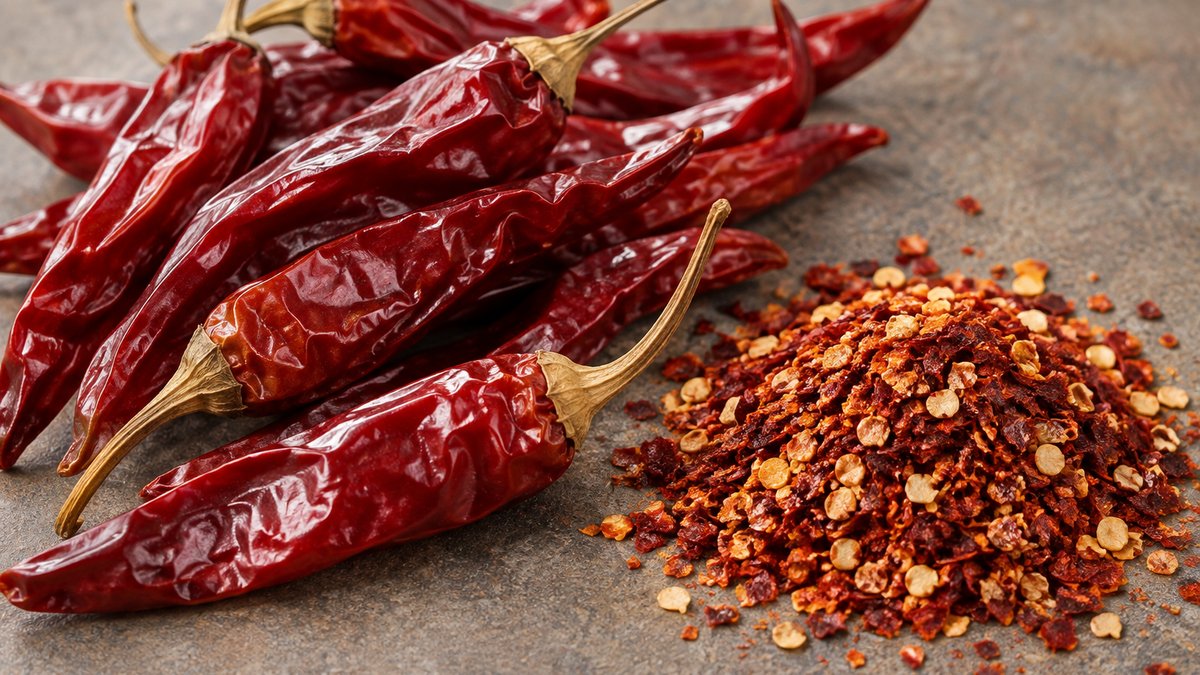
Whole dried chili is sold as intact pods, with stalks and seeds present or removed according to the agreed specification. Crushed chili flakes are pieces made by crushing or breaking dried pods. The two forms can come from the same Capsicum variety and harvest; the difference is how much the pod has been reduced in size before sale.
Codex classifies dried chili as whole, crushed, cracked, broken or flakes, and ground or powdered. Flakes remain visible pieces; powder is a finer ground form. The Codex standard allows dried chili to contain seeds and stalks, so the product name alone does not establish whether either is retained. Buyers should agree on those details with the supplier.
Whole pods let a buyer inspect shape, size, color and visible damage before breaking or processing the chili. The buyer can then crush, grind or use the pods according to the recipe or manufacturing process. That control may suit processors who need a particular cut or want to do the grinding at their own facility.
Flakes arrive ready to portion as a coarse ingredient. They can be mixed into seasoning blends, sauces or other foods without the buyer first crushing whole pods. Their particle size and the share of seeds, stem pieces and fine material still need to be agreed: the word “flakes” alone does not give a measurable size range.
Neither form inherently sets the chili's heat, color or quality. Those attributes depend on the variety, growing conditions, maturity, drying and handling, and the contract specification. Buyers comparing samples should assess the actual product, including aroma, color, visible defects and pungency, instead of treating the cut as a grade.
The form also changes what inspection can readily reveal. With whole pods, an inspector can view the exterior and check dimensions, intactness and visible contamination. With flakes, the buyer should also agree on particle-size distribution and tolerance for fines, as the crushing process produces pieces of different sizes. A sample should represent the lot and use a method agreed by both parties.
Codex's dried chili standard covers products for direct consumption, food processing and repackaging, while excluding product intended for industrial processing. It sets common quality and labeling considerations across styles, including characteristic color, flavor and odor, freedom from foreign odors such as mustiness or rancidity, and a declaration of the product style. The standard is a reference; buyers must still check the importing market's rules and contract requirements.
2. Whole Dried Chili vs Crushed Chili Flakes: Comparison
The main commercial difference is the condition in which the buyer receives the dried pod. The table compares typical forms; the final contract should specify the actual cut, seed and stalk content, variety and quality requirements.
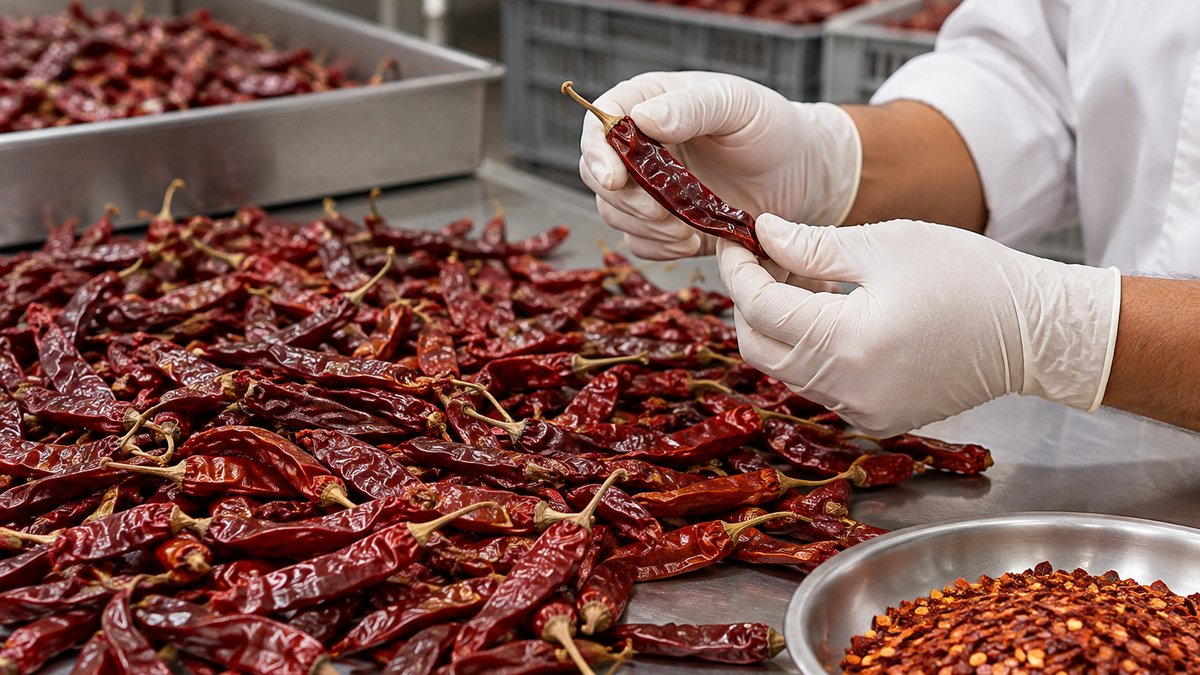
Codex says whole dried chili may be sized by length or an existing trade practice, with the sizing method indicated on the package when sizing is used. Its standard treats crushed, cracked, broken and flakes as one style group. It does not set a universal particle-size range for flakes, so parties should document a range or use a reference sample if size matters to production.
The two forms also require different checks at receiving. A sample of whole pods can reveal the range of pod lengths and the share of broken pods. A flake sample needs a method for checking the distribution of particle sizes, along with an agreed limit for fine particles and unwanted material. Buyers should write the test or inspection method into the purchase specification when acceptance depends on it.
For either form, specify the chili variety or trade name where known, country of origin, harvest information if required, color, pungency target, moisture requirement, foreign matter tolerance and packaging. Codex calls for the product style and country of origin to be declared. Harvest country, region and year are optional under that standard, though a buyer may request them for traceability or its own purchasing program. Destination-country labeling and safety rules still need separate review.
3. A Sourcing Scenario for an Indian Export Shipment
Consider an importer buying dried chili from an Indian exporter for two production lines. One line uses intact pods that staff inspect and crush in-house. The other needs a coarse chili ingredient that can be weighed directly into a seasoning blend. The importer should treat those as two product specifications, even if both use chili from the same variety or supplier.
For the whole-pod order, the importer can define whether stalks stay on, whether seeds may remain, the acceptable pod-length range and the maximum share of broken pods. It should also state the required color and pungency, packing format, quantity and delivery conditions. If the importer wants to process the pods itself, it can ask for a representative sample before finalizing the purchase.
For the flakes order, the importer should specify particle size and the permitted share of fines. It should state whether seeds and visible stem pieces are acceptable and how the shipment will be sampled. A sample that contains mostly coarse pieces may perform differently in a blend from one with a larger proportion of small fragments, even when both are sold as chili flakes.
Illustrative inquiry format:
Product: Dried chili flakes, origin India
Particle size: Buyer-defined range and inspection method
Seeds and stalks: State acceptable presence or limits
Quality: State color, pungency, moisture and foreign matter requirements
Commercial details: Quantity, packaging, destination, delivery term and shipment schedule
This is an illustrative inquiry format, not a universal product specification or offer.
The example leaves the numerical limits to the buyer and supplier because requirements vary by product, destination and intended use. They should agree on how each property will be tested, who will take the sample and what happens if inspection results fall outside the contract. For moisture, contaminants and microbiological criteria, the buyer should check applicable destination rules and specify the relevant test requirements rather than assume one limit applies to every shipment.
Origin labeling also needs care. Codex requires the country of origin to be declared for products covered by its standard, and it distinguishes origin from optional harvest details. Buyers sourcing from India can ask the exporter to state the origin information needed for the contract and destination label. If the buyer needs a particular growing region or harvest year, those details should be requested explicitly instead of inferred from the exporter's location.
A quotation comparison is meaningful only when both offers describe the same form and comparable quality requirements. A whole-pod price and a flake price may include different processing steps, sorting, packaging and yield. Compare the stated specifications and delivery basis side by side; do not treat the product names alone as proof that the offers are equivalent.
Looking to Source Dried Chili?
Connect with verified suppliers, discover matching products, and explore sourcing opportunities from global markets.
4. When Buyers Should Choose Each Form
Choose whole dried chili when the buyer needs intact pods for visual inspection, later processing or a finished product that uses whole chili. Choose crushed flakes when the process calls for a coarse, ready-to-portion ingredient. The decision should follow the buyer's production steps and product specification.
4.1 Choose whole dried chili when the buyer needs control over processing
Whole pods suit buyers that want to set the cutting or grinding step themselves. A food processor may want the option to produce different cuts from one raw material lot, while a buyer selling whole pods may need an intact appearance and a consistent size range. In both cases, the buyer should clarify whether the specification permits broken pods and whether stalks must be removed.
Whole form also gives buyers a direct view of pod length, color and exterior condition. That inspection cannot establish every quality attribute: pungency, moisture or contamination needs an agreed test where those properties are critical. The contract should identify the test method and acceptance limit instead of relying on appearance alone.
A whole-pod specification is especially useful when the buyer has equipment or labor for downstream processing. The buyer should include the cost and capacity of that work in its purchasing decision. If the buyer lacks crushing or grinding capacity, purchasing whole pods may add a processing step that the flakes supplier has already completed.
4.2 Choose crushed chili flakes when the buyer needs a prepared cut
Flakes suit a production line that uses chili pieces without first crushing whole pods. They can simplify a recipe's ingredient handling when the intended cut is coarse and consistent enough for the finished product. Buyers should define particle size in terms that suppliers can measure and should state whether fines count toward the specification.
Flakes are less suitable when the buyer needs an intact pod for retail presentation or wants to control every stage of cutting. Crushing changes the product's shape and makes pod length irrelevant. It also means that the buyer needs an agreed method for evaluating the particle distribution and checking for seeds, stalk fragments and foreign material.
Do not assume flakes are powder. If the production line needs a powder, specify ground or powdered chili and give a particle-size requirement. Codex lists flakes and ground or powdered chili as separate styles, so a request that says only “crushed chili” may leave the supplier unsure about the required cut.
4.3 Set shared requirements before comparing offers
For either form, tell the supplier the intended application and the quality properties that affect acceptance. State the chili variety or trade name, color, pungency target, moisture limit, foreign matter tolerance and any required testing. Add quantity, packaging, country of origin, destination and delivery term. The buyer should check whether any destination-specific food safety or labeling rules apply to the product and shipment.
For whole pods, add length range or sizing method, stalk status, seed requirements and tolerance for broken pieces. For flakes, add the desired particle range, proportion of fines and tolerance for seeds or stem pieces. In both cases, identify the sampling method and specify whether acceptance will be based on a pre-shipment sample, arrival inspection or another agreed procedure.
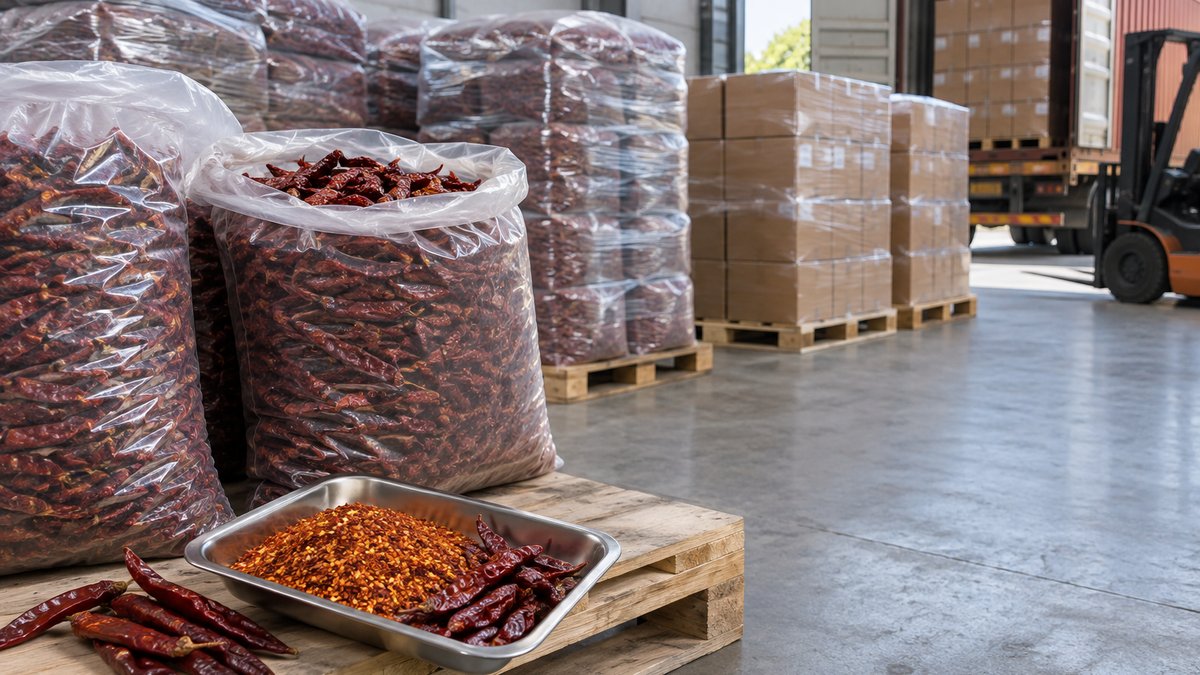
Packaging and storage conditions should match the product's planned handling and the buyer's destination. Ask the supplier to state the packaging material, net weight per unit and any storage instructions. If the buyer needs a particular shelf-life or best-before period, state the requirement and ask how the supplier will document it; do not infer shelf life from whether the chili is whole or crushed.
Before approving a shipment, buyers can compare the supplier's sample with the written specification and record any agreed deviations. For whole pods, the check can include the stated length range, stalk status and broken-pod tolerance. For flakes, it can include particle distribution and the agreed limit for fines. The buyer and supplier should keep the accepted reference sample or its documented description available for the inspection agreed in the contract. A change in harvest, processing or packing may affect the sample, so the buyer should confirm which lot the sample represents.
Buyers sourcing from India can compare offers against the same written specification and check which details each supplier states. Freshdi's Dried Chili supplier listings can help buyers find potential suppliers for that comparison. The listing is a starting point; buyers should confirm current product details and commercial terms with the supplier.
References
1. FAO/WHO Codex Alimentarius – Standard for Dried or Dehydrated Chilli Pepper and Paprika (CXS 353-2022), 2025 (adopted 2022; amended 2025).
2. Spices Board, Government of India – Guidelines on quality improvement, 2026.
Disclaimer: This article is compiled from platform data, public sources and information provided by third parties, for general informational purposes only. We do not guarantee its accuracy or completeness. Please conduct your own due diligence before making business decisions.