
1. Whole milk powder and skimmed milk powder differ mainly in milkfat
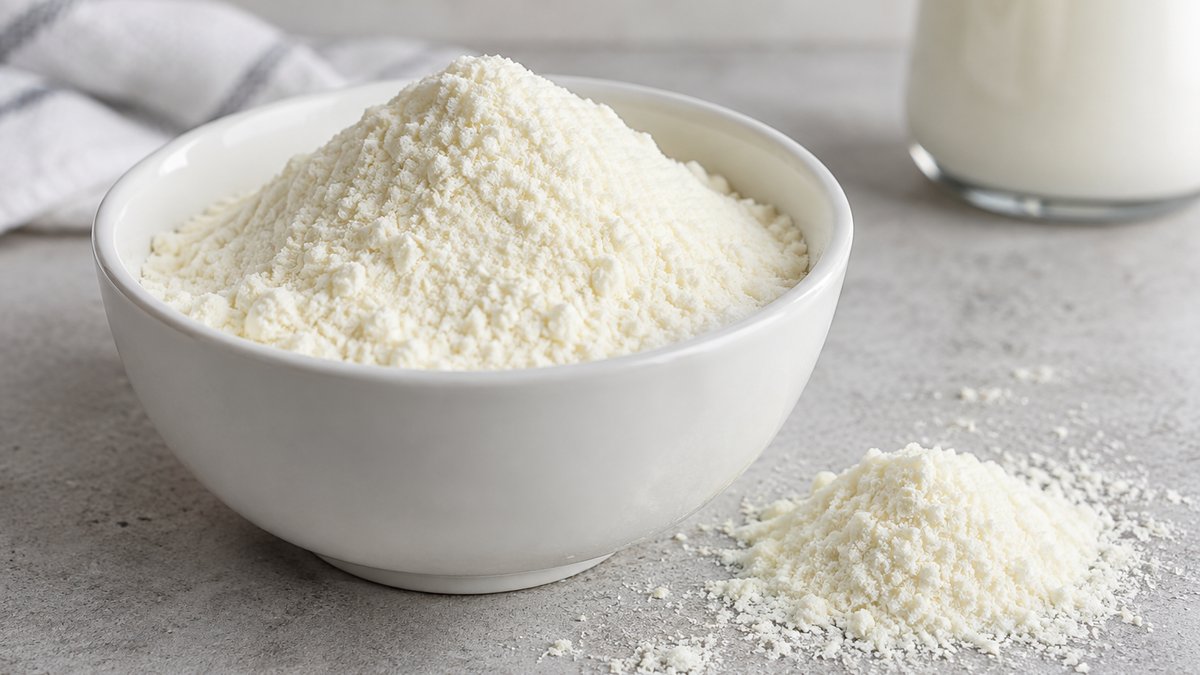
Whole milk powder (WMP) retains substantially more milkfat than skimmed milk powder (SMP). Under Codex CXS 207-1999, WMP contains at least 26% and less than 42% milkfat by mass; SMP contains no more than 1.5%. Both are concentrated milk products made by removing water, but their fat levels affect the product a buyer receives, how it behaves in a formulation and how it must be specified.
The names describe compositional categories, not every feature of a commercial product. They do not, on their own, specify protein per serving, heat treatment, solubility, particle size, instant properties, flavor, packaging or the final application. Buyers sourcing from New Zealand should compare the supplier’s product specification with the requirements of the destination market and their own manufacturing process.
Codex also sets a maximum water content of 5% by mass and a minimum milk-protein content of 34% in the milk solids-not-fat for both WMP and SMP. These are compositional provisions in an international food standard. Codex provisions are not automatically a country’s law: importers must check the applicable rules in the destination jurisdiction and the product’s intended use.
The fat distinction is the starting point for a commercial comparison. WMP brings milkfat along with the other milk solids. SMP supplies milk solids with a much lower fat level, so a manufacturer choosing between them needs to account for the fat that the recipe already contains or requires. Neither name gives enough information to calculate a finished product’s nutrition or processing performance without the detailed specification.
Both powders can be used in products for direct consumption or as ingredients for further processing. Their application depends on the manufacturer’s target composition and process. Tetra Pak’s Dairy Processing Handbook describes uses for milk powders including recombined milk, yoghurt, ice cream, bakery and confectionery products, savory foods and nutritional products. Those broad application categories do not mean that every grade of either powder is suitable for every process.
The Codex comparison was checked against the available source text on 15 November 2026. Buyers should confirm whether the importing country has adopted or supplemented the relevant provisions before writing them into a purchase specification.
2. Compare composition, handling and specification requirements
WMP and SMP share some basic compositional limits, while their milkfat ranges separate the two categories. The comparison below reflects Codex CXS 207-1999; it is a reference for product classification, not a complete purchase specification.

Codex’s limit for WMP is less than 42%, while SMP’s maximum is 1.5%. A product between those categories may fall under the partly skimmed milk powder provisions instead. Buyers should therefore use the stated fat percentage, not a broad description such as “milk powder,” when they compare offers or approve a supplier’s sample.
The handbook’s production notes describe WMP as commonly made by removing water from pasteurized, homogenized whole milk. SMP is commonly made after milkfat has been separated from the milk and the remaining skim milk is dried. Manufacturing routes and commercial specifications can vary, so ask the supplier how the offered powder was produced if that information matters to the process.
SMP specifications may also state a heat classification. The Dairy Processing Handbook explains that heating affects whey-protein denaturation and that skim powder is classified for some food-industry uses according to heat treatment. For buyers, the practical point is to request the grade and functionality required for the application, rather than treating the SMP name as a complete description of processing performance.
Reconstitution and handling also depend on the powder’s specific properties. Tetra Pak notes that powders intended to be mixed with water for direct consumption need appropriate solubility and sensory characteristics. Buyers should confirm whether they need regular or instant powder, the expected method of mixing, and any limits for dispersibility or solubility. A generic WMP or SMP description does not settle those points.
Storage deserves particular attention for WMP because it contains much more milkfat. The FAO account of milk and dairy products in human nutrition notes that the fat in dry whole milk can become rancid, while its discussion of dried skimmed milk describes the lower-fat powder as less susceptible to that issue. Actual shelf life depends on the product, packaging and storage conditions. Importers should use the supplier’s stated shelf life and handling instructions, and check that the shipment’s remaining shelf life meets their requirements.
Buying consideration: When requesting quotations, ask each supplier for the same specification: fat and moisture limits, protein basis, heat treatment where relevant, solubility or instant properties, packaging, shelf life, batch documents and destination-market compliance. That makes WMP and SMP offers easier to compare on the attributes that affect your process.
3. A manufacturer’s formulation shows why the distinction matters
Consider a dairy manufacturer planning a recombined milk drink. The product brief calls for milk solids and a defined fat level in the finished drink. The purchasing team must decide whether the powder itself should supply much of that fat or whether the formulation will use a lower-fat powder alongside another permitted fat ingredient.
Illustrative sourcing scenario:
Product: Milk powder for a recombined dairy drink
Formulation question: Should the powder supply milkfat, or should the recipe add fat separately?
WMP route: Assess a WMP specification against the required finished-product fat level
SMP route: Assess an SMP specification and the recipe’s separate fat requirement
Supplier information: Composition, processing properties, packaging and shelf life
This is an illustrative comparison, not a formula or a universal recommendation. The buyer’s product design and applicable food rules determine the actual specification.
With WMP, the buyer evaluates the powder’s stated fat content as part of the recipe’s overall fat calculation. The Codex category covers a range, not one fixed value, so the actual certificate of analysis and purchase specification matter. If the buyer assumes all WMP has the same composition, the finished drink may not meet the intended formulation.
With SMP, the buyer starts from a powder containing no more than 1.5% milkfat under the Codex category. The recipe may need a separate fat source if the finished product requires more. The manufacturer must then assess the ingredients together, including how the added component affects the product’s composition, processing and applicable labelling.
The same comparison applies to a food processor reformulating a dry mix or a bakery ingredient. WMP may contribute milkfat as well as non-fat milk solids, while SMP contributes far less fat. A formulation change can therefore require adjustments beyond swapping one powder for another. The manufacturer should run trials against its process and finished-product requirements rather than assume a one-for-one replacement.
A supplier inquiry should identify the actual application and the intended powder properties. For example, a buyer needing powder for beverage reconstitution should ask about the required solubility and instant characteristics. A buyer using SMP in a process sensitive to heat treatment should state the needed classification or test criteria. These details help suppliers respond with an appropriate grade instead of a broad product name.
For New Zealand-origin supply, buyers should also verify export and market-access requirements. New Zealand’s Ministry for Primary Industries states that dairy exporters must meet relevant New Zealand requirements and the requirements of the destination country; its export guidance also says only registered exporters can export dairy products, including milk powder. An importer should confirm that the supplier, product and shipment meet the rules for the intended destination before agreeing delivery terms.
Looking to Source Whole Milk Powder?
Connect with verified suppliers, discover matching products, and explore sourcing opportunities from global markets.
4. Choose the powder that fits the product and process
Choose WMP when the formulation calls for a milk powder that includes a meaningful milkfat fraction and the supplier’s stated composition fits the recipe. This can suit products where the buyer wants milkfat and non-fat milk solids in the same ingredient. Confirm the precise fat content, because the Codex WMP category spans from 26% to below 42% by mass.
Choose SMP when the buyer needs milk solids with a low fat content or wants to control the fat contribution separately in the formulation. Under Codex, SMP contains no more than 1.5% milkfat. That classification does not guarantee a specific flavor, solubility, heat class or performance in a particular application; the buyer must set those requirements separately.
For a direct comparison, ask whether each offer matches the same intended use and whether the two powders provide comparable solids, processing performance and delivery conditions. A price per tonne alone does not tell the buyer which ingredient gives the required result. The relevant comparison includes the formulation impact, any additional ingredient needed, handling, shelf life and the supplier’s specification.
Before approving a purchase, put the product description and measurable limits in the contract or technical specification. State the required powder category and fat range, moisture limit, protein basis, heat classification if applicable, instant or regular form, packaging and storage conditions. Include the agreed methods for testing and accepting a shipment where those are part of the buyer’s quality process.
Ask the supplier to identify documents available for the lot, such as a certificate of analysis and the applicable product and export documentation. Specify what the buyer needs to verify for the destination market. Regulatory requirements depend on jurisdiction and product use, so a general Codex comparison should not be treated as proof that a shipment satisfies every importing-country rule.
Storage and transport conditions should match the supplier’s instructions and the buyer’s handling capacity. WMP’s higher fat content makes protection from conditions that accelerate fat deterioration a relevant procurement consideration. For both powders, buyers should check packaging integrity, lot identification, production date and remaining shelf life at delivery. Set acceptance criteria before shipment rather than trying to resolve a specification gap after the powder arrives.
A practical choice follows the finished product. If the formula needs more milkfat from the powder, assess WMP against its exact fat specification. If the buyer needs a low-fat milk-solids ingredient and wants to manage fat separately, assess SMP and specify the required heat and solubility properties. A supplier sample and production trial can then test whether the chosen grade works in the buyer’s equipment and recipe.
5. Use standards, export guidance and supplier information together
Codex CXS 207-1999 provides the compositional reference for distinguishing WMP, partly skimmed milk powder and SMP. Use it to frame the category and compare declared fat levels, then check the importing country’s own food rules. Where a contract calls for a specific composition, write the required value and measurement basis into the specification rather than relying on a category name alone.
The Dairy Processing Handbook provides technical context on how milk powders are produced and why application requirements such as solubility and heat treatment matter. The FAO publication on milk and dairy products in human nutrition discusses the differing storage considerations for whole and skimmed milk powders. These sources can inform a buyer’s questions, but the supplier’s product specification and the destination market’s requirements govern a particular transaction.
For New Zealand shipments, the Ministry for Primary Industries’ dairy export guidance is a starting point for understanding exporter registration and destination-market obligations. The ministry notes that exporters must meet requirements in both New Zealand and the importing market. Importers should establish which documents and approvals apply to their product and route before confirming a shipment.
Freshdi’s Dairy and Whole Milk Powder pages can help buyers review related buying requests and suppliers. Compare each listing with the required fat level, grade, destination, quantity and documentation, then verify commercial and technical details directly through the transaction process.
References
1. Codex Alimentarius Commission – Standard for Milk Powders and Cream Powder, CXS 207-1999, 2023.
2. Tetra Pak – Dairy Processing Handbook: Milk and Whey Powdered Ingredients, n.d..
3. Food and Agriculture Organization of the United Nations – Milk and Dairy Products in Human Nutrition, 2013.
4. New Zealand Ministry for Primary Industries – Steps to Exporting Dairy Products, n.d..
Disclaimer: This article is compiled from platform data, public sources and information provided by third parties, for general informational purposes only. We do not guarantee its accuracy or completeness. Please conduct your own due diligence before making business decisions.