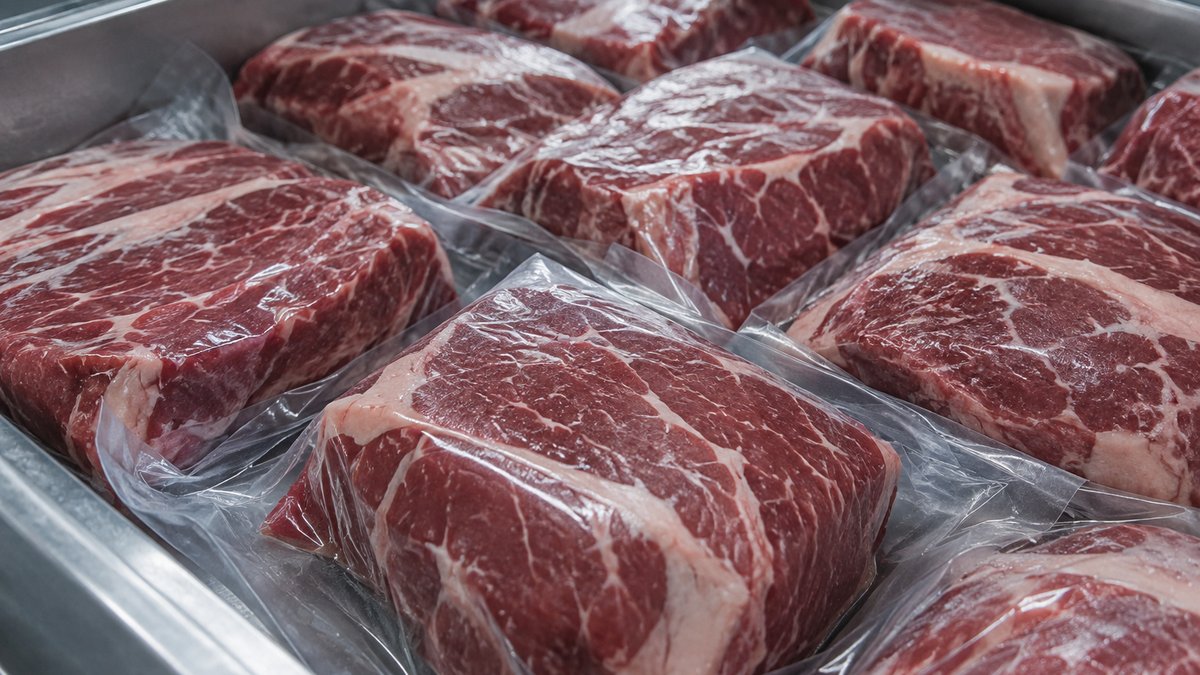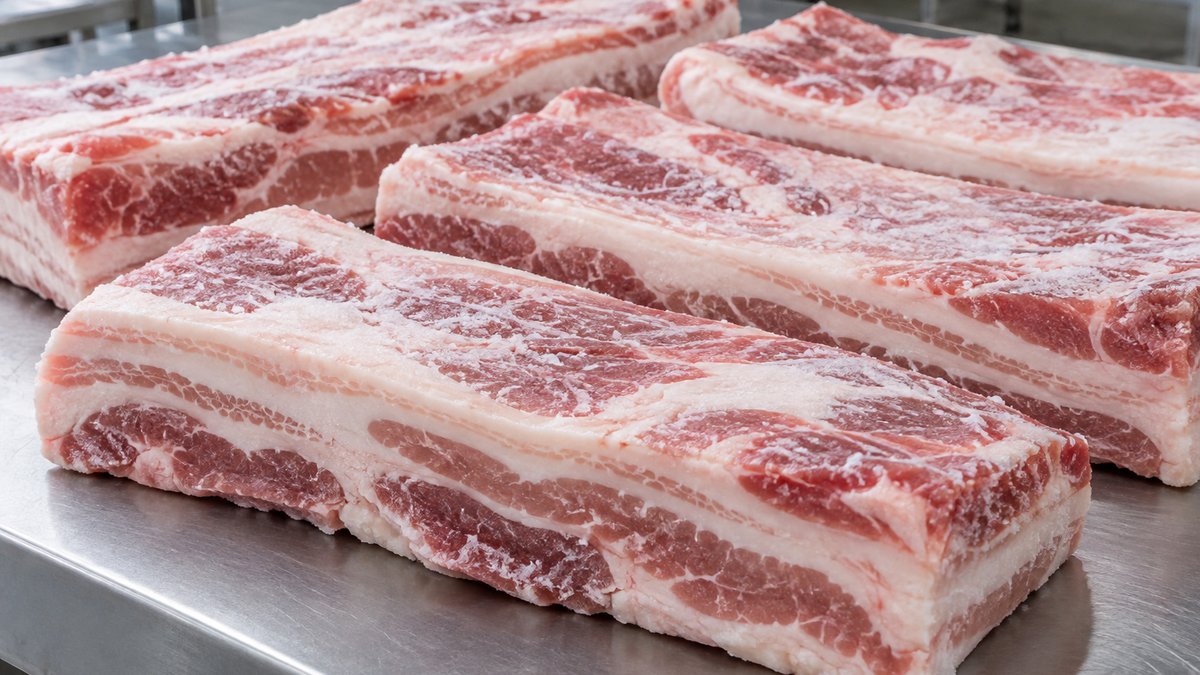

1. Frozen pork belly and shoulder come from different parts of the carcass
Frozen pork belly is cut from the side of the carcass; pork shoulder comes from the front portion. That location changes the cut’s shape, fat and lean distribution, and the products a buyer can make from it. Freezing describes the product’s temperature condition, while belly and shoulder identify different cuts.
The names do not, on their own, state whether a cut is bone-in or boneless, skin-on or skinless, whole or portioned, or trimmed to a particular fat level. Buyers need those details in the purchase specification before comparing offers.
The Canadian Food Inspection Agency’s meat-cuts manual defines the belly as the carcass portion separated from the shoulder, leg and loin. It describes side ribs as part of the belly and “side” as the boneless belly after the ribs are removed. The manual defines shoulder as a separate carcass portion and identifies sub-cuts such as shoulder picnic and shoulder blade. These are Canadian cut definitions; trade names and cutting lines can differ by market, so contracts should identify the applicable specification.
USDA’s Food Safety and Inspection Service lists shoulder and side among the basic pork primal cuts. Its consumer cut guide identifies bacon with the side and shoulder cuts such as blade roasts and steaks. These names help orient a buyer, but a product label or quotation still needs the exact cut and preparation.
For procurement, the practical distinction is the requested raw material and its intended use. Belly buyers may need a specified belly presentation for slicing, curing, or further processing. Shoulder buyers may need a defined shoulder portion for portioning, roasting, grinding, or further processing. Those uses are examples, not guarantees about a supplier’s product or a buyer’s market.
A product name alone is not a complete frozen-pork specification. Both cuts can vary in trimming, bone status, skin, dimensions, packaging, and declared net weight. Ask the supplier to confirm each attribute in writing and use the same requirements when requesting competing quotations.
2. Compare frozen pork belly and shoulder by specification
The table summarizes the commercial distinction between the two cuts. It is a starting point for a purchase specification, not a substitute for an agreed cutting standard or product description.
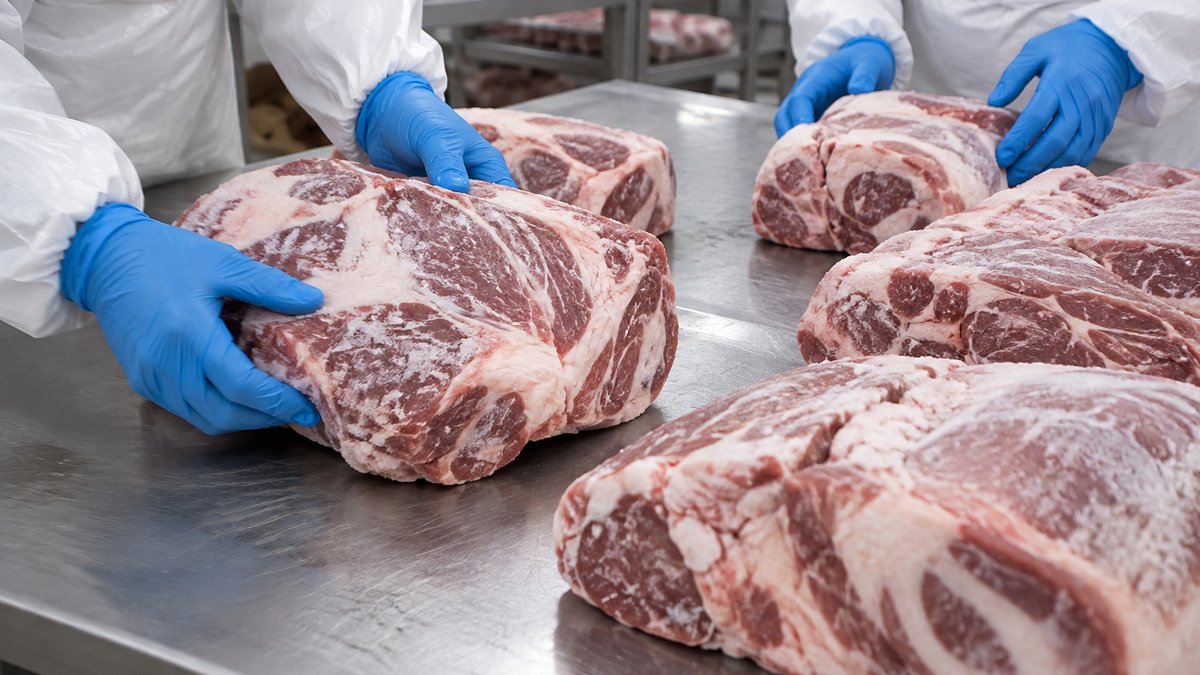
The terms “belly” and “shoulder” name different carcass areas, but neither sets a universal grade or price. USDA Agricultural Marketing Service pork carcass grades evaluate carcass characteristics and expected yields. A carcass grade is not automatically a finished frozen-cut specification, so buyers should not infer a particular grade from the cut name.
Cut nomenclature also needs a stated basis. The Canadian manual gives formal boundaries and names for cuts under Canadian rules. A buyer sourcing from another country should confirm which national or purchaser specification the supplier follows. If the parties use different cut charts, the same trade name may not describe an identical trim or boundary.
Frozen products need additional commercial details beyond the cut. State whether the product is raw or processed, the required pack and carton configuration, the weight basis, and any applicable labeling or documentation requirements. The destination market and shipment conditions can affect regulatory and documentation requirements, so confirm them for the actual product and lane.
When a supplier offers a product under a broad name, request a detailed description and, where available, a product specification sheet or representative cut image. A buyer can then check the stated sub-cut and preparation against the purchase requirement before agreeing on price or shipment.
3. A quotation scenario shows why cut names need detail
Consider an importer requesting frozen pork for two different production lines: one uses belly for slicing, while the other needs shoulder for portioning. A request that says only “frozen pork belly” or “frozen pork shoulder” leaves suppliers to interpret the required presentation.
For the belly line, the buyer should state whether the order requires boneless side, whether the skin remains, whether ribs are removed, the acceptable trim, and the form or dimensions needed by the slicer. If the product will be cured or further processed, the buyer should also identify any relevant process or quality parameters that the supplier must meet. The importer should not rely on an assumed fat level or a generic belly description.
For the shoulder line, the buyer should identify the required shoulder portion, such as picnic or blade where that matches the intended process and sourcing market. The inquiry should say whether bones and skin are acceptable, what trim is required, and whether the supplier is quoting whole cuts or portioned product. If the processor needs a specific size range, the buyer should state the measurement basis and tolerance.
Each offer should also state the same commercial basis: quantity and unit, pack format, declared net weight, origin, shipment terms, destination, delivery schedule, and payment terms. MOQ means minimum order quantity, the smallest order a supplier accepts. Buyers should record it alongside the unit, since a minimum quoted in cartons cannot be compared directly with one stated in metric tons without knowing the pack weight.
A useful comparison separates product fit from commercial terms. First check whether the offered cut and preparation meet the required specification. Then compare equivalent weights, packaging, delivery terms, and shipment conditions. If one supplier quotes a bone-in shoulder and another quotes boneless shoulder, the figures do not describe equivalent products; ask for revised offers or assess the alternatives on the intended yield and production requirements.
Illustrative inquiry format:
Product: Frozen pork belly, boneless side, skin status and rib status stated
Trim: Buyer’s required trim description or referenced specification
Product form: Whole or portioned, with dimensions or tolerance if required
Pack and weight: Carton configuration and net-weight basis
Commercial details: Quantity, destination, shipment term, delivery window, and payment terms
This is an illustrative format, not a universal specification. Set each requirement to match the product, destination rules, and processing needs.
For a shoulder inquiry, replace the belly description with the exact shoulder sub-cut and state bone, skin, trim, and portioning requirements. Keeping the remaining commercial fields consistent makes supplier responses easier to compare. Where the buyer has a reference specification, attach or identify it and ask the supplier to confirm deviations rather than treating an informal product name as agreement.
Looking to Source Frozen Pork?
Connect with verified suppliers, discover matching products, and explore sourcing opportunities from global markets.
4. Choose the cut that fits the production requirement
Choose frozen pork belly when the buyer’s process calls for the side or belly portion and the supplier can meet the required rib, skin, trim, and product-form details. Choose frozen pork shoulder when the operation calls for a defined shoulder portion and the supplier can meet its bone, skin, trim, and portioning requirements.
A buyer planning sliced or cured products should check belly form, skin, rib removal, trim, and dimensions against the processing line. A buyer planning shoulder portions should identify the sub-cut and the amount of preparation required at the plant. These checks help prevent a mismatch between a general cut name and the product the facility can actually process.
If a buyer is flexible on cut, compare the alternatives against the finished product requirement and the processing steps available at the destination. Ask the production team which raw material forms it can handle, how it will use the cut, and which attributes affect yield or labor. Do not treat belly and shoulder as interchangeable simply because both are frozen pork.
Compare quotations only after normalizing the specification. Confirm that each offer refers to the same cut boundary, sub-cut, bone and skin status, trim, pack, weight basis, and delivery arrangement. If a supplier cannot confirm a requested attribute, record it as unspecified and resolve it before purchase rather than assuming it matches.
For cross-border orders, confirm the importing market’s current rules for the specific pork product and processing status. Requirements can depend on destination, product type, and shipment conditions. A cut chart explains nomenclature; it does not establish that a shipment is admissible or replace the buyer’s regulatory checks.
5. Related resources for frozen pork sourcing
Buyers can use official cut references to clarify what a product name means, then use the supplier’s written specification to settle the exact form and trim. The Canadian Food Inspection Agency’s pork meat-cuts manual gives detailed definitions for shoulder, belly, side ribs, and boneless side. USDA FSIS explains the basic pork primal cuts and lists examples of retail cuts. USDA Agricultural Marketing Service publishes pork carcass grading standards and frozen pork purchase specifications; those documents cover different purposes, so check the scope of each before using it in a contract.
Freshdi has a frozen pork supplier category where buyers can review relevant supplier listings. Treat each listing as a starting point for checking product form, stated specifications, commercial terms, and documentation with the prospective supplier.
References
1. Canadian Food Inspection Agency – Pork: Meat Cuts Manual, n.d.; accessed November 22, 2026.
2. Food Safety and Inspection Service, U.S. Department of Agriculture – What Are the Cuts of Fresh Pork?, February 3, 2025.
3. Agricultural Marketing Service, U.S. Department of Agriculture – Pork Carcass Grades and Standards, n.d.; accessed November 22, 2026.
4. Agricultural Marketing Service, U.S. Department of Agriculture – Institutional Meat Purchase Specifications: Fresh Pork, 2014.
Disclaimer: This article is compiled from platform data, public sources and information provided by third parties, for general informational purposes only. We do not guarantee its accuracy or completeness. Please conduct your own due diligence before making business decisions.