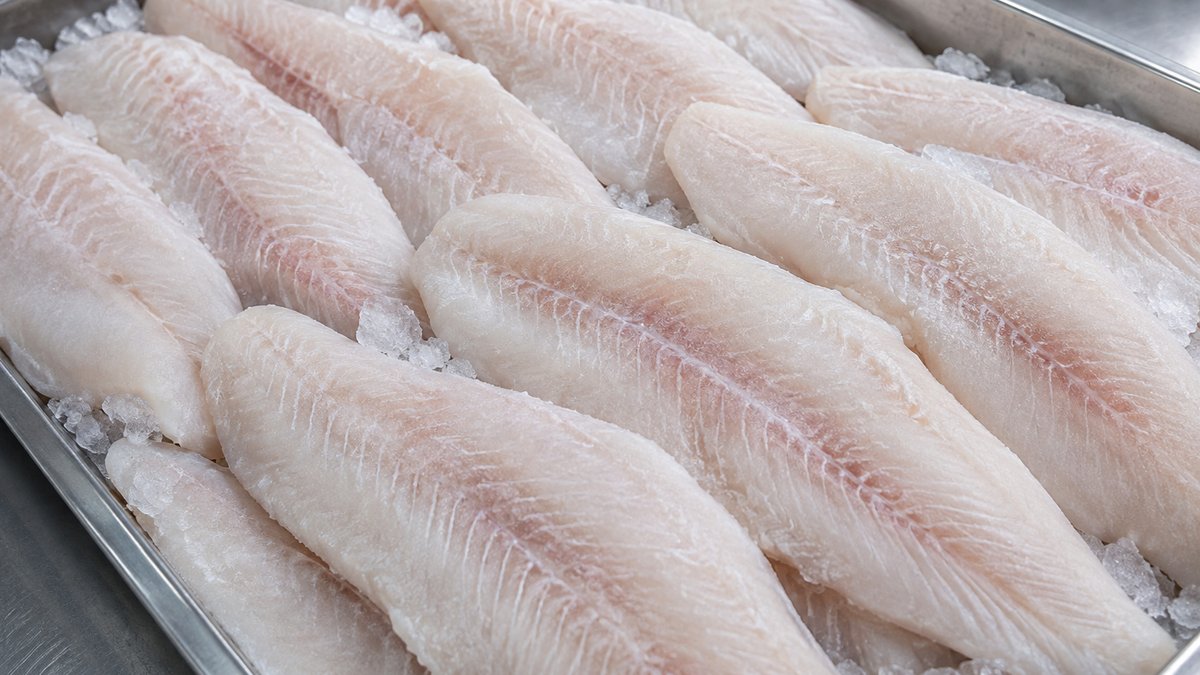

1. Pangasius and Basa Names Can Refer to Different Species
For a frozen fillet buyer, the main distinction is the fish’s scientific name. The US Food and Drug Administration (FDA) lists Pangasius bocourti under the acceptable market name Basa. It lists Pangasianodon hypophthalmus under Swai, Sutchi, Striped Pangasius or Tra. These are different species, even though commercial documents and casual conversation may use overlapping pangasius or basa wording.
Pangasius can refer broadly to fish in the family Pangasiidae or to a particular commercial product, depending on the document and market. Basa is more specific in the FDA list: it names Pangasius bocourti. That distinction matters when a buyer’s specification, carton label, health certificate and import paperwork need to identify the same species.
The names also vary by destination. In the United States, the FDA Seafood List gives acceptable market names for the two species separately. In the European Union, commercial designations are governed by member-state lists, and the European Commission’s database displays designations by species and country. A name accepted in one destination should not be assumed acceptable in another.
The comparison is therefore partly about product identity and partly about naming. It does not establish a universal difference in price, taste, fillet color or quality. Those attributes depend on the individual product and its specification. A buyer comparing two offers first needs to confirm whether both quotations cover the same species and product form.
2. Compare the Species Names and Buying Details
The clearest comparison starts with scientific name, followed by the commercial designation accepted in the destination market. Fillet preparation and freezing details then determine whether the offers are commercially comparable.

The FDA’s names identify species; they do not define a full frozen-fillet specification. A product described as a frozen fillet may still differ in whether it is skinless or boneless, whether the belly flap remains, how it is trimmed, and how it is packed. The United States International Trade Commission’s description of frozen pangasius fillets, for example, distinguishes regular fillets, shank fillets and strips. Those forms should be stated separately from the species name.
Compare quotations only after the supplier states the scientific name and the product attributes that affect the usable product. A price comparison between a well-trimmed boneless fillet and a different cut, or between products with different declared glaze and net-weight bases, does not isolate a species difference.
3. A Buyer Checks a Frozen Fillet Offer Before Ordering
Consider an importer reviewing two offers described as frozen pangasius fillets and frozen basa fillets. The names alone leave a central question unanswered: do the offers identify the same fish or different species? The importer asks each supplier to state the scientific name on the specification and commercial documents before comparing price or approving artwork.
If one supplier identifies Pangasianodon hypophthalmus and the other identifies Pangasius bocourti, the offers cover different species. The importer should then decide whether either species meets the buyer’s product brief and destination labeling rules. The importer should not treat the names as interchangeable just because the fillets share the pangasius family or appear under similar commercial wording.
Next, the importer aligns the physical specification. The purchase inquiry can state whether the product must be skinless and boneless, the accepted fillet cut, the size range per piece, trim level, freezing format, glazing declaration, packing configuration and net weight basis. Any required processing or quality condition should be written into the contract rather than left to a short product name.
Illustrative frozen fillet inquiry:
Product: Frozen fillet; supplier to state scientific name and destination-market commercial designation
Species: Specify Pangasianodon hypophthalmus or Pangasius bocourti
Fillet form: State skin, bone, belly-flap and trim requirements
Commercial specification: State size range, freezing format, glaze, packing and net-weight basis
Documents: Confirm required product, origin and health documentation for the destination
This is an illustrative inquiry format. The final specification and documents depend on the product and destination market.
The importer also checks the destination’s rules before finalizing label text. In the EU, Regulation (EU) No 1379/2013 requires the commercial designation and scientific name for covered fishery and aquaculture products offered to final consumers or mass caterers. Member states publish the designations accepted in their territories. For a specific product and sale channel, the importer should confirm which provisions apply and consult the relevant national list.
The decision should be recorded consistently across the purchase order, supplier specification, carton artwork and shipping documents. If a supplier changes the species or product form, the buyer should review the updated paperwork and label before shipment. That check helps prevent a mismatch between what was ordered and what the documents say.
Looking to Source Frozen Pangasius Fillet?
Connect with verified suppliers, discover matching products, and explore sourcing opportunities from global markets.
4. Choose by Species Requirement and Destination
Choose the product that meets the buyer’s required species, customer specification and destination rules. If the contract or end customer names Pangasianodon hypophthalmus, an offer identifying Pangasius bocourti does not meet that species requirement without the buyer’s explicit approval. The reverse applies when the specification calls for P. bocourti.
4.1 When the brief names pangasius
Ask the supplier to replace a broad product name with the scientific name of the fish offered. If the intended species is Pangasianodon hypophthalmus, confirm which commercial name the destination accepts. The FDA lists Swai, Sutchi, Striped Pangasius and Tra for that species. Do not assume that every market permits every one of those names.
4.2 When the brief names basa
Confirm whether the buyer means Pangasius bocourti and require the supplier to identify the species in the specification. If a quotation uses basa as a broad product label, ask for clarification before approving a contract or label. The FDA list’s species-specific entry is a useful check for US-market naming, while other destinations may use their own accepted designations.
4.3 When the requirement is about fillet performance or presentation
The species name does not answer questions about trim, size, cut, glaze or packing. Write those requirements independently. If the buyer needs a particular cut, specify it directly; the USITC’s frozen-fillet description, for instance, distinguishes regular, shank and strip forms. Avoid assuming that suppliers use a short commercial name to mean the same cut or trim.
A buyer choosing between offers should compare the same basis: species, fillet form, size, declared glaze, net weight, packing and delivery terms. Any difference should remain visible in the comparison instead of being compressed into the words pangasius and basa. Request a revised quotation when the supplier has left a material item unstated.
A final document check should trace the product identity from the purchase order to the supplier specification and label. The commercial designation should fit the destination, and the scientific name should match the contracted species. When the destination has a specific accepted-name list or additional import conditions, confirm those with the responsible authority or qualified compliance staff before shipment.
5. Related Resources for Species and Market Names
The FDA Seafood List is a direct reference for checking US acceptable market names against scientific names. For EU-market sales covered by the rules, Regulation (EU) No 1379/2013 sets the consumer-information framework, while the European Commission’s commercial-designation database helps users check names by species and member state. The database notes that national lists are the authoritative source for accepted designations.
For product form, the USITC report on frozen fish fillets from Vietnam provides a trade and customs description that distinguishes fillet cuts. That description is useful for understanding cut terminology; it is not a substitute for the buyer’s own specification or destination-market requirements.
Freshdi has frozen pangasius fillet buying requests and supplier listings for buyers comparing sourcing options. Use the product and species details stated in each listing, then confirm the supplier’s specification and applicable labeling requirements for your market.
References
1. U.S. Food and Drug Administration – The Seafood List: Pangasianodon hypophthalmus and Pangasius bocourti, Accessed November 22, 2026.
2. European Parliament and Council – Regulation (EU) No 1379/2013 on the common organisation of the markets in fishery and aquaculture products, 2013.
3. European Commission – Commercial and scientific names of fishery and aquaculture species: Pangasianodon hypophthalmus, Accessed November 22, 2026.
4. U.S. International Trade Commission – Certain Frozen Fish Fillets from Vietnam: Staff Report, 2020.
Disclaimer: This article is compiled from platform data, public sources and information provided by third parties, for general informational purposes only. We do not guarantee its accuracy or completeness. Please conduct your own due diligence before making business decisions.