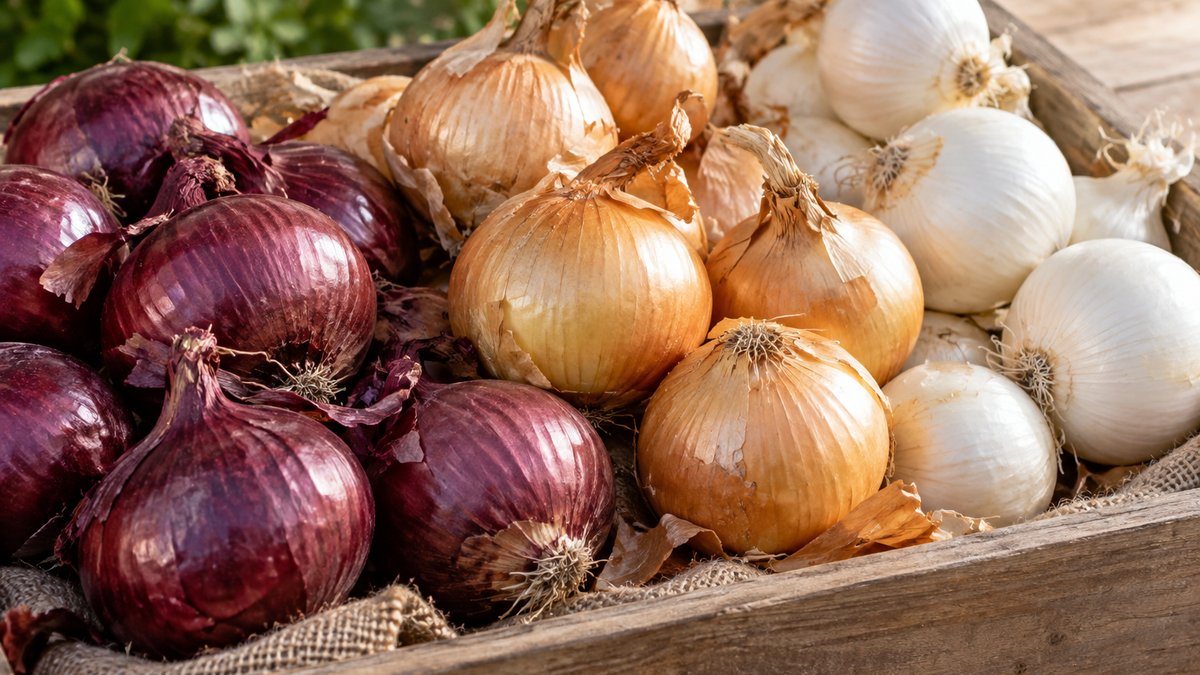

1. U.S. No. 1 and U.S. No. 2 Describe Different Fresh Onion Grade Requirements
U.S. No. 1 and U.S. No. 2 are USDA grades for certain fresh bulb onions. They describe the condition and quality requirements for a lot, with U.S. No. 1 setting tighter general requirements for firmness, shape and freedom from defects. U.S. No. 2 allows more variation, while still requiring mature onions that are not soft or spongy and that meet the grade’s defect limits.
These grades are U.S. terms, not universal onion classifications. USDA says its vegetable grade standards are voluntary and provide a common language for describing quality and condition. A buyer and seller can use them in a contract, but should identify the applicable standard and any additional requirements rather than assuming the grade name has the same meaning in every country.
The comparison here applies to the USDA standard for onions other than Bermuda-Granex-Grano and Creole types. Those types have separate standards. Under the general standard, both U.S. No. 1 and U.S. No. 2 have a default minimum diameter of 1.5 inches unless otherwise specified. The size composition requirement differs: U.S. No. 1 also has a minimum share of onions at least 2 inches in diameter, depending on color.
The grade does not specify every commercial detail. Buyers still need to agree on variety, color, size range, pack style, quantity, packaging, delivery terms and inspection method. They should also define what happens if inspection finds the lot outside the agreed grade or other contract specifications.
2. The USDA Grade Comparison Covers Condition, Defects and Size
The clearest difference is the amount and type of variation each grade permits. USDA’s standard describes U.S. No. 1 onions as mature, fairly firm and fairly well shaped. U.S. No. 2 onions must be mature and not soft or spongy, with specific restrictions on decay and serious damage.
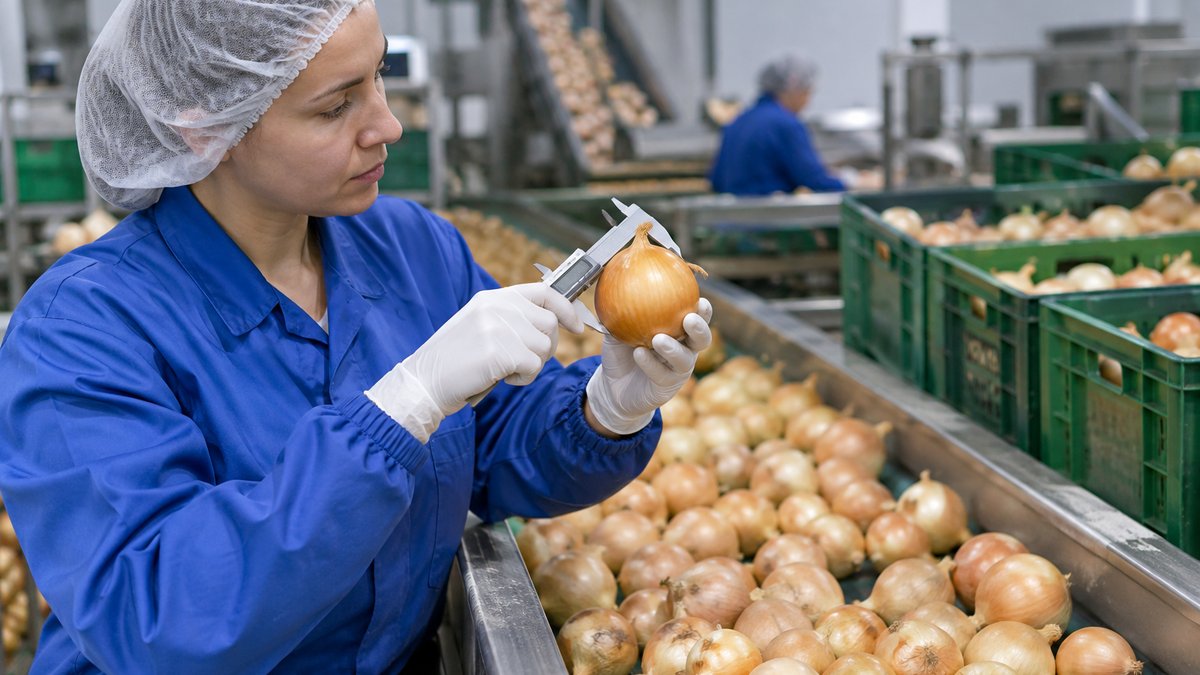
The defect wording needs careful reading. U.S. No. 1 does not mean that every onion in the lot has no visible variation: the standard includes tolerances. U.S. No. 2 uses a serious-damage threshold for its listed damage factors. The applicable tolerances and inspection rules should be checked in the USDA standard, not improvised from the grade names.
Size also needs more than a grade name. For U.S. No. 1, the default minimum diameter is 1.5 inches, and the lot must meet the specified share of onions at least 2 inches across. U.S. No. 2 has the same default minimum diameter but no matching 2-inch share requirement in its grade description. A contract can state a different size range or composition, so buyers should write the requested size alongside the grade.
A USDA grade is a quality description, not a complete commercial specification. The standard does not, by itself, identify a particular variety, flavor profile, country of origin, packaging format or delivery condition. Those points need to appear separately in the buyer’s purchase specification.
3. A Purchase Scenario Shows Why the Grade Alone Is Not Enough
Consider an importer purchasing red fresh onions for wholesale distribution. The importer asks for U.S. No. 1 but leaves the diameter range, packaging and inspection terms open. The grade supplies a baseline for maturity, firmness, shape, defects and size composition, but it does not answer those omitted commercial questions.
If the importer’s customers need larger bulbs for retail display, the buyer should state a minimum or range and make clear how the lot’s size composition will be assessed. Under the general USDA standard, U.S. No. 1 red onions have a default minimum diameter of 1.5 inches and at least 40% by weight of the lot must be 2 inches or larger. A buyer who needs a different distribution should specify it in the contract instead of relying on the grade label alone.
If the buyer considers U.S. No. 2, that grade can be a fit when the buyer’s end market accepts more variation in shape and minor damage, and the buyer has stated clear acceptance limits. The buyer should not treat U.S. No. 2 as an automatic substitute at a different price. The two grades have different requirements, and price depends on the offer and contract, not on the grade name alone.
Illustrative inquiry format:
Product: Fresh red bulb onions
Grade reference: USDA U.S. No. 1, general onion standard
Size: State the required diameter range and lot composition
Packaging and quantity: State pack format, net weight per package and order quantity
Inspection: State inspection point, sampling method and procedure for grade disputes
This is an illustrative format, not a universal specification. The buyer should set the size, packaging and acceptance terms for the intended market.
Before contracting, buyer and seller should confirm that the named USDA standard covers the onion type in the offer. They should agree who will inspect the lot, when inspection will take place, which tolerances apply and what remedy follows if the shipment does not meet the contract. A grade reference is useful only when both parties use the same standard.
Looking to Source Fresh Onion?
Connect with verified suppliers, discover matching products, and explore sourcing opportunities from global markets.
4. Choose the Grade That Matches the Buyer’s Acceptance Requirements
Choose U.S. No. 1 when the buyer needs the tighter baseline for firmness, shape and freedom from listed damage, or when the specified size composition suits the sales channel. Choose U.S. No. 2 when the buyer can accept more variation under its grade definition and has set inspection and acceptance terms that protect the intended use.
4.1 Choose U.S. No. 1 for a tighter condition specification
U.S. No. 1 can suit orders where appearance, firmness and a more defined size composition are part of the buyer’s requirements. The standard calls for onions to be fairly well shaped and fairly firm, and it sets a minimum share of 2-inch-or-larger onions for the covered colors. Buyers should still state the exact size range they want, since the grade does not capture every display or processing requirement.
Retail, foodservice or wholesale buyers may have different reasons for specifying the grade. A retail buyer may need a consistent pack for display, while a processor may care more about the size and condition suitable for its equipment. Those uses do not change the USDA grade; they determine the extra details the contract should add.
4.2 Consider U.S. No. 2 when the buyer accepts more variation
U.S. No. 2 may suit a transaction where the buyer accepts less restrictive requirements for shape and damage, provided the onions still meet the standard and the buyer’s own condition limits. The grade still requires mature onions that are not soft or spongy, and it excludes decay and wet sunscald. It does not mean that damaged, decayed or unsuitable onions are acceptable.
Buyers should decide in advance which visible defects matter to their customers or production line. They can then list any stricter limits, size requirements or use-specific criteria in the contract. That avoids relying on a broad grade label to communicate a requirement the label does not state.
4.3 Compare offers only after matching the full specification
When comparing supplier offers, match the grade reference, onion type, color, size, packaging and delivery basis. Confirm whether the seller is quoting the general USDA standard or another national or buyer-specific specification. If the product is a Bermuda-Granex-Grano or Creole type, check the corresponding separate USDA standard rather than applying the general standard discussed here.
For a U.S. import shipment, buyers should also check the applicable import rules. USDA’s onion import guidance says most onion shipments over 110 pounds, or 50 kilograms, are subject to Section 8e requirements, and that minimum grade, size, quality and maturity conditions can vary by variety and date. The general grade comparison in this article does not replace a shipment-specific regulatory check.
Buying consideration: Put the grade, standard scope, size distribution, packaging and inspection terms in the purchase specification. Confirm the applicable import requirements for the destination before shipment, especially when the contract relies on a USDA grade name.
5. Use USDA Standards and Freshdi to Continue Your Sourcing Check
For the exact wording, consult the USDA Agricultural Marketing Service standard for onions other than Bermuda-Granex-Grano and Creole types. USDA also publishes separate standards for processing onions and for other onion types. These distinctions matter when a buyer’s product description or intended use falls outside the general fresh bulb onion standard.
U.S. grade standards are voluntary as a general quality language, but particular import requirements or contract terms can make specific requirements relevant to a transaction. Buyers and exporters should distinguish the grade standard from the destination country’s binding rules and from any buyer-specific specification.
To compare current product listings and buying requests, Freshdi has pages for fresh onion suppliers and fresh onion buying requests. Check each listing’s stated details against the grade and contract requirements for the shipment.
References
1. U.S. Department of Agriculture, Agricultural Marketing Service – Onions (Other Than Bermuda-Granex-Grano and Creole Type) Grades and Standards, Accessed November 22, 2026.
2. U.S. Department of Agriculture, Agricultural Marketing Service – Vegetables: Grades and Standards, Accessed November 22, 2026.
3. U.S. Department of Agriculture, Agricultural Marketing Service – Importing Onions, Accessed November 22, 2026.
4. U.S. Department of Agriculture, Agricultural Marketing Service – Onion for Processing Grades and Standards, Accessed November 22, 2026.
Disclaimer: This article is compiled from platform data, public sources and information provided by third parties, for general informational purposes only. We do not guarantee its accuracy or completeness. Please conduct your own due diligence before making business decisions.