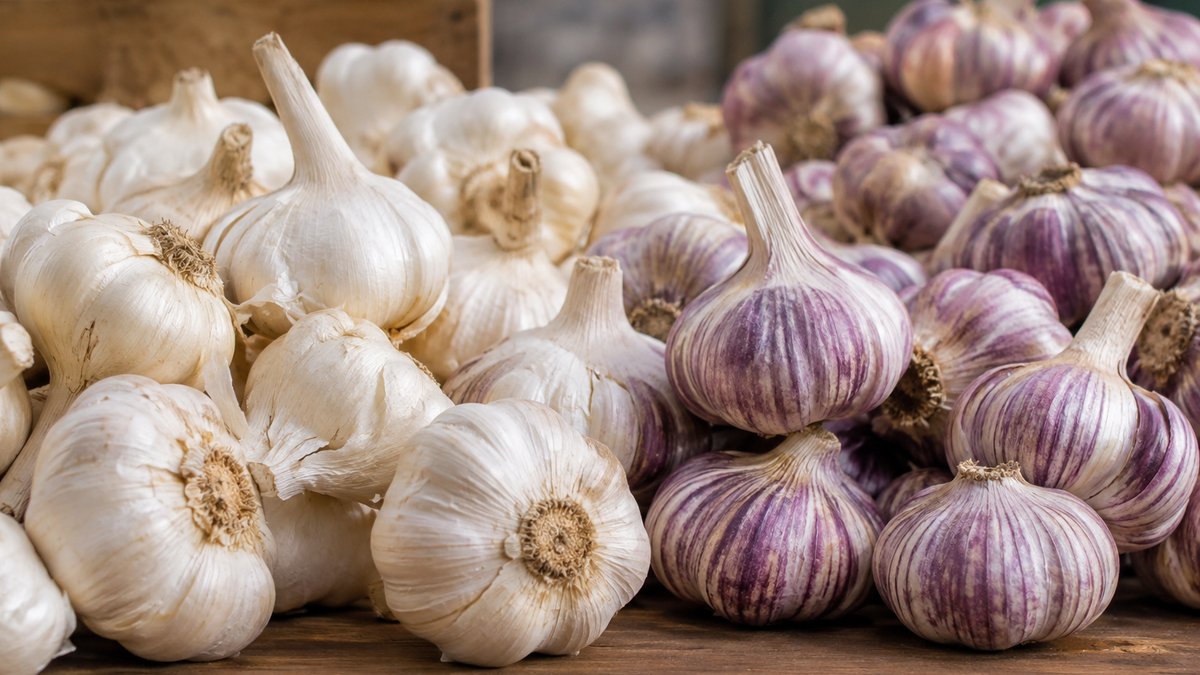

1. White and Purple Garlic Differ First by Their Skin Color
White garlic and purple garlic are commonly distinguished by the color of the bulb's outer skin. That color is a useful visual description, but it does not identify a precise cultivar or guarantee a particular flavor, clove count, bulb size or storage life.
The distinction is not a strict division between two uniform products. Garlic cultivars can have white, cream, pink-blushed or purple-streaked wrappers, and a bulb's outside may look different from the skin around its individual cloves. The University of Wisconsin Extension describes Purple Stripe garlic by the purple streaks and blotches on bulb wrappers and clove skins; it also describes white garlic types whose cloves or wrappers can show other blushes or striping.
For importers, the practical difference is therefore the appearance the buyer expects, followed by the cultivar and shipment characteristics that determine whether the product fits the end use. A color name alone is too broad to establish all those details.
The USDA's garlic inspection instructions, reprinted in June 2007, use white and purple as color-based product descriptions for U.S. inspection reporting. The instructions distinguish those color descriptions from variety names. That is a description of the U.S. inspection approach in that document, not a universal international grade or a substitute for the destination market's current requirements.
Flavor is also cultivar-specific. A 2007 study of 14 garlic cultivars grown in Spain found sensory differences among the cultivars it tested, including consumer preference for the color and pungency of one purple-type cultivar. The result describes those tested cultivars; it does not establish that every purple garlic is stronger, milder or otherwise preferable to every white garlic.
Buyers should treat white and purple as appearance descriptions and ask for the cultivar name where the supplier can provide it. Then compare the actual samples for skin color, bulb and clove size, pungency, curing and storage condition.
2. White Garlic vs Purple Garlic: Importer Comparison
The main dependable difference is visible color; other commercial traits depend on the cultivar, growing conditions, curing and handling. Use the comparison as a starting point for a specification, not as a promise that every lot in a color group will behave the same way.
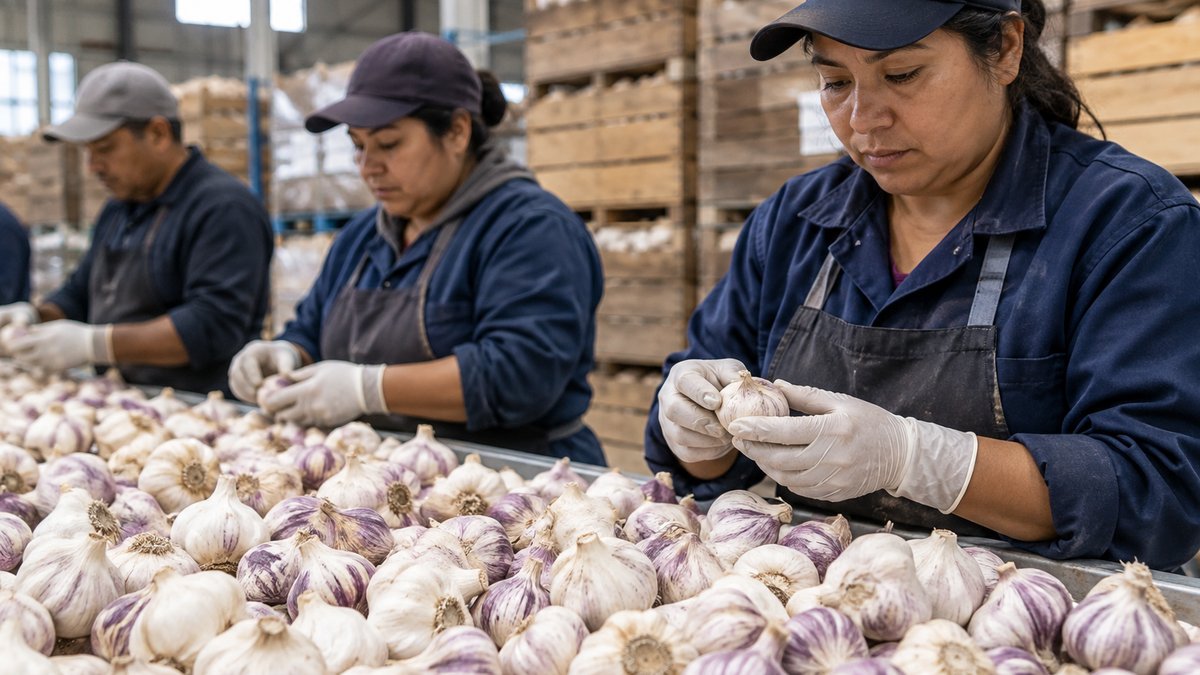
Color descriptions can overlap with cultivar traits. The University of Wisconsin Extension describes Purple Stripe garlic as streaked or blotched, while its variety examples include cultivars with purple-striped wrappers and cultivars whose bulb skins are white or clean white. A supplier's broad color label may therefore leave the specific cultivar and the appearance of the cloves unstated.
Flavor claims need the same care. In the Spanish cultivar study, the researchers classified their samples as purple, white and Chinese types and found sensory differences among particular cultivars. The study does not provide a dependable flavor rule for all garlic sold under the broad white and purple labels. Importers buying for a flavor-sensitive use should request samples and assess them against their own product requirements.
Color also says little about grade or condition. The USDA Agricultural Marketing Service describes U.S. No. 1 garlic through characteristics such as maturity, curing, compactness, well-filled cloves, freedom from specified defects and a minimum bulb diameter unless otherwise specified. Those quality and size criteria address different questions from whether a lot is white or purple. Importers should check the relevant grade or contract specification for their destination rather than assuming a color label establishes quality.
Storage life should likewise be verified at the cultivar and lot level. University of Wisconsin Extension gives different storage ranges for particular garlic groups, including softneck and hardneck types, and notes that varietal characteristics can change across growing locations. Those garden and variety descriptions are not a shelf-life guarantee for an imported commercial lot. Ask the supplier for harvest and curing details, storage conditions, packing date and the remaining expected storage life under the proposed shipment and receiving conditions.
For a fair quotation comparison, align the product description, size range, packaging, origin, crop or packing period, condition, quantity and delivery basis. If one quotation refers to a named cultivar and another only says 'purple garlic,' the offers are not yet comparable.
3. Example: A Retail Importer Comparing White and Purple Garlic
Consider a retailer whose product brief calls for garlic with a visible purple-striped wrapper. A supplier offers a lot described only as 'purple garlic,' while another offers garlic with a named cultivar and sample photographs. The retailer should check the physical sample before treating either offer as a match: the broad label alone does not confirm the stripe pattern, cultivar, clove appearance or consistency across the lot.
If the retailer's specification is driven by appearance on the shelf, it can state the desired wrapper color and pattern, acceptable variation within the lot, bulb size range and packaging presentation. It should request photographs or a physical sample that show both the whole bulb and opened cloves. The contract can then define the agreed appearance in words or by an approved reference sample.
If the retailer's main concern is a particular taste, it should say so separately. It can request the cultivar name when known, evaluate a sample in the intended use and agree on any sensory acceptance method before shipment. Purple color alone is not evidence that a lot will meet a specific pungency target.
The buyer should also assess condition and logistics independently of color. Confirm that garlic is mature and properly cured, and agree the acceptable limits for sprouting, mold, decay, damage and loose cloves. Specify the bulb size basis, net weight, packaging, lot identification, shipment temperature arrangements where applicable, delivery term and destination.
This example is a specification approach, not a claim about a particular retailer, supplier or market. The appropriate requirements depend on the buyer's product, destination rules and receiving process.
Looking to Source Fresh Garlic?
Connect with verified suppliers, discover matching products, and explore sourcing opportunities from global markets.
4. Choose by Required Appearance and Verified Lot Characteristics
Choose white garlic when the written product brief or customer requirement calls for pale or white wrappers. Choose purple garlic when the buyer requires purple-streaked or purple-blushed wrappers. When the buyer cares about flavor, clove format or storage performance, specify those separately and assess the cultivar or sample instead of relying on color.
For a color-led purchase, define what the term means in the contract. State whether the requested color refers to the outer bulb wrapper, clove skin or both. Add a description of acceptable variation, and use an approved sample or mutually accepted photographs if visual consistency is important.
For a flavor-led purchase, identify the intended application and ask the supplier for cultivar information where available. Test representative samples using the preparation method that matters to the buyer. A raw tasting may not predict the result in a cooked product, so the evaluation should match the intended use.
For a storage-led purchase, request details about curing, packing and storage history, and agree how condition will be checked on arrival. Garlic type can affect storage traits, but the final condition also depends on the lot and its postharvest handling. Any claimed storage period should state the conditions it assumes.
Before confirming an order, importers can put these items in the product specification:
- Color requirement, including whether it describes the bulb wrapper, the clove skin or both.
- Cultivar or commercial variety name, when known and relevant to the purchase.
- Bulb size range and the measurement method, plus any clove-count requirement.
- Maturity, curing and condition requirements, including agreed tolerances for defects.
- Packaging, net weight, lot identification and any labeling requirements.
- Origin, quantity, shipment schedule, destination and delivery term.
- Sample approval method and the inspection process used to check the delivered lot.
A detailed specification lets suppliers confirm what they can supply and helps the buyer compare offers on the same basis. Any import rules, plant-health requirements, labeling duties or inspection procedures must be checked for the importing jurisdiction and the shipment's specific product and origin.
5. Related Resources for Garlic Importers
The USDA Agricultural Marketing Service's garlic grades and standards page describes U.S. grade criteria and links to its garlic grade standard and inspection instructions. Importers should check the current destination-market rules as well, since a U.S. standard does not automatically apply to another jurisdiction.
University extension resources can help buyers understand how garlic groups and cultivars differ in wrapper appearance, cloves, flavor and storage traits. The University of Wisconsin Extension's garlic overview and New Mexico State University's varietal evaluation describe cultivar variation; they are horticultural references, not commercial specifications for an imported lot.
Freshdi's fresh garlic buying requests and fresh garlic supplier listings can help buyers and sellers find relevant B2B listings. Review each listing's stated specifications and confirm the product, condition and commercial terms directly before agreeing to a transaction.
References
1. U.S. Department of Agriculture, Agricultural Marketing Service – Garlic Inspection Instructions, Reprinted June 2007.
2. U.S. Department of Agriculture, Agricultural Marketing Service – Garlic Grades and Standards, n.d., accessed November 18, 2026.
3. University of Wisconsin-Madison Extension – Garlic, Allium sativum, Revised October 10, 2011.
4. New Mexico State University Cooperative Extension Service – Varietal Evaluation of Garlic in New Mexico, Research Report 717, n.d..
5. Journal of Food Quality – Physical-Chemical and Sensory Quality Evaluation of Garlic Cultivars, 2007.
Disclaimer: This article is compiled from platform data, public sources and information provided by third parties, for general informational purposes only. We do not guarantee its accuracy or completeness. Please conduct your own due diligence before making business decisions.